
Sign up to save your podcasts
Or

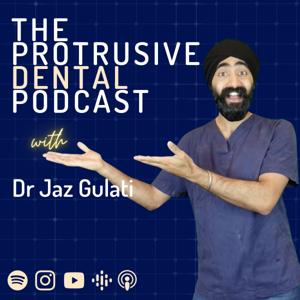

Sleep, Airway and Mouth Breathing: An ENT’s Guide for Dentists
Could a “normal” sleep study still be missing your patient’s airway problem?
Why do women and children with real symptoms keep scoring “mild”?
Should a mouth-breathing child see a myofunctional therapist — or an ENT first?
And which four questions screen a child for sleep problems in under a minute?
The roof of the mouth is the floor of the nose — so ENT and dentistry should be in constant dialogue. In practice, they rarely are. In this one, Dr David McIntosh — an Australian ear, nose and throat surgeon with a deep niche in sleep-disordered breathing — makes the case for why that has to change, and gives dentists practical ways to screen and refer. He is direct, analogy-rich and doesn’t mince words; expect a few positions that cut against the grain of how sleep apnoea is usually handled.
Protrusive Dental Pearl: When the Numbers Mislead
Dentists love data — the AHI, the cut-offs (over 5 is mild, over 30 is severe). But take those numbers with a pinch of salt: the thresholds are arbitrary, and a single score tells you nothing about why a patient has the problem.
They don’t account for individual variability — especially in women and children, where a mild score can sit right alongside significant symptoms. Read the number with the anatomy and the phenotype — the clinical signs and the airway assessment — never instead of them.
What You’ll Take From This Episode
This conversation reframes sleep-disordered breathing from a number on a report into something you can localise and refer.
Highlights of This Episode
From the Guest
Dr David McIntosh is an ear, nose and throat surgeon (MBBS, FRACS, PhD) with a special interest in sleep-disordered breathing and airway obstruction. A self-described compulsive educator, he is the author of several books on Amazon — including dENTal health, on the connection between ENT and dental disease, and Snored to Death, on the lesser-recognised causes of obstructive sleep apnoea in adults.
References & Further Reading
Sources discussed in this episode:
Loved This Episode? Try Next
Airway Dentistry with Jeff Rouse – PDP229
Listen, Subscribe, Earn CPD
This episode is eligible for 1 CE credit via the quiz on Protrusive Guidance.
This episode meets GDC Outcomes C
AGD Subject Code: 730 – Oral Medicine, Oral Diagnosis, Oral Pathology (Sleep medicine)
#PDPMainEpisodes #OralSurgeryandOralMedicine
Aim & Learning Outcomes
Aim: To help dental practitioners recognise sleep-disordered breathing across the whole airway, screen adults and children appropriately, and refer at the right time and to the right clinician.
Learning Outcomes — by the end of this episode, dentists will be able to:
 View all episodes
 By Jaz Gulati

4.7
2020 ratings
Sleep, Airway and Mouth Breathing: An ENT’s Guide for Dentists
Could a “normal” sleep study still be missing your patient’s airway problem?
Why do women and children with real symptoms keep scoring “mild”?
Should a mouth-breathing child see a myofunctional therapist — or an ENT first?
And which four questions screen a child for sleep problems in under a minute?
The roof of the mouth is the floor of the nose — so ENT and dentistry should be in constant dialogue. In practice, they rarely are. In this one, Dr David McIntosh — an Australian ear, nose and throat surgeon with a deep niche in sleep-disordered breathing — makes the case for why that has to change, and gives dentists practical ways to screen and refer. He is direct, analogy-rich and doesn’t mince words; expect a few positions that cut against the grain of how sleep apnoea is usually handled.
Protrusive Dental Pearl: When the Numbers Mislead
Dentists love data — the AHI, the cut-offs (over 5 is mild, over 30 is severe). But take those numbers with a pinch of salt: the thresholds are arbitrary, and a single score tells you nothing about why a patient has the problem.
They don’t account for individual variability — especially in women and children, where a mild score can sit right alongside significant symptoms. Read the number with the anatomy and the phenotype — the clinical signs and the airway assessment — never instead of them.
What You’ll Take From This Episode
This conversation reframes sleep-disordered breathing from a number on a report into something you can localise and refer.
Highlights of This Episode
From the Guest
Dr David McIntosh is an ear, nose and throat surgeon (MBBS, FRACS, PhD) with a special interest in sleep-disordered breathing and airway obstruction. A self-described compulsive educator, he is the author of several books on Amazon — including dENTal health, on the connection between ENT and dental disease, and Snored to Death, on the lesser-recognised causes of obstructive sleep apnoea in adults.
References & Further Reading
Sources discussed in this episode:
Loved This Episode? Try Next
Airway Dentistry with Jeff Rouse – PDP229
Listen, Subscribe, Earn CPD
This episode is eligible for 1 CE credit via the quiz on Protrusive Guidance.
This episode meets GDC Outcomes C
AGD Subject Code: 730 – Oral Medicine, Oral Diagnosis, Oral Pathology (Sleep medicine)
#PDPMainEpisodes #OralSurgeryandOralMedicine
Aim & Learning Outcomes
Aim: To help dental practitioners recognise sleep-disordered breathing across the whole airway, screen adults and children appropriately, and refer at the right time and to the right clinician.
Learning Outcomes — by the end of this episode, dentists will be able to:
392 Listeners
322 Listeners

8,748 Listeners

3,767 Listeners
4,045 Listeners

4 Listeners
2 Listeners

266 Listeners

209 Listeners
1 Listeners

29,207 Listeners
4 Listeners

1,183 Listeners

827 Listeners

174 Listeners