
Sign up to save your podcasts
Or



Based on Podcast App listening data
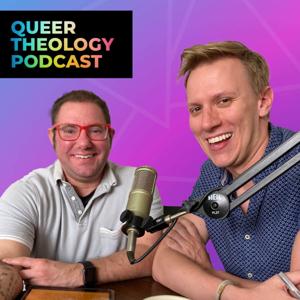
Brian is joined by long-time friend, Jason Tseng (they/them), @queeriously on the pod this week for a joyful and inspiring conversation about queer spirituality, storytelling, and moving through the world as a queer Christian. Jason, a queer, non-binary Chinese-American playwright based in New York City, talks about the different stories from their life that led to writing plays, including Fear and Wonder. They talk about how their gayness transformed and informed their understanding of the sacred. Brian and Jason discuss how important it is to reclaim queer spirituality by paying attention to what actually feels sacred in our lives. Jason is a Creative Partner of Flux Theatre Ensemble Plays developed by Judson Arts, Boise Contemporary Theatre, Playwrights Foundation, Pride Plays / Woolly Mammoth, and Artist at Play. They are also the artist behind the Queer Saints Project, a reclamation of queer spirituality rooted in Judson Memorial Church.
Resources:
The post Prophetic Queer Plays with Jason Tseng appeared first on Queer Theology.
This week we queer one of our favorite passages, Micah 6:1–8, and explore one of the Bible’s clearest calls to justice: “do justice, embrace faithful love, and walk humbly with your God.” It often feels like messages of the prophets continue to resonate so deeply today, especially in a world where faith is often reduced to rule-following and anxiety-inducing checklists. We unpack how this passage recenters us on what truly matters: not perfection, but practicing justice, mercy, and humility in the everyday moments of our lives. There is so much richness beneath this seemingly simple message that calls to the larger story of liberation and collective memory that shapes the prophet’s words.
Resources:
Listen to the next episodes in the series and join the Queer Bible Study at https://www.queertheology.com/community
The post The Radical Simplicity of Micah 6:1-8 appeared first on Queer Theology.
In this episode, Father Shannon shares a deeply personal and recent story about being denied Communion by a Catholic priest despite identifying as Catholic himself and serving as an ordained priest in the Old Catholic tradition. Reflecting on the pain and rejection that surfaced in this encounter, Fr. Shannon explores how bad theology hurts people. He also reflects on how healing is never linear, and even if you have done the work to heal old wounds, they can still open up again. There is so much institutional rejection in Christian spaces but it’s important to remember that no priest, pastor, or church authority can separate queer and trans people from God. And, as always, the importance of a supportive community, spiritual practices that nourish us, and the liberating truth that the kin-dom of God is already alive among queer and trans communities, is something you can wholeheartedly believe. For anyone navigating religious trauma, exclusion, or the ongoing journey of healing and reclaiming faith; you are welcome at God’s table. You belong and are loved.
Resources:
The post Can You Fall Out of God’s Favor? appeared first on Queer Theology.
We queer two chapters in this week’s episode and explore God’s expansive vision of belonging and justice that is the throughline between them. Both passages challenge insider/outsider binaries and emphasize that God’s covenant community is open to all. Especially, in these passages, immigrants and those historically excluded. They also call people into active participation in justice, mercy, and communal care. And this tension is pertinent today as we witness modern anti-immigrant rhetoric often justified by Christianity. arguing that such views contradict the text’s clear ethic of inclusion. Salvation does not need to be seen as a distant, individual reward, but as a present, collective practice of building communities rooted in equity, solidarity, and care for the marginalized. A call to live out our faith through tangible acts of justice here and now.
Resources:
Listen to the next episodes in the series and join the Queer Bible Study at https://www.queertheology.com/community
The post All Are Gathered In: Isaiah 56:1, 6-8 & Romans 11:1-2a, 29-32 appeared first on Queer Theology.
In this episode, we explore the idea that everyone needs a village or that everyone wants to build community. The thing is, when it comes to actually being the Villager.. no one wants to put in the effort. Or they think it needs to be a big effort. Or cost alot. Or look perfect. But that is not the case! Building meaningful community in a world that often prioritizes convenience and individuality can be tough. The truth is that not everyone in your community has to be your best friend to still show up and care. Even if there can be pressure to make community look polished or perfect, it’s those low-stakes, real-life connections (think messy houses, popcorn hangs, and shared responsibility) that are real community building. Support can often look like small, everyday acts of showing up that can add up to something much bigger. Remember- building a village isn’t about doing everything, it’s about doing something, together.
Resources:
The post Everyone Wants a Village… but Nobody Wants to be the Villager appeared first on Queer Theology.
In this week’s episode we queer Mark 10:17–31 and look at some of Jesus’ most challenging teachings. The ones that really make you think about how difficult it would be to let go of wealth, privilege, and certainty in order to follow a more expansive, justice-centered vision of love. There is often a tendency to explain away hard passages about money while taking other scriptures literally. But is that what was intended in this passage? We also explore complicated ideas about eternal life, moving beyond rigid, afterlife-focused theology to consider how “eternal life” might be experienced here and now- in moments of connection, vulnerability, and collective care that draw us into something bigger than ourselves. Those rituals that connect us outside or inside church and really make us feel part of a community. If we can reimagine a faith rooted in embodied justice and shared humanity, one that ultimately calls us deeper into love, what a more expansive faith that is.
Resources:
The post Finding Eternal Life Now: Mark 10:17-31 appeared first on Queer Theology.
Fr. Shannon brings us this week’s episode and it is the first in a series on the books of Colossians. In this first episode on book 1 of Colossians, he invites us into the deeply human world of letter writing and explores how this ancient text started as a letter to a real community navigating complex questions of identity, faith, and belonging. What does it mean to be “in Christ” while also rooted in a particular place, culture, and political reality? This is a question we can still resonate with and can set the stage for honest, thoughtful wrestling with the Bible, with tradition, and with ourselves.
Resources:
Listen to the next episodes in the series and join the Queer Bible Study at https://www.queertheology.com/community
The post Queer Bible Study: Colossians 1:1–2 appeared first on Queer Theology.
It’s Easter Sunday, so we dive into the messy, complicated, and deeply meaningful questions surrounding resurrection, belief, and what it all means in the world today. We explore the literal vs. metaphorical resurrection of Jesus and broader questions about God, suffering, and the reconciliation of all things. There is an element in the Easter resurrection story that rather than offering neat answers, embraces the tension of faith that doesn’t always fit into tidy boxes. Wrestling with doubt, grief, activism, and hope in a world marked by injustice and uncertainty can feel so difficult. But the invitation of the resurrection story opens for all of us to choose our level of engagement to lead to the reconciliation of all things. We can reimagine resurrection not as a distant theological concept, but as a lived, communal practice rooted in love, resistance, and the ongoing work of making things right that lead toward a more connected, compassionate, and hopeful way of being.
Resources:
The post How Easter Inspires Us To Work For The Reconciliation of All Things appeared first on Queer Theology.
Brian shares part of his interview with Jonah Wheeler on the podcast this week. Together they explore the complex intersections of sex, spirituality, and personal history, unpacking how formative experiences, particularly around desire, power, and validation, shape the ways we show up in intimate encounters. Jonah shares an experience from his early 20s that becomes a lens for examining “daddy issues,” internalized religious frameworks, and the search for divine approval through sex. He muses how these revealing moments of vulnerability and surrender can mirror spiritual longing while also exposing the ways we project meaning onto our partners. The conversation traces the shift from compulsive, unconscious patterns toward a more intentional and self-aware approach to intimacy- highlighting how naming our desires can create space for agency, consent, and emotional sustainability. Reframing sex not just as physical connection, but as a site of self-discovery, transcendence, and the ongoing work of offering ourselves the validation we once sought from others (or from God!) can be a spiritual experience.
Resources:
The post Searching for Divine Approval Through Sex with Jonah Wheeler (@ShowOffJonah) appeared first on Queer Theology.
This week, Fr. Shannon sits down with Samantha Boucher, (@sceboucher) a trans activist and political organizer with deep roots in Appalachia, to explore how growing up in a rural, conservative community shaped her approach to justice, belonging, and advocacy. Samantha shares her journey from disaster response and intelligence work into national politics, becoming the first openly trans federal campaign manager, and now leading efforts to advance trans rights through heartland-focused organizing. They dive into the cultural divide between urban and rural America, the importance of messaging that resonates across moral frameworks, and why building relationships in faith communities and small towns is critical to lasting change. Samantha also discusses urgent work supporting trans individuals facing displacement as well as practical ways allies can take action. Despite escalating challenges and political vitriol, Samantha encourages that there is still reason for hope grounded in community, courage, and connection.
Resources:
The post When Safety is at Stake: Organizing in a Time of Crisis with Samantha Boucher appeared first on Queer Theology.
From the publisher's feed
Ranked by our users in the last 21 days

37,991 Listeners

6,437 Listeners

24,533 Listeners
2,205 Listeners

5,112 Listeners
1,933 Listeners

2,232 Listeners

575 Listeners

41,384 Listeners

669 Listeners

10,548 Listeners

18,064 Listeners

10,538 Listeners

1,454 Listeners

2,134 Listeners