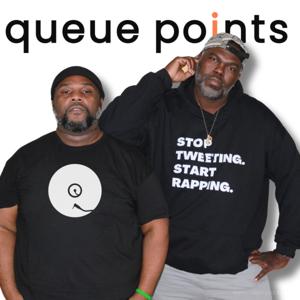
Queue Points
Download on the App Store

Queue Points episodes

  • Conversations on Wealth, Hip Hop, and the "Black Trump" Era

    DJ Sir Daniel and Jay Ray look at how Donald Trump’s name moved through Black music in the late ’80s and ’90s as a symbol of wealth, access, and status. The conversation ties that image to the media world of the 1980s, the crack era, the Exonerated Five, and records from artists like the Fat Boys, Beastie Boys, The Time, and Wu-Tang Clan. It’s a conversation about how hip hop reflected the culture around it, and how those references helped shape the way people saw success, power, and performance in public life.

    The Breakdown
    • How did the 1980s “ME era” and Reaganomics shape the way wealth showed up in Black life? Sir Daniel talks through the TV shows, magazines, and class divide that made money feel like a public measure of worth in the ’80s.
    • What did the Exonerated Five and the 1989 Trump ad have to do with the conversation? The episode connects the Central Park case, respectability politics, and Trump’s newspaper ad to the same moment when his name started appearing in rap lyrics.
    • How did Donald Trump become a symbol in Black music? Jay Ray and Sir Daniel break down references from the Fat Boys, Beastie Boys, and The Time’s “Donald Trump (Black Version)” to show how Trump became shorthand for money and image.
    • Why did hip hop start leaning into mob boss and “mafioso” imagery? The conversation moves into Scarface, the Godfather, Dapper Dan, and Wu-Tang-era references like Tony Starks and “Incarcerated Scarfaces.”
    • What does the “Black Trump” idea say about status in the community? The hosts explain how the phrase became a way of talking about Black aspiration, power, and the pressure to perform success.
    • How do platforms, radio, and public narratives shape what we accept? From Diddy and Making the Band to India Arie and the “algorithm of your brain,” the episode closes by talking about media choices, cultural responsibility, and what people keep repeating.

    Links to Content Related To This Episode For Research and Context
    • Donald Trump Rap Version (The Nelson George Mixtape)
    • The Central Park Five (PBS Documentary)
    • Raekwon - Incarcerated Scarfaces featuring Ghostface Killah
    • The Time - Donald Trump (Black Version)

    Chapter Markers

    00:00 Intro Theme

    00:16 Welcome to the Show and Acknowledging the state of America

    01:21 Remembering the 80s Wealth Obsession

    03:10 Discussing the New York, the Exonerated Five, and the term "Wilding"

    08:41 Juxtaposing the May 1, 1989 Trump Ad to Mentions in Music

    11:34 Discussing "Donald Trump (Black Version)" by The Time

    16:49 Mob Bosses, Dons, and the Rise of Hip Hop "Mafioso"

    21:26 Discussing "Incarcerated Scarfaces" by Raekwon f/ Ghostface

    23:49 Platforming Celebrities Carefully

    30:36 The Importance of Controlling Your Personal Algorithm & Closing Thoughts

    33:59 Outro Theme

    Get More From Us
    • Join The Queue Points Insiders: https://newsletter.queuepoints.com
    • Become A Member: https://link.queuepoints.com/membership
    • Support Us: https://buymeacoffee.com/queuepointspod
    • Everything else, including our store and socials: https://queuepoints.com
    • Instagram: https://instagram.com/queuepointspod
    • YouTube: https://youtube.com/@queuepointspod

    #QueuePoints, #BlackMusicHistory, #HipHopHistory, #BlackCulture, #MafiosoRap, #Prince, #WuTangClan, #Raekwon, #GhostfaceKillah, #TheTime, #FatBoys, #BeastieBoys, #ExoneratedFive, #NewYorkHipHop, #80sCulture, #90sHipHop, #BlackMusicPodcast, #HipHopCulture, #BlackHistory, #MusicHistory

    35 min
  • Neneh Cherry, Punk, Rap and the Making of a Black Icon

    Neneh Cherry sits at the crossroads of punk, rap, pop, and Black music history, and this episode traces how she built a lane that still feels outside the box. DJ Sir Daniel and Jay Ray talk about her global roots, the Wild Bunch, “Buffalo Stance,” the Raw Like Sushi era, and the way her music moved through MTV, the clubs, and Black radio culture. They also get into the records, remixes, and collaborations that made her feel like more than a crossover act, but a real part of the conversation about legacy and cool. If you remember Video Music Box, long-box CDs, and the days when remixes changed everything, this one will take you right back.

    The Breakdown
    1. How did Neneh Cherry’s background shape her sound? From Sweden to Sierra Leone to New York and London, her nomadic upbringing and artistic family gave her a sound that pulled from reggae, world music, punk, and U.S. hip-hop.
    2. Why did “Buffalo Stance” hit so hard? The song grew out of “Looking Good Diving with the Wild Bunch,” then broke wider through the video era, Video Music Box, MTV, and the pop-crossover moment of the late 1980s.
    3. What made Neneh Cherry more than a rapper or singer? The conversation gets into her activist edge, her genre-bending approach on records like Raw Like Sushi, Homebrew, and later projects, and why her work still feels connected to Black music history.

    Want to hear this episode with music? Listen here: https://qpnt.net/show-218-mixcloud

    Links to Content Related To This Episode For Research and Context
    • Keep Those Dreams Burning Forever: Neneh Cherry Interviewed | The Quietus - A long-form feature from The Quietus covering The Cherry Thing, the Bristol scene's spirit, and her stepfather Don Cherry's influence; strong critical analysis of her jazz-punk lineage.
    • Twisted Mess - Neneh Cherry (from the Best Laid Plans soundtrack) - Song referenced by Jay Ray as one of his favorites during Neneh's hiatus years. From the "Best Laid Plans" soundtrack.
    • Neneh Cherry - Buddy X (Falcon and Fabian Jeep Mix) - Remix featuring Biggie — directly relevant to the episode's deep-cut revelations.
    • Neneh Cherry - Buddy X - The 1993 Homebrew single featuring the gender-politics video with its notably diverse cast; key visual document of Neneh's 90s era discussed in depth in the episode.
    • Neneh Cherry - Buffalo Stance (Official Music Video) - The original Virgin Records video that introduced most US audiences to Neneh Cherry via Video Music Box and MTV; essential visual context for understanding her crossover moment and UK hip-hop aesthetic.
    • Morgan-McVey - 'Looking Good Diving With The Wild Bunch' Featuring Neneh Cherry - "Looking Good Diving with the Wild Bunch" is the B-side of Morgan-McVey's "Looking Good Diving." This version features Neneh Cherry, and was ultimately reworked to become "Buffalo Stance."

    Read the full show notes for this episode here: https://qpnt.net/show-218-notes

    Chapter Markers

    00:00 Intro Theme

    00:16 Welcome to the Show

    00:45 Why Neneh Cherry Matters

    01:40 Nomadic Roots and Punk London

    05:05 From Wild Bunch to Buffalo Stance

    07:04 Buffalo Stance Video Memories

    13:44 90s Evolution and Buddy X Remix

    20:23 Legacy Wrap and Listener Shoutouts

    24:33 Outro Theme

    Get More From Us
    • Join The Queue Points Insiders: https://newsletter.queuepoints.com
    • Become A Member: https://link.queuepoints.com/membership
    • Support Us: https://buymeacoffee.com/queuepointspod
    • Everything else, including our store and socials: https://queuepoints.com
    • Instagram: https://instagram.com/queuepointspod
    • YouTube: https://youtube.com/@queuepointspod

    #NenehCherry, #BuffaloStance, #BlackMusicHistory, #QueuePoints, #RawLikeSushi, #90sHipHop, #UKRap, #VideoMusicBox, #BlackWomenInMusic, #HipHopRemixes, #PunkRap, #MTVClassics, #BiggieRemix, #BlackMusicPodcast

    25 min
  • Anita Baker's Rapture: 40 Years of Auntie Music

    Anita Baker’s 1986 classic “Rapture” gets the full auntie treatment in this episode of Queue Points, as DJ Sir Daniel and Jay Ray dig into how this album became the soundtrack to Black Gen X childhoods, Saturday morning cleanups, and late-night Quiet Storm radio. They trace Anita’s journey from Detroit group Chapter 8 to going solo, fighting her label in court, and arriving on Elektra Records with a sound critics called “retro-nuevo.” Along the way, they break down the tracklist from “Sweet Love” to “Same Ole Love,” talk about that iconic haircut and video-era style, and connect Anita’s deep vocal tone to the intimacy of Quiet Storm radio. This is a conversation about an album with no skips, the Black women who loved it, and the community memories it still stirs 40 years later.

    The Breakdown
    1. Anita Baker’s Detroit roots, Chapter 8 days, label battles, and the legal fight that cleared the way for “Rapture” on Elektra.
    2. Inside the “Rapture” tracklist: “Sweet Love,” “You Bring Me Joy,” “Caught Up in the Rapture,” “Same Ole Love” and more as a front-to-back no-skip experience.
    3. Anita’s lower vocal register, the “retro-nuevo” sound, and how she cut through an ‘80s radio landscape dominated by bright pop R&B.
    4. The power of the Quiet Storm: how album cuts like “Been So Long” became radio staples and baby-making anthems without being formal singles.
    5. Music video memories: Video Soul, flowing dresses, roller-skating Anita, and how visuals helped shape Black women’s style and options in the ‘80s.
    6. Why “Same Ole Love (365 Days of the Year)” is Sir Daniel’s favorite cut and how rollerskating culture, New Orleans bounce, and Black joy show up in the song.
    7. The lasting legacy of “Rapture” 40 years on—its awards, crossover impact, and why the album still feels timeless for new and longtime listeners.

    If you had to pick one moment from “Rapture” that instantly takes you back—to a house or a person—which song is it?

    Want to hear this episode with the music? Listen Here: https://qpnt.net/show-217-mixcloud

    Links to Content Related To This Episode For Research and Context
    • Anita Baker Live in 1986 - Sweet Love and Caught Up In The Rapture - Rare 1986 Rapture Tour footage capturing Anita's original stage presence, the Anita Baker rock, and the iconic silhouette the hosts describe in detail.
    • Anita Baker’s ‘Rapture’ Turns 40 | Album Anniversary - Comprehensive 40th anniversary feature tracking Rapture's tracklist, Baker's vocal style, and its place in her larger discography; strong companion read.
    • Quiet Storm: How 1970s R&B changed late-night radio - Vox documentary tracing the Quiet Storm format from Melvin Lindsay's 1976 WHUR broadcast; essential background for the episode's segment on how the format elevated Rapture's album cuts.
    • Anita Baker - 'Same Ole Love" (365 Days A Year) (Official Music Video) - Official music video for the Detroit rollerskating clip Sir Daniel names as his personal favorite cut and a visual love letter to the city.
    • Anita Baker — "Sweet Love" (Official Audio) - Official Rhino Atlantic upload of Rapture's lead single; primary reference for the album's opening track and production discussed throughout the episode.

    Read the full show notes for this episode here: https://qpnt.net/show-217-notes

    Chapter Markers

    00:00 Intro Theme

    00:16 Welcome and Anita Baker's "Rapture" Memories

    01:01 Soundtrack of Black Childhood

    02:23 Anita Baker Origins and Industry Fight

    05:10 Peoples Auntie Iconography

    08:14 Rapture in the 80s and Tracklist

    11:02 Quiet Storm Impact and Video Era

    12:57 The Quiet Storm Allowed Album Cuts To Become Hits

    16:43 DJ Sir Daniel's Favorite Cut From "Rapture"

    18:18 Legacy of the Album & Final Thoughts

    22:10 Outro Theme

    Get More From Us
    • Join The Queue Points Insiders: https://newsletter.queuepoints.com
    • Become A Member: https://link.queuepoints.com/membership
    • Support Us: https://buymeacoffee.com/queuepointspod
    • Everything else, including our store and socials: https://queuepoints.com
    • Instagram: https://instagram.com/queuepointspod
    • YouTube: https://youtube.com/@queuepointspod

    #AnitaBaker #Rapture40Years #QueuePoints #AuntieMusic #QuietStorm #BlackMusicHistory #RaptureAlbum #AnitaBakerRapture #80sRB #DetroitMusic

    23 min
  • TLC: Legacy, Money and Music Industry Lessons

    Sir Daniel and Jay Ray sit down to talk TLC, starting with the 34th anniversary of Ooooooohhh... On the TLC Tip and how "Ain't 2 Proud 2 Beg" hit screens in 1992. They walk through the group's formation, cultural contest of the time, Pebbles' role in the group, LaFace's early days, and the business layers that left TLC broke despite massive sales.

    Topics Discussed
    1. Dallas Austin's wall-of-sound production, Left Eye's mic check, Chili's hook, heavy sampling, and how it mixed rap, R&B, and visuals like big hats and condom glasses.
    2. "Creep" video evolution, shedding the kid image in "Hat 2 da Back," growing into their sound while staying authentic.
    3. Production deals: Why TLC sold millions but stayed broke?
    4. Her features (Not Tonight remix), Supernova project, shepherding rap group Illegal and R&B group Blaque; T-Boz and Chili continue to honor her.

    Links to Content Related To This Episode For Research and Context
    • Lil' Kim ft. Missy Elliott, Da Brat, Left Eye, Angie Martinez - Not Tonight (Ladies Night Remix) - Left Eye's verse on this iconic remix is praised by Sir Daniel as one of the best features of her career. The video also features T-Boz and Chilli cameos, making it a double TLC moment.​
    • Donell Jones - U Know What's Up (Official Video) - Sir Daniel calls out Left Eye's verse on this track as a mandatory DJs-must-play cut, calling it "curtains" if you don't play her version. A testament to Left Eye's standalone legacy beyond TLC.​
    • Left Eye Explains How TLC Sold Millions and Still Went Broke - Lisa "Left Eye" Lopes' famous breakdown of TLC's finances — the "get your calculators out" moment Sir Daniel says belongs in every accounting and capitalism curriculum. A primary visual document for the episode's money and margins theme.
    • Pebbles, Salt-N-Pepa - Backyard (Official Music Video) - Sir Daniel recounts spotting a pre-TLC T-Boz and Left Eye in this Pebbles video with stripped-back looks and no Chilli yet, illustrating how Pebbles used her position to develop the group before their official debut.​
    • TLC - Diggin' On You (Official HD Video) - The concert-style video Jay Ray references when noting the gap between TLC's global reach — thousands of fans in stadiums — and the modest checks they actually took home.​
    • TLC - Waterfalls (Official HD Video) - TLC's signature hit, featuring Left Eye's defining rap verse. Referenced throughout the episode as a cultural landmark of the CrazySexyCool era and one of the album's most fully collaborative tracks.​
    • TLC - Hat 2 da Back (Official Video) - The "Hat 2 Da Back" video is cited by Sir Daniel as a key turning point in their visual evolution discussed in the episode.​
    • TLC - Creep (Official HD Video) - The official music video for "Creep," a CrazySexyCool cornerstone the hosts discuss as representing TLC's matured image and sound — a Grammy-winning track that marked a major reinvention of the group's identity.
    • TLC - Ain't 2 Proud 2 Beg (Official Video) - The debut TLC video on the LaFace/Arista label that Sir Daniel recalls watching on American Music Makers and being immediately struck by the group's color, energy, and mixed-shade representation. Central to the episode's opening discussion.​

    Chapter Markers

    00:00 Intro Theme

    00:16 Setting the Stage: TLC Arrives

    04:59 "Ooooooohhh… On the TLC Tip" & LaFace 1.0

    09:20 1992 Girl Groups and Atlanta Bubbling Up

    14:26 From Colorful Kids to Grown Women (CrazySexyCool Era)

    15:56 How Production Deals Work (Money & Margins 101)

    19:56 Lessons on Contracts and Exploitation

    23:26 Honoring the Memory of Left Eye

    30:26 Thank You & How To Support the Show

    32:00 Outro Theme

    Get More From Us
    • Join The Queue Points Insiders: https://newsletter.queuepoints.com
    • Become A Member: https://link.queuepoints.com/membership
    • Support Us: https://buymeacoffee.com/queuepointspod
    • Everything else, including our store and socials: https://queuepoints.com
    • Instagram: https://instagram.com/queuepointspod
    • YouTube: https://youtube.com/@queuepointspod

    #TLC #QueuePoints #BlackMusicHistory #CrazySexyCool #LaFaceRecords #LeftEye #90sR&B #AtlantaMusic #GirlGroups #MusicBusiness

    33 min
  • From “I Wanna Be Down” to “Ladies Night”: Classic Women in Rap Posse Cuts

    DJ Sir Daniel and Jay Ray pull up a chair for a women’s history cypher, tracing how Black women MCs turned 90s remixes and rap features into full-on posse cuts that still ring off at cookouts and girls’ nights. From Brandy’s “I Wanna Be Down” remix to Lil’ Kim’s “Not Tonight (Ladies Night),” they connect the songs we know by heart to label politics, video memories, and why we do not hear records like this much anymore.

    In this episode, they talk through:

    • Why “Ladies First” is a classic, but not really a posse cut, and what actually counts as one when you grew up on mixtapes and radio rap debates.​
    • How Brandy’s “I Wanna Be Down” hip hop remix, Total’s “No One Else” remix, and Lil’ Kim’s “Not Tonight (Ladies Night)” flipped R&B joints into rap cyphers for Black women MCs like Queen Latifah, MC Lyte, Yo-Yo, Foxy Brown, Da Brat, Left Eye and Missy Elliott.​
    • The lesser-known women posse cuts, like DJ Big Kap’s “Da Ladies in Da House” and Bahamadia’s “3 the Hard Way,” and what they reveal about the 90s backpack and Northeast rap scenes.​
    • Joi’s “Freedom,” the Panther soundtrack, and how the R&B and rap versions pulled together voices like SWV, TLC, Vanessa Williams, Queen Latifah, Patra, Salt-N-Pepa and more around Black freedom, care and protest.​
    • Why women posse cuts faded, from industry separation and money to today’s feature economy, and what it would look like to see that spirit of unity and collaboration return.​

    If you grew up recording videos off BET, arguing over who had the best verse, or learning the words to “Ladies Night” with your cousins, this one will feel like digging back through the CD book and remembering who was really there.

    Is there a women-led posse cut you feel never gets mentioned but still lives rent-free in your head?

    Detailed Show Notes: https://link.queuepoints.com/show-215-notes

    Links to Content Related To This Episode For Research and Context
    • Erykah Badu - Love Of My Life Worldwide - 2003 song from Erykah Badu which is a remix to her single "Love of My Life." This remix features Queen Latifah, Angie Stone, and Bahamadia. The song pays homage to "Funk You Up" by The Sequence, and early all-women rap crew which featured Angie Stone (Angie B). (YouTube)
    • Various Artists - "Freedom" - 1995 music video of the rap version of "Freedom" from the Panther film soundtrack. The song features Queen Latifah, Yo-Yo, Lisa 'Left Eye' Lopes, MC Lyte, Patra, Nefertiti, Da 5 Footaz, Salt-N-Pepa, Meshell Ndegeocello and more. (YouTube)
    • Brandy - I Wanna Be Down (feat. Queen Latifah, Yo-Yo, and MC Lyte) [Official Video] - Official remix audio featuring Queen Latifah, MC Lyte, and Yo-Yo, with production credits for Keith Crouch and Kipper Jones, directly matching transcript discussion on the track's origins. (YouTube)
    • Big Kap - Da Ladies In The House - 1995 Tommy Boy single video featuring backpack era MCs like Bahamadia, Lauryn Hill, Treep, Uneek and Precise, providing visual context for the mixtape posse cut praised in the transcript. (YouTube)
    • Bahamadia ft. K-Swift and Mecca Starr - 3 The Hard Way - DJ Premier-produced track from Kollage album, illustrating Philly Northeast rapid rap style and Bahamadia's role in women-led posse cuts. (YouTube)
    • Lil' Kim ft. Missy Elliott, Da Brat, Left Eye, Angie Martinez - Not Tonight (Ladies Night Remix) - Official explicit video from Nothing to Lose soundtrack, showcasing the Kool & the Gang sample and all-female lineup discussed as a radio posse cut staple. (YouTube)
    • Total - No One Else ft. Lil' Kim, Foxy Brown, Da Brat (Official Music Video) - HD music video of the remix with cameos from Biggie and Puff Daddy, highlighting the historic Lil' Kim/Foxy Brown collaboration noted in the episode. (YouTube)

    Chapter Markers

    00:00 Intro Theme

    00:16 Welcome to the Show

    02:29 What Counts as Posse Cut

    04:57 Brandy - "I Wanna Be Down" (Human Rhythm Remix) featuring Queen Latifah, MC Lyte and Yo Yo

    07:22 Total - "No One Else" Remix featuring Lil Kim, Foxy Brown and Da Brat

    11:09 Lil Kim - "Not Tonight" Remix (Ladies Night) featuring Angie Martinez, Left Eye, Da Brat and Missy Elliott

    17:23 Big Kap - "Da Ladies in Da House" featuring Bahamadia, Precise, Treep, Uneek and Lauryn Hill

    22:37 Bahamadia - "3 the Hard Way" featuring Mecca Starr and K-Swift

    23:21 Bahamadia Kollage Era

    24:01 "3 the Hard Way" Breakdown

    27:13 Discussing the origins of Joi's "Freedom"

    29:25 "Freedom" Featuring R&B All Stars

    30:30 "Freedom" Rap Remix Featuring Hip Hop All Stars

    35:30 Why Posse Cuts Faded

    40:41 Erykah Badu - "Love of My Life Worldwide" featuring Queen Latifah, Angie Stone, and Bahamadia

    42:45 Final Thanks Sign Off

    44:17 Outro Theme

    Get More From Us
    • Join The Queue Points Insiders: https://newsletter.queuepoints.com
    • Become A Member: https://link.queuepoints.com/membership
    • Support Us: https://buymeacoffee.com/queuepointspod
    • Everything else, including our store and socials: https://queuepoints.com
    • Instagram: https://instagram.com/queuepointspod
    • YouTube: https://youtube.com/@queuepointspod

    #WomenInHipHop, #PosseCuts, #90sRap, #BlackWomenInMusic, #LilKim, #Bahamadia, #QueenLatifah, #BrandyRemix, #LadiesNight, #IWannaBeDown, #HipHopHistory, #BlackMusicPodcast, #QueuePoints, #NoOneElseRemix, #3TheHardWay, #FreedomPanther, #HipHopPosseCuts, #WomensHistoryMonth, #90sRBRemix, #CookoutVibes, #BlackGirlMagicMusic, #RapCyphers, #EastCoastRap, #BackpackRap, #SugarWaterFestival

    45 min
  • Dancing Through Black History With Dr. Marcus Borders: Line Dancing, Skating, and Community

    From roller skating rinks and line dance floors to Southern Soul nights in Atlanta, this episode captures the heart of Black joy, history, and the communal spaces where we find freedom together. DJ Sir Daniel and Jay Ray welcome Dr. Marcus Borders to discuss how he went from an introverted kid in Atlanta to finding his flow through skating, line dancing, community, and what that journey reveals about us as a people.

    In this conversation, they dive into:

    1. How line dances like the Electric Slide, “The Wobble,” and the Tamia Shuffle offer a safe haven for introverts to step off the sidelines, blend into the crowd, and still shine.
    2. The way Atlanta’s skating rinks and Southern Soul line dance nights mirror a family reunion; intergenerational spaces where uncs and aunties, college students, and elders all moving to the same steps across different songs.
    3. Why Marcus made skating at Cascade a weekly ritual during the pandemic, and how he defends these dance spaces as essential to his emotional, spiritual, and physical well-being.
    4. What it takes for a DJ to truly read a Black dance floor—from giving the music space to breathe to smoothly dropping in line dances and slow jams that keep people moving.
    5. The idea of an unspoken “music school” happening at every class and party, where Black culture, rhythm, and movement are quietly passed down to little cousins, students, and the next generation, both on TikTok and in real life.

    If you remember the first time you learned the Electric Slide, gliding to 90’s Quiet Storm cuts, or learning new steps in a basement before heading to the club, this episode will hit home in the best possible way.

    Guest Biography

    Dr. Marcus Borders is a Learning Innovation Specialist with Ed Farm, where he supports educators and school leaders in designing blended learning, coaching, and K–12 computer science experiences. His work centers on expanding access to high-quality technology learning and ensuring digital equity for the communities he serves, with a particular passion for elementary educators, students, and adult learners. Dr. Borders holds an Ed.D. and Ed.S. in Instructional Technology from Kennesaw State University, along with degrees in Urban Teacher Leadership and Early Childhood Education from Georgia State University. A native Atlantan, Marcus can often be found outside of work rolling around one of the city’s skating rinks or learning the latest Southern Soul and trail ride line dances.

    Follow Dr. Marcus Borders: http://instagram.com/quietasitskept

    Links to Content Related To This Episode For Research and Context
    • Roller-skating, an old-school refuge for Black Americans, is getting a revival - Article on roller skating's Black roots as sanctuary, Civil Rights ties, street skating evolution, and modern revival amid rink closures. (NBC News)
    • The History of Black Line Dances: Electric Slide, Cha-Cha Slide, and The Wobble - Queue Points episode on Electric Slide, Cha-Cha Slide, Wobble origins, cultural significance at cookouts/weddings, tying to Black celebration and history. (Queue Points)
    • 10 Black Owned Roller Skating Rinks | Black Roller Skaters' Showcase | #BlackExcellist - Showcase of Black-owned rinks like Cascade, highlighting roller skating's role as refuge, self-expression, and addiction in African American communities. (Black Excellence Excellist)
    • The Civil Rights Era Roots of Roller Skating - Documentary tracing roller skating's Black history from segregation-era "Soul Nights" to Atlanta's Cascade as a key hub, evolving into a unique subculture. (Great Big Story)
    • Atlanta's Rolling Skating Community Pays Homage to History - Video exploring Atlanta's roller skating culture as a family bonding tradition in Black communities, with historian Tasha Klusmann on its deep roots. (NBC 11Alive Atlanta)
    • Legacy of Legends: Cascade Skating Rink - Feature on Cascade Skating Rink's 25+ year history as Atlanta's cultural hub, influencing fashion, music, dance, and serving as a safe space for Black families. (Atlanta Voice)​

    Chapter Markers

    00:00 Intro Theme

    00:16 Welcome to Queue Points

    01:05 Line Dancing Goes Viral

    02:41 Meet Dr Marcus Borders

    05:01 Introvert on the Dance Floor

    06:45 Cars and Early Dance Roots

    08:46 Skating Sparked the Shift

    10:58 Finding Freedom and Community

    13:03 Classes Across Generations

    19:11 Atlanta Energy and Joy

    22:52 What Makes a Good Groove

    24:11 Dancing Like A Game

    25:19 What DJs Should Play

    26:48 Transitions And Crowd Reading

    28:49 Hardest Line Dance Learned

    31:13 Practice By Messing Up

    34:23 Learning To Fall Safely

    35:43 Classes Build Confidence

    37:46 Protect Your Safe Spaces

    40:10 Passing The Culture Down

    42:16 Where To Take Classes

    43:31 Final Thanks And Sign Off

    45:58 Outro Theme

    Get More From Us
    • Join The Queue Points Insiders: https://newsletter.queuepoints.com
    • Become A Member: https://link.queuepoints.com/membership
    • Support Us: https://buymeacoffee.com/queuepointspod
    • Everything else, including our store and socials: https://queuepoints.com
    • Instagram: https://instagram.com/queuepointspod
    • YouTube: https://youtube.com/@queuepointspod

    #QueuePoints, #BlackMusicHistory, #BlackCulture, #BlackJoy, #BlackLineDances, #LineDancing, #SouthernSoul, #TrailRideCulture, #RollerSkating, #AtlantaSkating, #CascadeSkatingRink, #AtlantaCulture, #BlackPartyMusic, #ElectricSlide, #ChaChaSlide, #TamiaShuffle, #QuietStorm, #CookoutMusic, #BasementPartyVibes, #BlackCommunity, #BlackTraditions, #BlackHistoryMonth, #DJCulture, #SkateCulture, #BlackDance, #BlackArtists, #BlackPodcast, #MusicPodcast, #CulturalCommentary, #BlackCreative

    47 min
  • Michael Jackson’s “Dangerous” at 35: New Jack Swing, Videos and Memories

    Michael Jackson’s Dangerous turns 35, so DJ Sir Daniel and Jay Ray pull out the liner notes, the memories and the mess to talk about the album that closed out Michael’s classic run and dropped him squarely into the New Jack Swing era. Think Teddy Riley drums, prime‑time video premieres and Black folks glued to the TV on Sunday night. This one feels like sitting in the living room talking about the first time you saw “Remember the Time” and tried to hit that choreography at school the next day.

    In this episode, they get into:

    1. How leaving Quincy Jones and linking with Teddy Riley shifted Michael into a 90s New Jack Swing sound, while still keeping pieces of the classic studio team like Bruce Swedien and Bill Bottrell in the mix.​
    2. Why the “Black or White” premiere felt like a TV event, from Macaulay Culkin and Tyra Banks to the morphing effects and that controversial, angry street sequence tied to early 90s racial tension.​
    3. The impact of “Remember the Time” as a Black cultural moment, with Eddie Murphy, Iman, Magic Johnson, the Fly Girls and Fatima Robinson choreography that folded in dances like the Bart Simpson.​
    4. Deep‑cut love for singles like “In the Closet,” “Jam” and the nine‑single run that kept Dangerous on radio and TV for years, plus how the tour and videos leaned into fashion, sensuality and spectacle.​
    5. How Dangerous works as the last chapter of Michael’s classic era, the weight of what came after, and the way the album still lives in Black memory through parties, choreography and those big 90s TV moments.

    Read These Related Articles
    • 10 of the Most Expensive Music Videos By Black Artists
    • Exploring Michael Jackson's Hidden Legacy
    • Michael Jackson’s “Dangerous” at 35: A New Jack Swing Classic and a fitting end to MJ’s Classic Period

    Chapter Markers

    00:00 Welcome to Queue Points: MJ, the biopic & why Dangerous matters

    02:10 From Quincy to the ’90s: Michael’s new era and something to prove

    03:41 New Jack Swing takeover: Teddy Riley and the Dangerous sound

    04:42 The Music Videos

    05:42 “Black or White” premiere: tech, star power, and the controversial ending

    10:47 “Remember the Time” as a cultural moment: Egypt, choreography, and the kiss

    16:24 Singles for days: “In the Closet,” Naomi, and riding the album for years

    19:03 After the peak: tour stakes, career derailment, and the Jackson release-cycle theory

    22:19 Legacy check: Neverland imagery, fashion icon status, and why Dangerous still holds up

    24:11 Wrap-up & how to support Queue Points

    Get More From Us
    • Join The Queue Points Insiders: https://newsletter.queuepoints.com
    • Become A Member: https://link.queuepoints.com/membership
    • Support Us: https://buymeacoffee.com/queuepointspod
    • Everything else, including our store and socials: https://queuepoints.com
    • Instagram: https://instagram.com/queuepointspod
    • YouTube: https://youtube.com/@queuepointspod

    #QueuePoints, #MichaelJackson, #DangerousAlbum, #NewJackSwing, #BlackMusicHistory, #BlackPopCulture, #RememberTheTime, #BlackOrWhite, #TeddyRiley, #90sRNB, #90sKids, #BlackCulture, #BlackJoy, #CookoutMusic, #BasementPartyVibes, #QuietStorm, #MusicPodcast, #BlackPodcasts, #PopMusicHistory, #RBHistory, #BlackIcons, #JanetJackson, #MTV90s, #FoxSundayNight, #InLivingColor, #BlackChoreography, #FatimaRobinson, #Iman, #NaomiCampbell, #EddieMurphy, #KingOfPop

    27 min
  • From Hank Ballard to The Fat Boys: How The Twist Connected Black Musical Generations

    DJ Sir Daniel and Jay Ray talk about those post-Civil Rights dances our parents' generation did—like the Twist, Watusi, Swim, Jerk, and Bus Stop—and how we Gen Xers picked them up from TV reruns and family talks. It's like sitting around remembering Soul Train lines, What's Happening episodes, and how those moves showed up at house parties and clubs. They trace the Twist from Hank Ballard's original to Chubby Checker's American Bandstand version, then to the Fat Boys sampling it in hip hop.​

    1. Hank Ballard's "The Twist" gets remade by Chubby Checker for a wider crowd on shows like American Bandstand out of Philly.
    2. Gen X watching Gidget, What's Happening, and Soul Train, seeing parents do the Watusi or Jerk and arguing about "your music."
    3. Fat Boys bring the Twist back in the '80s with their hip hop take, linking '50s records to new beats.
    4. Bus Stop line dances on local TV clips, led by folks like Charlie Green, with People's Choice tracks, showing group vibes in Black spaces.
    5. Movies like Hairspray and Dirty Dancing catching that era's dance energy from Baltimore clubs to Catskills resorts.

    Chapter Markers

    00:00 Intro Theme

    00:16 Welcome to the Show

    02:48 The Evolution of Dance in Black Culture

    05:59 The Twist: A Cultural Phenomenon

    08:49 Chubby Checker and the Crossover Effect

    11:45 The Importance of Dance in Black Expression

    14:44 Movies and Dance: Hairspray and Dirty Dancing

    17:44 The Role of Dance in Social Movements

    20:55 The Bus Stop: A Community Dance

    23:48 Documenting Dance for Future Generations

    27:54 Outro Theme

    Get More From Us
    • Join The Queue Points Insiders: https://newsletter.queuepoints.com
    • Become A Member: https://link.queuepoints.com/membership
    • Support Us: https://buymeacoffee.com/queuepointspod
    • Everything else, including our store and socials: https://queuepoints.com
    • Instagram: https://instagram.com/queuepointspod
    • YouTube: https://youtube.com/@queuepointspod

    #QueuePoints, #BlackMusicHistory, #TheTwist, #HankBallard, #ChubbyChecker, #FatBoys, #BlackDanceHistory, #Watusi, #BusStopDance, #SoulTrain, #AmericanBandstand, #BlackHistoryMonth, #GenXMusic, #PostCivilRightsDances, #DJSirDaniel, #JayRay

    29 min
  • The Wop at 40: The Greatest Hip Hop Dance Ever and the Groove of Mid-80s Black Parties

    The Wop turned 40, and this episode sits right in that mid‑80s pocket where hood parties, basement jams, and early music videos shaped how we moved and how we saw ourselves on the floor. DJ Sir Daniel and Jay Ray pull from memory, region, and music history to talk through why this simple little move still says so much about Black joy, style, and rhythm.

    1. How The Wop became the defining hip hop dance for a generation, from its simplicity to why it still looks cool in videos and at parties decades later.​
    2. The songs, tempos, and producers that gave The Wop its groove, from B Fats’ “Woppit” to that Eric B. & Rakim feel and the Dougie Fresh and Herbie Love Bug sound.​
    3. The many “ways to Wop,” including aggressive, flirty, playful, and party-time versions, and what those variations say about nuance in Black culture.​
    4. How region and era shaped the move, from New York’s head‑driven style to D.C.’s upper‑body wave, and how dances traveled without the internet through tours, tapes, and TV.​
    5. A bigger conversation on the “genetic code” of Black dance, what today’s music might be losing, and the kind of time‑traveling parties that could unlock that feeling again.

    Chapter Markers

    00:00 Intro Theme

    00:16 Welcome to the Show

    00:27 The Significance of The Wop

    02:29 Cultural Impact of The Wop

    05:55 Regional Variations of The Wop

    07:40 Historical Context and Evolution

    17:01 The Role of Music Videos

    18:32 The Genetic Code of Dance

    22:13 Conclusion and Call to Action

    23:42 Outro Theme

    Get More From Us
    • Join The Queue Points Insiders: https://newsletter.queuepoints.com
    • Become A Member: https://link.queuepoints.com/membership
    • Support Us: https://buymeacoffee.com/queuepointspod
    • Everything else, including our store and socials: https://queuepoints.com
    • Instagram: https://instagram.com/queuepointspod
    • YouTube: https://youtube.com/@queuepointspod

    #QueuePoints, #TheWop, #HipHopDance, #80sHipHop, #GoldenEraHipHop, #BlackMusicHistory, #BlackCulture, #BlackJoy, #BasementParties, #BlackParties, #LineDances, #OldSchoolDance, #BlackHistoryMonth, #RBHistory, #DJCulture, #MusicAndMemories, #CookoutVibes, #QuietStormEnergy, #BlackFamilyTraditions, #BlackCommunity, #MusicNostalgia, #HipHopCulture, #EricBAndRakim, #DougieFresh, #JanetJackson, #MCHammer, #PaulaAbdul, #BlackDanceCulture, #Podcast, #MusicPodcast, #CulturalCommentary, #BlackPodcasts, #JayRay, #DJSirDaniel

    25 min
  • The Sacred Science of Black Line Dances: Electric Slide, Cha-Cha Slide & The Wobble

    In this episode of Queue Points, Jay Ray and DJ Sir Daniel unpack the sacred science behind three modern Black line dance staples: the Electric Slide, the Cha-Cha Slide, and the Wobble. Through personal stories, musical history, and DJ wisdom, they trace how these dances move from family gatherings and fitness classes to clubs, cruise ships, and cookouts—and what they reveal about Black community, joy, and continuity across generations.​

    You’ll hear them dig into:

    1. How line dances operate as a through line and a direct storytelling of Black history in America, from rites of passage to everyday celebrations.​
    2. Personal “confessions on the dance floor,” including learning the Electric Slide in living rooms, on crowded dance floors, and sometimes by trial and error under auntie-level pressure.​
    3. The roots of the Electric Slide, from Marcia Griffiths’ “Electric Boogie” and Bunny Wailer’s songwriting to the way DJs helped turn it into a shared ritual in the late 1980s.​
    4. The surprising fitness-class origins of the Cha-Cha Slide, how DJ Casper built it from “Plastic Dreams,” and why its built-in instructions make it a lifeline for wallflowers.​
    5. The role of songs like “The Wobble” as a DJ “cheat code,” creating space for folks who might not feel comfortable dancing one-on-one but still want to be in community on the floor.​

    If line dances have ever pulled you from the wall to the center of the room, this conversation offers language for why those moments feel so familiar, necessary, and alive.

    Chapter Markers

    00:00 Intro Theme

    00:16 Welcome to the Show

    00:27 The Cultural Significance of Line Dances

    01:31 Confessions of Line Dancing Skills

    04:12 The Electric Slide: A Historical Perspective

    12:02 The Cha-Cha Slide: From Fitness Class to Global Phenomenon

    20:31 The Rise of the Wobble

    22:10 The Impact of the Wobble in Clubs

    25:44 DJ Tips for Playing the Wobble

    29:23 The Cultural Significance of Line Dances

    32:34 Supporting Queue Points

    35:13 Outro Theme

    Get More From Us
    • Join The Queue Points Insiders: https://newsletter.queuepoints.com
    • Become A Member: https://link.queuepoints.com/membership
    • Support Us: https://buymeacoffee.com/queuepointspod
    • Everything else, including our store and socials: https://queuepoints.com
    • Instagram: https://instagram.com/queuepointspod
    • YouTube: https://youtube.com/@queuepointspod

    #BlackLineDances, #ElectricSlide, #ChaChaSlide, #TheWobble, #BlackCulture, #BlackJoy, #BlackHistory, #LineDancing, #DJCulture, #QueuePoints, #MusicPodcast, #BlackMusicHistory, #PartyMusic, #CookoutMusic, #DanceFloor, #GenX, #HipHopAndRB, #BlackCommunity, #BlackCelebration

    36 min

About Queue Points

From the publisher's feed

Queue Points is the Black Podcasting Award and Ambie Award-nominated music podcast that is dropping the needle on Black Music history and celebrating Black music through meaningful dialogue. The show…

More shows like Queue Points

The Right Time with Bomani Jones by Playmaker and iHeartPodcasts

The Right Time with Bomani Jones

12,852 Listeners

Code Switch by NPR

Code Switch

14,635 Listeners

The Daily by The New York Times

The Daily

112,173 Listeners

Where Should We Begin? with Esther Perel by Esther Perel Global Media

Where Should We Begin? with Esther Perel

14,914 Listeners

MURDERISH by Cloud10

MURDERISH

3,427 Listeners

Reality Hangover by The Ringer

Reality Hangover

5,080 Listeners

You Can’t Make This Up by Netflix

You Can’t Make This Up

1,024 Listeners

2 Black Girls, 1 Rose by Justine Kay and Natasha Scott-Reichel & Studio71

2 Black Girls, 1 Rose

2,586 Listeners

Here's The Thing by iHeartPodcasts and The Volume

Here's The Thing

7,767 Listeners

The Questlove Show by iHeartPodcasts

The Questlove Show

1,957 Listeners

Jess A Couple Things with Jessie Woo by Woohoo Media

Jess A Couple Things with Jessie Woo

764 Listeners

IMO with Michelle Obama and Craig Robinson by Higher Ground

IMO with Michelle Obama and Craig Robinson

13,012 Listeners

The Ezra Klein Show by New York Times Opinion

The Ezra Klein Show

16,184 Listeners

Dear Black Gay Men Podcast by Jai The Gentleman

Dear Black Gay Men Podcast

126 Listeners

What Now? with Trevor Noah by Trevor Noah

What Now? with Trevor Noah

4,236 Listeners