
Sign up to save your podcasts
Or

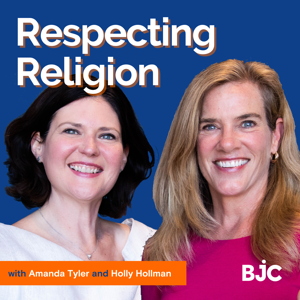


The doctrine of the “ministerial exception” and the latest installment in the ongoing saga of challenges to the contraceptive mandate capped off this year’s Supreme Court term. Amanda and Holly give their analysis of those key cases impacting religious liberty and discuss how they interact with other decisions from this blockbuster year. In this season finale, Amanda and Holly also look back at our entire season of Respecting Religion and invite you to continue the conversation.
Segment 1: The ministerial exception decision (Starting at 00:40)
Amanda mentioned this New York Times article rounding up this year’s Supreme Court term by Adam Liptak: In a Term Full of Major Cases, the Supreme Court Tacked to the Center.
Starting at 4:47, the cases regarding the “ministerial exception” are Our Lady of Guadalupe School v. Morrissey-Berru and St. James School v. Biel. You can read Justice Samuel Alito’s majority opinion and the concurrence and dissents at this link.
Amanda and Holly talked about oral arguments in the case on Episode 13: Who’s a ‘minister’ and who gets to decide?
Learn more about the 2012 Hosanna-Tabor decision that was a precursor to the latest ministerial exception cases at BJConline.org/hosanna-tabor.
Read Holly’s statement on the decision in this post on BJC’s website.
Read Amanda’s Twitter thread reacting to both decisions issued the same day at this link.
Holly and Amanda discussed the decision in the Title VII cases in Episode 17: A landmark case for LGBTQ rights: What’s next for religious liberty?
Read and listen to the NPR story by Tom Gjelten that featured Holly Hollman: Recent SCOTUS Decisions On Religion Open Up New Questions.
Segment 2: The contraceptive mandate decision (starting at 22:47)
The Trump v. Pennsylvania case regarding the contraceptive mandate was consolidated with Little Sisters of the Poor Saints Peter and Paul Home v. Pennsylvania. You can read the decision by Justice Clarence Thomas and the concurring and dissenting opinions at this link.
Amanda and Holly talked about the oral arguments in this case in Episode 12: Not a charm: Contraceptive mandate returns to the Supreme Court for the third time.
The “Affordable Care Act” is often referred to as the “ACA.”
Holly mentioned BJC’s brief with Professor Douglas Laycock in the Zubik v. Burwell case – learn more about that and read the brief at BJConline.org/Zubik.
For more on this case, including reaction from Holly, read this post on BJC’s website.
Segment 3: Looking back at season one (starting at 37:13)
See a list of all 20 episodes of Respecting Religion by visiting BJConline.org/RespectingReligion.
Amanda and Holly examine the troubling Supreme Court ruling that has major implications for funding education and protecting against government-sponsored religion. They break down the decision in Espinoza v. Montana Department of Revenue, including a concurrence that would undermine the entire Establishment Clause and the different angles taken by the dissenting justices. In segment three, Amanda and Holly share ways they are seeing religion respected in the world around us.
Segment 1: Understanding the Espinoza decision and its application of an earlier case (Starting at 00:40)
For resources from BJC on the case of Espinoza v. Montana Dept. of Revenue, visit BJConline.org/Espinoza.
To hear Holly and Amanda’s February discussion on the Espinoza case, listen to episode 2 of this podcast series.
For more background on the 2017 Trinity Lutheran v. Comer case (involving a playground resurfacing in Missouri) that Amanda and Holly mentioned as a precursor to this case, visit BJConline.org/TrinityLutheran.
Read the Espinoza opinion by Chief Justice John Roberts; concurrences by Justice Clarence Thomas and Justice Samuel Alito, and Justice Neil Gorsuch; and dissents by Justice Ruth Bader Ginsburg, Justice Stephen Breyer, and Justice Sonia Sotomayor at this link.
Amanda and Holly mention “no-aid” provisions during this conversation, which are clauses often found in state constitutions to make sure taxpayer money does not fund religion. The principle that government should not fund religious activities or interfere in religious doctrine is deeply rooted in our country’s religious liberty tradition, recognizing the distinctiveness of religion and protecting against government advancement and interference in religion.
Segment 2: The dissents and BJC analysis of this landmark case (starting at 16:35)
Read Holly’s analysis of Espinoza for the symposium on SCOTUSblog: What’s ‘the use’ of the Constitution’s distinctive treatment of religion if it is disregarded as discrimination?
Amanda mentioned reports that the Trump administration plans to push for tax money for religious schools, check out this article from McClatchy by Francesca Chambers: Trump to seek funds for private, religious school scholarships in COVID recovery bill.
Segment 3: Religion respected in the world around us (starting at 32:42)
Holly and Amanda mentioned this CNN article featuring college students: Finding God in the unlikeliest of places.
Holly and Amanda also discussed this video from NPR featuring five descendants of Frederick Douglass reading and responding to his famous speech, “What to the Slave is the Fourth of July?”
We’re bringing you important conversations on white supremacy and American Christianity in this episode. First, we’ll play the June 26 discussion between researcher Robert P. Jones of PRRI and journalist Adelle Banks from Religion News Service (starting at 2:14). Jones is the author of the forthcoming White Too Long: The Legacy of White Supremacy in American Christianity, and he talks with Banks about the church’s current “moment of reckoning” across denominational lines, particularly as white churches have been either blind to their part in systemic racism or have ignored it. This podcast also features Amanda’s call to action from the June 26 event, including the dangers of Christian nationalism (25:39). We’re also bringing you part of a follow-up conversation with BJC’s Charles Watson Jr. and Dr. Alphonso Saville of Georgetown University (37:48), where they discuss a wide range of issues, including how arguments can inform how we proceed and the importance of understanding history.
Segment 1: Robert P. Jones and Adelle Banks discuss white supremacy and American Christianity (Starting at 00:40)
To watch the entire BJC Luncheon, featuring the national conversation on white supremacy and American Christianity, visit this YouTube link.
Robert P. Jones is the author of The End of White Christian America (2017) and the forthcoming White Too Long: The Legacy of White Supremacy in American Christianity.
If you would like an autograph for your book, you can pre-order White Too Long and email a copy of your proof of purchase and your mailing address to to [email protected] with the subject line “WHITE TOO LONG Bookplate.” (Note that this offer is only available in the United States)
Segment 2: Our call to action (starting at 25:31)
Read and sign the Christians Against Christian Nationalism statement at https://www.christiansagainstchristiannationalism.org/.
Hear the episodes in the 10-part podcast series on the dangers of Christian nationalism – and see other resources related to the initiative – by visiting https://bjconline.org/christiannationalism/.
Segment 3: Charles Watson Jr. and Dr. Alphonso Saville IV (starting at 31:30)
Read more about Dr. Alphonso Saville at this link.
Hear the entire conversation with Watson and Saville at this link on BJC’s Facebook page.
This week, the Supreme Court issued a landmark case for LGBTQ rights, interpreting Title VII of the Civil Rights Act of 1964 to prohibit employment discrimination based on sexual orientation or gender identity. Amanda and Holly discuss the opinion and the dissents, looking at the way each interprets “because of sex” in the statute. They also talk about how the opinion and dissents discuss implications for religious liberty, as well as responses to the case from the community. In the final segment, Amanda and Holly discuss and recommend recent movies and podcasts and invite you to join upcoming conversations about religious liberty, race, white supremacy and American Christianity.
Segment 1: The Supreme Court decision in the Title VII cases (Starting at 00:40)
Amanda and Holly previewed the Title VII cases in Episode 5, which you can hear at this link. The three consolidated “because of sex” cases are Bostock v. Clayton County, Altitude Express Inc. v. Zarda, and Harris Funeral Homes v. EEOC.
Amanda mentioned this story on Gerald Bostock, written by Samantha Schmidt for The Washington Post: Fired after joining a gay softball league, Gerald Bostock wins landmark Supreme Court case.
They mentioned the coverage of the decision in The New York Times, by Adam Nagourney and Jeremy W. Peters: A Half-Century On, an Unexpected Milestone for L.G.B.T.Q. Rights.
To read the opinion by Justice Neil Gorsuch and dissents by Justice Samuel Alito and Justice Brett Kavanaugh, visit this link.
Segment 2: How does religious liberty fit into this? (starting at 16:30)
The Religious Freedom Restoration Act is often referred to as “RFRA,” which sounds like “Riff-rah.” Learn more about it at this link.
Segment 3: Movie and podcast recommendations and invitations to join us in conversation (starting at 31:30)
Amanda recommended this episode of The Ezra Klein Show podcast, featuring a conversation with Cyrus Habib.
Holly recommended the movie Just Mercy, which is currently available to watch for free on several different streaming platforms.
Amanda recommended the documentary Emanuel, which is available to rent on streaming platforms.
You can watch a live Facebook conversation on Juneteenth with Amanda and BJC Director of Education Charles Watson Jr. on Friday, June 19, at 1 p.m. on BJC’s Facebook page.
Join us for a national conversation on white supremacy and American Christianity on Friday, June 26, at noon Eastern Time. The livestream is free, but you must register to attend. Visit BJConline.org/luncheon for details.
As the conversation about racial justice continues in our country, we dig in to talk about race and religious liberty. BJC Director of Education Charles Watson Jr. joins Amanda and Holly for a personal conversation about his experiences and how his work at BJC intersects with the work for racial justice. He tells his story and explains how a seminal speech at a BJC Luncheon on Juneteenth impacted the trajectory of his work at BJC. Amanda, Holly and Charles discuss how different ethnic communities view the phrase “separation of church and state” and why the work for religious freedom matters. Plus, in the third segment, they discuss how they are seeing religion respected in books and articles this week.
Segment 1: Introducing Charles Watson Jr. and a pivotal moment in 2015 (starting at 00:40)
Hear episode 15 of the podcast about the protests and the president’s photo op with a Bible at this link.
You can read a list of BJC’s current supporting Baptist bodies on our website at this link.
Last week, BJC published Amanda’s reflections on responding to racial injustice and the work of BJC’s Special Committee on Race and Religious Liberty, which began in the fall of 2019: Reflections in solidarity: Our work to do.
Holly mentioned this article about religious activism, distributed by Reuters and published by The New York Times: After George Floyd’s Death, a Groundswell of Religious Activism.
For more about the vigil various churches participated in on 16th Street in Washington, check out this article from the D.C. neighborhood blog Popville: Vigil Against Racism starts at 5pm on 16th Street NW.
Watch the Rev. Dr. Marvin A. McMickle’s 2015 speech on Juneteenth at this link.
Juneteenth is June 19, one of the most popular celebrations of the abolition of slavery in the United States. On that date in 1865, news about the Emancipation Proclamation finally made its way to the state of Texas in an order from the Union army.
Read about the domestic terrorism committed in Charles’s hometown of Millen, Georgia, in 1919 at Carswell Grove Baptist Church with reporting by The New York Times: After a Summer of Racial Violence Across the U.S., a Century of Neglect.
Segment 2: Broadening our understanding of religious freedom and the separation of church and state (Starting at 20:34)
Since 2015, BJC names 10 young professionals each year as BJC Fellows. Learn more about the program at this link.
Learn more about the Newseum program that 2015 BJC Fellow Dr. Sabrina Dent led on religious freedom and African American perspectives at this link.
The Christians Against Christian Nationalism statement includes the phrase, “It often overlaps with and provides cover for white supremacy and racial subjugation.” Read the entire statement and add your name by visiting christiansagainstchristiannationalism.org.
Segment 3: Respecting religion in our culture (starting at 40:24)
The Reuters story Holly mentions is the same as the one referenced in segment one: After George Floyd’s Death, a Groundswell of Religious Activism.
Charles mentioned the book Long Shot: The Triumphs and Struggles of an NBA Freedom Fighter by Craig Hodges.
You can hear a conversation with Robert P. Jones and journalist Joy Reid about white supremacy and American Christianity at our BJC Luncheon, which will be a virtual event on June 26. Learn more and register for free at BJConline.org/luncheon.
After President Trump publicly addressed the unrest following the killing of George Floyd, peaceful protesters were violently dispersed and the president posed for a photo holding a Bible in front of a church. This week, Amanda Tyler and Holly Hollman talk about the photo op and what it means in terms of religious liberty and Christian nationalism. They also review the most recent legal developments related to houses of worship and the coronavirus, including a late-night Supreme Court order and an unexplained change on the CDC’s guidance for houses of worship. In the third segment, Amanda and Holly answer listener questions and share important books for self-reflection and action to take a stand against systemic racial injustice.
Segment 1: New developments related to religious liberty, presidential statements and the coronavirus (starting at 00:40)
Amanda shared her reflections on responding to racial injustice in this piece on BJC’s Medium channel: Reflections in solidarity: Our work to do
See President Trump’s comments from Friday, May 22, about re-opening houses of worship at this C-SPAN link.
The story Holly mentioned on the changing CDC guidelines is this article by Lena H. Sun and Josh Dawsey for The Washington Post: White House and CDC remove coronavirus warnings about choirs in faith guidance. Read the original guidance for houses of worship from the CDC at this link, and read the current version at this link, which no longer includes the suggestion to consider suspending or decreasing choirs and congregational singing as “singing may contribute to transmission of COVID-19.” You can view a report on the CDC’s website about the spread of COVID-19 at a choir practice in Skagit County, Washington, at this link.
Read the Supreme Court’s order from May 29 denying a church’s request to halt California Gov. Gavin Newsom’s restrictions on in-person worship services at this link.
You can hear their earlier discussion on various lawsuits regarding stay-at-home orders and the importance of comparing like things to like things on episode six of this podcast series.
Segment 2: A photo op in the middle of protests about racial injustice (Starting at 19:15)
Holly mentioned this article by Toluse Olorunnipa and Sarah Pulliam Bailey in The Washington Post. The online title is Trump’s naked use of religion as a political tool draws rebukes from some faith leaders.
Amanda quoted this Episcopal News Service article by Egan Millard about the fire in St. John’s Church, which quotes both Rev. Rob Fisher and Bishop Mariann Budde: Fire causes minor damage to St. John’s, the ‘church of presidents’ in Washington, during night of riots.
Amanda Tweeted this statement after the president’s photo op: “The Bible is not a prop. A church is not a photo backdrop. Trump’s version of Christianity provides cover for white supremacy and racial subjugation. My fellow Christians who feel the same: join us in denouncing #Christiannationalism.”
Amanda mentioned Bishop Mariann Budde’s appearance on Anderson Cooper 360. You can read more about that interview at this link.
Read the Christians Against Christian Nationalism statement and add your name by visiting christiansagainstchristiannationalism.org.
Amanda mentioned the article written by Andrew Whitehead for Religion News Service about Christian nationalism: With Bibles and flash grenades, Trump walks the Christian nationalist walk
Segment 3: Resources for educating yourself and learning more (starting at 39:09)
Amanda mentioned the following books:
These Truths: A History of the United States by Jill Lepore
Stamped from the Beginning by Ibram X. Kendi
How to be an Antiracist by Ibram X. Kendi
The Color of Compromise: The Truth about the American Church’s Complicity in Racism by Jemar Tisby
Listen to Amanda’s conversation with Jemar Tisby on our previous podcast series about the dangers of Christian nationalism at this link.
Holly mentioned the following books:
Frederick Douglass: Prophet of Freedom by David Blight
Pulpit and Politics: Separation of Church and State in the Black Church by Marvin McMickle (and you can hear Dr. McMickle’s address to BJC’s 2015 luncheon about Juneteenth at this link)
White Too Long: The Legacy of White Supremacy in American Christianity by Robert P. Jones
You can hear a conversation with Robert P. Jones and journalist Joy Reid about white supremacy at our BJC Luncheon, which will be a virtual event on June 26. Learn more and register for free at BJConline.org/luncheon.
Churches are facing a barrage of challenges as they navigate whether, when and how to resume in-person worship and other gatherings during the coronavirus pandemic. This week, Amanda and Holly explore what’s at stake for churches and how religious liberty fits into these nuanced conversations (28:30). They look at what makes religion unique in the reopening landscape and respond to articles about life in our current context. Plus, find out how you can help shape a future episode of Respecting Religion – we want to hear from you!
Segment 1: What are churches doing as the country starts to re-open? (starting at 00:40)
Holly mentioned this story by Michelle Boorstein in The Washington Post about the Hopeful Baptist Church meeting again: On the first Sunday congregations could reopen, a church called Hopeful Baptist lived up to its name the first Sunday it could meet.
Holly also mentioned this story by Elizabeth Dias in The New York Times about the re-opening conversations happening in congregations across the country: After Weeks on Zoom, Churches Consider Plans to Reopen.
Segment 2: How does religious liberty fit into these conversations? (Starting at 20:26)
Amanda and Holly devoted episode 10 to the various legal challenges to COVID-19 directives. You can listen to it at this link.
Amanda mentioned this article by Brian Kaylor in Word&Way that provides an overview of the ups and downs facing congregations: More Churches Reopening as Some Close Again Amid New Outbreaks.
To read about the situation at Palermo Bible Family Church, which had a service that exposed nearly 200 people to the coronavirus, here is an article from The Los Angeles Times.
Holly and Amanda recommended this editorial by Peter Marty for The Christian Century: Churches obsessed with their right to reopen are missing the point.
Segment 3: We want to hear from you! (starting at 37:04)
To catch up on previous episodes of Respecting Religion while we take next week off, you can see a full list at BJConline.org/RespectingReligion.
Let us know what questions you want us to answer, topics you want us to cover, and articles you want us to discuss. Contact the show by sending an email to [email protected].
On this episode of Respecting Religion, Amanda Tyler and Holly Hollman discuss this week’s Supreme Court arguments in cases involving the ministerial exception, a First Amendment doctrine that makes Title VII and other employment discrimination protections inapplicable to certain employees of religious organizations. They explain what the doctrine means (5:33), what you need to know about the 2012 Hosanna-Tabor case that looms large in this term’s cases (3:55), and what to make of active questioning from the justices in this week’s oral arguments (17:20). They also comment on a related line of questioning about public schools that connects to other Supreme Court cases and areas of BJC’s work.
Segment 1: What do you need to know about a previous case to understand the ministerial exception? (starting at 00:40)
Learn more about the 2012 case that dealt with the ministerial exception (Hosanna-Tabor Evangelical Lutheran Church and School v. EEOC) on our website at BJConline.org/hosanna-tabor.
To read the Hosanna-Tabor decision by Chief Justice John Roberts and the concurrences from Justice Clarence Thomas and Justice Samuel Alito, visit this link.
Amanda and Holly also talked about the ministerial exception and other important employment discrimination cases this term in episode 5 of this podcast series. You can listen to it here.
Segment 2: What are our takeaways from this week’s oral argument? (Starting at 15:01)
The two consolidated cases heard on Monday, May 11, are Our Lady of Guadalupe School v. Morrissey-Berru and St. James School v. Biel. You can access briefs and additional information on the cases at SCOTUSblog.
You can listen to the Supreme Court arguments at this C-SPAN link.
The clip from Justice Stephen Breyer is from about 1:05:29 in the argument. The clip from Justice Elena Kagan is from about 43:53 in the argument. The clip from Justice Neil Gorsuch is from 44:58 in the argument. The clip from Justice Ruth Bader Ginsburg is from about 30:16 in the argument. The clip form Justice Sonia Sotomayor is from about 13:43 in the argument.
Segment 3: How do these arguments relate to other areas of BJC’s work? (starting at 32:33)
Amanda and Holly discussed the Espinoza v. Montana Department of Revenue case in episode 2 of this podcast series.
Amanda and Holly also talked more about religion in public schools on episode 3 of this podcast series.
The controversy over the contraceptive mandate was back at the U.S. Supreme Court this week. Amanda Tyler and Holly Hollman react to the live arguments in Trump v. Pennsylvania and give the history of the contraceptive mandate, including how the Hobby Lobby and Zubik cases led to this one. They also share audio clips from key moments in the arguments and discuss what’s at stake for religious liberty when religious accommodations turn into “all-or-nothing” claims on both sides.
Segment 1: The history of the contraceptive mandate (starting at 00:40)
For more resources on the 2016 Zubik v. Burwell case (also known as the “Little Sisters of the Poor” case) and to read our brief written with Douglas Laycock, visit BJConline.org/Zubik.
Segment 2: Breaking down the arguments in Trump v. Pennsylvania (Starting at 21:33)
To listen to the oral arguments in Trump v. Pennsylvania from May 6, 2020, visit this link from C-SPAN.
The excerpts Holly and Amanda used in the podcast can be found at the following time in the oral arguments:
The clip of Chief Justice John Roberts is from around 27:44 into the arguments
The clip of Justice Stephen Breyer is from around 35:00 into the arguments
The clip of Justice Ruth Bader Ginsburg is from around 32:44 into the arguments
The clip of Justice Sonia Sotomayor is from around 40:00 into the arguments
Segment 3: What else is happening in our world (starting at 39:30)
Next week’s consolidated cases on the ministerial exception are known as Our Lady of Guadalupe v. Morissey-Berru. Amanda and Holly discussed the issue in episode 5 of this podcast series during the second segment.
See BJC’s page of coronavirus articles and podcasts at BJConline.org/COVID-19.
To read stories we shared on Giving Tuesday Now from members of our community making a difference, visit BJConline.org/givingtuesdaynow-2020.
The dangerous political ideology of Christian nationalism is a persistent problem in our country, and continues to be during the COVID-19 pandemic. This week, Amanda and Holly talk about how Christian nationalism often contributes to confusion about religious liberty in our public discourse at this time, conflating legal and religious understandings. They review troubling rhetoric from political leaders and how to train your ears for telltale signs that someone is using religion for their own political purposes.
Segment 1: What is Christian nationalism? (starting at 00:40)
There are 10 episodes in our podcast series on the dangers of Christian nationalism. They are all available on this website page.
To read the statement and learn more about the movement of Christians calling out Christian nationalism, visit ChristiansAgainstChristianNationalism.org.
Segment 2: Recent examples of Christian nationalism (Starting at 14:47)
Read about President Trump’s March declaration that he wanted to have full sanctuaries on Easter Sunday in this article from Politico.
Read about the recent call with President Trump and Catholic leaders in this story from Crux.
Read about several “culture war” issues in the coronavirus pandemic, including the comparison between the treatment of mosques and churches, in this article from The New York Times.
BJC often has spoken out about the National Day of Prayer. Here is a link to a 2010 article written by Holly on the topic.
When you post on social media about Christian nationalism, Amanda recommends using the hashtag #ChristianNationalism. You can see recent tweets on the topic at this link.
Segment 3: Where did we see religion respected in our world? (starting at 33:15)
Amanda mentioned an article by Adelle Banks for Religion News Service: Black church leaders urge churchgoers to continue to ‘tele-worship’
Holly mentioned an NPR story by Tom Gjelten: Black pastors say they have trouble accessing SBA loan program
Episode 7 of this podcast series included a longer conversation on the CARES Act and the Paycheck Protection Program. It is available at this link.
Amanda mentioned an article by Michelle Boorstein in The Washington Post: Church donations have plunged because of the coronavirus. Some churches won’t survive.
From the publisher's feed
9,185 Listeners
3,475 Listeners
6,280 Listeners
7,634 Listeners
9,328 Listeners
1,934 Listeners
8,029 Listeners
5,779 Listeners

15,904 Listeners
10,415 Listeners
1,024 Listeners
815 Listeners
6,922 Listeners
1,741 Listeners
667 Listeners