
Sign up to save your podcasts
Or

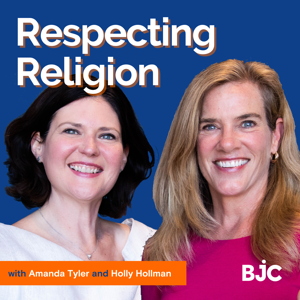


Christian nationalism is one of the great threats to religious freedom in America, and there's a new, comprehensive report on the role it played in the January 6 insurrection. Amanda and Holly take a look at what the report tells us, BJC's experience working with Freedom From Religion Foundation on this expansive project, and the reactions we continue to see. They discuss the different ways people – including researchers – view Christian nationalism, and they talk about what you can do to start to move the needle against this ideology so entrenched in our society.
SHOW NOTES
Segment 1: Why do we need a report on Christian nationalism and January 6? (starting at 00:52)
The new report – Christian Nationalism and the January 6, 2021, Insurrection – is available for free download at the following links:
https://bjconline.org/jan6report/
https://www.christiansagainstchristiannationalism.org/jan6report
https://ffrf.us/jan6report
Watch the webinar releasing the report at this link.
Right after the January 6 attack, Amanda wrote this article for Good Faith Media: An Attack Done in Jesus' Name
You can access the BJC Podcast series called "The Dangers of Christian Nationalism" at this link, including discussion guides for each episode. You can also visit the BJC Podcast feed on your favorite provider and scroll back to those episodes from 2019.
Read and sign the Christians Against Christian Nationalism statement at https://www.christiansagainstchristiannationalism.org/
To learn more about the genesis of the report, see Chrissy Stroop's piece for Religion Dispatches: New Report on (White) Christian Nationalism and the J6 Insurrection Shows Just 'How Dire the Threat Is'
Check out this one-page resource: "What is Christian Nationalism?"
Segment 2: A detailed breakdown of the Christian symbolism at the January 6 attack (starting at 16:38)
We played a clip of Andrew Seidel, a constitutional attorney at the Freedom From Religion Foundation who was the major contributor to the report. This portion of the webinar begins at 29:28.
Segment 3: Responses to the report (starting at 29:56)
Jack Jenkins of Religion News Service covered the report in this article: New report details the influence of Christian nationalism on the insurrection
Sarah Stankorb wrote this article for GEN magazine: White Christian Nationalism's Threat Has Not Gone Away
Here are some actions mentioned that can help move the needle against Christian nationalism:
Respecting Religion is made possible by BJC's generous donors. You can support these conversations with a gift to BJC.
SHOW NOTES: Segment 1: Learning to tell a more honest history and launching the Project on Race and Religious Freedom (starting at 00:44)
We always like hearing your feedback – email Amanda and Holly at [email protected].
For more on Baptist history and BJC's commitment to religious liberty, see the BJC website: https://bjconline.org/mission-history-baptist-heritage/
BJC has been responding to the truth that religious freedom has been white too long. Amanda wrote about what that means last year, including the quote from James Baldwin who coined the idea.
Watch the Rev. Dr. Marvin McMickle's speech at our 2015 luncheon on the 150th anniversary of Juneteenth: https://vimeo.com/131663810
Amanda mentioned Dr. Corey D.B. Walker's work in complicating the narrative of religious freedom. Hear him on a panel at the 2019 BJC Dinner: An Inclusive Approach to Religious Liberty.
Amanda read from the book African Americans and Religious Freedom: New Perspectives for Congregations and Communities, edited by Dr. Walker and Dr. Sabrina Dent.
Segment 2: Resources from recent BJC events on race and religious freedom (starting at 20:03)
The first clip is from Dr. Nicole Myers Turner of Yale University, speaking during Religious Liberty Has Been White Too Long: Voices of Black Scholars, which was our presentation for the 2021 Walter B. and Kay W. Shurden Lectures. You can watch the entire presentation at this link, featuring Dr. Turner, Dr. Teresa L. Smallwood of Vanderbilt Divinity School, Dr. Anthony Pinn of Rice University, and Dr. David Goatley of Duke Divinity School.
Holly also mentioned Dr. Turner's book: Soul Liberty: The Evolution of Black Religious Politics in Postemancipation Virginia
The second clip is from The Most Rev. Michael Curry, Presiding Bishop of The Episcopal Church. He spoke during a webinar called "Democracy and Faith Under Siege: Responding to Christian Nationalism." You can watch that entire presentation at this link.
Our third clip is from the Rev. William Lamar IV, Pastor of Metropolitan African Methodist Episcopal Church in Washington, D.C. This is from a Facebook Live conversation with BJC Director of Education Charles Watson Jr. in 2021 called "What can the American church learn about Black faith freedom?" You can watch their entire conversation at this link, and visit BJConline.org/facebook-live for more conversations in our "Voices of Faith Freedom Series."
We played two clips from Fierce Freedom, a live event held in 2021 featuring the Rev. Dr. Jacqui Lewis. During the clips, we heard from Dr. Lewis and then we heard a clip from a conversation after her presentation, featuring the Rev. Keisha Patrick, who is an attorney and a BJC Fellow. You can watch the entire "Fierce Freedom" presentation at this link.
For other videos and resources, visit our page of resources on race and religious freedom, available at:BJConline.org/race-and-religious-liberty/
Segment 3: Freedom Fighters and Black History Month (starting at 32:38)
Holly and Amanda mention an episode of the Ezra Klein Show, featuring Martha Jones being interviewed by Jamelle Bouie. You can listen and read a transcript at this link.
Follow BJC on Instagram as we share stories of freedom fighters throughout Black History Month. Our handle is @BJContheHill.
Respecting Religion is made possible by BJC's generous donors. You can support these conversations with a gift to BJC.
The Supreme Court's docket is deep with cases impacting religious freedom, and we learned this week that Justice Stephen Breyer plans to retire. What does it all mean? Amanda and Holly take a look at what's facing the Court, including recent oral arguments in the Christian flag case that deserve our attention and a new case about a coach's prayer practice on the football field. They talk about decisions we're waiting for, cases the Court might still take, and cases the Court declined to hear. In segment three, Amanda and Holly discuss the recent hostage crisis at a Jewish synagogue in Texas that happened the day before Religious Freedom Day, highlighting the chasm between the promise and reality of religious freedom today.
SHOW NOTES: Segment one: Changes coming to the Court and a review of the Shurtleff v. Boston argument (starting at 00:54)
NPR broke the news about Justice Breyer's retirement in this piece from Nina Totenberg: Justice Stephen Breyer, an influential liberal on the Supreme Court, to retire
You can see pictures from the opening of our Center for Religious Liberty in 2012, featuring remarks from Justice Breyer, in this photo album.
Amanda and Holly previewed the case of Ramirez v. Collier earlier this season in episode 2, and they talked about the oral arguments in episode 4.
Amanda and Holly previewed Carson v. Makin in episode 5 and reviewed the oral arguments in episode 7.
Amanda and Holly previewed Shurtleff v. Boston in episode 8, and the Court heard oral arguments on January 18.
We played a clip from the Shurtleff v. Boston oral argument featuring Justice Elena Kagan, which begins at 13:20 mark in the audio of the arguments, available on the Supreme Court's website.
Holly spoke to Salon's Kathryn Joyce for this article "Christian flag" case reaches Supreme Court: Is the Proud Boys flag next?
Segment two: Court's docket review: a new case this term and more to come for next term? (starting at 23:02)
Amanda and Holly mention this article from Amy Howe at SCOTUSblog that mentions the Court taking up the case of Kennedy v. Bremerton: Court will take up five new cases, including lawsuit from football coach who wanted to pray on the field
You can also read about Kennedy v. Bremerton in this post on our website: Supreme Court to hear case involving high school football coach's post-game prayer on the field
Segment three: Respecting religious freedom for all, in the face of constant threats (starting at 33:22)
You can read the Virginia Statute for Religious Freedom, signed January 16, 1786, at this link.
Read President Joe Biden's proclamation for Religious Freedom Day at this link.
On Religious Freedom Day 2022, Amanda Tweeted this: Today as we observe Religious Freedom Day, we are mindful of the ongoing threats to houses of worship across this country. We should be free to worship in synagogues, mosques, temples, meeting houses and churches without fear of violence and attack.I'm holding the people of Congregation Beth Israel in my heart as they heal from yesterday's attack, with a grateful heart that the hostages are safe. In solidarity with Jewish communities who live with these ongoing threats. We won't rest until there is faith freedom for all.
BJC Board Member Sofi Hersher Tweeted this after news broke about hostages taken at Congregation Beth Israel in Colleyville, Texas, on January 15, 2022: Resist anyone and anything that seeks to position the hostage situation at Congregation Beth Israel as Jews vs. Muslims.
That kind of reductionist thinking is lazy, untrue, and helps no one.
Here's the NPR interview with Rabbi Charlie Cytron-Walker, from the congregation Beth Israel in Colleyville, Texas: Texas Rabbi who was held hostage says we can't live in fear
Respecting Religion is made possible by BJC's generous donors. You can support these conversations with a gift to BJC.
It's been one year since President Joe Biden took office. What have we seen from his administration in regards to religious liberty? From executive actions to court cases to appointments, Amanda and Holly take a look at this administration's actions that impact faith freedom for all. In segment three, they talk about how President Biden has continued to practice his private faith in a very public role over the past year.
SHOW NOTES:
Segment one: Setting the tone: Executive orders, court cases, and legislation (starting at 01:14)
Amanda and Holly previewed the incoming Biden administration at the end of 2020 with Melissa Rogers in season 2, episode 6: What's next? The Biden administration and religious liberty. They also looked at the Trump administration's record in season 2, episode 4: Grading the Trump administration on religious freedom.
Click here for President Joe Biden's signing statement when he repealed the Muslim and African travel ban.
Amanda and Holly discussed the complicated relationship between vaccine mandates and religious exemptions on episode 3 of this season: What's going on with religious exemptions to COVID-19 vaccine mandates?
Amanda and Holly discussed the oral arguments in Carson v. Makin in episode 7 of this season, and they previewed the case in episode 5.
Amanda and Holly discussed Ramirez v. Collier in episode 2 and episode 4 of this season.
For more on Chí'chil Biłdagoteel (which is translated into English as "Oak Flat") and its sacred importance to the San Carlos Apache Tribe and other tribes, read this article from Chairman Terry Rambler: Save our church from destruction.
Segment two: Presidential appointments and commissions: Substantively and symbolically important (starting at 17:35)
Amanda and Holly mention this article on the diversity in President Biden's appointments, written by Yonat Shimron and published in the Washington Post: Two faiths dominate Biden's cabinet picks
Segment three: Setting a tone and sharing personal faith (starting at 28:25)
Amanda and Holly discussed President Donald Trump's photo op with a Bible in front of St. John's Church in 2020 in season 1, episode 15: Protests, the president and the photo op with a Bible
Amanda and Holly recommended this article from Politico magazine by Ruby Cramer: A Private Matter: Joe Biden's Very Public Clast with this Own Church
Respecting Religion is made possible by BJC's generous donors. You can support these conversations with a gift to BJC.
The Christian flag is at the center of a case the Supreme Court hears next week. Amanda and Holly preview Shurtleff v. Boston, share how this situation made it to the highest court, and look at the central legal question presented before the justices. They discuss the best arguments from both sides that the Court will consider when it determines whether this flagpole outside Boston City Hall is government speech or a public forum. In segment three, Amanda and Holly discuss the Christian nationalism aspects to the case, and they talk about the Christian flag's history, including how this powerful symbol has been appropriated in destructive ways.
SHOW NOTES:
Segment one: Happy New Year and a peculiar case for the Supreme Court (starting at 01:09)
For a discussion of religious liberty and vaccines, listen to episode 3 of this season: What's going on with religious exemptions to COVID-19 vaccine mandates?
Read more about the Shurtleff v. Boston case in this article on BJC's website: U.S. Supreme Court agrees to hear bit do fly Christian flag at Boston City Hall
Segment two: Is the flagpole government speech or a public forum? Arguments and amici (starting at 16:10)
You can see a list of the various parties' amicus briefs filed in Shurtleff v. Boston and read them online on this page provided by SCOTUSblog.
Segment three: The broader context and why it matters (starting at 31:48)
Amanda mentioned this piece by Brian Kaylor and Beau Underwood at Word & Way that shares the history of the Christian flag: Has the Christian flag become a lost cause?
They also released another article with context on this case: The man behind Shurtleff v. City of Boston
For more on the overlap between Christian symbols and white supremacy, check out this webinar from the Christians Against Christian Nationalism initiative: White Christian Nationalism: How Racism Undergirds Christian Nationalism, featuring Dr. Jemar Tisby, Dr. Robert P. Jones, and Amanda Tyler.
Respecting Religion is made possible by BJC's generous donors. You can support these conversations with a gift to BJC.
It's a frustrating day at the Supreme Court when several justices seem not to care about the reasons religion gets special treatment in our constitutional system. Amanda and Holly share audio clips and their reaction to the oral arguments in Carson v. Makin, including spotting some faux outrage from the justices and how six justices seem poised to chart a new and troublesome direction in church-state law. They talk about obvious differences between determining protecting free exercise of religion and requiring taxpayer funding of religious education. In segment three, Amanda and Holly share how they are welcoming the holidays.
Segment one: Why should religion be treated differently? (starting at 00:55):
Amanda and Holly previewed the oral arguments in Carson v. Makin in episode 5: What's the problem with the government funding religious education?
Amanda shared her first impressions of the oral arguments on Twitter. You can read her thread here. You can follow her on Twitter @AmandaTylerBJC.
We played the following clips from the oral arguments, available at this link.
*Michael Bindas, attorney for the challenge to Maine's program: 1:31-2:09
*Justice Brett Kavanaugh and Deputy Solicitor General Malcolm Stewart, arguing on behalf of the Biden administration 1:31:36-1:32:46
Segment two: Is this a choice program? Is there discrimination between different religions? (starting at 14:40)
We played the following clips from the oral arguments, available at this link:
*Christopher Taub, attorney defending Maine's program: 42:54-44:14
*Justice Elena Kagan: 29:15-30:04, and then 30:30-31:17
Segment three: The advent of the holiday season (starting at 29:08)
Amanda and Holly talked about this New York Times piece by Tish Harrison Warren: I'm not ready for Christmas. I need to take a minute.
Amanda wrote a devotional for Word & Way's Unsettling Advent series. You can read her devotional here, and read the entire series here. Subscribe to get future editions sent to your inbox.
Respecting Religion is made possible by BJC's generous donors. You can support these conversations with a gift to BJC.
What do you do when you're around the dinner table or visiting family over the holidays and hear someone share misinformation? How do you have productive conversations and truthful exchanges that bring people together? From fake narratives that drive violence to the mundane myths that build a false foundation, Amanda and Holly talk about common misconceptions they hear, what they see when talking about the dangers of Christian nationalism, and how you can find areas of agreement with others. They share some specific ways they would handle difficult statements in one-on-one conversations. In segment three, Holly and Amanda talk about the pros and cons of online worship from their own experience.
Segment one: Why is misinformation such a problem in Christian communities? (starting at 00:49):
Amanda and Holly discuss this May webinar from the Council on Foreign Relations: Disinformation and Faith Communities, which featured Joan Donovan from the Shorenstein Center on Media, Politics, and Public Policy, along with Ed Stetzer of Wheaton College's Billy Graham Center.
They also mention a piece Stetzer wrote for USA Today in September 2020: "Evangelicals need to address the QAnoners in our midst"
Amanda wrote this column for Baptist News Global about Michael Flynn's troubling comments: If you're paying attention to Christian nationalism, you won't be shocked by Michael Flynn's call for 'one religion under God'
Segment two: Handling difficult conversations with others (starting at 14:28)
Learn more about the Christian Against Christian Nationalism campaign at christiansagainstchristiannationalism.org.
Amanda referenced this summer's webinar: White Christian Nationalism: How Racism Undergirds Christian Nationalism
Amanda read this Tweet from author Kaitlyn Schiess:The problem with the "confront your family about politics on Thanksgiving" thing isn't that we can't influence our families or shouldn't have those conversations, it's thinking one tense dinner will do it.
Long, compassionate faithfulness > "bold" one-time confrontation.
Here are some resources to help combat misinformation from the Christians Against Christian Nationalism website:
Segment three (starting at 28:41): Online and in-person worship services
Amanda and Holly talked about this NPR story by Deena Prichep: Worshipers found religious homes near and far thanks to virtual services
Respecting Religion is made possible by BJC's generous donors. You can support these conversations with a gift to BJC.
A central concern for BJC in protecting faith freedom for all involves keeping the government out of religion, and that principle is at stake at the Supreme Court next week. Holly and Amanda preview the case of Carson v. Makin, talking about the Baptist beginnings of protecting religious liberty, the importance of religious education, the unique school system in the state of Maine, and how this case is different from cases involving school vouchers. After listening to this episode, you'll also be able to impress your friends with trivia about Maine's public school system. In segment three, they talk about a troubling article and share a warning about overreaching arguments.
SHOW NOTES:
Segment one: Why are cases about government funding important? (starting at 00:48)
Holly previewed Carson v. Makin in this article for BJC's winter magazine: Forcing states to fund religion
Amanda mentioned this article in The Atlantic by Kimberly Wehle: The Sleeper SCOTUS Case That Threatens the Separation of Church and State
Holly read from the brief of the attorney general of Maine to describe Maine's public education system and the law that provides school administrative units (SAUs) — alternative ways to ensure every child has an opportunity to receive the benefits of a free public education.
Segment two: Is there a free exercise right to government money? (starting at 17:10)Holly mentioned two recent cases that involved Free Exercise Clause claims challenging government programs:
Trinity Lutheran v. Comer (the playground case): Learn more at BJConline.org/TrinityLutheran
Espinoza v. Montana Dept. of Revenue: Learn more at BJConline.org/Espinoza
Read the brief BJC joined in Carson v. Makin at this link.
Amanda read from James Madison's Memorial and Remonstrance: "Because the Bill implies either that the Civil Magistrate is a competent Judge of Religious Truth; or that he may employ Religion as an engine of Civil policy. The first is an arrogant pretension falsified by the contradictory opinions of Rulers in all ages, and throughout the world: the second an unhallowed perversion of the means of salvation."
Amanda mentioned their conversation about Espinoza on season one, which you can listen to at this link or in your podcast feed.
Segment three: Is Maine discriminating between religions? Spoiler alert: No (starting at 32:31)
You can find the link to the article they mention in The Atlantic article linked in segment one.
Respecting Religion is made possible by BJC's generous donors. You can support these conversations with a gift to BJC.
The Supreme Court brought the execution chamber into the courtroom as it heard arguments about the activities clergy can perform at the moment of death. Amanda and Holly share clips from the arguments in Ramirez v. Collier and discuss issues raised by the justices. From questions about sincerity of religious belief to the key laws that protect the religious exercise of prisoners, hear what the justices focused on and learn about the arguments made by both sides. In segment three, Amanda and Holly discuss the roles of pastors in cases like this and how churches connect with prisoners.
Show notes
Segment one (starting at 00:43):
Amanda and Holly previewed the Ramirez v. Collier case in episode two this season — you can listen to that on your feed and access show notes at this link.
This Texas Tribune article by Jolie McCullough provides a helpful overview of the case: U.S. Supreme Court weighs religion's place in the Texas death chamber.
During the conversation, Amanda and Holly played clips from the oral arguments. You can listen to the entire argument at this CSPAN link.
The clips played in this segment were:
To learn more about the Religious Land Use and Institutionalized Persons Act ("RLUIPA"), visit BJConline.org/RLUIPA.
Segment two (starting at 19:11)
Read the brief BJC joined in the Ramirez v. Collier case at this link.
The clips from oral arguments played in this segment were:
Segment three (starting at 34:48)
Amanda and Holly talked about this article by Robert Barnes in the Washington Post that shares background on the pastor at the center of the case: Supreme Court considers a minister's role at the time an inmate is put to death
Respecting Religion is made possible by BJC's generous donors. You can support these conversations with a gift to BJC.
This week, Amanda and Holly explore questions swirling around vaccine mandates and religious exemptions related to COVID-19. Is there a newfound religious awakening that is leading to new requests? Are people gaming the system? Dive into the issue that is on the mind of employers, government officials and individuals across the country. Amanda and Holly discuss the religious liberty rationale for religious exemptions, the compelling government interest in mandating vaccines and how those values have been balanced in the past and in dealing with the present pandemic. They also talk about some of the difficult decisions employers are facing as they try to keep their workforce safe, healthy and productive. In the third segment, they look at the broader impact of COVID-19, including new reports on the trustworthiness of clergy when it comes to this topic.
Show notes:
Segment one: Why do we have religious exemptions for any laws, and why do we see so many requests right now? (starting at 00:50)
Amanda and Holly discussed the COVID-19 pandemic and its intersections with religion and religious liberty at length in season one. See the following episodes:
Holly wrote an article about religious exemptions to vaccines mandates for BJC's fall 2021 magazine, which you can read at this link.
Segment two: Employers dealing with the novel issue of employees claiming exemptions (starting at 15:17)
Amanda mentioned watching a hearing talking about vaccine mandates — you can read a recap and see clips in this piece on our website: House subcommittees hold joint hearing on vaccine mandates and employee accommodations
Here's a link to the guidance issued by the EEOC about what is required by Title VII: https://www.eeoc.gov/newsroom/eeoc-issues-updated-covid-19-technical-assistance-0
For the latest news on these issues, visit the latest news section of our website.
Segment three: Where are we now with COVID-19, and how are clergy part of the conversation? (starting at 28:43)
Holly mentioned this article by Zeynep Tufekci in the New York Times: The Unvaccinated May Not Be Who You Think
Amanda mentioned this article by Michelle Boorstein in the Washington Post: New survey: Most U.S. churchgoers trust their clergy for covid vaccine guidance, but clergy aren't really offering it
Respecting Religion is made possible by BJC's generous donors. You can support these conversations with a gift to BJC.
From the publisher's feed

9,185 Listeners
3,475 Listeners
6,280 Listeners
7,634 Listeners
9,328 Listeners
1,934 Listeners
8,029 Listeners
5,779 Listeners

15,904 Listeners
10,415 Listeners
1,024 Listeners
815 Listeners
6,922 Listeners
1,741 Listeners
667 Listeners