
Sign up to save your podcasts
Or

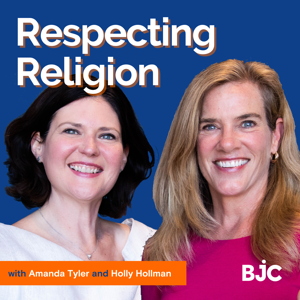


The Supreme Court opened its new term this week, and Amanda and Holly look at where its last decisions are leading us. They provide updates on high-profile decisions, including the praying coach in Washington state who hasn't returned to work yet and the dilemmas facing religious schools in Maine. Amanda and Holly lament how this Court ignores the distinctiveness of religion, despite religion's special status in the Constitution. They view the Court as taking a major risk by leaving lower courts without better guidance. Amanda and Holly also weigh in on discussions regarding the Court's legitimacy and remind us that we can't just count on the Supreme Court to uphold our rights.
Segment 1: Back after first Monday at the Court (starting at 01:07)
You can contact Amanda and Holly with your thoughts on the show by writing to [email protected].
Amanda was live outside the Supreme Court on the first day of the new term, and you can see that video here.
Amanda and Holly wrote about the Supreme Court this week for USA Today: 'Pro-religion'? Conservative Supreme Court abandons long-standing religious liberty principles.
Shurtleff v. Boston: Holly and Amanda discussed the oral arguments during Season 3 in episode 8, and they discussed the decision in episode 16. Ramirez v. Collier: Holly and Amanda previewed the case last season in episode 2, discussed the oral arguments in episode 4, and reviewed the decision in episode 16.
Segment 2: Focusing on the two consequential cases that were overshadowed (starting at 13:27)
Carson v. Makin: Access BJC's resources here.
Kennedy v. Bremerton: Access BJC's resources here.
Holly summarized both decisions in our latest magazine: Supreme Court continues to shift religious liberty landscape.
Amanda and Holly discussed this article by Michelle Boorstein for the Washington Post (which includes comments from Holly): Under right-leaning Supreme Court, the church-state wall is crumbling
Segment #3: What do Amanda and Holly make of conversations about this Court's legitimacy? (starting at 27:46)
See a list of our previous episodes by visiting RespectingReligion.org.
You can also access episodes of Respecting Religion on BJC's YouTube channel. Subscribe today!
Respecting Religion is made possible by BJC's generous donors. You can support these conversations with a gift to BJC.
The Supreme Court is sowing more confusion with its Kennedy v. Bremerton decision, ruling for a public school official and abandoning long-standing Establishment Clause protections in ways that harm the religious freedom rights of students. In our season three finale – and our first episode in front of a live audience – Amanda and Holly discuss the impact of this ruling, and they ponder just what, exactly, would actually constitute "coercion" for this Court. The Supreme Court did not overrule the previous school prayer cases with the decision, but it did gut some of the consensus that protects the religious liberty rights of everyone at public schools. In the second and final segment, Amanda and Holly look to the next Supreme Court term and BJC's plans to continue its work defending faith freedom for all.
The first segment of this episode was recorded in front of a live audience during the Cooperative Baptist Fellowship General Assembly in Dallas, Texas, on June 29, 2022.
Segment 1: A six-justice majority upends settled law (starting at 06:07)
Season three of Respecting Religion won the "Best in Class" award for specialty programming from the Religion Communicators Council's DeRose-Hinkhouse Awards.
You can access BJC's resources on the Kennedy v. Bremerton case by visiting BJConline.org/Bremerton, including BJC's amicus brief in this case.
You can read the Bremerton opinion here, written by Justice Neil Gorsuch. Justice Sonia Sotomayor's dissenting opinion includes photos of the prayer practice at issue (see pages 9 and 10 of the dissent, which are on pages 49 and 50 of the opinion PDF document).
Segment 2: It's "game on" for BJC (starting at 30:09)
Watch the livestream of Holly and Amanda recording the first segment of this podcast during our workshop at the CBF General Assembly at this link.
Holly and Amanda discussed this NPR story by Nina Totenberg: The Supreme Court is the most conservative in 90 years
Holly mentioned this article by Kelsey Dallas for Deseret News: The Supreme Court came together on religion this term. Then, it fell apart
Amanda mentioned our BJC Luncheon, which was held in Dallas on June 30, listening to Indigenous voices on faith freedom. You can watch a video of the program on our YouTube page.
While the podcast is taking a break, BJC is not! Keep up with our work by subscribing to our email list at BJConline.org/subscribe and following us on Twitter, Instagram, Facebook and YouTube.
Respecting Religion is made possible by BJC's generous donors. You can support these conversations with a gift to BJC.
Does the Constitution require our government to fund religion? In a landmark ruling, the Supreme Court says, for the first time, that if a state has a program that includes funding for private schools it must also provide funding for religious schools. In this episode, Amanda and Holly examine the Carson v. Makin decision, which shows how the Supreme Court is shifting further and further away from the Establishment Clause's protections of religious liberty for all. They explore the Court's "bait and switch" to make this radical shift seem not so bad, and they look at all of the reasons the Framers thought it was smart to avoid government funding of religion. In segment three, Amanda and Holly review the latest misleading headlines that conflate "religious liberty" with a promotion of free exercise rights at the expense of Establishment Clause protections.
SHOW NOTES Segment 1: A radical shift in religious liberty law (starting at 03:50)
You can contact Amanda and Holly with your thoughts on the show by writing to [email protected].
Amanda Tweeted her reaction to the Dobbs decision on Friday, June 24. You can see her Tweet thread here.
Holly and Amanda recorded this episode before the Court released its opinion in the Kennedy v. Bremerton case on June 27, 2022. They will analyze that case in the next episode of Respecting Religion.
Access BJC's resources on Carson v. Makin at BJConline.org/CarsonvMakin, including the brief we joined, Holly's article for our winter magazine, and our statement on decision day.
Read the Supreme Court decision in Carson v. Makin at this link.
We mentioned the two recent cases that led to this case:
Segment 2: Where's the Establishment Clause? (starting at 19:18)
Holly and Amanda mentioned these cases when discussing how the Court abandoned the "play in the joints" principle in religious freedom law and the impact of this case in state funding of religious schools:
Amanda quoted from the Virginia Statute for Religious Freedom, written by Thomas Jefferson.
Holly quoted from Memorial and Remonstrance against Religious Assessments, written by James Madison.
Segment #3: More misleading headlines (starting at 33:02)
Amanda and Holly discussed this New York Times newsletter written by Ian Prasad Philbrick: A Pro-Religion Court. It also links to a piece by Adam Liptak with some misleading shorthand, titled Supreme Court Rejects Maine's Ban on Aid to Religious Schools.
Respecting Religion is made possible by BJC's generous donors. You can support these conversations with a gift to BJC.
The United States has a distinctive and increasingly destructive gun culture. In this episode, Amanda and Holly look at how embracing Christian nationalism correlates to opinions on gun control and why conversations about gun reform become more difficult when "God-given rights" are invoked and government-sponsored prayer is advanced as a policy solution after violence. Dive into this nuanced, complicated and emotional issue as our country reels from recent mass shootings and searches for policy solutions.
SHOW NOTES
Segment 1: What is it about Christian nationalism that drives such strong opposition to gun reform? (starting at 00:43)
You can contact Amanda and Holly with your thoughts on the show by writing to [email protected].
We've discussed manifestations of Christian nationalism this season in several episodes, including episode 6, episode 12, and episode 18.
Visit ChristiansAgainstChristianNationalism.org for a statement to sign and additional resources on Christian nationalism.
Amanda and Holly mentioned our 10-part podcast series on the dangers of Christian nationalism and corresponding discussion guide. You can listen to each episode individually at ChristiansAgainstChristianNationalism.org/podcasts, or you can visit our "BJC Podcast" feed and scroll back to episodes from 2019.
The podcast discussion guide is also available at this link.
Amanda mentioned Dr. Samuel Perry and Dr. Andrew Whitehead's book Taking America Back for God: Christian Nationalism in the United States, which uses a model to identify and explain Chrisitan nationalism and its impact on a variety of public policy issues and debates. You can see a quick overview in this one-page document.
Dr. Samuel Perry and Dr. Philip Gorski have a new book out titled The Flag and the Cross: White Christian Nationalism and the Threat to American Democracy.
Dr. Perry's recent article for TIME magazine is School Shootings Confirm That Guns Are the Religion of the Right
Amanda mentioned this article by David French: Against Gun Idolatry. She also referred to this episode of the Good Faith podcast, with David French and Curtis Chang: Gun Violence, Gun Rights & Gun Idolatry.
Segment 2: How do we see Christian nationalism impacting the debate on guns? (starting at 18:00)
Amanda and Holly mentioned this article from Australia by Nicola Heath: Where do religious groups in the US stand on gun control?
Segment #3: Clergy in action (starting at 35:28)
Amanda and Holly mentioned these two articles:
Respecting Religion is made possible by BJC's generous donors. You can support these conversations with a gift to BJC.
It's an election year, and we're already seeing high-profile primaries and debates over the role religion plays in elections. In this episode, Amanda and Holly discuss constructive engagement for religious organizations in elections and voting, discussing terms that often get confused – such as "political" and "partisan" – and the important role of religion and religious people when it comes to advocating for policies. They explain the tax benefit that houses of worship and other charitable organizations receive and what that means when it comes to partisan campaigns. Getting involved in elections is one way you can fight back against Christian nationalism, and this episode talks about the legal rules and the rules of thumb when it comes to making your voice heard in the public square.
SHOW NOTES
Segment 1: What's the difference between being political and being partisan? (starting at 04:22)
You can contact Amanda and Holly with your thoughts on the show by writing to [email protected].
Segment 2: Understanding the tax rules and steering clear of violations (starting at 16:21)
Holly mentioned IRS guidance for churches that is available online. You can see it at this link.
Amanda mentioned the Pew Research poll that shows a majority of both Republicans and Democrats identify as Christians. You can see the full religious landscape study and results at this link.
Holly mentioned BJC's one-page handout with tips for being an advocate instead of a partisan. You can see that here.
For additional resources from BJC on churches and political campaigns – as well as the "Johnson Amendment" – visit BJConline.org/JohnsonAmendment.
Segment #3: An extreme example (starting at 37:22)
Amanda and Holly mentioned this post on our website: Troubling growth of Christian nationalism on display in the pulpit, on the campaign trail
Imagine your house of worship is facing destruction and your elected officials could stop it, but they were more concerned with how others view your sacred space. That's the scenario facing the San Carlos Apache and other tribes in their fight to preserve their sacred land of Chí'chil Biłdagoteel, loosely translated in English as "Oak Flat." In this podcast, learn more about this issue facing our Indigenous neighbors and how you can use your position to make a difference and save sacred land. Just because a religious group doesn't build a steeple, it doesn't mean the sacredness of the land is any less than a church or mosque or other worship site.
Show notes:
Segment 1: Land use and religious freedom (segments starts at 01:12)
RLUIPA is an acronym for the Religious Land Use and Institutionalized Persons Act, which became law in 2000.
Starting at 12:17, we played audio of congressional testimony from Naelyn Pike, a youth Apache Leader. She gave this testimony on March 12, 2020, during a hearing of the Subcommittee on Indigenous Peoples of the United States in the U.S. House of Representatives. You can watch the entire hearing at this link, and her testimony begins at 8:21 in that video.
Segment 2: How did we get here? Sweetheart deals in the NDAA (starting at 18:03)
NDAA stands for the "National Defense Authorization Act," which is the bill that authorizes the annual budget and expenditures of the U.S. Department of Defense.
The Save Oak Flat Act is H.R. 1884/S. 915.
Learn more about Chí'chil Biłdagoteel and the Save Oak Flat Act, including social media posts you can share, at BJConline.org/SaveOakFlat. The individual petition you can sign will be linked on that page in the near future.
Read the letter from more than 100 religious and religious freedom groups sent to Congress asking to Save Oak Flat.
If you would like to contact your members of Congress about co-sponsoring the Save Oak Flat Act, here is a sample script you can use:
Hello, my name is [Name]. I am a constituent and am calling to ask Representative/Senator [Name] to co-sponsor the Save Oak Flat Act. Oak Flat is an ancient sacred site for the Apache and several other tribes in the Southwest. The federal government is giving the land to a foreign mining operation that will totally destroy this holy ground. Oak Flat's sacredness is not lessened because their tradition does not build a steeple to mark it. Will Rep./Sen. [Name] co-sponsor the Save Oak Flat Act?
Not sure who your members of Congress are? Click here to find out.
Segment 3: What can you do to Save Oak Flat? (starting at 34:18)
See a list of 18 ways you can advocate for Oak Flat in this piece by BJC Associate General Counsel Jennifer Hawks on Medium: Celebrate Earth Day 2022 by protecting Oak Flat
Learn more about the Oak Flat Challenge in this article on Medium: What does 1.8 have to do with faith freedom for all?
See examples of the Oak Flat Challenge on Facebook here and in our Instagram highlight here.
Hear from Indigenous voices on faith freedom this summer in Dallas at our BJC Luncheon. On Thursday, June 30, we'll be at the Hyatt Regency Dallas, and you can learn more and purchase a ticket at BJConline.org/Luncheon.
Plus, we'll be doing a live recording of the Respecting Religion podcast on June 29 during our workshop at the CBF General Assembly. There is no cost to attend the assembly in Dallas – learn more at this link.
As always, you can contact Amanda and Holly by writing to [email protected].
Respecting Religion is made possible by BJC's generous donors. You can support these conversations with a gift to BJC.
It's been quite the week for the Supreme Court, releasing a decision in a case we were watching and responding to the unprecedented leak of a draft opinion in a case that captured the attention of the entire country. In this episode, Holly and Amanda break down Monday's ruling in Shurtleff v. Boston – about a city flying a Christian flag – and the recent decision in Ramirez v. Collier – concerning religion in the execution chamber. They also react to the big Supreme Court news this week: the leak of a draft opinion for Dobbs vs. Jackson Women's Health Organization, the case challenging a Mississippi law that restricts abortion. Amanda and Holly share their reactions to what's happening at the Court and preview what's to come.
SHOW NOTES
Segment 1: The leaked Dobbs draft opinion and a decision in Shurtleff v. Boston (segments starts at 00:55, the discussion of Shurtleff begins at 8:16)
Josh Gerstein and Alexander Ward of Politico broke the story with the leaked draft opinion: Supreme Court has voted to overturn abortion rights, draft opinion shows
Amanda and Holly discussed Shurtleff v. Boston on two previous episodes this season: They previewed the oral arguments in episode 8 and reviewed the arguments – and made predictions – in episode 10.
Read the Supreme Court's opinion in the case, written by Justice Stephen Breyer, and the concurring opinions at this link.
Segment 2: Say "yes" unless you have a really good reason to say "no" (starting at 23:41)
The Supreme Court issued its decision in Ramirez vs. Collier on March 24. Amanda and Holly discussed the case in episode 2 and episode 4. Read the Supreme Court's decision, written by Chief Justice John Roberts, the concurring opinions and Justice Clarence Thomas's dissent at this link.
"RLUIPA" is shorthand for the Religious Land Use and Institutionalized Persons Act, which became law in 2000.
The new filing from a district attorney in Ramirez v. Collier is discussed in this New York Times article by Ruth Graham: Days After Setting an Execution Date, a Texas Prosecutor Reverses Course
Segment 3: A rich holiday season (starting at 38:45)
Amanda and Holly mentioned this article by Adelle Banks in Religion News Service: Second gentleman Doug Emhoff touts 'critical' interfaith collaboration
As always, you can contact Amanda and Holly by writing to [email protected].
Respecting Religion is made possible by BJC's generous donors. You can support these conversations with a gift to BJC.
This week, the Supreme Court discussed a coach-led prayer practice on the football field, hearing two very different versions of the facts. Amanda and Holly review Monday's oral arguments in Kennedy v. Bremerton in this podcast, sharing their four takeaways and playing key courtroom exchanges. From the fights over the facts to conflating the rights of students and school officials, there are plenty of moments that caused more than fleeting concerns.
SHOW NOTES:
Segment 1: Get your facts straight (starting at 00:51)
You can see Amanda's videos outside the Supreme Court on oral argument day on Facebook, Twitter and Instagram.
Amanda and Holly previewed Kennedy v. Bremerton in Episode 14.
Americans United for Separation of Church and State represented the Bremerton school district, and Richard Katskee presented their arguments in the courtroom. First Liberty represented Coach Joseph Kennedy, and Paul Clement presented their arguments in the courtroom.
In this segment, we played the following clips, which are all available from the Supreme Court's audio recording of the oral arguments:
You can learn more about Kennedy v. Bremerton and read BJC's brief in the case at BJConline.org/Bremerton.
Segment 2: Tim Tebow, Mohamed Salah, and examples that aren't relevant to this case (starting at 19:30)
Amanda and Holly mentioned several cases about religion and public schools: Tinker v. Des Moines (1969) Santa Fe v. Doe (2000) Engel v. Vitale (1962) Abington v. Schempp (1963) Lemon v. Kurtzman (1971 – origin of the "Lemon test")
In this segment, we played the following clips, which are all available from the Supreme Court's audio recording of the oral arguments:
The American Jewish Committee, the Evangelical Lutheran Church in America, and the General Synod of the United Church of Christ joined BJC's brief, which was co-authored by Professors Douglas Laycock and Christopher Lund.
Segment 3: Where do we go from here? (starting at 40:40)
Holly's reaction to the case was quoted in this article from the Los Angeles Times by David Savage: Supreme Court conservatives lean toward allowing football coach's postgame prayers
Dr. Charles Haynes shared his experience teaching guidelines in the public schools in this piece for Baptist News Global: At the Supreme Court: The First Amendment on the 50-yard-line
Respecting Religion is made possible by BJC's generous donors. You can support these conversations with a gift to BJC.
SHOW NOTES: Segment 1: What is going on in this case? Outlining the facts and setting the record straight (starting at 00:50)
In episode 10, Amanda and Holly discussed Shurtleff v. Boston, the flag-raising case at Boston City Hall.
BJC filed a brief in the Kennedy v. Bremerton case, defending students' rights to religious liberty. You can read the brief here, and read more about it on our website in this article: BJC urges Supreme Court to reject high school coach's defense of on-field prayers with students.
BJC's brief was led by Holly and BJC Associate General Counsel Jennifer Hawks, and it was written by church-state scholars Douglas Laycock and Christopher Lund.
Segment 2: Previewing the oral arguments (starting at 16:30)
Amanda and Holly mentioned several cases involving case law about the rights of government employees and the rights of the government as an employer: Pickering v. Board of Education (1968) Garcetti v. Ceballos (2006)
They also mentioned cases about religion and public schools and speech that are relevant to this case: Good News Club v. Milford Central School (2001) Santa Fe v. Doe (2000) (another case involving prayer at public school football games) Tinker v. Des Moines (1969)
You can read BJC's guidance on religion in the public schools – including consensus guidelines put together by diverse groups in decades past – by visiting BJConline.org/religion-public-schools-resources/.
Segment 3: Religion and sports in our lives today (starting at 33:56)
Amanda and Holly discussed this article by Kelsey Dallas, published by Deseret News: Trying to raise successful kids? Experts say you shouldn't forget about faith
Respecting Religion is made possible by BJC's generous donors. You can support these conversations with a gift to BJC.
The expected and the unexpected came up during Judge Ketanji Brown Jackson's confirmation hearings to be a Supreme Court justice. Amanda and Holly review key exchanges, including questions about her personal religious belief and religious liberty. Plus, they review the jaw-dropping news about texts from Virginia Thomas – wife of Supreme Court Justice Clarence Thomas – on January 6 that showcase the prominence of Christian nationalism in the events and conversations that culminated in the attack on the Capitol.
SHOW NOTES: Segment 1: We're back! What's happened since our last podcast? A review of events and a look at Judge Jackson's nomination (starting at 00:58)
Amanda and Holly previewed the case of Ramirez v. Collier in episode 4 and episode 2 of this season, and they discussed Kennedy v. Bremerton in episode 10.
Read more about the event led by the Progressive National Baptist Convention on the first day of Judge Ketanji Brown Jackson's confirmation hearings in this article from Baptist News Global: PNBC leads call to action for voting rights, democracy
Learn more about the Walter B. and Kay W. Shurden Lectures on our website at BJConline.org/ShurdenLectures
A new Marquette University Law School poll shows the national support for confirming Judge Ketanji Brown Jackson. You can read it at this link.
Read Holly's review of Judge Jackson's record at this link.
Segment 2: Religion in Judge Jackson's hearings (starting at 20:43)
BJC's website has two articles with video clips of the conversations about religion during Judge Jackson's confirmation hearings:
During the podcast, we played clips involving questions from Sen. Lindsey Graham, R-South Carolina; Sen. John Kennedy, R-Louisiana; Sen. John Cornyn, R-Texas; and Sen. Jon Osoff, D-Georgia.
Segment 3: Virginia Thomas and January 6: Texts and Christian nationalism conversations (starting at 41:57)
The Washington Post broke the story in this article by Bob Woodward and Robert Costa article: Virginia Thomas urged White House chief to pursue unrelenting efforts to overturn the 2020 election, texts show
Amanda also tweeted about the jaw-dropping story.
Holly mentioned this opinion piece by Michael Gerson at The Washington Post: What the Ginni Thomas text furor warns about an outsize role of faith in politics
Read the report on Christian Nationalism and the January 6, 2021, Insurrection, a joint project between BJC and the Freedom From Religion Foundation.
Read and sign the Christians Against Christian Nationalism statement online.
Respecting Religion is made possible by BJC's generous donors. You can support these conversations with a gift to BJC.
From the publisher's feed
9,185 Listeners
3,475 Listeners
6,280 Listeners
7,634 Listeners
9,328 Listeners
1,934 Listeners
8,029 Listeners
5,779 Listeners

15,904 Listeners
10,415 Listeners
1,024 Listeners
815 Listeners
6,922 Listeners
1,741 Listeners
667 Listeners