
Sign up to save your podcasts
Or

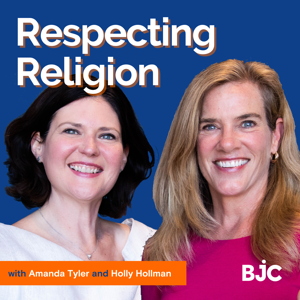


The Texas legislature meets once every two years, and they are spending a great deal of this session on bills that would advance religion. We return to our conversation on the Ten Commandments bill in Texas, as we saw a groundswell of opposition to the bill when it headed to the state House. Amanda and Holly take a look at some viral moments, and we share an exclusive conversation with Texas state Rep. James Talarico, who spoke in opposition to this bill as a lawmaker, a former schoolteacher, and a Christian.
SHOW NOTES: Segment 1 (starting at 00:38): Why are we still talking about this?
Last week's program on the Ten Commandments bill in Texas (Senate Bill 1515) is episode 20 of season 4. You can listen to it on our website.
We played the viral video of state Rep. James Talarico questioning the author of the bill. You can watch it on Twitter.
An advocate in Waco put together this petition opposing SB 1515, available for Texans who oppose the bill as people of faith to sign.
Segment 2 (starting at 12:39): A conversation with Texas state Rep. James Talarico
You can see video clips of the interview with Amanda and Texas state Rep. James Talarico in a Twitter thread she posted. It is also available on YouTube and on a reel posted by the @endchristiannationalism Instagram account.
Segment 3 (starting at 27:32): Putting this discussion into focus
For additional resources on the various ways religions interpret and list the commandments, a chart from New World Encyclopedia shows how different traditions order them. You can see a list of the 613 Mitzvot (Commandments) here. Visit this website for a side-by-side comparison of the Ten Commandments as listed in Deuteronomy 5 and Exodus 20.
We played a clip of Justice Ruth Bader Ginsburg questioning Paul Clement in 2005 during oral arguments in the Van Orden v. Perry case. You can listen to the full argument here, and the clip we played is from 51:24 in the audio recording of the argument.
Respecting Religion is made possible by BJC's generous donors. You can support these conversations with a gift to BJC.
Texas is taking matters into its own hands, going full-on cowboy as it leads the nation in abandoning long-held religious liberty protections. Amanda and Holly review a troubling bill in Texas that would mandate the posting of the Ten Commandments in public school classrooms, and they share how some are trying to use the Kennedy v. Bremerton decision – and removal of the Lemon test – to justify this effort. They also review some surprising moments during a Texas Senate hearing on the bill, including when Baptists discover they have different understandings of their own theology. In the final segment, Amanda and Holly review the religious freedom problem with legislation like this and share ideas for engaging in conversation that can help reframe the issue.
SHOW NOTES: Segment 1 (starting at 00:41): Dueling over the Ten Commandments
Amanda and Holly discuss last year's Supreme Court decision in Kennedy v. Bremerton on episode 21 of season 3.
Amanda and Holly talk about the Lemon test, from the 1971 decision in Lemon v. Kurtzman. They also mention the 1980 Stone v. Graham decision.
The proposal in Texas is Senate Bill 1515, and the text is available online.
Amanda and Holly mentioned this piece by Britt Luby for Baptist News Global: 'Thou shalt not covet thy neighbor's wife' and other posters I do not want in a first grade classroom.
Read Amanda's Tweet about this proposal in Texas.
Segment 2 (starting at 13:28): The Texas Senate hearing on this bill
You can listen to the Texas state Senate hearing on Senate Bill 1515 at this link. We played a clip of Tara Beulah, which appears at 27:13 in that video.
Former BJC Executive Director Brent Walker wrote this piece in 2005 debunking some of David Barton's claims.
You can find resources on Christian nationalism on the website of our Christians Against Christian Nationalism campaign.
Segment 3 (starting at 30:01): Engaging in conversation about the Ten Commandments
In 2005, the two Supreme Court cases dealing with the posting of the Ten Commandments in government settings were McCreary County v. ACLU and Van Orden v. Perry.
Read Holly's preview column, which included ways to engage in conversation about the issue, on page 6 of this magazine: Supreme Court's review of Ten Commandments cases an opportunity for education on religious liberty
After the cases concluded in 2005, Holly wrote this column: Making sense of the Ten Commandments cases
For more resources from BJC on religious displays, visit BJConline.org/religious-displays.
The Respecting Religion podcast was honored with two DeRose-Hinkhouse Awards from the Religion Communicators Council: Best in category for an individual episode, recognizing our episode on the Kennedy v. Bremerton decision, and an award of merit for season 4 of the podcast.
Respecting Religion is made possible by BJC's generous donors. You can support these conversations with a gift to BJC.
The Supreme Court seemed less divided by ideological lines during the Groff v. DeJoy oral arguments, as justices searched for common ground to clarify a standard from a 1977 decision that no advocate seems to be fully supporting. Amanda and Holly share their thoughts from the day, playing key moments from the courtroom in their breakdown of the legal issues and sticking points in the case. What, exactly, constitutes "undue hardship" when looking at the practical realities of the modern workplace and the strain that one worker's need – religious or not – can cause on others?
Segment 1: Statutory stare decisis (starting at 00:47)
Learn more about Groff v. DeJoy on our website: BJConline.org/Groff, which includes a link to the brief BJC joined and Holly's preview column.
Listen to our preview of the case in episode 17: Is 'de minimis' enough?
Holly mentioned this story from Nina Totenberg on NPR: Who bears the burden, and how much, when religious employees refuse Sabbath work?
Visit the Supreme Court's website to listen to oral arguments in Groff v. DeJoy and read a transcript.
At the Supreme Court, Aaron Streett argued on behalf of the petitioner, Gerald Groff, and Solicitor General Elizabeth Prelogar argued on behalf of the United States Postal Service.
We played one clip from the oral arguments during this segment:
Segment 2: A Court looking for common ground to clarify the law (starting at 14:14)
We played five clips from the oral arguments in this segment:
Segment 3: How will the Court fix this problem? (starting at 25:43)
Respecting Religion is made possible by BJC's generous donors. You can support these conversations with a gift to BJC.
Media reports about Christian nationalism are often tied to topline takeaways from research on the political ideology. Amanda and Holly review various definitions of the term "Christian nationalism," look at its connection to – and distinctiveness from – the Christian faith, and talk about why sociological research on this topic matters.
SHOW NOTES: Segment 1: Definitions of Christian nationalism (starting at 00:48)
The Christians Against Christian Nationalism campaign defines Christian nationalism in the statement of principles.
Dr. Andrew Whitehead and Dr. Samuel Perry defined Christian nationalism in their 2020 book Taking America Back for God: Christian Nationalism in the United States. You can also see their definition on a 1-page handout available on the Christians Against Christian Nationalism website.
Dr. Jemar Tisby shared his definition in a recent Substack post: A Virtual Roundtable on the Threat of Christian Nationalism, Part 2 of 4
Dr. Anthea Butler defined white Christian nationalism in her contribution to Christian Nationalism and the January 6, 2021, Insurrection. Her section is on pages 4-6.
Russell Moore defined Christian nationalism in this piece for Christianity Today: Christian Nationalism Cannot Save the World
Dr. Paul Miller defined Christian nationalism in this piece for Christianity Today: What is Christian nationalism?
Segment 2: What's "Christian" about Christian nationalism? (starting at 16:08)
Amanda and Holly discussed this piece from The New Yorker by Kelefa Sanneh: Under God: How Christian is Christian nationalism?
Segment 3: Why do polling results matter? (starting at 24:12)
The PRRI/Brookings survey discussed is called A Christian Nation? Understanding the Threat of Christian Nationalism to American Democracy and Culture
Respecting Religion is made possible by BJC's generous donors. You can support these conversations with a gift to BJC.
A spring Supreme Court case is bringing together some unlikely allies. Amanda and Holly preview Groff v. DeJoy, which examines the federal statutory protection against religious discrimination in the workplace. They review the facts of the case, which involves a postal worker who has a religious belief he cannot work on the Sabbath, and they share why a "de minimis standard" set in a 1977 case is way too low. Not all impacts on coworkers are "undue hardships," and Amanda and Holly share why we need a standard that works for everyone.
SHOW NOTES Segment 1: The facts of this case (starting at 00:37)
Visit BJConline.org/Groff for a full list of resources on Groff v. DeJoy.
Holly wrote an article for our spring magazine on the case: The Supreme Court's latest religion case offers opportunity to restore statute's meaning
Segment 2: Considering a better standard (starting at 14:55)
BJC joined an amicus brief in this case, led by the Church of Jesus Christ of Latter-day Saints. Other organizations joining the brief are the United States Conference of Catholic Bishops, National Association of Evangelicals, Ethics and Religious Liberty Commission of the Southern Baptist Convention, and ADL (Anti-Defamation League). Segment 3: What do we expect in oral argument? (starting at 25:06)
The Supreme Court will hear this case April 18, and we'll have an episode dedicated to the oral argument.
Respecting Religion is made possible by BJC's generous donors. You can support these conversations with a gift to BJC.
Schoolhouse Rock left out a key way laws are made: The regulatory process. Amanda and Holly discuss the federal regulatory and rulemaking process and review some recent proposals and final rules from the Biden administration, including a proposed rule from nine different agencies and a final rule from the Department of Labor. They also review how these rules have changed through the Bush, Obama and Trump administrations, and they talk about the importance of balancing everyone's rights when using government money to serve people in need.
SHOW NOTES: Segment 1: How does this process work? (starting at 00:51)
Amanda mentioned this article by Annie Lowrey for The Atlantic: The Time Tax
Holly and Amanda mentioned the BJC Advocacy Team, a group of people who get email alerts about opportunities to reach out to government officials to make themselves heard. You can join up by signing up for BJC's email list and checking the box to join the BJC Advocacy Team.
The Federal Register – which contains notices and proposed rules – is available online.
Segment 2: Three areas of proposed regulations where BJC filed comments (starting at 10:12)
As mentioned, The White House Office of Faith-Based and Community Initiatives under the Bush administration was sometimes abbreviated "WHOFBCI," which some pronounced as "Whoof-book-ee."
For more on regulations proposed by the Trump administration, listen to episode 4 of season 1 of the podcast: On the Regs: Faith-based regulations from the Trump administration
For some additional history of the White House's faith-based office, read this 2015 article by Holly Hollman: BJC weighs in on proposed faith-based regulations, affirms progress
Learn about the new proposed regulations from the Biden administration in this post on our website: Biden administration proposes new rules reinstating important religious liberty protections for beneficiaries of federal funds
Segment 3: A finalized regulation on federal contractors (starting at 29:58)
Amanda read the statement from Holly that BJC released February 28 reacting to the final rules from the Department of Labor.
For more information on this topic, visit the website of the Office of Federal Contract Compliance Programs from the Department of Labor. It includes additional details and resources on Executive Order 11246, which bars discrimination in federal contracting.
Respecting Religion is made possible by BJC's generous donors. You can support these conversations with a gift to BJC.
From New York City Mayor Eric Adams to several individuals at CPAC, we've recently heard new, troubling comments from public leaders that show – once again – the prominence of Christian nationalism and the dangers it poses to public debate. Amanda and Holly provide some "Separation of Church and State 101" in this episode to clear up confusion about the term and what it really means. They also share examples of people working together across ideological divides to combat Christian nationalism.
SHOW NOTES Segment 1: Troubling comments from New York City Mayor Eric Adams (starting at 00:51)
We played two clips from this speech Mayor Eric Adams gave at an interfaith breakfast. The first clip begins at 51:31 in the video, and the second begins at 44:36.
Read the full response from Rachel Laser, CEO of Americans United for Separation of Church and State, at this link.
Read Amanda's Tweet in response to Mayor Adams here. It also appeared in this column from Jennifer Rubin for The Washington Post: Eric Adams wades into church-state quicksand.
Watch Mayor Adams on CNN's State of the Union with Dana Bash at this link.
Segment 2: Concerns from CPAC (starting at 12:56)
See video of Rep. Marjorie Taylor Greene's remarks at CPAC in this Tweet from Religion News Service reporter Jack Jenkins.
Amanda and Holly mentioned this photo essay from The New York Times on CPAC, with words by Jane Coaston and photos by Damon Winter.
Amanda quoted this Tweet from conservative commentator Bill Kristol on the remarks from Michael Knowles at CPAC.
Amanda denounced Michael Knowles' call for the elimination of transgenderism in this Tweet.
Segment 3: We don't have to agree on everything to work together (starting at 24:59)
Amanda mentioned attending the Principles First Summit. Learn more at this link.
Learn more about BJC's Christians Against Christian Nationalism campaign and check out resources on the campaign's website.
Amanda and Holly mentioned this book by Dr. Paul Miller: The Religion of American Greatness: What's Wrong with Christian Nationalism
Respecting Religion is made possible by BJC's generous donors. You can support these conversations with a gift to BJC.
From curriculum debates to the posting of "In God We Trust," we're seeing the political ideology of Christian nationalism impacting religious freedom in our public schools. During Public Schools Week, Amanda and Holly review recent controversies and discuss the important role our nation's public schools play in serving all people and educating 90% of American schoolchildren. They also discuss why some schools would rather teach a misleading version of history and shut down any conversation by calling on the "boogeyman" of Critical Race Theory.
SHOW NOTES Segment 1: A proliferation of bills pushing Christian nationalism in public schools (starting at 00:49)
Learn more about Public Schools Week on this website.
We played a clip of Amanda's testimony before Congress in December 2022 during a hearing titled "The Evolution of Anti-Democratic Extremist Groups and the Ongoing Threat to Democracy," led by the House Oversight Subcommittee on Civil Rights and Civil Liberties. Watch her full testimony at this link.
Amanda and Holly mentioned this "super-thread" on Twitter from Bryan Kelley, a policy analyst, of bills being introduced in state legislatures which have a component that combines religion and public education.
Segment 2: What's the role of religion in public schools? (starting at 14:45)
Visit BJC's collection of resources on religion in the public schools at this link.
Amanda and Holly mentioned an article by the Rev. Jennifer Hawks, BJC's associate general counsel, that was published in Good Faith Media: Strong public schools fight Christian nationalism
Segment 3: Other opportunities to support public schools (starting at 23:25)
Watch the webinar on advancing religious freedom in public schools, featuring Maggie Siddiqi, Director of the Center for Faith-based and Neighborhood Partnerships at the U.S. Department of Education, and the Rev. Dr. Brian Kaylor, President and Editor-in-Chief of Word&Way.
Respecting Religion is made possible by BJC's generous donors. You can support these conversations with a gift to BJC.
How can we best understand the overlap of white supremacy and Christian nationalism? The Rev. Dr. Jonathan C. "Jay" Augustine joins Amanda and Holly for a wide-ranging conversation during Black History Month as we explore the way Christian nationalism devalues Blackness in our country. A pastor, preacher, lawyer and author, Dr. Augustine shares the differences between racial discrimination and ethnic discrimination we see throughout American history as well as the polarization and "otherism" we see today. He also reviews the various methods of reconciliation and what we all can learn from the Black Church as we seek to envision a just society and embrace a fuller understanding of religious freedom, including its ability to liberate.
SHOW NOTES
Segment 1: How to have a religious freedom conversation that respects all (starting at 00:43)
Learn more about the work of the Rev. Dr. Jonathan C. "Jay" Augustine by visiting his website.
Dr. Augustine delivered BJC's 2022 Walter B. and Kay W. Shurden Lectures on Religious Liberty and Separation of Church and State. You can watch all three presentations on our YouTube channel:
Dr. Augustine's new book is titled When Prophets Preach: Leadership and the Politics of the Pulpit (Fortress Press, 2023). It will be released March 28, and you can pre-order it from Amazon or from Fortress Press.
Segment 2: Christian nationalism's white-centric idea of belonging (starting at 12:47)
Amanda mentioned the Christians Against Christian Nationalism statement and the line in it that says the ideology "overlaps with and provides cover for white supremacy and racial subjugation." Read the entire statement online at ChristiansAgainstChristianNationalism.org
Holly mentioned Dr. Augustine's previous book, which is Called to Reconciliation: How the Church Can Model Justice, Diversity, and Inclusion (Baker Academic, 2022). It is available wherever books are sold, including Amazon.
Segment 3: What can everyone learn from the Black Church? (starting at 30:07)
Amanda mentioned remarks by Dr. Jemar Tisby during an event at The Brookings Institution. BJC Tweeted out a clip of his remarks, available here.
Respecting Religion is made possible by BJC's generous donors. You can support these conversations with a gift to BJC.
Accusations of antisemitism and Islamophobia tend to spark and exacerbate divisions in our world. Amanda and Holly discuss two recent controversies that featured accusations of religious bias: The removal of Rep. Ilhan Omar from a congressional committee and a depiction of the Prophet Muhammad shown in an art history class. They look at the under-discussed parts of these controversies, implications for the future, and how we balance the right to religious belief and expression with respect for others' beliefs.
SHOW NOTES
Segment 1 (starting at 00:55): A vote to remove Rep. Ilhan Omar from a congressional committee
Holly and Amanda discussed this article by Karoun Demirjian in The New York Times: House Ousts Ilhan Omar From Foreign Affairs Panel as G.O.P. Exacts Revenge
Amanda read a statement from former Rep. John Yarmuth via Twitter.
Segment 2 (starting at 11:39): A professor, ancient art and campus controversy
Amanda and Holly discussed this in-depth article by Vimal Patel in The New York Times on the controversy at Hamline University: A Lecturer Showed a Painting of the Prophet Muhammad. She Lost Her Job.
For more on blasphemy laws and BJC's work against them:
BJC and others speak out against blasphemy laws, covering a congressional briefing in 2018
U.S. House Supports International Religious Freedom Resolution by the Rev. Jennifer Hawks, associate general counsel at BJC
Read the lawsuit filed by professor Erika López Prater, Ph.D., at this link.
Holly and Amanda mentioned this article by Yonat Shimron in Religion News Service: Hamline University retracts 'Islamophobia' charge as instructor sues
Segment 3 (starting at 31:12): What have we learned from these controversies?
Holly mentioned a program called "Protecting Academic Freedom, Empowering Muslim Students After the Hamline Controversy," led by Rutgers Law Professor Sahar Aziz for the Rutgers Center for Security, Race, and Rights. It is available to watch on YouTube.
Amanda mentioned this open letter from Muslims for Progressive Values.
Respecting Religion is made possible by BJC's generous donors. You can support these conversations with a gift to BJC.
From the publisher's feed

9,185 Listeners
3,475 Listeners

6,280 Listeners
7,634 Listeners
9,328 Listeners
1,934 Listeners

8,029 Listeners
5,779 Listeners

15,904 Listeners
10,415 Listeners
1,024 Listeners
815 Listeners
6,922 Listeners
1,741 Listeners

667 Listeners