
Sign up to save your podcasts
Or

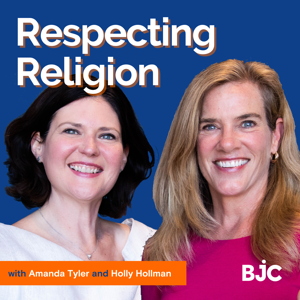


What is the role of churches and other houses of worship in protecting democracy? This topic usually comes up because of bad actors that overstep into partisanship, but today's show looks at how faith communities can help our elections run smoothly. Holly Hollman speaks with Chris Crawford of Protect Democracy – a nonprofit, cross-ideological organization that has a new playbook to help faith communities ensure "all eligible voters can access a ballot and every valid vote is counted." Learn more about how people of faith can love their neighbors and take active roles in protecting our system of government.
SHOW NOTES: Segment 1 (starting at 00:45): Working across differences without papering over them
Read more about Chris Crawford at this link.
Protect Democracy and Interfaith America partnered to help faith communities to serve their communities during the 2024 election. Click here to access the Faith in Elections Playbook, and learn more about Protect Democracy at this link.
Protect Democracy's guide for recognizing authoritarianism is available at this link.
Segment 2 (starting at 11:49): The Faith in Elections Playbook
Chris Crawford mentioned A More Perfect Union: The Jewish Partnership for Democracy. Learn more about their work on their website.
Chris Crawford mentioned PowerThePolls.org as a resource to learn more about being a poll worker.
Segment 3 (starting at 31:03): Religious freedom and protecting our democracy
Respecting Religion is made possible by BJC's generous donors. You can support these conversations with a gift to BJC.
Now that the first votes have been cast in the presidential primaries, Amanda Tyler and Holly Hollman look at some of the troubling statements and activities on the campaign trail concerning the role of religion and religious freedom – from both Democrats and Republicans. While candidates are – and should be – free to talk about the ways their faith inspires them, there are some red lines when it comes to politicking in houses of worship with tax-exempt resources or using political power as a way to impose religion on others.
SHOW NOTES Segment 1 (starting at 00:38): What makes someone "religious" according to voters?
Amanda and Holly mentioned the following articles:
Trump's biggest Iowa gains are in evangelical areas, smallest wins in cities by By Dan Keating, Adrian Blanco and Clara Ence Morse for The Washington Post
Trump Is connecting with a different type of evangelical voter By Ruth Graham and Charles Homans for The New York Times
Most Republicans think Donald Trump is a person of faith. We asked why by Samuel Benson for Deseret News
There's a seed of truth in the 'God Made Trump' ad. But his acolytes don't see it. by Guthrie Graves-Fitzsimmons for MSNBC.com. It includes a link to the "God Made Trump" campaign video
Amanda and Holly discussed the "God Made a Fighter" video for the 2022 gubernatorial campaign of Ron DeSantis in episode 6 of season 4: Evaluating Christian nationalism as a campaign strategy.
Amanda and Holly discussed the ReAwaken America tour in episode 22 of season 4.
Read more about Speaker Mike Johnson and Steve Bannon debating "God's will" in this article by Mark Wingfield for Baptist News Global: Mike Johnson and Steve Bannon spar over whether it is 'God's will' that Joe Biden is president
Segment 2 (starting at 23:05): A war on Christians? Trump's promises if he returns to office
Holly mentioned this piece by Meryl Kornfield, Colby Itkowitz, Hannah Knowles and Marianne LeVine for The Washington Post: Ordained by God: Trump's legal problems galvanize Iowa evangelicals
Read more about former President Donald Trump's promises if he returns to office in this pice by Sarah Posner for MSNBC.com: Trump just promised an authoritarian 'task force' to impose Christian ideology
Segment 3 (starting at 31:47): President Biden at Mother Emanuel Church
Amanda mentioned this piece by Ken Macon for MSNBC.com on President Biden's appearance at Mother Emanuel AME Church: It's protesters, not politicians, who keep the history of Mother Emanuel AME alive
BJC has a one-page explainer of how houses of worship and other religious nonprofits can how to use their prophetic voice in the political process while maintaining their 501(c)(3) tax status. Click here to access the PDF, called "Advocates, not partisans."
Respecting Religion is made possible by BJC's generous donors. You can support these conversations with a gift to BJC.
What is the cost of speaking out against Christian nationalism? In this episode, Amanda Tyler talks with Rob Reiner and Dan Partland, two people behind a new film that discusses the dangers of Christian nationalism to the country, to the faith, and to pluralism. They share candidly about what they learned while making "God & Country," the cost for Christians who are speaking out against the political ideology, and what new conversations they are hoping to create with this film.
SHOW NOTESSegment 1 (starting at 00:35): Rob Reiner and Dan Partland on Christian nationalism
"God & Country" will be in theaters on February 16. Learn more at GodAndCountryTheMovie.com.
The phrase "separation of church and state" is not in the U.S. Constitution, but the concept is laid out several times, including Article VI's prohibition on any religious test for office, the First Amendment's prohibition of a government establishment of religion, and the First Amendment's guarantee of the free exercise of religion. Read more in Brent Walker's "Top 5 Myths of the Separation of Church and State."
Learn more about the Christians Against Christian Nationalism campaign – a project BJC began in 2019 – by visiting ChristiansAgainstChristianNationalism.org.
Segment 2 (starting at 20:58): Post-screening Q&A with Partland and Reiner
BJC and the Freedom From Religion Foundation released a comprehensive report on the role of Christian nationalism in the January 6 attack on the Capitol. You can access it here.
Dan Partland mentioned The Power Worshippers, a book by Katherine Stewart on the rise of religious nationalism. It serves as a basis for the movie.
Segment 3 (starting at 41:18): Closing
Michelle Boorstein covered the screening for The Washington Post in this article: 'God & Country' film spotlights Christian nationalism's threat to democracy
Respecting Religion is made possible by BJC's generous donors. You can support these conversations with a gift to BJC.
In honor of Martin Luther King Jr. Day, we look back at the history of the holiday and the international context at the time of its first official celebration. On today's podcast, hear from Coretta Scott King, speaking just months after the country's first commemoration of the holiday in 1986. After Dr. King's assassination in 1968, she led the charge to establish her husband's birthday as a national holiday. In this presentation, Mrs. King talks about the first celebration, plans for future celebrations, and some of her work promoting peace and freedom around the world.
Segment 1 (starting at 00:36): The first and second celebration of Martin Luther King Jr. Day
Mrs. Coretta Scott King's speech is from BJC's 20th National Religious Liberty Conference, held in October 1986.
Read the biography of Coretta Scott King on the website of the King Center at this link.
The theme for the 2024 King Holiday Observance is 'Shifting the Cultural Climate through the Study and Practice of Kingian Nonviolence.' Visit the website of the King Center to learn more, including a list of different ways you can honor the day.
The Progressive National Baptist Convention was the denominational home of the Rev. Dr. Martin Luther King Jr. Read more about their history at this link on their website.
"The King Center" is the name commonly used for the Martin Luther King, Jr. Center for Nonviolent Social Change, which was established by Mrs. King in 1968.
Segment 2 (starting at 06:18): International work for nonviolence
Segment 3 (starting at 18:09): Hopes and plans for future celebrations
Segment 4 (starting at 23:26): Closing
Click here to listen to a presentation from former Rep. Barbara Jordan during this same 1986 event, which we presented in episode 7 of this season.
Respecting Religion is made possible by BJC's generous donors. You can support these conversations with a gift to BJC.
Justice Sandra Day O'Connor showed a thoughtful approach toward religious liberty issues during her time on the bench, upholding both the Free Exercise Clause and the Establishment Clause. Paying tribute to her soon after her passing on December 1, Amanda Tyler and Holly Hollman remember Justice O'Connor's contributions and talk about her legacy, sharing personal reflections as well as wisdom from Justice O'Connor that holds true today. They also look at her controversial endorsement test and how the Supreme Court has shifted – both the law and in terms of public opinion – after her retirement. Amanda and Holly also take a moment to share what we learned about you, our listeners, from this year's Spotify Wrapped.
SHOW NOTES: Segment 1 (starting at 00:38): The life of Justice Sandra Day O'Connor
Here are a few remembrances of Justice Sandra Day O'Connor:
Justice O'Connor's funeral was a private event at the Washington National Cathedral, but it is available for the public to view on the Cathedral's YouTube page.
Segment 2 (starting at 15:41): Justice O'Connor on church-state cases
Supreme Court Justice Sandra Day O'Connor leaves legacy of civic-minded church-state jurisprudence by Don Byrd for BJC's website
Amanda and Holly mentioned the following cases:
Segment 3 (starting at 26:49): The ongoing impact of Justice O'Connor
Amanda and Holly mentioned that Justice O'Connor was one of the authors of the plurality opinion in Planned Parenthood v. Casey (1992)
Amanda and Holly discuss this article from Linda Greenhouse for The New York Times: "What Sandra Day O'Connor got wrong"
Segment 4 (starting at 35:31): Who are your fellow listeners?
See our Spotify Wrapped on Instagram at this link.
Our most popular podcast on Spotify in 2023 was Episode 22 of Season 4, discussing the ReAwaken America tour. Our most shared one was Episode 23 of Season 4 on the myth of American "chosenness."
Respecting Religion is made possible by BJC's generous donors. Use this special link to support these conversations, and thank you for listening!
In part two of our conversation on school vouchers, Amanda Tyler and Holly Hollman look at who really wants the troublesome programs, and why. They discuss how court decisions are chipping away at constitutional boundaries and dive into the policy debates and political fights over school vouchers that are pitting communities against each other. Plus, they share the origins of some of the language used in these conversations and why Texas – surprisingly – hasn't passed a voucher program.
SHOW NOTES Segment 1 (starting at 00:38): Analyzing Zelman and cases chipping away at constitutional boundaries
Listen to part one of this conversion in episode 8 of season 5.
Holly and Amanda discuss the ruling in the 2002 case of Zelman v. Simmons-Harris. You can read the opinion and dissent here.
They mention a trilogy of cases that came later – click the case name for more information, including podcast episodes:
Trinity Lutheran v. Comer (2017) Espinoza v. Montana Dept. of Revenue (2020) Carson v. Makin (2022)
Segment 2 (starting at 06:04): Policy debates and political fights
Holly and Amanda mentioned the following articles:
Amanda and Holly discussed Texas Gov. Greg Abbott's push for school vouchers in episode 1 of this season.
Learn more about Pastors for Texas Children and their work countering vouchers by visiting their website.
Segment 3: (starting at 24:00): Additional resources on vouchers
Here are some additional resources from BJC on school vouchers:
You can also access additional resources on religion and public schools at this link on our website.
Respecting Religion is made possible by BJC's generous donors. You can support these conversations with a gift to BJC.
School voucher programs across the country seek to divert taxpayer money to religious schools, which raises significant concerns for religious freedom advocates. In part one of this two-part episode, Amanda Tyler and Holly Hollman explore the problematic issue of school vouchers. They talk about the various iterations of vouchers and the many issues they can create, including their coercive nature. Plus, they look at the first time the Supreme Court upheld a voucher program and what that ruling actually says.
SHOW NOTES: Segment 1 (starting at 00:38): What is the problem with the government funding of religion?
Amanda and Holly talked about the Texas chaplain bill in episode 5: An alarming push to put chaplains in public schools
Segment 2 (starting at 12:33): What are school vouchers?
Segment 3: (starting at 19:37): Exploring Zelman and the chain of causation
Holly and Amanda review the ruling in the 2002 case of Zelman v. Simmons-Harris. You can read the opinion and dissent here.
Respecting Religion is made possible by BJC's generous donors. You can support these conversations with a gift to BJC.
American trailblazer Barbara Jordan delivered a powerful speech on the role of churches in shaping public policy at a BJC event in 1986. We're bringing you this special presentation because her words resonate for our political climate today. Congresswoman Jordan notes that the institutional separation of church and state must be maintained, but that doesn't mean the two can't interact. She gives a strong case for Christian citizenship and being active in the policy realm. Plus, her wide-ranging Q&A covers nuclear conflicts, the "wall of separation" metaphor, and more.
SHOW NOTESSegment 1 (starting at 00:34): Barbara Jordan's 1986 speech on the church and public policy
Barbara Jordan's speech is from BJC's 20th National Religious Liberty Conference, held in October 1986.
Learn more about Barbara Jordan from the following sources:
Biography from the Barbara Jordan Center
Biography from the Smithsonian National Museum of African American History and Culture
Article about Barabara Jordan written by William Broyles and published by Texas Monthly (1976)
Barbara Jordan's obituary in The New York Times, written by Francis X. Clines (1996)
During her speech, Congresswoman Jordan mentions the letter from Thomas Jefferson to the Danbury Baptists (1802). You can read it on the website of the Library of Congress.
Segment 2 (starting at 23:26): Q&A on nuclear conflict, the "wall of separation," advocacy, and more
The audience members who asked questions did not have microphones, so we just shared the host's repetition of questions in this segment. In two instances, Barbara Jordan repeated the question herself (at 32:22 and 33:58).
Segment 3 (starting at 40:29): Wrapping up today's show
Respecting Religion is made possible by BJC's generous donors. You can support these conversations with a gift to BJC.
Thirty years ago today, President Bill Clinton signed the Religious Freedom Restoration Act (RFRA) into law. It was a monumental event in religious liberty law at the time, and it remains part of an even more complex legal landscape of religious exemptions today. Amanda Tyler and Holly Hollman look at the standard set by RFRA and discuss how the law has been used in cases dealing with issues ranging from sacramental drug use to application of health insurance regulations. They discuss the non-controversial applications of RFRA, too, and the search for win-win solutions to complicated situations that arise in a religiously pluralistic society.
SHOW NOTES Segment 1 (starting at 00:38): The need for and passage of RFRA
Learn more about the Religious Freedom Restoration Act (RFRA) on BJC's website: BJConline.org/RFRA
Holly wrote a column on RFRA for Word&Way's "A Public Witness" newsletter, and you can read it here: Revisiting RFRA 30 years later
Read the text of the federal Religious Freedom Restoration Act at this link.
Amanda mentioned these two "high water mark" cases in the period before 1990: Sherbert v. Verner (1963) and Wisconsin v. Yoder (1972).
The 1990 Employment Division v. Smith is the case often known as the "peyote case." We played audio from Justice Antonin Scalia reading the opinion of the Court from the bench, which you can listen to and read at this link.
Watch the signing ceremony for RFRA on November 16, 1993, at this link on the YouTube channel of the William J. Clinton Presidential Library.
Holly mentioned this printed resource available on our website, produced for the 20th anniversary of RFRA.
Segment 2 (starting at 14:16): Twists and turns of RFRA over 30 years
Amanda mentioned the 1997 case that struck down RFRA as applied to the states: City of Boerne v. Flores.
The Religious Land Use and Institutionalized Persons Act of 2000 (RLUIPA) has the same standard as RFRA, but it has not been the subject of so many controversies.
Holly and Amanda mentioned three other RFRA cases: Gonzales v. O Centro Espírita Beneficente União do Vegetal in 2006 (also known as the "UDV" case), Tanzin v. Tanvir in 2020, and Burwell v. Hobby Lobby Stores in 2014.
Holly wrote about the application of RFRA to corporations in light of the Hobby Lobby decision in 2014: Examining RFRA in light of Hobby Lobby
J. Brent Walker, former executive director of BJC at the time, wrote about the Hobby Lobby decision in 2014: Exploring Hobby Lobby's narrow victory
Segment 3 (starting at 32:28): The state of RFRA today
Here are additional resources from BJC providing more context on the application of the Religious Freedom Restoration Act:
Podcasts:
Video:
Resources from BJC on cases:
Additional reading:
Respecting Religion is made possible by BJC's generous donors. You can support these conversations with a gift to BJC.
A new Texas law allows public schools to replace counselors with chaplains. In this wee's episode, discover why Texas chaplains are voicing their opposition. Amanda Tyler and Holly Hollman discuss SB 763 and their concerns about government-sponsored proselytization in public schools. They discuss the group behind this law and how Texans are resisting its implementation in their local communities. School districts have until March 1, 2024 to vote on creating chaplain programs. The only qualification to serve as a "chaplain" is to pass a criminal background check.
SHOW NOTES
Segment 1 (starting at 1:55): The group behind the push for this law
The Texas Tribune's Robert Downen and Brian Lopez looked into Rocky Malloy's troubling work: Key supporter of Texas school chaplain bill has pushed for evangelism in schools
Segment 2 (starting at 7:07): Texas chaplains respond to this law
You can read the letter from chaplains opposing chaplains in public schools at this link.
Read a story about Texans opposing the school chaplain law in the Dallas Morning News, an op-ed from two Texas clergy in the Austin American-Statesman, or the transcript of a radio segment that aired on National Public Radio.
Segment 3 (starting at 20:10): What can you do?
Find more information about how to get involved on the BJC website.
If you're a chaplain living in or educated in Texas, add your name to the letter from Texas chaplains here.
The petition for Texans of faith opposing law can be accessed here.
The petition for people of faith across the country opposing any attempt to bring public school chaplains to their state can be found here.
Advocates who want information about how to make a difference in their Texas school district can fill out this form.
A short video about the law and how-tos on advocacy to school boards is available on our YouTube channel.
Respecting Religion is made possible by BJC's generous donors. You can support these conversations with a gift to BJC.
From the publisher's feed

9,185 Listeners
3,475 Listeners
6,280 Listeners
7,634 Listeners
9,328 Listeners
1,934 Listeners
8,029 Listeners
5,779 Listeners

15,904 Listeners
10,415 Listeners
1,024 Listeners
815 Listeners
6,922 Listeners
1,741 Listeners
667 Listeners