
Sign up to save your podcasts
Or

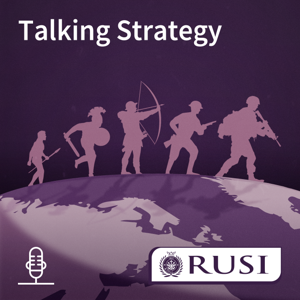

In the first instalment of the new season of Talking Strategy, Paul and Beatrice are joined by Dr Peter Lorge, Associate Professor of Premodern Chinese and Military History at Vanderbilt University.
The enigmatic Chinese text that took its definitive form in the third century BC was not discovered in Europe until shortly before the French Revolution and, significantly, by a French missionary. The document's thoughts on strategy – such as the ideal of winning without giving battle – diverged strongly from those of the battle-obsessed West. Barely remembered for centuries, Sun Tzu's ideas went through a staggering renaissance in the 20th century, inspiring Mao Zedong and strongly impacting Western thinkers who were struggling to come to terms with the Chinese Communist insurgency's triumph in China and the US defeat in Vietnam.
Sun Tzu's approach is that of a rationalisation and planning of warfare. His text advocates evaluating a conflict ahead of time, supposing that one can know its dimensions with reasonable accuracy, and largely excluding contingency. Famously, it says that one should know oneself and one's enemy, by implication also foreseeing the outcome of all military exchanges. The text thus falls into the category of those, like Christine de Pizan's and Machiavelli's works, that argue in favour of prudent planning in the belief that this can minimise risk and uncertainty.
Dr Peter Lorge is an Associate Professor of Premodern Chinese and Military History at Vanderbilt University. He is the author or editor of nine books, most recently The Beginner's Guide to Imperial China (2021), and perhaps most famously The Asian Military Revolution: from Gunpowder to the Bomb (CUP 2008). Dr Lorge has two forthcoming books: Documents From Early Chinese History, a sourcebook for premodern Chinese history written with Scott Pearce, and Sun Tzu in the West: The Anglo-American Art of War, which explores both the writings of Sun Tzu and the impact they have had on Western thinking, especially in the last half-century.
 View all episodes
 By Royal United Services Institute
5
2424 ratings
In the first instalment of the new season of Talking Strategy, Paul and Beatrice are joined by Dr Peter Lorge, Associate Professor of Premodern Chinese and Military History at Vanderbilt University.
The enigmatic Chinese text that took its definitive form in the third century BC was not discovered in Europe until shortly before the French Revolution and, significantly, by a French missionary. The document's thoughts on strategy – such as the ideal of winning without giving battle – diverged strongly from those of the battle-obsessed West. Barely remembered for centuries, Sun Tzu's ideas went through a staggering renaissance in the 20th century, inspiring Mao Zedong and strongly impacting Western thinkers who were struggling to come to terms with the Chinese Communist insurgency's triumph in China and the US defeat in Vietnam.
Sun Tzu's approach is that of a rationalisation and planning of warfare. His text advocates evaluating a conflict ahead of time, supposing that one can know its dimensions with reasonable accuracy, and largely excluding contingency. Famously, it says that one should know oneself and one's enemy, by implication also foreseeing the outcome of all military exchanges. The text thus falls into the category of those, like Christine de Pizan's and Machiavelli's works, that argue in favour of prudent planning in the belief that this can minimise risk and uncertainty.
Dr Peter Lorge is an Associate Professor of Premodern Chinese and Military History at Vanderbilt University. He is the author or editor of nine books, most recently The Beginner's Guide to Imperial China (2021), and perhaps most famously The Asian Military Revolution: from Gunpowder to the Bomb (CUP 2008). Dr Lorge has two forthcoming books: Documents From Early Chinese History, a sourcebook for premodern Chinese history written with Scott Pearce, and Sun Tzu in the West: The Anglo-American Art of War, which explores both the writings of Sun Tzu and the impact they have had on Western thinking, especially in the last half-century.
1,065 Listeners
145 Listeners
776 Listeners
424 Listeners
109 Listeners
21 Listeners
373 Listeners
407 Listeners
23 Listeners
497 Listeners
495 Listeners
1,887 Listeners
338 Listeners
470 Listeners
267 Listeners