
Sign up to save your podcasts
Or

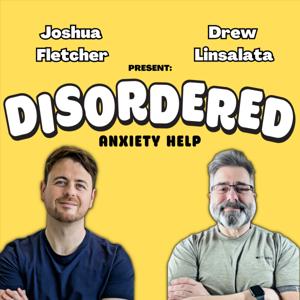

Questions about this episode? Want to interact with Drew, Josh, and other members of the Disordered audience? Check out the Disordered Community Space!
https://disordered.fm/community
-------
This week we're discussing the relationship between anxiety and self-compassion. Self-compassion is often dismissed as a way to avoid difficult tasks or "whine" about struggles, but it is actually a functional part of the desensitization process.
Drew shares how he originally viewed self-compassion as a weakness that would lead to more avoidance, only to realize that berating himself was not actually an effective motivator. Josh explains how a lack of self-compassion can lead to "re-sensitization" when you turn recovery into a performance you have to perfect.
What We Discuss:
Recovery requires the flexibility to be afraid and move forward simultaneously. Using self-compassion means letting the scared version of yourself into the experiential classroom so you can actually learn the lessons found in acceptance, tolerance, surrender, floating, and exposure!
---
The Disordered Guide to Health Anxiety is now available. If you're struggling with health anxiety, this book is for you.
---
Want a way to ask questions about this episode or interact with other Disordered listeners? The Disordered app is nearing release! Visit our home page and get on our mailing list for more information..
-----
Want to ask us questions, share your wins, or get more information about Josh, Drew, and the Disordered podcast? Send us an email or leave a voicemail on our website.
 View all episodes
 By Josh Fletcher and Drew Linsalata

4.9
415415 ratings
Questions about this episode? Want to interact with Drew, Josh, and other members of the Disordered audience? Check out the Disordered Community Space!
https://disordered.fm/community
-------
This week we're discussing the relationship between anxiety and self-compassion. Self-compassion is often dismissed as a way to avoid difficult tasks or "whine" about struggles, but it is actually a functional part of the desensitization process.
Drew shares how he originally viewed self-compassion as a weakness that would lead to more avoidance, only to realize that berating himself was not actually an effective motivator. Josh explains how a lack of self-compassion can lead to "re-sensitization" when you turn recovery into a performance you have to perfect.
What We Discuss:
Recovery requires the flexibility to be afraid and move forward simultaneously. Using self-compassion means letting the scared version of yourself into the experiential classroom so you can actually learn the lessons found in acceptance, tolerance, surrender, floating, and exposure!
---
The Disordered Guide to Health Anxiety is now available. If you're struggling with health anxiety, this book is for you.
---
Want a way to ask questions about this episode or interact with other Disordered listeners? The Disordered app is nearing release! Visit our home page and get on our mailing list for more information..
-----
Want to ask us questions, share your wins, or get more information about Josh, Drew, and the Disordered podcast? Send us an email or leave a voicemail on our website.

2,553 Listeners
1,801 Listeners

1,455 Listeners
1,238 Listeners
829 Listeners
761 Listeners
2,528 Listeners

1,392 Listeners

3,903 Listeners

432 Listeners
590 Listeners
360 Listeners
365 Listeners

20,222 Listeners

197 Listeners