
Sign up to save your podcasts
Or



Based on Podcast App listening data
Organisational expert Dilly Carter introduces her podcast, Sort Your Life Out Unpacked.
In this episode, Dilly is joined by the ‘queen of podcasting’, Elizabeth Day. Elizabeth brings three meaningful items for Dilly to unpack – literally and figuratively. Each one reveals a story from her life, from cherished childhood memories she still carries with her to the beautiful love story of her grandparents.
Elizabeth opens up about rebuilding a home after divorce, her relationship with partner Justin and whether she colour-codes her bookshelves. Things take an emotional turn when Dilly reflects on what Elizabeth’s words and books have meant to her personally. Elizabeth rates her organisation a confident 9.5/10 – but what will Dilly discover inside the boxes?
Sort Your Life Out Unpacked is a podcast hosted by tidying expert Dilly Carter. In each episode, Dilly chats to a celebrity guest and unboxes three mystery objects from their home that reveal what is really important to them. At the end, Dilly asks her guest whether they are going to keep, donate or recycle any of the items and, along the way, we learn how to organise and sort our own lives out.
If you enjoyed this episode then you can hear more by searching for Sort Your Life Out Unpacked on BBC Sounds.
Presented by Dilly Carter
An Optomen production for iPlayer and BBC Sounds.
Is it OK to take experimental peptides like the Wolverine Stack?
These are what bodybuilders, longevity gurus, and online influencers are all talking about: experimental peptides. They're chemicals that you can buy online, in packages with names like the Wolverine Stack or the Glow Stack. The websites say "for research purposes only" but talk about their supposed benefits for wound healing and de-aging, and lots of people have been injecting them in a bid to heal faster and look younger.
Sliced Bread listener Steve is excited - and has even tried them for himself - but listener Sophie is worried. Both of them are asking whether there's any evidence behind the fantastic claims.
To find out the truth, Greg Foot is joined by Dr Andrew Steele, longevity scientist and Director of the Longevity Initiative.
All of our episodes start with YOUR suggestions. If you’ve seen an ad, trend or wonder product promising to make you happier, healthier or greener, email us at [email protected] OR send a voice note to our WhatsApp number, 07543 306807.
RESEARCHER: JULIA RAVEY
Pods, liquids and powders: which laundry detergent really cleans up?
A trip down the laundry aisle can leave you faced with a welter of confusing marketing claims. From stain-busting formulas and lower-temperature washes to eco-friendly promises, every detergent seems to offer cleaner clothes, lower energy use and a lighter environmental footprint.
Listener Rosanna came to Sliced Bread for help making sense of it all. She wants to know what really separates bio from non-bio detergents, whether pods, liquids and powders perform differently and if eco brands live up to their sustainability claims.
To get the answers, Greg is joined by Professor Steven Abbott, Fellow of the Royal Society of Chemistry and an expert in cleaning agents.
All of our episodes start with YOUR suggestions. If you’ve seen an ad, trend or wonder product promising to make you happier, healthier or greener, email us at [email protected] OR send a voice note to our WhatsApp number, 07543 306807.
RESEARCHER: JULIA RAVEY
What makes the perfect pillow?
Nothing saying ‘waking up on the wrong side of the bed’ like a crick in your neck. With up to 70% of us experiencing neck pain at some point in our lives, sleeping in a dodgy position can lead to days of discomfort. And pillows might be part of the problem...
Listener Angela has a frozen shoulder, and hoped a new pillow might provide a more comfortable night’s sleep. But with so many options to chose from, which one should she buy? One advertised for her preferred sleeping position? Soft or firm? And what about material: feathers, foam or fibre? She's asked Sliced Bread to help pick out the facts from the marketing fluff.
Physiotherapist Dr Chris McCarthy from Manchester School of Physiotherapy joins presenter Greg Foot to discuss the most important factors in selecting the perfect pillow, personalised to you - plus, how to save your sleep when faced with a floppy hotel pillow...
All of our episodes start with YOUR suggestions. If you’ve seen an ad, trend or wonder product promising to make you happier, healthier or greener, email us at [email protected] OR send a voice note to our WhatsApp number, 07543 306807.
RESEARCHER: JULIA RAVEY
What's the best way to keep your home cool?
As heatwave after heatwave pushes temperatures higher across the UK and Europe, air conditioning has become a serious topic. Listener Rachel is one of many people who have turned to a portable air conditioner for relief. About the size of a dehumidifier, these units cool a room by drawing in warm air, chilling it, and venting the excess heat outside through a hose, usually attached to a window.
But with hotter summers forecast, Rachel is wondering whether it's worth investing in a fixed, or "split", air conditioning system instead. These systems use an indoor unit paired with an outdoor condenser and are increasingly common in homes across Europe. She wants to know: how much do they cost to buy and run? Are they difficult to install? And how noisy are they in everyday use?
Then there are the cheaper "air coolers" that claim to lower temperatures by blowing air over cold water or ice. Do they genuinely cool a room, or are they simply fans with clever marketing?
To find out, presenter Greg Foot is joined by Rachel and Professor Richard Fitton, Technical Director of the Energy House 2.0 test facility at the University of Salford.
All of our episodes start with your suggestions. If you've spotted an advert, trend or wonder product that claims to make you happier, healthier or greener, email us at [email protected] or send us a voice note on WhatsApp: 07543 306807.
RESEARCHER: JULIA RAVEY
Can you really learn a new language from apps like Duolingo?
Nathan wants to know: are language apps an effective way to learn? How do they compare to other ways of learning? And can AI really supercharge your language skills?
Which is the most hygienic for cleaning your kitchen?
Most of us will be familiar with the cheap packs of coloured kitchen sponges with the abrasive tops, used for washing dishes and wiping surfaces. But could they be harbouring a host of bacterial baddies?
Listener Caroline wants to know as she uses them regularly and even goes as far as running them through the washing machine to keep them cleaner for longer! Does that really work? And are there concerns about these sponges releasing microplastics? Would alternatives like cloths or brushes be a better option?
To answer all of these questions, presenter Greg Foot is joined by Markus Egert, Professor of Microbiology and Hygiene at Furtwangen University in southwest Germany and one of the authors of a major study into the hygiene of sponges; and Vilde Snekkevik, research scientist at the Norwegian Institute for Water Research in Oslo.
All of our episodes start with YOUR suggestions. If you’ve seen an ad, trend or wonder product promising to make you happier, healthier or greener, email us at [email protected] OR send a voice note to our WhatsApp number, 07543 306807.
RESEARCHER: JULIA RAVEY
Can robotic lawnmowers save you time without hassling hedgehogs?
Listener Pat has seen adverts for robotic lawnmowers and has lots of questions: Do they cut effectively? How do they manage with edges and flower borders? And what about avoiding wildlife and other objects in the garden?
To find out, presenter Greg Foot is joined by BBC Gardeners' World magazine's tech reviewer Harry Duncton, alongside Dr Sophie Lund-Rasmussen (aka 'Dr Hedgehog'), who has carried out research into the dangers to hedgehogs posed by robotic lawnmowers.
All of our episodes start with YOUR suggestions. If you’ve seen an ad, trend or wonder product promising to make you happier, healthier or greener, email us at [email protected] OR send a voice note to our WhatsApp number, 07543 306807.
RESEARCHER: JULIA RAVEY
Can a test tell you what's living inside your gut - and what to do about it?
That's what listener Pete Mace asked us, kicking off a brand new series of Sliced Bread! He's seen 'gut microbiome tests' advertised by ZOE, Randox Health and others. They promise to tell you about the bacteria - and other bugs - currently making your intestines their home. Many also claim they'll use this information to make personalised diet recommendations, showing you exactly what you should and shouldn't eat to nurture the right bugs and improve your health.
Orange was once one of the most recognisable brands in Britain — a mobile network with its iconic slogan “The future’s bright, the future’s Orange”, it helped turn mobile phones from elite business tools into everyday essentials.
But while the Orange name still exists globally, its mobile service disappeared from the UK. So what happened?
BBC Business journalist Sean Farrington investigates how Orange took the UK by storm in the 1990s telecoms boom — and why, at home, it ultimately gave way to a new brand: EE.
Joined by resident business expert and entrepreneur Sam White, Sean explores the bold brand thinking that set Orange apart, the rapid growth that made it a takeover target, and the strategic turning points that reshaped the company.
Along the way, they hear from the people who built the brand, including founding marketer Chris Moss, former executives Linda Kennedy and Stuart Jackson, and former EE CEO Olaf Swantee, to understand how Orange captured the public imagination — and why it couldn’t remain a standalone mobile network in the UK.
At the end, Sam draws her own conclusions: as the future stayed bright but less Orange, was the brand overtaken by change — or did it choose to evolve into something new?
If you have an idea for an interesting Toast topic, email [email protected].
This episode was produced by Linda Walker. Toast is a BBC Audio North production for BBC Radio 4 and BBC Sounds.
From the publisher's feed
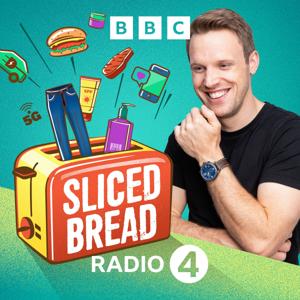
Sliced Bread is the series that investigates the latest ad-hyped products and trending fads promising to make us healthier, happier and greener. Are they really 'the best thing since sliced bread'?…
Greg speaks to experts on a bunk-busting mission to test the latest consumer trends chosen by listeners. Do they live up to the hype? Or are they just marketing BS?
Greg chats to the experts, dives into the data, performs tests and crunches the numbers before putting his findings back to the listener so they can decide if it’s worth spending their hard earned money on.
New episodes of Sliced Bread are released weekly on Thursdays wherever you get your BBC podcasts. But you can listen to the latest episode on BBC Sounds first, a week earlier than anywhere else.
If you have a suggestion for a product to investigate, you can email the team on [email protected] or send a WhatsApp voice note via the number 07543 306807.
Sliced Bread is produced by BBC Audio North for BBC Radio 4 and BBC Sounds.
Ranked by our users in the last 21 days

7,587 Listeners

873 Listeners

1,047 Listeners

42 Listeners

5,519 Listeners

1,806 Listeners

1,789 Listeners

1,033 Listeners

2,088 Listeners

2,032 Listeners

1,946 Listeners

265 Listeners

399 Listeners

101 Listeners

819 Listeners

238 Listeners

74 Listeners

478 Listeners

3,184 Listeners

1,004 Listeners

786 Listeners

1,007 Listeners
178 Listeners
96 Listeners
13 Listeners