
Sign up to save your podcasts
Or

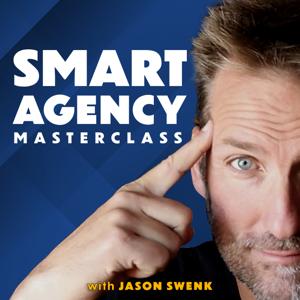


Think skillsets are all that matter? Need help building a team aligned around your mission? Skills and experience are important, but it's your culture that will really make or break your agency. It's that culture and your attention to healthy cash flow that can make or break your agency's growth.
In this episode we'll cover:
Today I had the chance to talk with Jim Flint of Local Search Group, a Houston-based marketing agency in the automotive industry. Jim began his career working with agencies from the corporate side at brands like Nike and Toyota, before ultimately deciding he wanted to help clients through an agency of his own. He shared what he's learned along the way so you can create a successful agency culture and increase your cash flow.
Why Your Digital Agency's Culture is So ImportantBefore Jim realized the value of culture, he was hiring smart and capable people who weren't necessarily aligned with him in important areas. This created challenges within his agency, and he quickly learned the importance of building a team of people who are on the same page and headed in the same direction.
"It's not about the company and the person—it's about the company and the person and the client and the job," Jim says. If the fit doesn't go both ways, and if an employee isn't passionate about the purpose of the agency, you'll end up holding each other back.
Poor fits can lead to toxicity, which can take longer to undo than it takes to start. When toxicity takes hold at a company, the good employees will end up leaving, making it even harder to turn the ship around.
What to Consider When Hiring Agency TalentCreating culture starts with your team, and your team starts with the hiring process. Instead of only looking at a resume, try to learn who the candidate is as a person. Learn what they do outside of work and get a sense of where they are in life. Does it align with where your agency is headed?
Another consideration is whether a candidate has a side-hustle. Side-hustles used to be considered a red flag. However, Jim views them as indicators of ambition and initiative. They also tell you what a candidate is truly passionate about—and, if it's an area related to your marketing agency, it's a good sign they may be a great fit.
How to Create a Healthy Cash FlowWhile culture may be the more overlooked aspect of agency success, it's not the only piece of the puzzle. Another important component of digital agency growth? Capital.
Your cash flow is the lifeblood of your agency, and when it's running low your forward momentum can grind to a halt. What are a few ways to boost your agency's cash flow?
Another way to benefit your cash flow is to get rid of the high-maintenance clients. They cost you more than you know — and beware of bringing on those clients from the outset. "A high-maintenance skinny deal is a really poor vanity play," Jim says, "and it hurts the company in ways you don't really understand until you come to actually experience it."
By cutting those clients loose, you'll free up your resources for more of the clients that are actually helping your agency turn a profit.
Looking for a Content Creation Solution?Verblio has been a long time supporter of the Smart Agency Masterclass and a trusted vendor we've been using for over two years. They are an amazing content creation solution designed specifically for agencies; their writers can help with all your content creation needs across a variety of industries. If you're interested in trying Verblio for yourself check out Verblio.com/smartagency for 50% off your first month of content.
Want an 8-figure agency? Tired of the hassle and cost of managing employees? Want an entirely new, innovative business model? The answer for one agency owner was in the cloud.
In today's episode, we'll cover:
Today I talked with Julian Stubbs, co-founder and CEO of Up There, Everywhere. Since our last conversation in 2015, the cloud-based marketing agency has continued to grow and is now approaching 8 figures in revenue.
What is the No-Employee Model?The problem Julian had with the traditional agency business model is that you can never downsize or upsize as quickly as you need, so you are either missing opportunities or wasting resources. Combined with the high overhead of offices and employees, he knew there had to be a better way.
He and his business partner decided to take advantage of cloud-based tools to build a truly global agency. Instead of employees, they now have a network of members in 20 countries around the world. Members work on projects remotely for clients, and all their work is backed up online.
Why Not Freelancers?Often, when an agency chooses to go lean, they have a slate of freelancers they work with instead. As Julian says, though, freelancers don't scale and they aren't a long-term solution. Up There, Everywhere needs professionals who work consistently, which is why they opt for the member model.
To make sure it's a good match for both sides, potential members go through a series of interviews before joining the agency and learning how to work with their particular tools and clients. Because it's such a unique model, the agency isn't for everyone—and members need to be able to deliver.
Members don't pay to be a part of the agency, but they do donate their time to the community based on their skills, such as writing for the agency's blog. In addition to the pay they get from projects, members also have a reward system based on their earnings, their engagement, and other charitable endeavors the agency encourages. As with employees, keeping members engaged and motivated is crucial for the agency's success.
While they are free to pursue other work as well, Julian works hard to make sure the agency's projects are the most interesting—preferring members to choose their work rather than forcing it on them.
A Unique Way to Compensate Your Agency TeamOne of the most applicable takeaways from Up There, Everywhere's model is its fixed-rate structure. Instead of billing hourly and paying its members per hour of work, it has fixed rates for its clients and its members. Julian points out that when people are working on their own time, they're much more productive—a lesson for any agency owner. Consider how you can structure your team's pay around deliverables rather than time spent.
Other stats from the cloud-based agency's continued success?
As in any agency, having a plan and direction is paramount. The various teams get together on a weekly call to talk about clients, members, and the agency. Think about your own agency and what you can do regularly to check-in across your team and make sure you stay aligned on the same goals, whether you're in the same office or fully remote.
Want to Help Your Team Be More Efficient and Scale Agency Faster?If you want to help your team work smarter and scale your agency faster you need to check out the artificial intelligence software created by our friends at Morphio. It instantly alerts your team about digital marketing errors before they become problems, saving a huge amount of time. Their AI manages and analyzes data, so you can focus on growing your agency.
For a limited time, Morphio is offering Smart Agency podcast listeners a special deal to get you started. Sign up at Morphio.ai/Swenk and get 25% for a limited time.
Have you ever wondered if the grass is greener for big agencies? Or is it easier to be a small agency that is more nimble? Are you struggling with prioritizing growth strategies? Does size matter when it comes to growth trajectory? It all comes down to perspective. Size only matters in relation to your vision of growing your agency.
In this episode, we'll cover:
I talked to Steve McCall, a partner in a branded digital strategy agency called Carbon. Formerly, Steve was the general manager of a large agency in Boston. However, as he explains, life happened a few years ago. The death of a loved one gave him clarity on his career goals. So Steve took a risk by partnering with two former colleagues who had already begun Carbon. Steve is here to share the differences between big agencies and small agencies and how Carbon provides the best client experience, best product, and best work-life balance.
What Are the Big Agencies Missing?"There is a lot to like about big agencies," Steve explains, adding that the benefits of a big agency include:
However, Steve and his partners realized something was missing from their experiences with big agencies. Focus is placed on making sure the client experience is equal to the output, even if it cuts into profitability. "We are not always profit-focused," he says. "It's more about ensuring a great product and developing a relationship with the client. In a larger holding company model, that is challenging to do."
Hurdles to Overcome When Growing An AgencyGrowing an agency that offers a work-life balance and is devoted to delivering quality products and client experiences isn't easy. The primary challenge was finding out where their product and level of service needed to be in order to be successful. Other challenges included:
Carbon places emphasis well-roundedness and Steve attributes their rapid growth to these 3 tactics:
Verblio has been a long time supporter of the Smart Agency Masterclass and a trusted vendor we've been using for over two years. They are an amazing content creation solution designed specifically for agencies; their writers can help with all your content creation needs across a variety of industries. If you're interested in trying Verblio for yourself check out Verblio.com/smartagency for 50% off your first month of content.
Are you feeling overwhelmed by client demands? Struggling to choose the ideal clients who are right for your agency? Have you lost a major client and you don't understand why? There are a lot of factors involved in growing your digital agency. But the most important factor is how well you serve your clients.
In this episode, we'll cover:
On this episode, I talked to Tyler Dolph, the President, and Partner at the Wisconsin-based digital advertising and marketing agency, Rocket Clicks. Tyler joined the agency in a business development role about 6 years ago, after a chance meeting with the agency owner on an airplane flight. Shortly after joining the team there, the President of the agency resigned and Tyler stepped into the role. Since then, the agency has grown from a team of 12 to 39, and the client list has grown from about 15 to 85. Tyler is here to offer some insights about the emphasis his agency places on client services, and how it has helped them grow.
Why Determining and Communicating Agency Focus is Important"We're not a full-service agency, we're not everything to everyone," Tyler says of Rocket Clicks. Once the agency was financially stable, they discovered it was OK not to take on every client. Instead, they learned to focus the agency's service offering and narrow down to what they're best at.
Another important part of this process is determining who the right client is. The best way to accomplish this is identifying your ideal clients' service needs and the necessary budget. By establishing these parameters, you can target potential clients and quickly detect the ones that aren't right for you.
Developing the agency's focus is only part of the challenge, however. The other part was in letting everyone -- including the clients and the team -- know what that focus is. Tyler compared this to navigating a boat. When you communicate the focus it allows others to decide if they want to stay in the boat, jump off, or alter the course of the boat just a little bit and still reach the destination.
Setting Goals and Making Sure Your Agency Is on the Right TrackOnce you've developed the focus of your agency and distilled your offerings down to a few specialties that you do really well, it is important to set goals to ensure you are keeping focus. This isn't a one-shot deal. Goals should be set and revisited on a frequent basis. Each goal needs to be measurable. Rocket Clicks uses software that enables the process of setting these goals and gathering data needed to measure progress efficiently and with little effort required.
3 Ways to Use Communication as a Catalyst for Growing Your AgencyThe key is communication in order to provide superior client service. Tyler recommends the following steps in using communication as a catalyst for agency growth:
If you want to help your team work smarter and scale your agency faster you need to check out the artificial intelligence software created by our friends at Morphio. It instantly alerts your team about digital marketing errors before they become problems, saving a huge amount of time. Their AI manages and analyzes data, so you can focus on growing your agency.
For a limited time, Morphio is offering Smart Agency podcast listeners a special deal to get you started. Sign up at Morphio.ai/Swenk and get 25% for a limited time.
Are you searching for more ways to attract new agency clients? Have you considered starting a podcast for your agency? Are you searching for new ways to spread the word about the services you offer? Are you wondering how to encourage your own team to be thought leaders? Now more than every, content creation options are endless. Take advantage of them all by asking for help so you can focus on growing your agency.
In this episode, we'll cover:
I talked with Steve Pockross, the CEO of the content creation marketplace, Verblio. Verblio currently has 3,000 writers who create 70,000 pieces of unique content each year, with a focus on delivering content to more than 500 digital agencies who count on the company to supply content for their clients. Steve is here to talk about how content creation is changing with the times and how agencies can keep up with these changes. Today, Verblio's writers need to go beyond writing simple blog posts to transforming audio and video content into written work and refreshing old content into something new.
How Content Marketing Is Changing With the TimesAt the beginning of 2020, Steve noted the trend in content creation was long-form content creation. Clients were seeking content that was 1,000 words long or more. Additionally, clients were beginning to ask for written content created from video. However, when the pandemic hit in March, the requests for content changed again. "Since the pandemic, we have seen a move toward instant impact content," Steve says. "We are getting requests for content refreshers. We are re-purposing audio content as written content." Additionally, Steve adds, there is a micro content trend in which larger pieces of content are broken up into smaller pieces that provide a quick, easy read for the client's audience.
With all of the changes experienced through technological advances and world events, one thing Steve has noticed is clients are going bigger. Verblio has experienced a 25% increase in content requests since April.
When Should Content Be Written vs Spoken?Digital agencies are looking for a way to reach their clients in a world that offers many different channels and platforms. Steve says to use them all. "Podcasts are a DVR for audio," he says. "They're so accessible, you can listen anytime you want." He adds that there is a natural viral aspect to podcasts: they're interactive, they're engaging, and they are a way to build your audience.
On the flip side, though, Steve stresses making a podcast involves preparation. You can't ask every guest the same questions, and with 800,000 podcasts available, it's important to know what you're trying to create and who you're trying to reach. As effective as a podcast can be in reaching your clients, "many people still love to read," Steve said. Providing your podcast content in written form is a more complete way to present the content and reach different listeners as well as readers.
Writing is time-consuming and not everyone is confident in their ability to do it. Steve encourages agency owners to perform the work they're strong in seek help from outside sources or others on your team in order to provide content in other formats to reach a larger audience.
3 Things to Turn Your Team Into Thought LeadersBeing a thought leader is difficult to manage when you still have a day job, Steve notes. This is one of the reasons that encouraging your team to be thought leaders can provide you with advantages. Some of the things you can do to encourage this thought leadership in your team include:
Verblio has been a long time supporter of the Smart Agency Masterclass and a trusted vendors we've been using for over two years. They are an amazing content creation solution designed specifically for agencies; their writers can help with all your content creation needs across a variety of industries. If you're interested in trying Verblio for yourself check out Verblio.com/smartagency for 50% off your first month of content.
AND... if you want to provide input about what works and what doesn't take a minute to participate in Verblio's agency survey.
Do you feel like you've made so many mistakes at your agency you may never be successful? Do you find yourself trying to be someone else for your clients? Are you willing to accept any client and any project out of desperation for cash flow? Truth is, you can learn from your mistakes and grow your agency because of those experiences.
In this episode, we'll cover:
I talked to Theo Fanning, the Executive Creative Director and President of Traction, a digital marketing agency in San Francisco. Traction was started in the ruins of the dot com bomb of 2001. At that time, faced with few opportunities, Theo and three friends decided to start an agency of their own. "It was blind fury," he recalls. "We had no idea what we were doing. Many of us had not had management or operational roles. We just assumed everything would come our way and we made a lot of mistakes. We are an agency built on failure, but we're always failing up." Theo shares some of those mistakes and lessons learned so he could grow his agency to a team of 50.
Why Bigger Clients Aren't Always Better ClientsTraction was built on a freelance-based model, "because we had a lot of friends who were freelancers," Theo explained. However, this business model led to some of the agency's earliest mistakes: "Freelancers are flaky and you can't build a business off the backs of friends."
What followed were several years of a truly organic agency experience that began without operational tools and timesheets. Along the way, however, the agency managed to break even and the team began to grow. In 2005, after having just relocated to new office space and with a team of 12-15, Traction lucked into the opportunity to pitch Apple. "We sort of jumped into it with no true strategy," Theo explained. "All we had was grit and good nature, and some good relationships that we had built."
Theo points out that landing this first big client taught the team something very important. "When you're the smallest agency working for the largest client, you really don't get to run your business the way you'd like." He said the experience with Apple helped them learn to focus on clients of all sizes. Traction still works with Apple 15 years later but has a greater appreciation for fostering relationships with decision-makers of all-sized clients.
How Relationship-Building Helps Retain ClientsOne of the most important things an agency can do is build relationships. Traction's relationships with the business owners they work with has taught the team to better articulate their value. Gaining the trust of the client through the relationship opens the door to offering additional services to help the client succeed. Traction prides itself on being able to show clients "new ways to do old things," -- which can include the adoption of new technologies as well as new ways to look at their business.
Theo says the relationships you build with your team also go a long way. The agency started by friends focused on doing quality work and providing the ability for staff to have a good quality of life, as well. What they got in return was a team that is both strong as well as loyal.
3 Tips for Healthy Agency GrowthTheo embraces the learning process that comes from making mistakes. Some of the tips he offers to other agencies who are struggling to find their place in a competitive industry include:
What will it take for your agency to be successful? Do you think it's landing one big, game-changing client? Are you impatiently waiting for your big-break that's going to put your agency on the map? It's hard to be patient, but understanding the importance of planning and focusing on the basics lead to success.
In today's episode, we'll cover:
I talked to Tom Sullivan, the president and co-owner of Lead Marketing Agency. Tom and his partner started Lead about twelve years ago. At the time, they were both working for another agency, and they were the two guys who were a bit more data and media-oriented than the rest of the agency. So they decided to start their own agency, originally focused on certain aspects of the business. Twelve years later, they have a full-service agency that employs a team of 20 people. Tom is on the show to talk about the importance of being patient while growing your agency.
What's the Key to Longevity for Your Agency?You likely share the dream of nearly every agency owner: landing the big deal which allows you the freedom to do whatever you want with your agency. However -- while it is entirely possible you will do that -- Tom says there is an importance to being patient. "Everyone wants to hurry up and get there," he tells me. "We are so impatient as a society. Be patient. Owning a business sounds cool, but there is going to be failure. Impatience makes it difficult to get through the hard times."
These days, Facebook gives us everyone's highlight reel of their best moments. It's easy to compare your success to someone else's, but it isn't fair to you. It's easy to get caught up in these advertisements for marketers, promising to show you the secret to earning six-figures in ten days. Those offerings are not rooted in the reality of the industry though. The reality, as Tom explains, is time gives you the opportunity to focus on the fundamentals of your business, hire a team, and learn enough to know you don't know everything. There is always more to learn.
Does Your Agency Have a Business Plan?Another thing patience buys you is the opportunity to create a business plan, and to develop actionable goals to help you enact that plan. Additionally, Tom encourages, you should develop ways to measure yourself in order to determine if you're following the path you've set for yourself. Then you can decide how you need to adjust your plan to fit your vision. "Understand the percentage you want and why you picked that percentage," Tom says. Figure out how many inquiries it will take to generate the leads that will convert to sales and enable you to accomplish your goal.
Tom warns, however, to watch out for the pitfalls of working in a service-related industry. A lot of times, marketing agencies get so caught up in taking orders and servicing people it gets wrapped up in the business plan. This causes the agency to become order-takers and blurs the line between serving and succeeding.
3 Basic Agency Business Principles You NeedWhile you're being patient and learning more about the industry, Tom encourages new digital agency owners to also remember the basics of business: Work hard, and do what you can to improve a little bit each day. Some of the suggestions he offers include:
If you want to help your team work smarter and scale your agency faster you need to check out the artificial intelligence software created by our friends at Morphio. It instantly alerts your team about digital marketing errors before they become problems, saving a huge amount of time. Their AI manages and analyzes data, so you can focus on growing your agency.
For a limited time, Morphio is offering Smart Agency podcast listeners a special deal to get you started. Sign up at Morphio.ai/Swenk and get 25% for a limited time.
How do you find your ideal clients that are a good fit for your agency? How do you avoid taking on clients who aren't a good fit? Often times we take on the wrong clients because we're too eager for the work or because we didn't screen them thoroughly enough. Learn how to avoid these mistakes and the questions you need to ask before you even begin working with a new client.
In today's episode, we'll cover:
On today's show, I talked to Erin Bailey, partner at the digital marketing agency, Matrixx. Erin has spent the past eleven years at Matrixx, first as part of the team and later as a partner. She has seen the agency evolve from a team of three people designing MySpace pages for clients to one that works with common household brands such as Coleman, Zest, and Hefty. While other agencies have a vision of becoming the biggest and most well-known, the Matrixx partners choose to stay the size they are. Erin is here to share why and how they made this decision.
How Do You Keep Your Agency the Right Size for You?Erin says, in order to keep your agency at its current size, you have to be selective about who you choose to work with. Some agencies want to grow and add to their team. But if you're happy where you're at you need to know your team's bandwidth and then be more selective about what clients you choose to work with. "Everyone makes mistakes," she explains, and usually one of the biggest is taking on the wrong clients out of desperation. When you have a clear vision for your agency and you understand what clients want from you, you'll find the right balance between size and success. The best way to accomplish this is:
Erin encourages agencies not to rush into large contracts with new clients. Instead, agree to work on a specific project for the client. This gives you and the client the opportunity to each evaluate the fit before entering into a contract for additional services. "There is a fine line between making sure you keep the business healthy and spreading yourself too thin," she says.
3 Questions to Ask Prospective Agency ClientsSo, if you are being selective about the clients you take, what are the questions you should ask them? These questions are an important part of the qualification process at Matrixx:
As Erin says, mistakes happen when selecting clients. Sometimes it's overeagerness, and sometimes it's being afraid to say no. And yet, in other cases, the person you were working with leaves the company, and their replacement doesn't have the same vision. "Don't be afraid to say no to a client," she says. "There are other companies out there that you can work with." If you find yourself in a contract with a client that isn't a good fit, Erin suggests:
If you want to help your team work smarter and scale your agency faster you need to check out the artificial intelligence software created by our friends at Morphio. It instantly alerts your team about digital marketing errors before they become problems, saving a huge amount of time. Their AI manages and analyzes data, so you can focus on growing your agency.
For a limited time, Morphio is offering Smart Agency podcast listeners a special deal to get you started. Sign up at Morphio.ai/Swenk and get 25% for a limited time.
Uncertain on choosing a niche for your agency? Have you ever considered specializing in multicultural marketing? Are your clients losing customers by omitting multicultural messaging? Multicultural marketing is rapidly becoming an important growth strategy for businesses. It might be time you consider specializing in this marketing area in order to grow your agency.
In this episode, we'll cover:
I had the opportunity to speak with Eric Diaz and Natasha Pongonis, partners at Nativa. Their agency specializes in multicultural digital marketing agency and works with brands like Charmin, Castrol Motor Oil, and Arizona State University. Several years ago, Eric and Natasha noticed a lack of ads targeted to Hispanic audiences. Realizing these advertisers were missing out on a substantial demographic, they set out to not only help clients expand their reach but to help make the world of marketing a more inclusive one, as well.
How Important is Multicultural Marketing?According to Eric and Natasha, the growth of the Hispanic population is just one example of the importance of multicultural marketing. In addition to Hispanic and Asian consumers in the U.S., multicultural marketing targets other growing demographics, like African-Americans, Native Americans, and others who fall outside of the mainstream marketing reach, including the LGBTQ community.
Natasha also points out, as the country becomes more diverse, the numbers of individuals in the Millennial and Gen Z generations who identify with more than one ethnicity are also increasing. We have growing numbers of young consumers in this country whose buyer preferences are impacted by more than one culture. Failing to reach this growing group of consumers means leaving their money and their business on the table for one of the bigger companies to grab.
How Can You Learn More About Your Clients' Audiences?How do agencies know what a certain demographic will want? The answers are in the data, Eric explains. Determining the data to identify potential consumers by cultural identity takes some digging, however. Many years ago Nativa developed a website that gathered data in a spreadsheet on what Hispanic buying habits, trends, and attitudes. Unfortunately, the data they gained only identified Hispanics based on whether they spoke Spanish. Thing is, many Hispanics don't speak Spanish fluently but still consider themselves of Hispanic descent.
The team had to discover new ways of learning about Hispanic consumers by studying their profiles for information to indicate a Hispanic ethnicity. They looked at names, the commonality of products the purchased, and geographic information.
Eventually, Nativa turned this site in a more valuable and all-encompassing SaaS tool that helps their prospects and clients learn more about all their multicultural consumers. This solution has proved to be invaluable to prospects and clients alike.
Are Your Agency Clients Drowning In Data?Most brands have the data, but what sets Nativa apart is how they analyze and interpret the data. How can a company organically reach multicultural audiences by being part of their conversations? The best way is to just be quiet and listen. Learn what is driving those conversations, where are they taking place, and what are is the ethnicity of the users. Watch strategic partnerships of competitors and learn how different ethnicity's use different products.
Our society is overwhelmed with data. We are drowning in data, but we're starving in knowledge. If you can interpret the data that is a superpower. And today, with machine learning Nativa is even testing out AI usage to predict behaviors of multicultural audiences.
Eric made reference to Walmart and their 25-year relationship with their multicultural agency. The multicultural niche isn't going anywhere in fact, it's evergreen as the market continues to evolve. Natasha says it's not necessarily about the native language anymore. It's more about cultural awareness. It's about communicating in a very cultural and appropriate way to the demographic you're trying to reach, whether Hispanic, Asian, African-American, or others.
Looking for a Payroll and HR Solution for your Agency?Payroll and benefits are hard. Especially when you're a small business. Gusto is making payroll, benefits, and HR easy for small businesses. You no longer have to be a big company to get great technology, great benefits, and great service to take care of your team.
For a limited time, Gusto is offering a deal to Smart Agency Master Class listeners. Check out Gusto.com/agency for 3-months FREE once you run your first payroll with them.
Are you a new digital agency wondering how to attract the best agency talent? Or an established agency afraid your amazing team might fall apart? The best way to keep your team engaged and happy is to embrace who they are outside of the workplace.
In today's episode, we'll cover:
I had the opportunity to talk with Andrew Au, Co-founder and President of Intercept Group, the marketing agency that he and his wife started 13 years ago. Andrew had started his marketing career at Pepsi, but quickly learned that he was on the wrong side of the business. Today, he has an agency team of 30 and is earning over 8-figures while working with clients such as Microsoft, FedEx, and Intuit. Andrew is here to share the ways he keeps his team engaged and happy as they continue to produce amazing, creative work.
Why Millennial Side-Hustles Can Work In Your FavorIf you're building a team, in all likelihood you will be interviewing and hiring Millennials between the ages of 19 and 39. "Millennials are the largest single cohort in the workplace and they're driving a lot of change," Andrew says. But there is something else you should know about the millennial generation: They're entrepreneurial. Around 40% of Millennials who are working have a "side-hustle". While many marketing agency owners would discourage side-hustles, Andrew says he actually looks for employees with a business on the side.
"It gives them a maturity that you can't get from school or from working in another place," Andrew explains. He says employees are going to be pursuing these side-ventures whether you know about them or not, so "find ways to bring it into the business."
Also, when your team feels like you support their outside endeavors they're likely to share with others. And in my experience, being an awesome place to work is the kind of reputation you want in order to keep attracting more amazing talent.
6 Ways to Keep Your Team Engaged and HappyEncouraging and supporting your team's individual side hustles is one way to invest in your employees and to keep them engaged and happy. Here are 6 more ways to help retain your agency team:
If you want to help your team work smarter and scale your agency faster you need to check out the artificial intelligence software created by our friends at Morphio. It instantly alerts your team about digital marketing errors before they become problems, saving a huge amount of time. Their AI manages and analyzes data, so you can focus on growing your agency.
For a limited time, Morphio is offering Smart Agency podcast listeners a special deal to get you started. Sign up at Morphio.ai/Swenk and get 25% for a limited time.
From the publisher's feed

227,484 Listeners

580 Listeners

16,843 Listeners
1,445 Listeners

32,776 Listeners
287 Listeners

113 Listeners

1,256 Listeners

579 Listeners

4,453 Listeners

856 Listeners

2,644 Listeners

2,607 Listeners

29,163 Listeners
357 Listeners