
Sign up to save your podcasts
Or

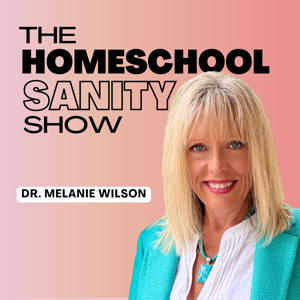

The best way to teach grammar in high school homeschool is through short, practical instruction that connects directly to real writing. High school students are often more developmentally ready to understand grammar than younger students, and they are more motivated to improve because grammar now affects essays, communication, and future academic or career goals.
Do you have a high school student who struggles with grammar? Or do you have a soon-to-be high school student and no idea how to approach grammar at this stage?
This is the Homeschool Sanity Show, the episode where I share a sane approach to teaching grammar in high school.
Hey, homeschoolers! If you’ve struggled to help your high schooler use correct grammar in writing or if the thought of teaching it in the high school years gives you the heebie geebies, I have good news.
This episode is sponsored by CTCMath.com
As I’ve explained to parents of elementary students many times, these younger students simply aren’t developmentally prepared to master the abstraction of grammar. It’s similar to the abstract reasoning ability required to master algebra. Sure, some students develop this reasoning ability earlier, but most don’t. Up until this point in their development, they were working hard to decode and pronounce words and determine the meaning of words given the context of the sentence. Asking them to determine the role of the word in a sentence as well is extra challenging.
That’s why I made Grammar Galaxy a fun, confidence-building introduction to grammar and other language arts in the elementary years. I didn’t want them avoiding grammar once the were developmentally ready to use it in their writing.
When students are in classes with other students and sharing in speech or writing, they will want to avoid the embarrassment of poor grammar. I capitalized on this peer pressure with my own kids with great results. In the English classes I taught, students read their writing aloud and passed it to a friend to read aloud. This performance pressure rapidly improved my students’ grammar and spelling. High school students also begin to use messaging and email and do not want to have poor grammar and spelling for their friends to see. Some of them will be interested in learning grammar for the first time as a result.
With the developmental ability and new motivation, students can use grammar curriculum to learn more quickly than they could have in elementary school. With instruction, they will learn to make better use of automatic editors like Grammarly. Like all writers, they will still require another human editor–whether that’s you, an outside instructor, or a friend with good grammar. I have found high school students learn from this editing feedback very quickly.
I hope I’ve convinced you that your teen isn’t behind or incapable of growing as a writer if they still need to master grammar.
Studies indicate that high school students tend to spend more time with friends than reading as much as they did in their earlier years. They also tend to use reading time for study instead of leisure. But reading for enjoyment is the key to developing your student’s vocabulary, grammar, and writing. Invest time helping your student find enjoyable books and making time to read them in their schedule.
Reluctant students want to know why they should care. Using prescreened, funny grammar memes and examples is a great way to do this. Because I write grammar curriculum, my high school student loves pointing out grammar errors he finds. You can have fun with this, too. Consider having a competition to find grammar errors.
When choosing a grammar curriculum for high school, you haven’t had many options. There are worksheet drills indistinguishable from elementary and middle school curriculum. There are the thoroughly dry English curricula that have sentences unrelated to story or to teens’ lives. And then there are brief reviews that are optional. My students didn’t learn anything from these.
The number one request I get from Grammar Galaxy booth visitors at Great Homeschool Conventions is a curriculum for high school. I knew that the Grammar Galaxy story line wasn’t well suited to older teens, so I created a new fictional curriculum. Kirk English, the programming whiz kid in Grammar Galaxy, has developed a program to deal the failure of autocorrect. His Fast Grammar training is for human autocorrectors. These trainees will get to know clients’ intentions so they can correct their grammar in real time through the power of science fiction.
The client in the training is a high school student who has typical teen troubles as well as high school writing assignments. Students who use Fast Grammar correct the client’s grammar while learning it themselves. Trainees will look forward to getting the client’s updates in each lesson.
Fast Grammar is a supplemental, secular curriculum that can be used with any high school literature or writing program. The brief lessons can be completed in one sitting or preferentially, spread out over the week. Like Grammar Galaxy, much of the lesson can be completed with a highlighter. Homophone graphics are included each week because choosing the wrong homophone is a common and embarrassing problem for writers.
The curriculum is completely independent, with the solutions at the back of the student book. At the end of each unit, teachers can administer a test that is available in a separate PDF download. The solutions will help you score the test and give a grade that can contribute to the English grade for the year.
Click here to download a complete lesson. If you’ll be joining me at the Great Homeschool Conventions this year, you can see it in person. The week of this broadcast, the curriculum is 20% off in print or digital.
Whether you try Fast Grammar or not, I hope I’ve given you hope that high school can be the time that your student grasps grammar. Give some of these strategies a try, and I feel confident that you’ll see your high schooler’s writing improve.
Have a happy homeschool week!
No, high school is often the ideal time to teach grammar because teens are more developmentally ready to understand abstract grammar concepts and more motivated to apply them in writing.
Many homeschool high school students benefit from a grammar curriculum, especially if they struggle with writing mechanics, punctuation, sentence structure, or common usage errors.
The best grammar curriculum for homeschool high school is one that is age-appropriate, practical, and easy to apply in real writing rather than just isolated drills.
Grammar is often most effective when taught in short, consistent lessons rather than long, infrequent sessions.
The post Special Replay: How To Teach Grammar In High School appeared first on Ultimate Homeschool Podcast Network.
 View all episodes
 By Melanie Wilson, PhD

4.6
108108 ratings
The best way to teach grammar in high school homeschool is through short, practical instruction that connects directly to real writing. High school students are often more developmentally ready to understand grammar than younger students, and they are more motivated to improve because grammar now affects essays, communication, and future academic or career goals.
Do you have a high school student who struggles with grammar? Or do you have a soon-to-be high school student and no idea how to approach grammar at this stage?
This is the Homeschool Sanity Show, the episode where I share a sane approach to teaching grammar in high school.
Hey, homeschoolers! If you’ve struggled to help your high schooler use correct grammar in writing or if the thought of teaching it in the high school years gives you the heebie geebies, I have good news.
This episode is sponsored by CTCMath.com
As I’ve explained to parents of elementary students many times, these younger students simply aren’t developmentally prepared to master the abstraction of grammar. It’s similar to the abstract reasoning ability required to master algebra. Sure, some students develop this reasoning ability earlier, but most don’t. Up until this point in their development, they were working hard to decode and pronounce words and determine the meaning of words given the context of the sentence. Asking them to determine the role of the word in a sentence as well is extra challenging.
That’s why I made Grammar Galaxy a fun, confidence-building introduction to grammar and other language arts in the elementary years. I didn’t want them avoiding grammar once the were developmentally ready to use it in their writing.
When students are in classes with other students and sharing in speech or writing, they will want to avoid the embarrassment of poor grammar. I capitalized on this peer pressure with my own kids with great results. In the English classes I taught, students read their writing aloud and passed it to a friend to read aloud. This performance pressure rapidly improved my students’ grammar and spelling. High school students also begin to use messaging and email and do not want to have poor grammar and spelling for their friends to see. Some of them will be interested in learning grammar for the first time as a result.
With the developmental ability and new motivation, students can use grammar curriculum to learn more quickly than they could have in elementary school. With instruction, they will learn to make better use of automatic editors like Grammarly. Like all writers, they will still require another human editor–whether that’s you, an outside instructor, or a friend with good grammar. I have found high school students learn from this editing feedback very quickly.
I hope I’ve convinced you that your teen isn’t behind or incapable of growing as a writer if they still need to master grammar.
Studies indicate that high school students tend to spend more time with friends than reading as much as they did in their earlier years. They also tend to use reading time for study instead of leisure. But reading for enjoyment is the key to developing your student’s vocabulary, grammar, and writing. Invest time helping your student find enjoyable books and making time to read them in their schedule.
Reluctant students want to know why they should care. Using prescreened, funny grammar memes and examples is a great way to do this. Because I write grammar curriculum, my high school student loves pointing out grammar errors he finds. You can have fun with this, too. Consider having a competition to find grammar errors.
When choosing a grammar curriculum for high school, you haven’t had many options. There are worksheet drills indistinguishable from elementary and middle school curriculum. There are the thoroughly dry English curricula that have sentences unrelated to story or to teens’ lives. And then there are brief reviews that are optional. My students didn’t learn anything from these.
The number one request I get from Grammar Galaxy booth visitors at Great Homeschool Conventions is a curriculum for high school. I knew that the Grammar Galaxy story line wasn’t well suited to older teens, so I created a new fictional curriculum. Kirk English, the programming whiz kid in Grammar Galaxy, has developed a program to deal the failure of autocorrect. His Fast Grammar training is for human autocorrectors. These trainees will get to know clients’ intentions so they can correct their grammar in real time through the power of science fiction.
The client in the training is a high school student who has typical teen troubles as well as high school writing assignments. Students who use Fast Grammar correct the client’s grammar while learning it themselves. Trainees will look forward to getting the client’s updates in each lesson.
Fast Grammar is a supplemental, secular curriculum that can be used with any high school literature or writing program. The brief lessons can be completed in one sitting or preferentially, spread out over the week. Like Grammar Galaxy, much of the lesson can be completed with a highlighter. Homophone graphics are included each week because choosing the wrong homophone is a common and embarrassing problem for writers.
The curriculum is completely independent, with the solutions at the back of the student book. At the end of each unit, teachers can administer a test that is available in a separate PDF download. The solutions will help you score the test and give a grade that can contribute to the English grade for the year.
Click here to download a complete lesson. If you’ll be joining me at the Great Homeschool Conventions this year, you can see it in person. The week of this broadcast, the curriculum is 20% off in print or digital.
Whether you try Fast Grammar or not, I hope I’ve given you hope that high school can be the time that your student grasps grammar. Give some of these strategies a try, and I feel confident that you’ll see your high schooler’s writing improve.
Have a happy homeschool week!
No, high school is often the ideal time to teach grammar because teens are more developmentally ready to understand abstract grammar concepts and more motivated to apply them in writing.
Many homeschool high school students benefit from a grammar curriculum, especially if they struggle with writing mechanics, punctuation, sentence structure, or common usage errors.
The best grammar curriculum for homeschool high school is one that is age-appropriate, practical, and easy to apply in real writing rather than just isolated drills.
Grammar is often most effective when taught in short, consistent lessons rather than long, infrequent sessions.
The post Special Replay: How To Teach Grammar In High School appeared first on Ultimate Homeschool Podcast Network.

8,698 Listeners

2,986 Listeners

2,492 Listeners

101 Listeners

896 Listeners

30 Listeners

8 Listeners
220 Listeners

9 Listeners

14 Listeners

236 Listeners

2,061 Listeners

297 Listeners

45 Listeners

5,373 Listeners

5 Listeners

2,234 Listeners

484 Listeners

13,245 Listeners

262 Listeners

1,262 Listeners