
Sign up to save your podcasts
Or

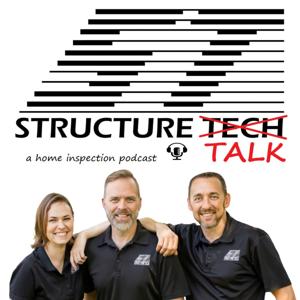


To watch a video version of this podcast, click here: https://youtu.be/c9hch5yyc-U
In this episode, Reuben Saltzman and Tessa Murry are joined by Structure Tech’s Services Manager, Eric Houseman, for a wild home‑inspection story that starts with a simple missing bath‑fan termination and snowballs into a major discovery. What begins as routine training turns into a dramatic game of telephone between inspectors, agents, sellers, and contractors—and ends with one of the most shocking ventilation mistakes the team has ever seen: a bathroom exhaust fan tied directly into a power‑vent water heater exhaust.
Along the way, the trio talked about communication pitfalls, the importance of clear reporting, the routine inspection steps that prevent safety issues, and the unexpected discoveries that even seasoned inspectors don’t see coming. It's an episode filled with lessons, surprises, and plenty of inspector banter.
Here's the link to Inspector Empire Builder: https://www.iebcoaching.com/events
Check out this link to our new favorite Combustible Gas Detector, the TPI 720b:
https://amzn.to/3NgZtv7
Takeaways
Clear communication during inspections is essential—verbal explanations can easily be distorted.
Always wait for the published report, which is the most accurate representation of the findings.
Words matter: “exhaust gas leak” is not the same as “gas leak.”
Inspectors should avoid paraphrasing defects; copy the exact language from the report when relaying information.
Even “routine” findings require careful verification—small details prevent major hazards.
A bath fan must exhaust to the exterior, and improper venting can create serious safety risks.
Creativity in home projects isn't always a good thing—especially when it involves exhaust systems and combustion appliances.
When something seems off, dig deeper; sometimes the truth is hidden behind drywall.
A well‑written report, complete with photos and precise language, is a home inspector’s best protection.
Even experienced inspectors learn new things—sometimes in the most unexpected ways.
Chapters
00:00 Introduction and Minnesota’s heavy current events
01:07 Shifting to lighter topics and home‑inspection talk
02:35 Combustible gas detectors: retiring the TIFF 8900
05:00 The new winner: TPI 270B
07:21 Show sponsor shout‑out: IEB
08:35 Reuben’s reverse osmosis saga (and user error)
11:35 Tessa’s stinky well‑water updates
13:31 Introduction to Eric’s “thrown under the bus” story
14:25 The inspection setup and counting exhaust points
16:45 The missing basement bath‑fan termination
18:14 The telephone game between clients, agents, and sellers
19:37 HVAC contractor conflicts with the findings
20:55 Re‑inspection and detective work
22:17 The shocking discovery: bath fan tied into water‑heater exhaust
23:59 Why this is dangerous: carbon monoxide risk
25:11 No apology, but valuable lessons
27:33 How communication gaps amplify issues
28:44 Importance of clear reporting and avoiding paraphrasing
30:33 Wrapping the episode; preview of next topic
31:48 Closing remarks
To watch a video version of this podcast, click here: https://youtu.be/GcQUDCQAgsI
In this episode, Reuben Saltzman speaks with film producer George Siegal, known for his documentary Built to Last, Buyer Beware. They explore the hidden risks of home buying, with a focus on insurance coverage, building codes, and purchasing in high-risk areas. Drawing on his background in TV news, George emphasizes how often buyers overlook critical details such as insurance limitations and local hazards. The episode serves as a cautionary discussion, encouraging prospective homeowners to ask the right questions and make informed decisions to protect their investments and families.
Here's the link to Inspector Empire Builder: https://www.iebcoaching.com/events
Check out George Siegal’s LinkedIn profile here -
https://www.linkedin.com/in/george-siegal/
Complete this short form for access to the special offer mentioned on the show: https://pro.speakerhub.com/speaker-feedback/?qr=980babe6-74ff-48c0-b387-83ec6aa6fe38
For the long version of the film, Built to Last:
movetheworldfilms.gumroad.com/l/kaywco
Takeaways
You have to assess your overall situation.
Don't think that just because your house burned down, you don't have to still pay the mortgage.
You need to understand all this stuff, and it's not fun
You have to ask questions and find out as much information as you can.
If someone tells you you’re being a nuisance or refuses to answer your questions, don’t buy the house.
You should know what they are before you go and ask them the question.
You have to dig into that a little bit.
You have to become a detective when you're buying a house.
If a builder ever looks at you, puffs out his chest, and says, “This house is built to code,” I wouldn’t buy it.
You want an inspector who does more than just look at the plug rating and say, “Yeah, that plug’s not connected right.”
Chapters
00:00 Introduction and Guest Introduction
01:55 George Siegal's Background and Career Transition
03:08 Overview of the Documentary "Built to Last"
04:25 Understanding Home Buying Decisions
05:22 The Importance of Insurance Awareness
09:24 Assessing Risks in Home Locations
14:17 Building Codes and Their Implications
18:28 Navigating Insurance Challenges
22:38 The Role of Inspectors in Home Buying
30:23 Key Questions for Home Buyers
To watch a video version of this podcast, click here: https://youtu.be/eVsiOW_Ynig
In today’s episode, Reuben and Tessa reflect on their holiday experiences and catch up on recent home projects, sharing practical insights on everything from snowblowers to indoor air quality concerns. They dive deeper into the complexities of health issues tied to home environments and discuss water quality challenges in Tessa’s new Florida residence. Along the way, the conversation highlights the difficulties of identifying and resolving these issues while underscoring the importance of family, transitions, and new beginnings.
Check this link for my power shovel demo video:
https://youtube.com/shorts/FzCBk2Z1jpc?si=9iYfiCXwn88r8GD0
Takeaways
Time seems to speed up as we grow older.
Spending time with family is invaluable.
Snowblowers can be enjoyable to use.
Indoor air quality can significantly affect health.
Home diagnostics can be complex and frustrating.
Water quality issues can arise from various sources.
It's important to investigate health symptoms thoroughly.
New beginnings can bring both challenges and opportunities.
Collaboration in the industry can lead to better solutions.
Listening to others' experiences can provide valuable insights.
Chapters
00:00 New Year Reflections and Family Time
02:51 Home Projects and Snowblower Insights
05:59 HRV Troubles and Indoor Air Quality
12:01 Mystery Health Issues and Home Diagnostics
23:37 Water Quality Concerns and Solutions
30:02 New Beginnings in Florida
To watch a video version of this podcast, click here: https://youtu.be/btTlpjM1w2c
In this episode, Reuben and Tessa explore practical smart home upgrades and energy-saving tools. They share hands-on experiences with infrared cameras, energy monitoring devices, and water leak prevention systems. The discussion also touches on the challenges of managing multiple smart devices and finding the right balance between convenience and simplicity. If you’ve ever wondered which gadgets are worth the investment for safety and efficiency, this episode is for you.
Here's the link to Inspector Empire Builder: https://www.iebcoaching.com/events
Takeaways
Infrared cameras for mobile devices can be great backups but aren’t ideal for daily home inspections.
Smart plugs with built-in energy monitoring (like TP-Link TAPO) are affordable and effective.
Energy monitors help track electricity costs and optimize usage.
Automatic water leak detection systems can prevent costly damage and insurance claims.
Managing multiple smart devices can become overwhelming—simplicity matters.
Leak prevention systems like YoLink offer peace of mind for homeowners.
Investing in smart home tech should prioritize safety and efficiency over novelty.
Chapters
00:00 Introduction and Personal Updates
03:45 Infrared Camera Review: TopDon TC002C DUO
08:14 Affordable Alternatives for Android and Apple Users
09:37 Energy Monitoring Devices and Smart Plugs
14:30 Automating Energy Savings with TAPO Smart Plugs
18:00 The Reality of Managing Multiple Smart Devices
27:08 Leak Prevention Systems: Guardian vs. YoLink
32:12 Why Every Home Needs Automatic Leak Detection
35:45 Wrapping Up and Listener Invitation
To watch a video version of this podcast, click here: https://youtu.be/nu1GoDS3z-E
In this episode of the Structure Talk podcast, hosts Reuben Saltzman and Tessa Murry welcome Nate Mielke, a general contractor and remodeler. They discuss Nate's journey in the construction industry, the differences between design-build and general contracting, and the importance of building performance in remodeling projects. The conversation also touches on unique business practices that set Nate apart from other contractors, as well as valuable lessons learned from past experiences.
Here's the link to Inspector Empire Builder: https://www.iebcoaching.com/events
You can check Nate’s website here: www.skapar.net
Takeaways
Nate Mielke has been in the construction industry since 1997.
The design-build approach allows for better collaboration and project outcomes.
Pre-construction planning is crucial for successful remodeling projects.
Building performance considerations can impact client satisfaction and comfort.
Nate emphasizes the importance of understanding client budgets from the start.
Mistakes in contracts can lead to significant issues, including lawsuits.
Value engineering helps clients achieve their desired outcomes within budget.
Nate's company focuses on high-end remodeling projects, typically ranging from $200,000 to $600,000.
The use of technology and AI tools is becoming increasingly important in the construction industry.
Nate's experience highlights the need for good contracts and legal protections in contracting.
Chapters
00:00 Introduction and Personal Updates
07:17 Nate Mielke's Journey in Contracting
18:20 Understanding Design-Build vs. General Contracting
22:57 Project Scope and Examples
25:48 Cost Insights for Bathroom and Kitchen Remodels
26:48 Optimizing Space: Plumbing and Layout Considerations
27:49 Integrating Building Performance in Remodeling
30:16 Addressing Ventilation and Comfort in Remodels
32:41 Client Concerns: Health and Indoor Environment
34:16 Identifying Mold Issues in Older Homes
37:35 The Impact of Building Codes on Home Performance
38:21 Pre-Construction Planning: Setting Projects Up for Success
41:28 Leveraging Technology: AI in Construction Management
44:23 Learning from Mistakes: The Importance of Contracts
To watch a video version of this podcast, click here: https://youtu.be/MpJELehhLbc
In this episode of the Structure Talk podcast, hosts Reuben Saltzman and Tessa Murry sit down with Rob Howard, founder of Howard Building Science, to explore how he’s tackling one of the biggest challenges in housing today: building affordable, high-performance homes. Rob shares his journey from Habitat for Humanity to creating Duke Street Cottages, a pocket neighborhood in North Carolina designed for community, energy efficiency, and resilience.
Here's the link to Inspector Empire Builder: https://www.iebcoaching.com/events
You can check Rob’s website here: https://howardbuildingscience.com/
Takeaways
Building code is the baseline, not the finish line.
Pocket neighborhoods foster community and affordability.
SIP panels and modular construction reduce waste and speed up builds.
Zero-energy-ready homes require airtight envelopes and efficient systems.
Maintenance plans in HOA dues simplify homeowner responsibilities.
Financing options like on-bill programs can make upgrades attainable.
Skilled labor shortages are driving innovation in factory-built housing.
Monitoring humidity and ventilation is key to healthy homes.
Modular homes can achieve near-SIPs performance with customization.
Affordability starts with design choices and community planning.
Chapters
00:00 – Introduction and Sponsors
01:14 – Shoutout to IEB Coaching
02:07 – Meet Rob Howard: Builder & Innovator
04:43 – From Habitat for Humanity to Howard Building Science
07:34 – Why Energy Audits Are a Hard Sell
14:03 – Duke Street Cottages: Pocket Neighborhood Concept
18:35 – Affordability and Price Points
21:26 – Building Zero-Energy-Ready Homes
24:34 – SIP Panels vs. Modular Construction
31:00 – Ventilation, Humidity, and ERVs
36:56 – Tackling Skilled Labor Shortages
40:35 – Modular Factory Advantages
44:20 – Performance Trade-Offs in Modular Homes
47:22 – Lessons Learned and Developer Interest
49:14 – How to Connect with Rob Howard
50:38 – Wrap-Up and Listener Call-Out
To watch a video version of this podcast, click here: https://youtu.be/gcF3wVu0630
In this episode, Tessa Murry and Reuben Saltzman welcome Isaac Scott, a builder from Louisiana, to discuss his company, Clare Homes, and the innovative building practices they employ. Isaac shares his journey from working in the construction industry to starting his own business focused on energy-efficient and resilient homes. The conversation delves into the Fortified Home Program, which aims to enhance the resilience of homes against natural disasters, and the importance of building science in creating sustainable living environments. Isaac also discusses the challenges and learning curves faced in the construction industry, particularly in Louisiana, and how they are paving the way for better building standards.
Here's the link to Inspector Empire Builder: https://www.iebcoaching.com/events
You can check Clare Homes’ website here: https://www.clare-homes.com/
Takeaways
Isaac Scott is the co-founder of Clare Homes, focusing on energy-efficient homes.
Clare Homes builds to ENERGY STAR and Fortified Roof standards.
The Fortified Home Program enhances resilience against natural disasters.
Building science is crucial for creating sustainable homes.
Isaac emphasized the importance of community resilience in building practices.
The cost of building fortified homes is often outweighed by insurance savings.
Indoor air quality management is essential in high-performance homes.
Isaac's journey reflects the evolution of building practices in Louisiana.
The construction industry is seeing a shift towards better standards and practices.
Isaac encourages collaboration among builders for community improvement.
Chapters
00:00 Welcome and Introduction
02:52 Meet Isaac Scott: Builder and Innovator
03:55 The Journey of Clare Homes
08:49 Building Energy Efficient Homes
14:31 What Sets Clare Homes Apart?
17:26 Understanding Fortified Certification
25:05 Cost of Building Fortified Homes
25:38 Understanding Fortified Roofing Systems
28:39 The Importance of Continuous Load Paths
31:01 The Growing Interest in Fortified Homes
33:04 Insurance Incentives for Resilient Building
34:56 Cost Considerations for Fortified Homes
37:00 Building Techniques for High Performance Homes
39:28 Air Quality and Humidity Management
45:48 The Evolution of Building Standards in Louisiana
To watch a video version of this podcast, click here:
https://youtu.be/6GZOqskHBwU
In this episode of the Structure Talk podcast, hosts Reuben Saltzman and Tessa Murry discuss Halloween chaos and a complex home inspection that pushed the limits of Structure Tech’s expertise. Reuben shares a detailed story about troubleshooting a heating system in a 100-year-old Minneapolis home, emphasizing the importance of documentation, communication, and customer support. Tessa adds insights on energy types and reflects on the challenges of winding down during a busy season.
Here's the link to Inspector Empire Builder: https://www.iebcoaching.com/events
Takeaways
When dealing with heating issues, timestamped evidence can be crucial.
Effective communication is key in customer support.
Guiding customers through troubleshooting can lead to successful outcomes.
Frustration is common among customers facing technical issues.
Follow-up is important to ensure customer satisfaction.
Resetting devices can often resolve common problems.
Clear instructions can empower customers to solve their issues.
Customer appreciation can enhance the support experience.
Billing for services can be a point of discussion in customer interactions.
Understanding customer emotions can improve service delivery.
Chapters
00:00 – Introduction and Sponsors
01:14 – Sleep Struggles and WHOOP Tracker
03:36 – Halloween Party Chaos at Reuben’s House
06:57 – Shoutout to IEB Coaching
07:34 – Facebook Post from Agent Clint Kipers
09:03 – Why Structure Tech Charges More
11:25 – Target Market: Savvy Buyers & High-Integrity Agents
15:14 – Training New Inspectors
17:34 – Tessa’s Travel, Moving, and Sleep Challenges
21:13 – Human Design and Energy Types
25:29 – Complex Home Inspection Case Study
30:05 – HVAC Systems Fighting Each Other
34:06 – Boiler Error Codes and Troubleshooting
36:25 – Homeowner Call and Reset Instructions
39:22 – Why Documentation Matters
42:05 – Not All Homes Are First-Time Buyer Friendly
46:10 – Maintenance Demands and Utility Costs
47:18 – Wrapping Up and Final Thoughts
48:12 – Listener Call-Out and Upcoming Guest
To watch a video version of this podcast, click here: https://youtu.be/vi0mEQemsck
In this episode of the Structure Talk podcast, hosts Reuben Saltzman and Tessa Murry sit down with Gene Myers, founder and CEO of Thrive Home Builders in Denver, Colorado. Gene shares his journey from land developer to one of the most forward-thinking builders in the country, known for creating high-performance, net-zero energy homes. The conversation explores the environmental impact of building materials—especially concrete—the importance of operational and embodied carbon, and how builders can balance sustainability with affordability. Gene also discusses innovative building practices, including fiberglass foundations, solar energy strategies, and the importance of building homes that serve both people and the planet.
Here's the link to Inspector Empire Builder: https://www.iebcoaching.com/events
To check Gene's company, click here: https://thrivehomebuilders.com/
Takeaways
Gene Myers transitioned from land development to home building during the savings and loan crisis.
Thrive Home Builders focuses on net-zero energy homes that are resilient, healthy, and sustainable.
Net-zero homes produce as much energy as they consume annually, often using solar panels and battery storage.
Concrete has one of the highest carbon footprints among building materials due to its production and transportation.
Fiberglass foundation panels offer a promising alternative to concrete, with lower carbon impact and faster installation.
Operational carbon (energy used to run a home) typically outweighs embodied carbon (carbon from materials and construction) over a home's lifetime.
Gene emphasizes a rigorous cost-benefit analysis to ensure sustainability is attainable for everyday homebuyers.
Partnerships with national labs and programs like Energy Star and DOE’s Zero Energy Ready Home are key to Thrive’s success.
Builders should avoid “shiny new objects” unless they are cost-effective and scalable.
Municipalities with climate action plans may value sustainable builders more than individual consumers.
Building a strong, meaningful brand has long-term benefits and helps attract talent and opportunities.
Chapters
00:00 – Introduction and Sponsors
01:32 – Guest Introduction: Gene Myers
03:08 – Gene’s Journey from Land Developer to Builder
04:43 – What is a Net-Zero Energy Home?
06:11 – Building Homes that Serve Communities
07:48 – Advice for Builders: Don’t Go It Alone
10:16 – Leveraging Energy Star and DOE Programs
12:11 – First Net-Zero Home and Choosing Solar Over Geothermal
13:48 – Solar Leasing Options Explained
15:45 – Balancing Sustainability with Cost
19:29 – Why Thrive Avoids Geothermal and SIPs
21:27 – The Carbon Footprint of Concrete
25:00 – Fiberglass Foundation Panels as an Alternative
28:08 – Operational vs. Embodied Carbon
31:53 – Using OneClick LCA for Carbon Calculations
33:26 – Offsetting Carbon Locally in Breckenridge
35:47 – Municipalities vs. Consumers: Who Values Sustainability More?
39:30 – What Thrive Homes Look Like
To watch a video version of this podcast, click here: https://youtu.be/qaISUXRUJrQ
In this episode of the Structure Talk podcast, hosts Reuben Saltzman and Tessa Murry welcome Sam Rashkin, former Chief Architect for the U.S. Department of Energy’s Building Technologies Office and creator of the Energy Star for Homes and Zero Energy Ready Home programs. Sam shares his journey into the housing industry, his passion for sustainable building, and his insights into why the U.S. housing market is fundamentally broken. The conversation dives deep into housing affordability, productivity challenges, regulatory barriers, and the transformative potential of advanced manufacturing in home construction. Sam also discusses the importance of purpose, resilience, and the need for a national roadmap to fix the housing crisis.
Here's the link to Inspector Empire Builder: https://www.iebcoaching.com/events
Check Sam's LinkedIn profile here: https://www.linkedin.com/in/sam-rashkin-1684582/
To check his book on Amazon, click here: https://amzn.to/4nhU5nH
Takeaways
Sam Rashkin’s early passion for housing led him to a career in architecture and energy-efficient building.
The U.S. housing market is broken due to a growing disconnect between home prices and median income.
Productivity in the housing industry has declined over the past 150 years, with little innovation in construction methods.
Advanced manufacturing and factory-built homes, as seen in countries like Sweden, offer a model for cost-effective, high-quality housing.
Regulatory complexity and lack of a national building code hinder innovation and scalability in the U.S.
Labor shortages and aging workforce are exacerbating the housing crisis.
Sam advocates for a national attic upgrade program as a low-hanging fruit for energy efficiency improvements.
Emotional connection and simplicity in consumer-facing metrics (e.g., star ratings for home energy scores) can drive better decision-making.
Resilience and disaster preparedness must be prioritized in housing design, especially in high-risk areas.
A collaborative, stakeholder-driven roadmap is essential to transform the housing industry.
Chapters
00:00 – Introduction and Sponsors
01:35 – Guest Introduction: Sam Rashkin
04:06 – Sam’s Journey into Housing and Architecture
06:45 – The Power of Purpose and Personal Stories
11:18 – Why the U.S. Housing Market is Broken
15:48 – Housing 2.0 and the Need for Disruption
17:42 – Lack of Innovation in Home Construction
20:43 – Customization vs. Standardization in Homebuilding
23:50 – Lessons from Sweden: Factory-Built Homes
33:05 – Labor Shortages and Immigration Challenges
37:29 – The Future of Home Inspection
41:18 – Creating a National Roadmap for Housing Reform
44:07 – The Role of Building Codes and Regulation
50:11 – Insurance Costs and Resilience
55:06 – Government Programs and Hypocrisy in Efficiency
56:29 – Shifting Perspectives and Asking the Right Questions
57:51 – The Need for Change and Sam’s Call to Action
01:05:21 – Wrapping Up and Whe<
From the publisher's feed
Structure Talk is a podcast about houses, home maintenance, home ownership, buying and selling houses, and of course, home inspections.
The show is hosted by Reuben Saltzman at
Our podcast is sponsored by Inspector Empire Builder.
Email us at [email protected]

16,689 Listeners

4,380 Listeners

32,776 Listeners
33,477 Listeners

46 Listeners

52 Listeners

2,647 Listeners
230 Listeners
380 Listeners

888 Listeners

9 Listeners

12 Listeners

33 Listeners

12 Listeners

3 Listeners