
Sign up to save your podcasts
Or



To watch a video version of this podcast, click here: https://youtu.be/Skx7vjdsdo8
In this episode, Reuben Saltzman and Tessa Murry discuss the dynamics of home inspection attendance, exploring who should be present during inspections, the roles of buyers and agents, and the impact of these interactions on the inspection process. They share personal experiences and insights on how attendance can affect the quality of inspections and the overall experience for clients. The conversation also touches on the importance of education in the real estate industry and the various types of agents that may be present during inspections. They also discuss the dynamics of home inspections, focusing on the various roles of buyers, agents, and sellers. They explore the unique needs of first-time home buyers, the importance of agent presence during inspections, and the complications that arise when sellers are present. The discussion also highlights the significance of setting boundaries and the impact of unique situations that can occur during inspections. The episode concludes with a call for listeners to share their own experiences.
Here's the link to check Inspector Empire Builder:
https://events.iebcoaching.com/events
Takeaways
The weather in Florida can be quite challenging due to humidity.
Health issues can impact professional life significantly.
Home inspection attendance has evolved, especially post-COVID.
Buyers should ideally attend inspections to understand their future home better.
Having agents present can help clarify communication and reduce misunderstandings.
Different types of agents can influence the inspection process positively or negatively.
Education is crucial for both home inspectors and real estate agents.
The presence of children during inspections can lead to distractions and potential issues.
Home inspectors appreciate agents who are supportive and engaged during inspections.
The inspection process is becoming more complex, requiring more time and attention. First-time home buyers often feel overwhelmed and need support.
Statistically, more single women are buying homes than single men.
Agents play a crucial role in providing moral support during inspections.
The presence of sellers during inspections can complicate the process.
It's generally advised that sellers should not attend their home inspections.
Buyers should ideally be present for the last hour of the inspection.
Setting boundaries is essential for home inspectors.
Unique situations can arise with various attendees during inspections.
The role of the seller's agent can vary depending on the situation.
Sharing stories from inspections can provide valuable insights.
Chapters
00:00 Welcome and Weather Check
02:58 Health Updates and Professional Endeavors
05:54 Home Inspection Attendance: Who Should Be There?
12:01 The Role of Buyers and Agents in Inspections
17:59 Types of Agents at Home Inspections
23:59 The Importance of Education in Home Inspections
24:19 Navigating First-Time Home Buyers' Needs
29:45 The Role of Agents During Inspections
30:10 The Seller's Presence at Inspections
37:51 The Impact of Seller's Agents
40:32 Unique Situations with Attendees
48:32 Final Thoughts on Inspection Attendance
To watch a video version of this podcast, click here: https://youtu.be/B4lgieKGvtI
In this episode of the Structure Talk Podcast, hosts Reuben Saltzman and Tessa Murry welcome back Noah Gavic from Brothers Underground to discuss various sewer types and cleaning techniques. Noah shares insights on the most common pipe types, including cast iron and clay tile, and explains the importance of proper cleaning methods like chain cleaning and jetting. They cover the risks associated with DIY drain cleaning and the costs of hiring professionals for sewer maintenance. In this conversation, the speakers delve into the complexities of sewer lines, discussing the various types of pipes used in plumbing, their historical context, and the responsibilities of homeowners regarding shared sewer lines. They explore the implications of different materials, such as cement, asbestos, and Orangeburg, and the modern alternatives like PVC and HDPE. They also discuss the lifespan of these materials and the importance of proper installation to avoid costly repairs and various aspects of sewer line repairs, focusing on the importance of proper techniques, materials, and the need for homeowners to hire knowledgeable professionals. They delve into the geographic variations in sewer materials, the process of accessing and repairing sewer lines, and the different methods and technologies used in pipe lining. They emphasize the significance of understanding the complexities of sewer repairs and the potential pitfalls of hiring inexperienced contractors.
Here’s the link to Noah Gavic's company: https://www.brosunderground.com/
Check this link to Tessa’s website: https://www.yourhousecoach.com/
Takeaways
Noah Gavic has 21 years of experience in the plumbing industry.
Brothers Underground focuses on educating customers about their sewer options.
Cast iron and clay tile are the two most common sewer pipe types.
Roots intrude into pipes primarily through leaks, not through solid walls.
Chain cleaning is a high-speed, low-torque method for cleaning pipes.
Improper chain cleaning can damage pipes, leading to costly repairs.
Jetter machines use high-pressure water to clean pipes without damaging them.
Homeowners should be cautious about DIY drain cleaning due to potential risks.
Professional drain cleaning costs can range from $300 to $2400 depending on the service.
Knowing the length of a sewer line is crucial for effective cleaning. Access to sewer lines can be forgotten or lost.
Sewer line lengths can vary significantly based on connections.
Homeowners share responsibility for shared sewer lines.
Historical codes have changed regarding sewer installations.
Cement asbestos pipes are common in homes built in the 50s and 60s.
Orangeburg pipes are known for their poor durability.
PVC is the most common pipe used today, but it has limitations.
HDPE is flexible and resistant to breaking under pressure.
Proper installation is crucial to avoid future plumbing issues.
Lining pipes can extend their lifespan and prevent leaks. Proper sewer line repairs require the right materials and techniques.
Geographic variations affect the types of materials used in sewer systems.
Accessing sewer lines can be done through clean-out access points.
The lining process involves inserting a liner that hardens in place.
Different methods exist for lining pipes, including pull-in-place and inversion techniques.
Curing methods for liners can vary, including steam and UV light.
Choosing the right materials is crucial for effective repairs.
Homeowners should be cautious when hiring contractors for sewer repairs.
Lifetime warranties on repairs may not be reliable.
To watch a video version of this podcast, click here: https://youtu.be/jwVDbI86XKs
In this episode of the Structure Talk Podcast, hosts Reuben Saltzman and Tessa Murry share personal updates, including recent travels and experiences in different climates. They discuss the challenges of home inspections, particularly regarding insurance and aging roofs. The conversation delves into the impact of summer heat on homes and the potential damage it can cause. The hosts provide insights and advice for homeowners navigating these issues, emphasizing the importance of proactive maintenance and understanding insurance policies. They also discuss various home maintenance issues, focusing on sunlight and heat damage, water leaks, and the importance of proper dryer venting. They share personal experiences and insights on how to manage these issues effectively, emphasizing the need for awareness and innovative solutions in home construction and maintenance.
Takeaways
Reuben shares his recent experience chaperoning a school trip to Chicago.
Tessa discusses the challenges of adjusting to Florida's heat.
Reuben reflects on a recent walkthrough consultation he conducted after years.
Tessa emphasizes the simplicity of visual inspections in her consulting work.
Tessa recounts her experience at a friend's wedding in Arizona and the dry heat.
The hosts discuss the rising insurance costs related to aging roofs.
Reuben explains the insurance industry's perspective on old roofs and potential claims.
Tessa shares insights on the impact of climate change on insurance rates.
The hosts explore the effects of summer heat on home systems and materials.
Tessa highlights the importance of understanding the longevity of home components. Sunlight can cause heat damage to neighboring properties.
Water leaks can occur unexpectedly, requiring quick action.
Proper management of rental properties is crucial.
Dryer ducts venting through roofs can lead to significant issues.
Ice dams can form due to improper dryer venting.
Regular maintenance of dryer ducts is essential to prevent fires.
Innovative products like Dryer Jack can improve dryer venting.
Cost and availability affect the choice of venting solutions.
Awareness of building codes is important for safety.
Homeowners should be proactive in managing home maintenance.
Chapters
00:00 Introduction and Personal Updates
02:57 Consultation Insights and Experiences
05:53 Weather Experiences: Florida vs. Arizona
09:03 Insurance and Homeowner Concerns
11:49 The Impact of Aging Roofs on Insurance
14:57 Heat Damage to Homes: A Discussion
18:03 Conclusion and Final Thoughts
22:05 Sunlight and Heat Damage
23:01 Water Leak Incident
26:17 Dryer Ducts and Venting Issues
30:10 The Importance of Proper Dryer Venting
34:09 Innovative Solutions for Dryer Venting
To watch a video version of this podcast, click here: https://youtu.be/2cNHgOFCes0
In this episode of the Structure Talk podcast, hosts Reuben Saltzman and Tessa Murry engage with listener questions, discuss the growth of their inspection team, and share insights into their training process. They also highlight an upcoming conference for home inspectors and delve into specific home maintenance topics, including rim joist insulation. The conversation emphasizes the importance of communication, training, and adapting to clients' needs in the home inspection industry. They also discuss various topics related to home improvement, including building codes, plumbing issues, and the pros and cons of recessed lighting. They provide insights into safety standards, troubleshooting plumbing problems, and the differences between drum traps and P-traps. The conversation also touches on energy efficiency and listener engagement for future topics.
Takeaways
Reuben enjoys answering listener questions despite mixed responses.
The podcast is now available on YouTube for viewers.
Spring is a busy season for home inspections.
New inspectors with real estate backgrounds are now on the team.
Training focuses on both technical skills and client communication.
A blog post detailing the training process will be available soon.
The company has successfully grown despite challenges from COVID-19.
An upcoming conference will feature networking and learning opportunities.
Pickleball and casino night are fun activities planned for the conference.
Spray foam insulation is a recommended method for rim joist insulation. Building codes require ignition barriers for exposed foam in habitable areas.
Drum traps can be challenging to remove, but there are effective methods.
Replacing a drum trap with a P-trap depends on the plumbing configuration.
Recessed lights can cause drafts and heat loss if not installed properly.
Wafer down lights are a better alternative to traditional recessed lights.
Proper attic ventilation is crucial when installing ceiling fixtures.
Homeowners should consider maintaining drum traps to avoid clogs.
Using a hair catcher can prevent plumbing issues in bathtubs.
Listener feedback is encouraged for future podcast topics.
The hosts are open to discussing various home improvement topics.
Chapters
00:00 Introduction and Listener Engagement
02:55 Team Growth and New Inspectors
06:02 Training Process Insights
09:05 Upcoming Conference and Networking Opportunities
11:57 Home Inspection Questions and Answers
15:04 Rim Joist Insulation Discussion
22:02 Understanding Building Codes and Safety Standards
23:01 Troubleshooting Plumbing Issues
27:13 Drum Traps vs. P-Traps: What Homeowners Should Know
31:41 Recessed Lighting: Pros and Cons
40:18 Future Topics and Listener Engagement
To watch a video version of this podcast, click here: https://youtu.be/MVcLWet9gqw
In this episode of the Structure Talk Podcast, hosts Reuben Saltzman and Tessa Murry discuss various topics related to home inspection, including the latest trends in home inspection tools, a Q&A session addressing homeowner concerns, and the importance of combustion air in furnace safety. They also delve into the specifics of octopus furnaces and provide options for upgrading heating systems to ensure safety and efficiency. They discuss various topics related to home maintenance and safety, focusing on heating efficiency, foundation repair, chimney compliance, and carbon monoxide safety. They emphasize the importance of proper installations and the implications of neglecting safety standards in home systems.
Takeaways
The podcast is now available in video format.
Home inspection tools are evolving with trends.
Homeowners often have specific questions about their properties.
Combustion air is crucial for furnace safety.
Octopus furnaces are outdated and can pose safety risks.
Self-closing doors can help mitigate risks with furnaces in bedrooms.
Homeowners should consider upgrading to modern heating systems.
Real estate agents can be valuable referral partners for inspectors.
Small tweaks in business can lead to significant improvements.
Community events like Unite can enhance professional development. High-efficiency furnaces can save tenants money on utilities.
Changing one system can impact the entire home environment.
The need for qualified engineers in foundation assessments is critical.
Chimney height regulations are essential for safety and compliance.
Carbon monoxide levels should be zero in living spaces.
Old heating systems may pose safety risks and should be replaced.
Documentation is crucial when dealing with landlord issues.
Professional opinions can vary; seek multiple assessments.
Home safety should always be prioritized over cost.
Communication with landlords about safety issues is vital.
Chapters
00:00 Introduction to Structure Talk Podcast
02:50 Home Inspection Trends and Tools
05:58 Q&A Session: Addressing Homeowner Concerns
08:57 Combustion Air and Furnace Safety
11:59 Understanding Octopus Furnaces
14:53 Options for Upgrading Heating Systems
18:39 Efficiency in Heating Systems
20:41 Foundation Repair Insights
23:51 Chimney Code Compliance
28:19 Carbon Monoxide Safety Concerns
In this episode of the Structure Talk podcast, hosts Reuben Saltzman and Tessa Murry welcome Noah Gavic from Brothers Underground. The conversation delves into Noah's extensive background in plumbing, the various techniques used in sewer line repair, and the challenges faced in the industry. Noah shares insights on the importance of technology in plumbing, the pricing structures for different services, and the unique challenges of working in the sewer repair field. The episode concludes with a discussion on the importance of quality work and customer service in the plumbing industry. In this conversation, Noah Gavic discusses the complexities of sewer systems, the evolution of repair techniques, and the challenges posed by infiltration and inflow in urban areas. He highlights innovative technologies used in sewer inspection and repair, shares real-life challenges faced in sewer management, and emphasizes the importance of understanding the responsibilities of homeowners regarding sewer lines. The discussion also touches on the future of sewer repair technologies and the significance of proper installation for longevity.
Check this link to IEB Unite: https://events.iebcoaching.com/IEBUnite2025
Here’s the link to Noah Gavic's company: https://www.brosunderground.com/
Takeaways
Noah Gavic has 21 years of experience in sewer plumbing.
Brothers Underground focuses on providing quality sewer repair services.
Technology plays a crucial role in modern plumbing solutions.
Pricing for sewer repair varies significantly based on the method used.
Excavation is the most common method for sewer line repair.
Lining and pipe bursting are innovative alternatives to traditional excavation.
Customer service and timely responses are key to success in plumbing.
Understanding local regulations is essential for sewer repair work.
Quality work can prevent future plumbing issues for homeowners.
The plumbing industry faces unique challenges that require specialized knowledge.
Sewer systems rely on gravity and lift stations for waste transport.
Excavation costs can vary significantly based on depth and obstructions.
Lining is often the simplest solution for sewer repairs.
Infiltration and inflow (I&I) can lead to increased costs for cities.
Homeowners are typically responsible for sewer lines up to the city connection.
Innovative technologies like pneumatic grabbers can save costly repairs.
Sewer inspections are crucial during property sales to ensure compliance.
The lifespan of a sewer liner can be up to 100 years if installed correctly.
Cities are incentivized to reduce I&I to avoid fines from waste treatment authorities.
Communication and transparency with customers are key to building trust.
Chapters
00:00 Introduction and Guest Introduction
03:00 Noah's Background and Brothers Underground
05:57 Scope of Work and Service Areas
09:00 Sewer Line Repair Techniques
11:56 Choosing Between Repair and Replacement
15:01 Technological Innovations in Sewer Repair
17:55 Pricing Structures and Cost Considerations
21:02 Challenges in Sewer Line Work
24:07 Conclusion and Final Thoughts
29:25 Understanding Sewer Systems and Their Complexities
32:52 The Evolution of Sewer Repair Techniques
36:46 Infiltration and Inflow: Addressing Urban Sewer Challenges
44:40 Innovative Technologies in Sewer Inspection and Repair
49:09 Real-Life Challenges in Sewer Management
53:41 Conclusion and Future Insights
In this episode, Reuben and Tessa discuss various homeowner questions, focusing on health effects related to sleep deprivation, the intricacies of high-efficiency furnaces, crawl space concerns, and the importance of proper ventilation and insulation. They emphasize the need for safety in home systems, particularly regarding carbon monoxide risks, and explore best practices for insulation techniques, including the concept of beam fill in basements. In this conversation, Tessa Murry and Reuben Saltzman delve into critical aspects of home construction and maintenance, focusing on capillary breaks, insulation challenges in older homes, the necessity of combustion air, and the myths surrounding electrical panels. They emphasize the importance of understanding building practices and the potential risks associated with modern energy efficiency measures, while also addressing common misconceptions in the home inspection industry.
Takeaways
Sleep deprivation can affect health and decision-making.
High-efficiency furnaces typically use a two-pipe system for safety.
Crawl spaces need proper ventilation to prevent moisture issues.
Insulation in crawl spaces can lead to potential rot if not done correctly.
Carbon monoxide risks are heightened with improper exhaust systems.
Homeowners should prioritize fixing leaks in exhaust pipes.
Ventilation strategies are crucial in cold climates to prevent frozen pipes.
Insulating the perimeter of crawl spaces is often recommended.
Beam fill is a technique used to secure floor joists in basements.
Home improvement decisions should consider long-term impacts on health and safety. Capillary breaks prevent moisture from moving into wood.
Older construction methods lack modern moisture management techniques.
Insulating older homes can lead to structural rot.
Energy efficiency measures must consider existing building conditions.
Combustion air is crucial for appliance safety and efficiency.
Home inspectors often face challenges with electrical panel assessments.
Not all recalls indicate a product is inherently unsafe.
Understanding building codes is essential for safe home practices.
Homeowners should weigh risks when considering insulation options.
Communication with homeowners is vital for effective home inspections.
Chapters
00:00 Sleep Deprivation and Health Effects
02:58 Introduction to Homeowner Questions
06:04 Understanding High-Efficiency Furnaces
08:56 Crawl Space Concerns and Insulation
11:55 Health and Safety Issues with Exhaust Systems
14:57 Addressing Carbon Monoxide Risks
17:54 Ventilation Strategies for Crawl Spaces
20:54 Insulation Techniques and Best Practices
24:06 Exploring Beam Fill in Basements
26:26 Understanding Capillary Breaks in Construction
29:36 The Risks of Insulating Older Homes
34:10 Combustion Air: Necessity vs. Comfort
44:01 Debunking Myths About Electrical Panels
This podcast contains a handful of visuals that we thought would be helpful, so we've published a video version of this podcast at https://youtu.be/NZ2qp06oET8.
The Testo 605i that Mark mentioned can be found at https://amzn.to/41TYFjs
To find the chart that Mark referenced, go to https://efficientcomfort.net/charts/.
Check this link to IEB Unite: https://events.iebcoaching.com/IEBUnite2025
You can find Mark at https://besttampainspector.com.
Reuben Saltzman, Tessa Murry, and Mark Cramer delve into the intricacies of air conditioning testing, focusing on how home inspectors can improve their methods. They discuss the importance of understanding temperature splits, the role of humidity, and the need for advanced measurement techniques. Mark emphasizes the limitations of basic thermometers and advocates for more accurate tools to assess air conditioning performance. The discussion also covers real-world examples, practical applications, and the significance of airflow in HVAC systems. In this conversation, the speakers delve into the intricacies of HVAC measurement techniques, focusing on the use of advanced tools like the Measure Quick app. They discuss the importance of accurate temperature readings, the role of humidity in system performance, and the shift toward non-invasive testing methods. The conversation highlights the challenges faced by HVAC professionals in adapting to new technologies and the implications of energy efficiency on system performance.
Takeaways
Air conditioning is crucial for comfort, especially in humid climates.
Home inspectors often rely on basic thermometers, which may not provide accurate readings.
Temperature splits in air conditioning can vary significantly based on humidity levels.
Understanding latent heat is essential for accurate air conditioning assessments.
Advanced measurement tools can provide more precise data than traditional methods.
Humidity plays a critical role in determining the effectiveness of air conditioning systems.
Real-world examples illustrate the importance of proper testing techniques.
Airflow issues are a common problem in HVAC systems that can affect performance.
Using technology like hygrometers can enhance the accuracy of air conditioning evaluations.
The ideal temperature split for air conditioning systems typically falls between 18-20 degrees. Using two probes allows for the simultaneous measurement of return and supply air.
The Measure Quick app simplifies the process of HVAC measurements.
Accurate temperature readings are crucial for assessing system performance.
Non-invasive methods are becoming the preferred approach in HVAC inspections.
Humidity levels significantly impact the efficiency of air conditioning systems.
High-efficiency systems may struggle with humidity control despite their performance.
Understanding airflow and duct conditions is essential for accurate HVAC assessments.
Investing in advanced measurement tools can enhance inspection accuracy.
The HVAC industry is gradually shifting away from traditional gauge methods.
Education and resources are vital for HVAC professionals to stay updated.
Chapters
00:00 Introduction to Air Conditioning Testing
09:14 Advanced Measurement Techniques for Air Conditioning
18:01 Understanding Temperature Differential and Humidity
31:31 Understanding Measurement Techniques in HVAC Systems
43:12 Cost and Accessibility of HVAC Measurement Tools
48:13 Key Factors Affecting HVAC Performance
56:18 Resources for Further Learning in HVAC
In this new episode, our hosts Reuben Saltzman and Tessa Murry discuss the intricate relationship between energy efficiency and durability in home construction. They explore how increasing energy efficiency through insulation and air sealing can lead to potential moisture issues and reduced durability if not appropriately managed. The conversation emphasizes the importance of understanding house systems and the need for a holistic approach to building performance, especially in changing climate conditions and homeowner expectations.
Check this link for IEB Unite: https://events.iebcoaching.com/IEBUnite2025
Takeaways
Energy efficiency can compromise durability if not managed properly.
Increased insulation can lead to moisture retention issues.
Understanding heat and moisture movement is crucial in building science.
Houses are complex systems that require a holistic view.
Contractors need education on the impacts of energy efficiency improvements.
Air leakage can lead to condensation problems in energy-efficient homes.
High-efficiency furnaces require additional ventilation strategies.
Older homes, while inefficient, often had better durability due to air movement.
Moisture control is essential for maintaining building integrity.
Future home designs must consider both energy efficiency and durability.
Chapters
00:00 Welcome and Weather Check
06:46 Energy Efficiency vs. Durability
12:11 The Impact of Insulation on House Performance
25:10 Understanding House Systems and Moisture Control
30:01 Looking Ahead: Future Discussions on Home Efficiency
In this episode, Reuben and Tessa discuss the transition into spring, personal life updates, and mold remediation challenges. Tessa shares her firsthand experience with mold issues in her boyfriend's apartment, while Reuben talks about his HVAC problems and the importance of air quality. They also touch on industry trends in home inspection and the significance of maintaining healthy living environments. In this episode, Tessa Murry and Reuben Saltzman discuss various aspects of indoor air quality, home energy efficiency, and the importance of maintaining home systems like HRVs and water heaters. They share personal experiences and insights on how these factors impact health and home durability, while also providing updates on industry standards and practical solutions for homeowners.
Takeaways
Spring brings changes in weather and personal life.
Mold remediation can be a complex process.
Air quality is crucial for health and comfort.
Duct cleaning can have mixed results on air quality.
Personal experiences shape professional insights.
Communication is key during remediation processes.
Investing in air purifiers can improve indoor air quality.
Understanding HVAC systems is essential for homeowners.
Home inspection trends are evolving with technology.
Maintaining a healthy living environment is a priority. Indoor air quality issues can stem from disconnected HRV systems.
Energy efficiency must be balanced with home durability.
Regular maintenance of home systems is crucial for health.
Anode rods in water heaters often disintegrate, leading to issues.
Creating DIY air purifiers can be an effective solution.
Homeowners should be aware of the potential for mold in ventilation systems.
The importance of checking behind vinyl siding for moisture issues.
Teaching in person allows for better interaction and learning.
Home inspection standards are under revision due to community feedback.
Homeowners should share their experiences to foster community learning,
Chapters
00:00 Springtime Reflections and Weather Changes
06:01 Mold Remediation Experiences
11:56 Health Challenges and HVAC Issues
23:11 Identifying Indoor Air Quality Issues
28:38 The Challenges of Energy Efficiency in Homes
36:49 Updates on Home Inspection Standards
From the publisher's feed
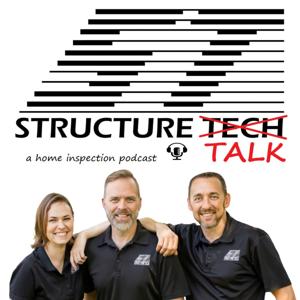
Structure Talk is a podcast about houses, home maintenance, home ownership, buying and selling houses, and of course, home inspections.
The show is hosted by Reuben Saltzman at
Our podcast is sponsored by Inspector Empire Builder.
Email us at [email protected]

16,689 Listeners

4,380 Listeners

32,776 Listeners

33,477 Listeners

46 Listeners

52 Listeners

2,647 Listeners
230 Listeners
380 Listeners

888 Listeners

9 Listeners

12 Listeners

33 Listeners

12 Listeners

3 Listeners