
Sign up to save your podcasts
Or

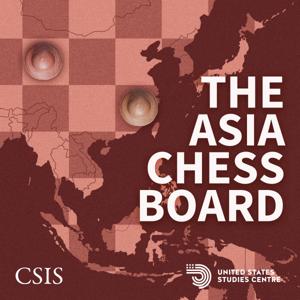

This week, Mike and Jude are joined by Kurt M. Campbell, Coordinator for Indo-Pacific Affairs in the National Security Council, and Mira Rapp-Hooper, Senior Adviser on China at the U.S. Department of State's Policy Planning Staff. They begin by discussing educational and professional experiences that build the groundwork for successful careers in international relations. They then discuss the recent one-year anniversary of the U.S. Indo-Pacific Strategy, noting that the approach reflects the recognition of “a new strategic era” in the region. They underline the Strategy’s focus on alliances and emphasize the importance of promoting broader regional engagement and shared interests beyond the framework of competition with China. Next, they discuss the implications of China’s evolving diplomatic approach towards the United States and regional partners. They conclude the conversation by exploring recent narratives of China’s overreach, and how U.S. strategy might react to a course correction in Beijing that would present China as a stronger, more reliable partner in the Indo-Pacific.
 View all episodes
 By Center for Strategic and International Studies

4.7
102102 ratings
This week, Mike and Jude are joined by Kurt M. Campbell, Coordinator for Indo-Pacific Affairs in the National Security Council, and Mira Rapp-Hooper, Senior Adviser on China at the U.S. Department of State's Policy Planning Staff. They begin by discussing educational and professional experiences that build the groundwork for successful careers in international relations. They then discuss the recent one-year anniversary of the U.S. Indo-Pacific Strategy, noting that the approach reflects the recognition of “a new strategic era” in the region. They underline the Strategy’s focus on alliances and emphasize the importance of promoting broader regional engagement and shared interests beyond the framework of competition with China. Next, they discuss the implications of China’s evolving diplomatic approach towards the United States and regional partners. They conclude the conversation by exploring recent narratives of China’s overreach, and how U.S. strategy might react to a course correction in Beijing that would present China as a stronger, more reliable partner in the Indo-Pacific.
253 Listeners

602 Listeners

1,064 Listeners
150 Listeners
609 Listeners
210 Listeners

768 Listeners

717 Listeners
2 Listeners
288 Listeners

147 Listeners
424 Listeners

6 Listeners

85 Listeners
17 Listeners
405 Listeners
1 Listeners
143 Listeners
21 Listeners
25 Listeners
4 Listeners
449 Listeners
2 Listeners

5 Listeners
269 Listeners
47 Listeners

0 Listeners

2 Listeners
13 Listeners
10 Listeners
0 Listeners

0 Listeners