
Sign up to save your podcasts
Or



Based on Podcast App listening data
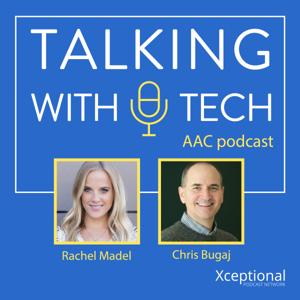
This week, the TWT team presents another “Small Talks” episode featuring short conversations with AAC specialists Erin Sheldon, Kelly Fonner, Lance McLemore, and Mo Buti!
Key ideas this episode:
🔑Suggest an AAC evaluation for young children (2-3 years old) with limited expressive language, because we don’t have to delay language skills while other skills (e.g. articulation skills) catch up.
🔑Try to use fun, memorable stimuli and prompts in therapy, because clients talk more about things that are silly, remarkable, and novel.
🔑Ask students who are AAC users to use their vocabulary to talk about the curriculum in the classroom, not just answer basic vocabulary questions.
For show notes, links to resources, past episodes, and more, visit bit.ly/twtpodcast!
This week on TWT, Chris interviews Brian Whitmer, CEO of CoughDrop, about OpenAAC.org and the “open” movement supporting AAC users and their right to move communication boards from one system to another, access a free set of symbols, open 3rd party apps inside their AAC systems, and more!
Key ideas:
🔑Many AAC developers do not allow communication boards to be moved from one communication system to another system, especially if that system is not owned by the developer. This can lead to users being stuck on old, broken equipment when a system or device is no longer supported.
🔑Giving control back to the user can be good for developers as well as users! Building customer goodwill can be a powerful way to build customer loyalty.
🔑The Communication Workshop (https://www.coreworkshop.org) is a growing collection of free materials, videos, and prompts for teaching words and ideas to AAC users.
For show notes, links to resources, past episodes, and more, visit bit.ly/twtpodcast!
This week on TWT, Rachel interviews Alyssa Hillary Zisk! Alyssa is a graduate student in neuroscience who shares their experiences as an autistic adult who uses AAC part of the time to communicate.
Key ideas this episode:
🔑Some autistic adults experience intermittent or insufficient speech.
🔑Some of these adults use AAC part of the time.
🔑It is important to give AAC users the same chance to participate in discussions and to allow them to communicate in whatever modality they choose.
For show notes, links to resources, past episodes, and more, visit bit.ly/twtpodcast!
This week on TWT, we share the second half of Rachel’s interview with Carly Stoltenberg! Carly is an SLP who was diagnosed with Guillain-Barré Syndrome (GBS) two years ago. At one point in her recovery, Carly was paralyzed and unable to speak. In the second half of the episode, Carly shares what she has learned about valuing the uniqueness of each person in our care, and why honesty about her struggles with GBS has led to greater, more meaningful connections with others!
Key ideas this episode:
🔑There are many ways to acquire AAC, and successful implementation doesn’t always require the involvement of an “AAC expert.”
🔑The “wrong” AAC is often better than no AAC at all.
🔑We should respect the differences in each patient, because there no “one size fits all” when it comes to a person’s treatment and care.
For complete show notes for this episode, visit bit.ly/twtpodcast
Earn CEUs from listening to Talking with Tech at linktr.ee/talkingwithtech
This week on TWT, we air the first half of Rachel's interview Carly Stoltenberg, an SLP who was diagnosed with Guillain-Barré syndrome two years ago. At one point in her recovery, Carly was paralyzed and unable to speak. Carly shares her amazing journey to regain her ability to walk and talk, and how this has shaped her passion for positive thinking and patient advocacy!
Key ideas this episode:
🔑The critical need for patients to be able to communicate with medical professionals during treatment.
🔑How Carly used low-tech AAC to communicate when she was paralyzed.
🔑A resilient attitude isn’t about “not having bad days,” its about getting back up when you’ve been knocked down.
For complete show notes for this episode, visit bit.ly/twtpodcast
Earn CEUs from listening to Talking with Tech at linktr.ee/talkingwithtech
This week, Chris interviews Charlie Danger, an occupational therapist from the UK who specializes in assistive technology and AAC! Charlie shares from his fascinating experiences working with AT and AAC in Qatar, including how to increase our understanding of other cultures and the importance of learning about our own!
Key ideas this episode:
🔑 Importance of encouraging more than requests from AAC users
🔑 Why “different but not less” applies to both cultural and neurological differences
🔑 Strategies for working with AAC users and families from different cultures
For complete show notes and links from this episode, visit bit.ly/twtpodcast
Earn CEUs from listening to Talking with Tech at linktr.ee/talkingwithtech
This week, Chris interviews Longwood University graduate students Shannon Graham, Courtney Kaczmarek, Lizzie Llewellyn, and Payton Yates!
Key ideas this episode:
🔑 Students’ research on ways people, like teachers, learn AAC
🔑 Benefits (and challenges) of 1:1 instruction
🔑 Value of encouragement from mentors and supervisors
For complete show notes and research discussed in the episode, visit bit.ly/twtpodcast
Earn CEUs for listening to Talking with Tech and more at linktr.ee/talkingwithtech
This week, Rachel interviews speech-language pathologist and mindfulness meditation leader Melanie Pensak! Melanie offers nature-based and home-based speech-language therapy services through her business, Destination Speech. In addition to her work as an SLP, Melanie leads wellness workshops and meditation groups, and specializes in helping therapists and parents prevent burnout and increase joy! Melanie believes that being aware of the present moment is a “superpower” that everyone can use to live life with more joy!
Three keys from this week’s episode:
🔑 Why making small changes over time often leads to the biggest results.
🔑 How mindfulness can be helpful for children, especially those with complex communication needs.
🔑 How mindfulness can be promoted in therapy through play-based activities, such as creating a focus on breathing by pretending to blow out a candle.
Links:
To learn more about Melanie, visit www.melaniepensak.com
For links to resources from this week’s episode, to listen to previous episodes, and more, visit linktr.ee/talkingwithtech!
This week, Talking With Tech is re-broadcasting the second half of our March 31st Facebook Live episode with Matt Hott, host of the SpeechScience podcast! Continuing where they left off last week, Rachel discusses how a AAC Clinical Speciality Certification could benefit SLPs in private practice, and why we should focus on how certification affects AAC users, not just ASHA members. Chris shares ideas about possible “microcredentials” that demonstrate expertise in particular sub-specialty areas, like eye gaze devices, least-to-most prompting, etc. Rachel notes that the Speciality Certification would expose those seeking certification to the latest evidence and best practices for AAC. Rachel also discusses the need for all clinicians to be more confident about AAC, whether or not they are certified. Matt shares why certification would give him more confidence as an SLP when working with parents and clients. Chris notes the importance of being motivated to learn, whether or not we are working towards certification. Rachel and Chris conclude by sharing their hope that the AAC Specialty Certification will support a “coaching” model that empowers communication partners to facilitate language all day long!
Links:
SpeechScience podcast: xceptionaled.com/podcasts/speech-science/
To join the Talking With Tech Facebook Group, earn CEUs, and more, visit linker.ee/talkingwithtech!
For Part 1 of our Facebook Live episode on AAC Clinical Specialty Certification, click here
This week, the TWT team is re-broadcasting the first half of our March 31st Facebook Live episode! Rachel, Chris, and Matt Hott of the SpeechScience podcast took questions from listeners about the ASHA AAC Clinical Specialty Certification. During this free-flowing discussion, they share concerns with the “expert” model, why Specialty Certification may help improve graduate-level AAC instruction, and how a Specialty Certification could impact private practices working with AAC. Rachel and Chris also touch on concerns about insurance payments, the need for more a collaborative approach to assessment, questions about who should be considered an “AAC Specialist”, and more!
Links:
SpeechScience podcast: https://xceptionaled.com/podcasts/speech-science/
Chris Bugaj's book, "The New Assistive Tech: Making Learning Awesome for All!": https://www.amazon.com/New-Assistive-Tech-Learning-Awesome/dp/1564846881
For Part 2 of our Facebook Live episode on AAC Clinical Specialty Certification, click here
From the publisher's feed
Ranked by our users in the last 21 days

21,780 Listeners

43,352 Listeners

12,187 Listeners

14,907 Listeners

69,495 Listeners

4,754 Listeners
427 Listeners

4,523 Listeners

3,461 Listeners
5,816 Listeners
12,705 Listeners

17,644 Listeners

10,652 Listeners

13,624 Listeners
3,426 Listeners