
Sign up to save your podcasts
Or

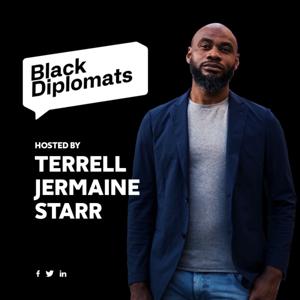


Today’s episode of Black Diplomats is a primer on the war in Nagorno-Karabakh, a disputed region in the mountains between Armenia and Azerbaijan. Host Terrell J. Starr talks to Lika Zakaryan, a journalist who has spent her life in Nagorno-Karabakh, known as Artsakh to the locals. Over 90% of the population of Artsakh is ethnically Armenian, but due to political wrangling in the Soviet era it is considered a territory of Azerbaijan.
Zakaryan could hear bombs going off in the background during our interview, and was interrupted near the end with news of a ceasefire planned for the next morning. With family and friends on the front lines, Zakaryan has chosen to tell human stories rather than political ones. Her powerful testimonials remind us all of the cost of violence, and the indifference of the people in power.
Lika Zakaryan is a journalist with CIVILNET who is reporting directly from Stepanakert, the capital of Nagorno-Karabakh where she was born and raised, and currently lives. Go to her Twitter feed to access her reporting from the ground.
Thank you for listening!
On Black Diplomats this week, host Terrell J. Starr is joined by two experts in world affairs to talk about President Trump’s foreign policies, and how he has tried to use the State Department to further his own interests. What does having a White Supremacist in Chief mean for American relations with the countries in Africa? They also discuss the advantages of diversity in the diplomatic corps from an insiders perspective, and what it’s going to take to repair the damage done by Tump’s shallow posturing.
Desiree Cormier Smith is the Senior Policy Advisor for Africa, Europe, and Eurasia for the Open Society Foundations. Previously, she was a Senior Director of the Africa practice at Albright Stonebridge Group, a strategic advisory firm. Prior to that, she was a Foreign Service Officer with assignments in Ethiopia, Mexico, South Africa, and Washington, DC.
Mr. Travis L. Adkins is a Lecturer of African and Security Studies at the Walsh School of Foreign Service at Georgetown University. As an international development leader, he has two decades of experience working in governance, civil society and refugee and migration affairs in over 50 nations throughout Africa and the Middle East. This includes serving as Staff Director of the House Subcommittee on Africa, working with leading international NGOs and think tanks, as well as within several branches of the United Nations system.
Check out blackdiplomats.net for more information.
Thank you for listening!
Black Diplomats is back to talk about nuclear non-proliferation with two experts from Eastern Europe - Polina Sinovits from Ukraine, and Ekaterina Mikhaylenko from Russia. Both women study, write, and teach about the way nuclear weapons affect international relations, and the massive, stupid threat they pose to the world.
Host Terrell J. Starr has interviewed many experts in the field and contributes his own analysis of the ways the so-called Nuclear Club contributes to maintaining white supremacy on a global scale. They discuss the absurd numbers of nuclear weapons around the world and the cost to maintain them, disarm the myth of deterrence, and talk about what steps must be taken to walk humanity back from the brink.
Ekaterina Mikhaylenko is Associate Professor at the Department of Theory and History of International Relations of Ural Federal University.
She has more than 18-years experience teaching the history of international relations, political and security issues at the Department of International Relations, Ural Federal University. Currently Ekaterina is teaching courses, related to contemporary issues of international relations and international security problems. Ekaterina has more than 20 publications, in Russian and English, on European regionalism and projects realized in the post-Soviet space.
Polina Sinovets is the head of the Odessa Center for Nonproliferation at the Odessa I. I. Mechnikov National University, Ukraine. She is also Associate Professor in the International Relations Department at ONU.
Previously Dr. Sinovets served as senior research associate at Ukraine's National Institute for Strategic Studies, as well as a fellow at the James Martin Center for Nonproliferation Studies and NATO Defense College. She is an expert in nuclear weapons policy and published articles in the Bulletin of the Atomic Scientists, Russia in Global Politics, NATO Defense College Research Papers etc.
Dr. Sinovets is currently a Fulbright Scholar at the James Martin Center for Nonproliferation Studies, Middlebury Institute International Studies, based at Washington DC.
Thank you for listening!
This is the third episode in our special coverage of the revolution in Belarus.
After their last election was rigged to keep a dictator in power, hundreds of thousands of people have taken to the streets to demand he step down. Top activists have been prosecuted, causing well known politicians and journalists to flee the country in fear for their safety.
Host Terrell J. Starr talked to Katsiaryna Shmatsina, a Belarusian political analyst focused on Belarusian foreign policy, regional security, and the impact of great power relations on smaller actors.
Shmatsina is one of the people who left Belarus after seeing the authoritarian government crack down. She continues her work through contact with an underground network still fighting the good fight in country.
Katsiaryna’s portfolio includes non-residential fellowship at the German Marshall Fund (2020) and Think Visegrad Fellowship (2019). Previously, she worked for the American Bar Association where she managed the democratic-governance and rule-of-law projects. She holds a Master’s in international relations from Syracuse University, New York and a law degree from Belarusian State University.
Thank you for listening!
Volodymyr Dubovyk has a resumé that is long enough to make you dizzy.
He is a faculty member in the International Relations department at Odessa I. I. Mechnikov National University and an expert on the foreign policy of the US and Ukraine. As Ukraine’s leading “Americanist”, he often travels in the States to speak on Eastern Europe, and travels Eastern Europe to speak on the States. This cross-cultural communication is exactly the kind of thing we like to facilitate on Black Diplomats.
On this episode host Terrell J. Starr talks to Dubovyk about the perspective of Ukrainian people on the U.S., anti-Black stereotypes that are alive and well in Europe, and how the summer uprisings in American cities are being talked about around the world. Starr interviewed Dubovyk in person in Odessa, Ukraine.
For more information about Black Diplomats check out blackdiplomats.net or @russian_starr on Twitter.
Thank you for listening!
Mike Espy was born and raised in Mississippi, and was Assistant Secretary of State, then Assistant Attorney General, before becoming a Congressman in 1986. He was the first Black congressman from Mississippi since Reconstruction, and then became Secretary of Agriculture under Bill Clinton, the first Black person to hold that position in our nation’s history.
Now Espy is running to replace Cindy Hyde-Smith, who was appointed by a Republican governor after Thad Cochran retired from the seat. Hyde-Smith has a long history of engaging with racist Southern tropes, defending racist symbols, and supporting self-segregated schooling.
Host Terrell J. Starr talks to Espy about running for Senate in the age of COVID-19, his work with different non-profit organizations, and American relations with the countries of Africa. Espy is an expert on trade, so he shares his thoughts on the tariff war the U.S. has been waging on China, investing in developing nations, and how a few rotten soybeans can be a symbol of a global market shift.
Thank you for listening!
On this episode of Black Diplomats we’re talking to three Transgender Black Women in three different countries about what liberation looks like for them. There is more transgender representation in media and politics than ever before, but transgender people still have to deal with hate and misgendering. Host Terrell J. Starr brings together a brilliant panel of activists from the US, Nigeria, and South Africa to fill us in on where the movement stands today, what it means for their fight to be connected on a global scale, and the true sound of freedom for Transgender Black Women everywhere.
Our guests include Diamond Stylz in Houston, Texas, Executive Director of Black Trans Women Inc., a national non-profit that is led by Black trans women focused on social advocacy, positive visibility and building strong leadership among Black trans advocates, activists, and our allies.
We also have Audrey Mbugua, a Kenyan activist who heads Transgender Education and Advocacy (TEA), an organization that defends the rights of transgender individuals in Kenya. In 2014, Mbugua won a landmark case, wherein the Kenya National Examinations Council was ordered to legally change Mbugua’s name and remove the existing gender designation on her academic certificates.
Rounding out our brilliant panel is Ricki Kgositau, an openly identified transwoman from Botswana who lives in Cape Town, South Africa. She is Executive Director to an International NGO known as Accountability International, which has a global team in Belgium, Kenya, Sweden (where it was founded and registered) and South Africa (where she is based in the Cape Town office).
When asked about the security services in Belarus, journalist Hanna Liubakova has a simple message:
“There are no rules.”
Black Diplomats host Terrell J. Starr interviews Liubakova about the ongoing protests in her country, and the brutal methods being used to shut them down. As a frontline journalist Liubakova and her colleagues have documented the beatings, arrests, and other crowd control methods employed by a corrupt dictator to maintain his hold on power.
This is a special episode of Black Diplomats, released in addition to our regularly scheduled weekly shows. The ongoing revolution in Belarus is a major development in the Russian sphere of influence and we will continue to bring you interviews with people on the ground as it evolves.
Follow Hanna on Twitter to keep up with the daily events.
Hanna Liubakova is a freelance journalist and researcher from Belarus. She is currently a journalist with Outriders, an international multimedia platform that produces in-depth multimedia and interactive reporting and focuses on solutions journalism. She also works as a journalism trainer and mentor. She started her career at the only independent Belarusian TV channel where she worked as a correspondent and TV presenter. Hanna has reported from various countries and regions, including Belgium, UK, Poland, France, and Chechnya. She was a recipient of the Václav Havel Journalism Fellowship at Radio Free Europe/Radio Liberty in Czechia, as well as a World Press Institute Fellowship in the United States. Hanna received a degree in Art History from The Jagiellonian University in Krakow, Poland in 2010 and a Master of Art with distinction in International Journalism from Brunel University in London in 2017. She was awarded the Peter Caws Prize for best postgraduate dissertation.
Thank you for listening!
This week on Black Diplomats, host Terrell J. Starr welcomes Maryia Sadouskaya-Komlach, a media development specialist who has lived and worked all over Europe, but is from Belarus.
There have been nationwide protests in her home country for more than a month at the time of this recording, with the goal of ousting dictator Alexander Lukashenko and establishing a democracy.
“The constitution of Belarus still says there has to be free and fair elections!,” says Sadouskaya-Komlach in the interview. “The constitution of Belarus says that Belarus is a unitary, sovereign, democratic state. So the people came there to defend their constitution. To defend their basic right.”
Maryia’s research interests are democracy transition, human rights, media development in "closed" environments, including exiled media, disinformation, and the development of new communication and media strategies and responses. Being a Belarus native, she has covered the EU-Belarus relations and Belarusian foreign policy since 2001.
In 2015, Maryia advised the European Endowment for Democracy on its Feasibility Study on Russian-language Media Initiatives. In 2019, she co-wrote a comprehensive analysis of Syrian exiled media for the International Media Support (Denmark). Maryia currently leads the Eurasia team at the Dutch non-for-profit media support organization Free Press Unlimited and contributes as a freelancer to several European media outlets. She looks for synergies between like-minded professionals and organizations all over the globe and specializes in creating and managing networks.
Thank you for listening!
In this very special episode of Black Diplomats, host Terrell J. Starr takes a break from the news cycle to talk about going abroad as a Black person from America. He’s been in the Carpathian mountains in Ukraine for a few weeks, away from the hustle and noise of New York, enjoying the countryside.
With the separation comes a kind of clarity. Terrell talks about the pressures of being Black, and the benefits of relieving those pressures when the opportunity arises. And he asks a simple question: what could life be like in a world without racism, where people could simply exist as people?
“I support the protests,” he says, “but what would it be like if I didn’t have to protest? What if I could just be?”
Thank you for listening!
From the publisher's feed

1,069 Listeners

428 Listeners

87,116 Listeners
6,108 Listeners

111,799 Listeners

24,705 Listeners

32,244 Listeners
3,950 Listeners

5,227 Listeners

7,288 Listeners
4,602 Listeners

5,781 Listeners

89 Listeners
368 Listeners
208 Listeners