
Sign up to save your podcasts
Or

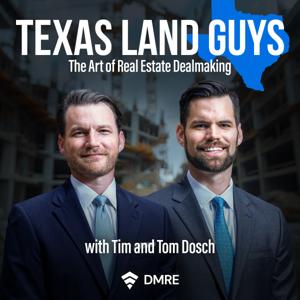


In this episode of the Texas Land Guys Podcast, Tom Dosch and Trippp Rich examine the role of local politics in Texas land development. They discuss how zoning regulations, community opposition, state legislation, and municipal decisions affect development opportunities, property rights, and land values.
The episode also addresses zoning regulations, future land use plans, Senate Bills 840 and 15, and changes to extraterritorial jurisdiction rules. These policies influence where development can occur and how cities manage population growth. The hosts explain how local governments must weigh neighborhood concerns against the potential benefits of new projects, including housing, employment, infrastructure investment, and tax revenue.
Tom and Tripp discuss the practical steps developers can take to address opposition, including traffic and noise studies, site plan adjustments, landscaping, and direct communication with nearby residents. They also examine the financial implications of zoning decisions, using examples of projects affected by changing market conditions and local political priorities. A development in Bastrop illustrates how revising a proposal to reflect market demand can help move a project forward.
The episode highlights the relationship between political decisions and property value. For landowners, zoning restrictions or changes in local policy can affect development potential and long-term financial plans. For developers, understanding local government priorities and maintaining productive relationships with community members can influence the outcome of a project.
Key Takeaways
Texas is landowner-friendly: strong control over your land, less over your neighbor’s.
Zoning sets today’s value; future land use hints at highest and best use but requires a political rezone.
SB 840 allows multifamily by right on qualifying commercial sites. SB 15 allows 3,000 sq. ft. single-family lots.
Cities don’t always like these laws, and some offer zoning in exchange for annexation to keep projects on their tax rolls.
Councils balance long-term tax revenue and jobs against vocal opposition and re-election.
Data centers could be “the new oil” for struggling small towns.
A denied rezone can erase a family’s retirement. $500K on the tax rolls can become tens of millions once developed.
Price political risk: a $15M offer that won’t get approved may be worth less than a $10M one that will.
In This Episode
[00:00] Intro
[01:18] Why talk about the politics of land use
[04:43] What a MUD is and how these meetings normally go
[06:19] Rural landowners and how fast development catches up
[11:30] Landowners surrounded by development and ready to sell
[14:34] Zoning vs. future land use, and how SB 840 and SB 15 changed the game
[28:33] What developers are trying to accomplish
[34:06] What city councils are really weighing
[38:50] Tripp’s data center story and the “new oil” argument for small towns
[45:56] Misinformation, outreach, and why developers bring cookies
[50:18] Market shifts, ground-floor retail requirements, and Tripp’s fence story
[56:07] Police escorts and heated council meetings
[57:33] Bastrop: a rezone approved in about 75 days
[01:01:01] How politics can create or erase value, and what’s at stake for families
[01:01:07] Apartments, tax revenue, and a city that regretted saying no
Resources and Links
Podcast
https://podcasts.apple.com/us/podcast/welcome-to-the-texas-land-guys-podcast-the-art/id1788566687?i=1000682586353
https://dmre.com/
Tripp Rich
https://www.linkedin.com/in/tripp-rich-52b35b60
https://dmre.com/
https://ascentinv.com/
https://100xharvest.org/
Tom Dosch
https://www.linkedin.com/in/tom-dosch-37263b3b/
https://dmre.com/
https://ascentinv.com/
https://100xharvest.org/
In this episode of the Texas Land Guys Podcast, brothers Tom Dosch and Tim Dosch pick up where they left off, looking at the Texas commercial real estate market as the year heads into its final quarter. Houston's industrial market is booming, with record absorption, rising land prices, and massive investment tied to AI infrastructure. The brothers discuss deals involving SpaceX, the growing demand for industrial sites, and why some Houston land values have increased as much as fivefold. But with the best sites becoming harder to find, they ask how long this momentum can last.
They then explore the risks behind the AI boom. Could rising debt, regulation, or a slowdown in data center development change the outlook for Texas industrial real estate? Tom and Tim also offer advice to landowners holding out for a potential data center deal, especially when a credible industrial buyer is already at the table. They explain why opportunity cost matters, why waiting for the perfect offer can backfire, and how emotions like greed and fear can lead landowners to miss good opportunities.
Finally, Tom and Tim examine the retail, hospitality, storage, and senior housing markets across Texas. Grocery-anchored retail and suburban commercial development are benefiting from population growth, while other property types remain more challenging. They wrap up by discussing interest rates, the broader economic outlook, and why Texas remains well positioned despite the uncertainty. Their message to landowners is clear: property values change with the cost of capital and the rents a property can generate, not simply what someone was willing to pay a few years ago.
Key Takeaways
Houston's industrial market is exceptionally strong, with record absorption, rising land prices, and major demand from AI infrastructure and data center investment.
Industrial land prices in some areas have increased as much as fivefold, while strong demand is pushing developers farther out from established growth corridors.
Utility access, wetlands, roads, and site readiness are becoming major challenges as the supply of easy-to-develop industrial sites shrinks.
The AI boom could continue driving Texas growth, but debt burdens, regulation, and limits on available power create risks.
Landowners should weigh a credible offer today against the uncertainty of waiting years for a potential data center buyer.
Retail development is expanding alongside population growth, particularly grocery-anchored centers, neighborhood retail, and suburban power centers.
Self-storage, senior housing, and hospitality activity varies by market, with oversupply and competition limiting opportunities in some areas.
Texas remains attractive because of continued population growth, job creation, corporate relocations, and investment from major companies.
In This Episode
[00:00] Intro and the Texas real estate market heading into year-end
[03:48] DFW's industrial growth and the search for developable sites
[06:36] AI infrastructure, manufacturing, and the next wave of Houston growth
[08:36] Could AI regulation or a market correction slow industrial development?
[12:24] Should landowners wait for a data center buyer?
[17:16] Why landowners struggle to let go of unrealistic price expectations
[23:38] Houston's single-family market and the shift away from far-out development
[36:36] Retail growth, grocery-anchored centers, and expanding suburbs
[44:37] Interest rates, inflation, and the outlook for the final quarter
[52:42] Why the hosts remain optimistic about Texas
[55:22] Wrap-up and a look ahead
Resources and Links
Podcast
https://podcasts.apple.com/us/podcast/welcome-to-the-texas-land-guys-podcast-the-art/id1788566687?i=1000682586353
https://dmre.com/
Tim Dosch
https://www.linkedin.com/in/tim-dosch-67a07899
https://dmre.com/
https://ascentinv.com/
https://100xharvest.org/
Tom Dosch
https://www.linkedin.com/in/tom-dosch-37263b3b/
https://dmre.com/
https://ascentinv.com/
https://100xharvest.org/
In this episode of the Texas Land Guys Podcast, brothers Tom Dosch and Tim Dosch talk about a rough week for real estate. The 10-year Treasury jumped above 5.2% in a single day, oil is hovering near $100 amid tensions with Iran, and the Fed is raising rates. They break down what all of this means for land sellers, developers, and investors across Houston, Dallas-Fort Worth, and Austin, and whether the market is heading into a new downturn or reaching the floor of the next cycle.
They then dive into how the land market is actually adjusting. In Houston, sellers are offering long closing extensions. In DFW, some sellers who held firm on price and timing are now walking away from deals at roughly 50% haircuts. Tom and Tim also compare the sharp move in rates to 2007 and 2022, explain why land takes longer to reprice even when investment sales move quickly, and share why Tim believes this could be the beginning of a new boom cycle.
The second half takes a deep dive into multifamily oversupply in the suburbs, the return of urban and infill deals, and a struggling consumer. They also look at the resurgence of infill office in Houston and the possibility of an Austin comeback. Tim breaks down the wall of commercial real estate debt maturities, while both hosts explain why they are cautious about land debt.
They wrap by looking at AI as an economic driver, efforts to regulate robotaxis, and the data center boom that has helped make industrial one of the hottest asset classes in Texas. This is part one of a two-part conversation, with the second half coming next week.
Key Takeaways
The 10-year Treasury spiked above 5.2%, causing immediate pressure on investment sales and cap rates.
Land is the first to adjust in a downturn, and in Houston that means sellers offering 6- to 12-month extensions.
In DFW, sellers holding firm are getting squeezed, and some land deals are trading at 50% discounts.
The economy is K-shaped, with AI and data centers driving real GDP growth while many consumers struggle.
Construction costs are rising for steel and concrete due to data center and infrastructure demand.
$865 billion in commercial real estate debt matures in 2026, and another $645 billion in 2027, much of it at higher rates.
AI is transformational but faces a likely market correction due to debt and liability concerns.
Regulation and financial interests are shaping the AI debate, including opposition to robotaxis.
Data centers are driving industrial absorption and creating high-paying jobs in Texas.
The next 6 to 18 months will be a critical window for establishing a market floor.
Texas land remains bullish long term due to population growth and economic diversification.
In This Episode:
[00:00] Intro
[00:40] A "horror movie" week: the 10-year runs above 5.2%
[02:09] Oil, Iran, the Fed, and whether this is an inflection point
[08:14] Houston: sellers extending closings into 2027
[09:04] DFW: sellers holding firm, land debt, and 50% haircuts
[13:31] Five years since the 2021 peak: "Glad we didn't win that deal"
[17:16] Tim's view: the floor is forming and a new cycle is starting
[22:07] Data centers, TerraFab, steel and concrete, and a K-shaped economy
[28:03] PFC/HFC deals and the oversupply ripple in North DFW
[39:41] $865B in 2026 maturities and the refinancing wall
[43:12] Land debt, rising basis, and why not to throw good money after bad
[45:02] AI: bubble risk, liability, and regulation
[48:28] Robotaxis, Waymo, and who benefits from the fear
[52:31] Wrap-up and a preview of part two
Resources and Links
Podcast
https://podcasts.apple.com/us/podcast/welcome-to-the-texas-land-guys-podcast-the-art/id1788566687?i=1000682586353
https://dmre.com/
Tim Dosch
https://www.linkedin.com/in/tim-dosch-67a07899
https://dmre.com/
https://ascentinv.com/
https://100xharvest.org/
Tom Dosch
https://www.linkedin.com/in/tom-dosch-37263b3b/
https://dmre.com/
https://ascentinv.com/
https://100xharvest.org/
In this episode of the Texas Land Guys Podcast, Tom Dosch, Tim Dosch, and Tripp Rich sit down for a candid roundtable discussion on the seismic shifts AI is creating across the economy and what it means for Texas land and real estate. They dig into competing predictions about AI’s pace, from Elon Musk’s rapid takeoff vision to more cautious forecasts of AGI by the turn of the century, and debate whether we’re in a bubble destined to pop or witnessing the most transformational technology ever invented.
They explore the dot-com comparison, sharing a prediction of a likely 30 to 50 percent market correction that won’t slow AI’s long-term adoption. They also discuss Elon Musk’s unprecedented scaling across multiple companies and the critical power infrastructure challenges that could limit or reshape Texas development. Throughout, they highlight how data centers are bringing massive tax revenue benefits to communities while raising concerns about Texas’s reactive rather than proactive approach to power generation.
Wrapping up, they tackle the implications for land values, interest rates, and the potential for “financial repression” as a response to economic downturns. They express long-term bullishness on Texas land driven by population growth and job creation, even as they acknowledge the rocky 12 to 24 month periods that may lie ahead.
Whether you’re a landowner, developer, or investor, this episode offers a pragmatic, forward-looking take on navigating the AI era in Texas real estate.
Key Takeaways
AI adoption will take longer than the hype suggests, but the technology itself is transformational and won't be stopped by a market correction.
A 30-50% market correction is likely, but it won't slow AI capability growth or adoption
Texas is uniquely positioned to benefit from AI investment, with trillions flowing into the Texas Triangle
Power generation and infrastructure are the biggest bottlenecks for AI data centers in Texas
Elon Musk's companies, including Starlink, Tesla, SpaceX, and xAI, are scaling at unprecedented speed and meeting real consumer needs
Natural gas plants operating at 60% capacity could be redirected to power data centers
Data centers bring massive tax revenue benefits to communities. Some municipalities see 30% of tax revenue from a single facility
Land values should benefit from AI-driven economic growth and population migration to Texas
If a recession hits, expect money printing, lower rates, and potential financial repression
The next 6-18 months will be a critical window for AI investment and market dynamics
In This Episode:
[00:00] Intro
[01:58] Two takes on AI's pace: fast takeoff vs. a much slower rollout
[07:16] Tripp: Elon's speed, hype, and why adoption is the real question
[09:14] China's power investment vs. U.S. data centers on an aging grid
[10:04] Implementation lag and a two-speed economy
[11:22] Tripp: Tesla self-driving as an adoption story
[13:41] Tim's prediction: an AI market correction and the dot-com comparison
[17:23] Data centers replace fracking as the villain
[22:21] The counterargument: Elon's pace, Grimes County, Starlink
[31:04] Trillions being invested on the ground in Texas
[31:56] Data centers in space and Texas's power policy problem
[35:40] The COVID parallel, $40T debt, and financial repression
[36:51] Summary: the next 6 to 18 months
[37:34] Population growth and the long-term case for Texas land
[39:16] Wrap-up
Resources and Links
Podcast
https://podcasts.apple.com/us/podcast/welcome-to-the-texas-land-guys-podcast-the-art/id1788566687?i=1000682586353
https://dmre.com/
Tripp Rich
https://www.linkedin.com/in/tripp-rich-52b35b60
https://dmre.com/
https://ascentinv.com/
https://100xharvest.org/
Tim Dosch
https://www.linkedin.com/in/tim-dosch-67a07899
https://dmre.com/
https://ascentinv.com/
https://100xharvest.org/
Tom Dosch
https://www.linkedin.com/in/tom-dosch-37263b3b/
https://dmre.com/
https://ascentinv.com/
https://100xharvest.org/
In this episode of the Texas Land Guys Podcast, brothers Tim and Tom Dosch break down the macro forces weighing on land and commercial real estate. With Brent crude near $110, the Iran conflict heating up, the 10-year Treasury approaching 5%, and the midterm elections around the corner, investors are hesitant to commit capital. They explain why this uncertainty has stalled recovery in 2026 and why higher oil, diesel, and financing costs ripple through the entire economy.
The conversation then turns to the U.S. debt crisis. At $40 trillion and roughly 125% debt-to-GDP, with $2 trillion a year just to service it, Tim argues the country will likely print its way out, creating a soft default through inflation. That hurts cash holders and the middle class but benefits asset holders, making land and income-producing property a potential hedge. They clarify the difference between a cap rate and a Treasury yield, why the 10-year matters to developer underwriting, and how higher rates can immediately pressure land values even as long-term money printing inflates them.
Tim and Tom discuss why developers are becoming pickier, why only the best sites with strong stories are getting capitalized, and why industrial and AI/data-center development is carrying much of Texas. They warn that AI regulation and midterm outcomes could slow that engine, potentially triggering a recession. Looking ahead, they expect near-term volatility, possible deals falling out, a multifamily reset, and a continued flight to quality into 2027.
Key Takeaways
Macro uncertainty, including $100+ oil, the Iran conflict, 5% Treasuries, and the midterms, keeps investors cautious.
U.S. debt is a long-term structural problem; $40T debt costs ~$2T/year to service.
Debt-to-GDP above 130% has historically led to soft or hard defaults; the U.S. may print its way out, causing inflation.
Inflation hurts cash and helps asset holders, making land and income property a potential hedge.
The 10-year Treasury is market-set and directly affects developer underwriting, cap rates, and land values.
A cap rate is not a bond; it reflects current NOI and bets on future rent growth and appreciation.
Short-term higher rates can lower land values; long-term money printing tends to inflate them.
Industrial and AI/data-center development carries much of Texas’s economy now.
AI regulation is a wildcard; slowing data centers could crush the economy downstream.
Flight to quality will continue; the multifamily reset may make 2027 underwriting difficult.
In This Episode:
[00:03] Intro
[00:37] Market uncertainty: $100 oil, 5% Treasuries, Iran war
[02:02] Why capital has been hesitant in 2026
[03:18] U.S. debt crossing $40 trillion and Iran’s incentive before midterms
[05:40] Texas economy: high oil prices help and hurt
[06:34] National debt, Japan, the yen carry trade, and the 10-year
[08:46] Debt-to-GDP, inflation, and printing our way out
[13:52] The 10-year Treasury vs. the Fed’s short-term rate
[16:35] Cash opportunity cost and real inflation
[18:14] Cap rate vs. bond: NOI growth and future upside
[20:51] Developers getting pickier and the “great real estate” test
[25:41] Recession response, government spending, and money supply
[27:24] Industrial, AI, and data centers driving Texas
[34:38] Elon Musk’s companies employ about 160,000 people
[37:00] Predictions: oil, rates, Fed, and the next year
[42:50] Flight to quality, multifamily reset, and midterms
[45:37] Wrap-up: macro conversations with clients
Resources and Links
Podcast
https://podcasts.apple.com/us/podcast/welcome-to-the-texas-land-guys-podcast-the-art/id1788566687?i=1000682586353
https://dmre.com/
Tim Dosch
https://www.linkedin.com/in/tim-dosch-67a07899
https://dmre.com/
https://ascentinv.com/
https://100xharvest.org/
Tom Dosch
https://www.linkedin.com/in/tom-dosch-37263b3b/
https://dmre.com/
https://ascentinv.com/
https://100xharvest.org/
In this episode of the Texas Land Guys Podcast, brothers Tom and Tim Dosch continue their deep-dive conversation into the realities of a long-term career in commercial real estate. Picking up where Part 1 left off, they reflect on the deals that got away and the painful, often humbling lessons those losses taught them. Tom shares a story about a pitch gone wrong, driven by pride and arrogance, and how that moment became a defining character check. Tim opens up about the challenge of family-owned land deals, where emotion and logic collide, and why standing firm in honesty, even at the risk of losing the client, is non-negotiable.
The conversation then pivots to practical advice for young brokers just starting out. Tim and Tom stress that the first 90 days (and even the first year) aren't about closing deals; they're about building reps, making mistakes, and learning the business from the ground up. They advocate for an apprentice mindset, cold calling, and surrounding yourself with experienced mentors. They also tackle the flawed mentality that a few deals a year is enough, emphasizing that this business requires hundreds of transactions to build a real career.
Wrapping up, the brothers discuss the daily habits that have sustained them over two decades: spiritual grounding, physical health, sleep, and, most importantly, investing in relationships. They warn against the transactional mindset that burns out brokers and destroys marriages, and they encourage listeners to see clients as people, not paychecks. Whether you're a new agent, a seasoned broker, or someone considering a career in land brokerage, this episode offers a candid, wisdom-filled look at what it actually takes to last in this marathon of an industry.
Key Takeaways
Losing a deal can teach you more than winning one.
Pride and arrogance can kill deals and damage your character.
Family-owned land deals are emotionally complex, unlike institutional clients
Honest, respectful confrontation is part of a broker's job.
Your first 90 days aren't about closing deals.
Brokerage is a marathon, not a sprint.
Relationships matter more than transactions.
The best business comes from trust, not competition.
Collaboration with partners who have different strengths is invaluable.
There's no substitute for experience.
You cannot build a lasting career by relying on luck or a handful of deals.
In This Episode:
[00:00] Part two of the 40-year CRE conversation
[00:38] The worst deals Tom and Tim have lost
[01:51] What Tom learned from losing a deal because of pride
[08:27] Deals that fall apart near closing
[11:19] What decades of experience teach you
[12:18] First 90 days: How new brokers can set themselves up for success
[16:42] Why the first year should be about learning
[17:25] Why you cannot build a career on a few lucky deals
[20:30] What kind of person do you want to become?
[22:30] What a perfect day in land brokerage looks like
[25:18] Why Tom loves pitching DMRE
[28:16] Helping clients instead of simply selling a service
[29:24] The customer is the hero, the broker is the guide
[30:48] 800 transactions and $6 billion in land sales
[34:14] Stress, alcohol, sleep, and burnout
[39:05] Why relationships matter more than business urgency
[42:19] Becoming a guide for clients
[44:05] Why commercial real estate is a marathon
Resources and Links
Podcast
https://podcasts.apple.com/us/podcast/welcome-to-the-texas-land-guys-podcast-the-art/id1788566687?i=1000682586353
https://dmre.com/
Tim Dosch
https://www.linkedin.com/in/tim-dosch-67a07899
https://dmre.com/
https://ascentinv.com/
https://100xharvest.org/
Tom Dosch
https://www.linkedin.com/in/tom-dosch-37263b3b/
https://dmre.com/
https://ascentinv.com/
https://100xharvest.org/
In this episode of the Texas Land Guys Podcast, brothers Tom and Tim Dosch look back on the experiences that shaped their careers in commercial real estate and the growth of DMRE. Joined by producer Ally McElheney, they revisit the early days of land brokerage, when brokers relied on printed maps, faxed offers, handwritten contacts, and hours of driving markets before digital tools changed the business.
Tim shares what it was like to survive the Great Recession after nearly his entire deal pipeline disappeared, while Tom reflects on Houston’s repeated market shocks, including the oil downturn, Hurricane Harvey, and COVID. They explain how those cycles shaped their approach to cash, risk, hiring, diversification, and long-term thinking.
The conversation also turns to lessons beyond individual deals: moving from scarcity to abundance, investing in great people during difficult times, learning when to walk away, and building a reputation that compounds over decades. For young brokers and CRE professionals, this episode shows why character, mentorship, patience, and knowing what to say no to can matter more than chasing the next commission.
Key Takeaways
CRE brokerage has changed dramatically as mapping, CRM, and virtual tools replaced many old-school processes.
Driving the market still gives brokers insights that aerials and technology can miss.
The Great Recession taught Tim to think long-term when deals and income disappeared.
Repeated Houston downturns reinforced the value of diversification and cash reserves.
A scarcity mindset can protect you, but being too conservative can also limit growth.
Some of DMRE’s best hires were made during COVID, when hiring felt least comfortable.
Brokers make better decisions when they are not emotionally dependent on a commission.
Saying no to the wrong client, listing, or opportunity can protect time and reputation.
Character and follow-through compound over a long career.
Early mentors shaped how Tom and Tim think about reputation and long-term success.
Resources and Links
Podcast
https://podcasts.apple.com/us/podcast/welcome-to-the-texas-land-guys-podcast-the-art/id1788566687?i=1000682586353
https://dmre.com/
Ally McElheney
https://www.linkedin.com/in/allylovelace98
https://dmre.com/corporate/
Tim Dosch
https://www.linkedin.com/in/tim-dosch-67a07899
https://dmre.com/
https://ascentinv.com/
https://100xharvest.org/
Tom Dosch
https://www.linkedin.com/in/tom-dosch-37263b3b/
https://dmre.com/
https://ascentinv.com/
https://100xharvest.org/
In this episode of the Texas Land Guys Podcast, brothers Tom and Tim Dosch revisit the data center conversation after receiving significant pushback on their previous episode. They address listener comments and dig into the real arguments around water usage, job creation, economic impact, and the geopolitical race with China. With over 200 moratoriums across the US and 70 percent of the public opposing data centers, the brothers challenge common misconceptions by comparing data center water use to golf courses (which use about 10 times more water), highlighting efficiency gains (Microsoft reduced water usage by 90 percent), and debunking claims like "you don't need data centers to stream."
The conversation expands to the broader stakes: China's aggressive investment in nuclear and AI infrastructure, the US falling behind, and why data centers are essential infrastructure for the modern economy. The brothers draw a cautionary parallel to nuclear power after Three Mile Island, when the US halted development while China surged ahead.
They also address the real concern about who will control AI's values and truth, warning that the debate is likely to become a major political issue in the 2028 election. Throughout, Tom and Tim emphasize that honest conversations, based on real data rather than fear, are critical for landowners, communities, and policymakers making decisions about data center development.
Whether you are a landowner considering a data center deal, a community leader weighing the tradeoffs, or simply trying to separate fact from fiction in the AI debate, this episode offers a balanced perspective on one of the most important infrastructure conversations of our time. Tune in to hear the Dosch brothers respond to listener comments, challenge the narrative, and explain why the US cannot afford to fall behind in the global race for AI dominance.
Key Takeaways
Data centers are becoming critical infrastructure for the modern economy.
Public opposition should be based on accurate data and legitimate concerns, not fear or misinformation.
Data center development can create jobs, investment, and significant tax revenue for Texas communities.
Water usage is a legitimate concern, but new cooling technologies are making data centers increasingly efficient.
Microsoft has dramatically reduced the water used by its data centers as technology has improved.
Data centers do not necessarily compete with agriculture. Texas has significant land available for both uses.
AI may experience an investment bubble without losing its long-term importance or impact.
Technological progress has historically continued despite public resistance and political opposition.
The bigger question may be who controls AI and how powerful systems are governed.
The future of AI could transform how we work, live, build, and approach healthcare.
In This Episode:
[00:00] Podcast intro
[02:09] Wanting real discourse instead of conspiracy-style arguments
[04:41] A real gigawatt data center Tom drove past in Kirkland, Texas
[06:19] Why big technological change always triggers an emotional reaction
[08:15] A White House official's comments on AI progress, via the Moonshots podcast
[16:31] Reading and responding to listener comments
[21:05] Data center jobs and tax revenue in Texas
[24:51] Responding to the almond industry water-usage comparison
[29:41] Addressing the "you don't need data centers to stream" comment
[31:14] The real debate: who controls AI, not resource scarcity
[35:46] Predicting an AI bubble, and why it differs from the dot-com crash
[37:57] Closing thoughts and where to follow the podcast
Resources and Links
Podcast
Texas Land Guys Podcast
https://dmre.com/
Tim Dosch
https://www.linkedin.com/in/tim-dosch-67a07899
https://dmre.com/
https://ascentinv.com/
https://100xharvest.org/
Tom Dosch
https://www.linkedin.com/in/tom-dosch-37263b3b/
https://dmre.com/
https://ascentinv.com/
https://100xharvest.org/
In this episode of the Texas Land Guys Podcast, brothers Tom and Tim Dosch break down the most common mistakes sellers make in Texas land deals and how to avoid them. Drawing on decades of experience, they explain why even well-intentioned sellers can derail their own transactions.
The conversation opens with a candid look at why land is actually the most complicated real estate transaction there is, far more complex than selling an apartment building or office tower. Environmental issues, utility access, zoning hurdles, and easement problems can turn a "simple" sale into a multi-year slog. Yet many sellers approach the process as if it should be quick and painless.
Tom and Tim share real stories that illustrate these pitfalls. There's the nonprofit board that wanted to demand aggressive terms from a top-tier developer, only to be reminded that the developer could simply go to another site. There's the seller who assumed a wealthy buyer would overpay just because they could, forgetting that successful developers got that way by making smart deals, not dumb ones. And there's a flawed municipal sealed-bid process where the city expected buyers to commit six figures without providing basic information like a survey or environmental report.
The episode also dives into seller psychology, the cycle of greed and fear, ego fixated on round numbers, and family guilt over selling legacy land. Throughout, Tom and Tim emphasize that the best brokers earn their keep by having honest, sometimes difficult conversations about pricing, risk, and market reality. Trust, they argue, is the foundation of every successful deal.
Whether you're a first-time seller or a seasoned developer, this episode offers practical insights into the mistakes that kill deals and the strategies that get them to the closing table.
Key Takeaways
Land transactions are often far more complicated than sellers expect, especially for large development projects.
Environmental, utility, zoning, access, easement, and infrastructure issues can dramatically affect a property's value.
The highest offer isn't always the strongest offer. A buyer's ability to execute and secure capital matters.
Sellers can let fear, greed, and ego influence decisions about when and how to sell.
Land prices are cyclical and can move differently depending on the property's location and intended use.
Holding out for a higher price comes with taxes, financing costs, and opportunity costs.
Brokers need to know when to fight for a seller and when pushing back could actually kill the deal.
Trust allows brokers to have difficult conversations and give sellers advice they may not want to hear.
Experienced land brokers can recognize when a buyer's request is legitimate and when a retrade is simply an attempt to get a better deal.
Sometimes the best outcome for a seller is to trade out of an asset rather than continue waiting for the market to recover.
The goal isn't simply to achieve a target price. It's to make the best decision based on today's market and the cost of waiting.
In This Episode:
[00:00] Podcast intro
[02:33] Why Fall is a busy time for land deals
[09:06] A nonprofit board learns not to push buyers too far
[15:55] What sellers lost by holding out during the hot market
[18:46] How to choose between a high offer and a stronger buyer
[20:12] How greed and fear can affect seller decisions
[35:32] How market timing and holding costs can hurt sellers
[38:07] Why some properties are now worth less than the owner’s basis
[42:02] Why some sellers are finally accepting lower prices
[44:21] Closing thoughts and where to follow the podcast
Resources and Links
Podcast
Texas Land Guys Podcast
https://dmre.com/
Tim Dosch
https://www.linkedin.com/in/tim-dosch-67a07899
https://dmre.com/
https://ascentinv.com/
https://100xharvest.org/
Tom Dosch
https://www.linkedin.com/in/tom-dosch-37263b3b/
https://dmre.com/
https://ascentinv.com/
https://100xharvest.org/
What does it take to make money on Texas land when appreciation alone is no longer enough?
In this episode of the Texas Land Guys podcast, Tom Dosch sits down with Tripp Rich to break down how Ascent approaches land investing across Texas. They explain why flexibility, speed, local market knowledge, and buying at the right basis matter more than ever, especially as developers, landowners, and lenders navigate a more complicated market.
Tom and Tripp walk through real deals in Georgetown, Manor, and McKinney, showing how Ascent has used quick closings, all-cash acquisitions, partnerships, assemblages, and multiple exit strategies to create value. They also discuss the growing number of distressed land situations, why waiting too long to sell can destroy leverage, and how Ascent can work with brokers and developers who need a capital partner.
Key Takeaways:
Ascent can be flexible on deal structure, acreage, use type, and closing timelines.
Speed and certainty can create opportunities when sellers need to close quickly.
Georgetown, Manor, and McKinney show how multiple exit strategies can reduce risk.
Ascent can help developers acquire larger or multi-phase sites without holding all the land themselves.
More distressed land opportunities are beginning to appear as loans reach later extensions.
Sellers facing debt pressure should start evaluating options well before their deadline.
Ascent typically targets land investments around $5 million to $15 million.
The team focuses primarily on opportunities within the Texas Triangle and major growth markets.
Ascent buys land all cash and generally avoids using debt on its land investments.
Brokers and developers can bring opportunities directly to Ascent even if DMRE is not brokering the deal.
In This Episode:
[00:00] Introduction
[03:07] Why Ascent is active in today’s market
[06:12] Inside the 220-acre Georgetown deal
[13:55] How the Manor deal came together
[18:07] Assembling land near the McKinney airport
[21:28] How brokers can work with Ascent
[24:59] Helping developers free up capital
[26:49] Breaking down multi-phase developments
[30:11] Where the opportunities are in today’s market
[32:47] Distressed land and increasing bank pressure
[34:49] Why sellers should not wait until the last minute
[37:17] Ascent’s ideal deal size and investment criteria
[41:08] What Ascent wants brokers and developers to send
Resources and Links
Podcast
Texas Land Guys Podcast
https://dmre.com/
Tripp Rich
https://www.linkedin.com/in/tripp-rich-52b35b60
https://dmre.com/
https://ascentinv.com/
https://100xharvest.org/
Tom Dosch
https://www.linkedin.com/in/tom-dosch-37263b3b/
https://dmre.com/
https://ascentinv.com/
https://100xharvest.org/
From the publisher's feed

227,484 Listeners

8,596 Listeners

4,335 Listeners

29,879 Listeners

82,316 Listeners

111,791 Listeners

8,281 Listeners

369,416 Listeners

4,079 Listeners

3,344 Listeners

506 Listeners

9,075 Listeners

46,014 Listeners

10,150 Listeners

44 Listeners