
Sign up to save your podcasts
Or



Based on Podcast App listening data
In the age of the internet, it's understandable to wonder what function, if any, our libraries still serve. But the shifting needs of the communities they cater to, and widening holes in the social safety net, have actually made these institutions more essential than ever.
As homelessness and mental health crises have spiked, libraries and the people who work inside them have become de facto social workers, sometimes tasked with everything from finding shelter beds to administering naloxone.
While the work they do is inspiring, is this really a viable way to approach the problems in towns and cities across the country? And are librarians equipped to deal with what has become an entirely different job?
GUEST: Nicholas Hune-Brown, writing in The Walrus
We love feedback at The Big Story, as well as suggestions for future episodes. You can find us:
Through email at [email protected]
Or @thebigstory.bsky.social on Bluesky
Hosted by Simplecast, an AdsWizz company. See pcm.adswizz.com for information about our collection and use of personal data for advertising.
It's hard to believe but The Big Story launched on this date, five years ago, June 25, 2018. Since then we've recorded more than 1,250 episodes and listeners have spent millions of hours listening to this podcast. As a token of our appreciation, we made a special bonus episode, digging into the archives for some of our oldest, biggest, strangest and best-remembered clips.
If you've listened to this show, even just once, thank you. We wouldn't be here without you.
As always, you can find us on Twitter @TheBigStoryFPN, via email: [email protected] or with a voicemail at 416-935-5935. We love hearing from listeners, so don't be a stranger!
We love feedback at The Big Story, as well as suggestions for future episodes. You can find us:
Through email at [email protected]
Or @thebigstory.bsky.social on Bluesky
Hosted by Simplecast, an AdsWizz company. See pcm.adswizz.com for information about our collection and use of personal data for advertising.
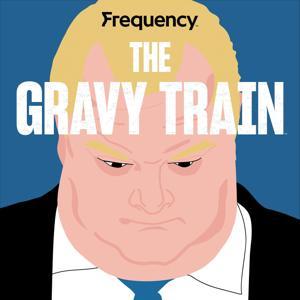
If you're a newer listener to The Big Story, you may not know aboutThe Gravy Train, a podcast we released in 2019 chronicling the meteoric rise, and tragic downfall of Toronto's most notorious mayor, Rob Ford.
With Toronto in the midst of its first wide-open mayoral race since 2010, we thought now would be an opportune time to revisit this narrative, which captures a moment in politics with some striking similarities to what we're seeing in the city today.
We'll be dropping an episode in this feed every Saturday for the next two months leading up to election day, but they're all available in The Gravy Train feed if you prefer to binge them.
Enjoy!
-------------------------------------
ORIGINAL SHOW NOTES
Toronto never got the chance to reelect Mayor Rob Ford. Nor did it get the chance to kick him out of office. It wasn’t the ending anyone wanted, it’s just what happened. And over the next few years, it would become clear just how profoundly Rob had changed politics, at home and around the world.
We love feedback at The Big Story, as well as suggestions for future episodes. You can find us:
Through email at [email protected]
Or @thebigstory.bsky.social on Bluesky
Hosted by Simplecast, an AdsWizz company. See pcm.adswizz.com for information about our collection and use of personal data for advertising.
For a long time now, Toronto has been run by conservative mayors. But all the polls indicate that will change on Monday, with former NDP MP and longtime progressive Olivia Chow holding a commanding lead. Chow ran for mayor before, in 2014, and lost badly. What's different this time, about both the city and her?
Whomever wins the job will have to work with Ontario Premier Doug Ford, who said this week that Chow would be an "unmitigated disaster" as mayor. So first, will she pull it off? And second, what happens if she does, and has to try to fix a crumbling city while needing the help of her political opposite to get things done with the province?
GUEST: Ben Spurr, City Hall bureau, Toronto Star
We love feedback at The Big Story, as well as suggestions for future episodes. You can find us:
Through email at [email protected]
Or @thebigstory.bsky.social on Bluesky
Hosted by Simplecast, an AdsWizz company. See pcm.adswizz.com for information about our collection and use of personal data for advertising.
It's one thing when companies that exist entirely online—like Facebook and Instagram—use chatbots and emails instead of a real person as a customer service solution. That's annoying, but understandable. It's another when business like appliance vendors, airlines and shipping companies have no way to connect a customer with a problem to an actual human who can help them.
But this trend has been gathering steam for years now, and the problems it creates are worth examining. What happens when business-customer exchanges are entirely impersonal? What's the cost-benefit decision the company is making here? How does an actual human voice change tense interactions? And what happens when more and more companies turn this stuff over to artificial intelligence?
GUEST: Emily Stewart, business and economics reporter at Vox
We love feedback at The Big Story, as well as suggestions for future episodes. You can find us:
Through email at [email protected]
Or @thebigstory.bsky.social on Bluesky
Hosted by Simplecast, an AdsWizz company. See pcm.adswizz.com for information about our collection and use of personal data for advertising.
A submersible intended to take five people to visit the wreck of the Titanic was missing as of Wednesday night. If the people inside are still alive, they are rapidly running out of air. A massive search is underway, but the ocean is huge, and the vehicle could be anywhere.
The expedition is a commercial endeavour run by a company called OceanGate, that runs out of St. John's. Would-be explorers pay $250,000 to risk death in exchange for a glimpse of the fabled wreck more than three kilometres below the surface. Why would someone pay so much to risk their life this way? What do we know about the craft that carries the crew, and the company that built it? And why does the Titanic still hold such a grip on our psyches after all this time?
GUEST: Leyland Cecco, Canadian reporter with The Guardian
We love feedback at The Big Story, as well as suggestions for future episodes. You can find us:
Through email at [email protected]
Or @thebigstory.bsky.social on Bluesky
Hosted by Simplecast, an AdsWizz company. See pcm.adswizz.com for information about our collection and use of personal data for advertising.
It wasn't that long ago that airlines were slashing prices and offering huge seat sales to lure timid customers back onto planes during the pandemic. Safe to say, those days are over. For at least a year now, prices have been climbing and the summer travel season marks a new peak. A peak that likely won't last past next summer.
How are seat prices set, anyway? How much of this is based on an airline's increased costs, and how much is a profit grab? What can you do to try to find cheaper fares? Do price-busting apps actually work? And why do you and your friend see different prices for the same seat on the same plane?
GUEST: John Gradek, Faculty Lecturer in Supply Chain, Logistics, Operations and Aviation Management at McGill University
We love feedback at The Big Story, as well as suggestions for future episodes. You can find us:
Through email at [email protected]
Or @thebigstory.bsky.social on Bluesky
Hosted by Simplecast, an AdsWizz company. See pcm.adswizz.com for information about our collection and use of personal data for advertising.
After a fire forced their high school to close, the Toronto District School Board decided to relocate the roughly 900 students and teachers from York Memorial Collegiate Institute to the nearby George Harvey Collegiate Institute. But George Harvey wasn't equipped to absorb all those new kids, and students showed up in September to find a school that was over-crowded, under-staffed and unsafe for them and their teachers.
The York Memorial fiasco isn't just a one-off, either. The school's struggles highlight systemic challenges across Canada's largest school board, namely staffing shortages, crumbling facilities and the lack of funding to properly address those issues. And the situation may only get worse as thousands of children lag behind socially and academically after the pandemic kept them home for nearly two years.
At York Memorial, it took an outcry from students, teachers and staff to spark meaningful change. What will take to get those in power to give schools the money and resources they desperately need?
GUEST: Danielle Groen, Toronto-based writer and editor, wrote about York Memorial for Toronto Life
We love feedback at The Big Story, as well as suggestions for future episodes. You can find us:
Through email at [email protected]
Or @thebigstory.bsky.social on Bluesky
Hosted by Simplecast, an AdsWizz company. See pcm.adswizz.com for information about our collection and use of personal data for advertising.
If you're a newer listener to The Big Story, you may not know aboutThe Gravy Train, a podcast we released in 2019 chronicling the meteoric rise, and tragic downfall of Toronto's most notorious mayor, Rob Ford.
With Toronto in the midst of its first wide-open mayoral race since 2010, we thought now would be an opportune time to revisit this narrative, which captures a moment in politics with some striking similarities to what we're seeing in the city today.
We'll be dropping an episode in this feed every Saturday for the next two months leading up to election day, but they're all available in The Gravy Train feed if you prefer to binge them.
Enjoy!
-------------------------------------
ORIGINAL SHOW NOTES
More than a year after the first stories about a ‘crack video’ broke, and months after the mayor admitted he’d tried the drug ‘during one of (his) drunken stupors’, Rob Ford admitted to the public that he had a substance abuse problem, and that he needed help. And he went to rehab. For a few weeks. Then he returned to the race for reelection. A race he very much expected to win. So Toronto had a choice. Four more years of this…or something else.
We love feedback at The Big Story, as well as suggestions for future episodes. You can find us:
Through email at [email protected]
Or @thebigstory.bsky.social on Bluesky
Hosted by Simplecast, an AdsWizz company. See pcm.adswizz.com for information about our collection and use of personal data for advertising.
You know how sometimes you notice that it's eerily quiet? That's because we're so accustomed to the background noise of life in a city of any size, that sudden silence catches our attention. From cars and trucks to neighbours and kids, modern appliances to incessant TV, music or videos, we rarely have a silent waking moment.
New research is beginning to discover exactly what that's doing to us, and the results are fascinating. It's not just us, either. When the world's water traffic mostly stopped during the first month of Covid lockdowns, the absence of the usual noise actually changed the way some sea creatures communicate... so what does a noisy world do to us all?
GUEST: Bojan Furst, writing in The Walrus
We love feedback at The Big Story, as well as suggestions for future episodes. You can find us:
Through email at [email protected]
Or @thebigstory.bsky.social on Bluesky
Hosted by Simplecast, an AdsWizz company. See pcm.adswizz.com for information about our collection and use of personal data for advertising.
From the publisher's feed
Ranked by our users in the last 21 days

111 Listeners

404 Listeners
224 Listeners
208 Listeners
209 Listeners
65 Listeners
78 Listeners

35 Listeners
35 Listeners
99 Listeners
78 Listeners
444 Listeners
9 Listeners
3 Listeners
25 Listeners
240 Listeners
110 Listeners

84 Listeners

40 Listeners

6 Listeners

2 Listeners

159 Listeners
11 Listeners

8 Listeners
117 Listeners
0 Listeners
39 Listeners
0 Listeners
146 Listeners
17 Listeners
3 Listeners
0 Listeners
1 Listeners