
Sign up to save your podcasts
Or



Based on Podcast App listening data
The LA Times' John Horn, Variety's Michael Schneider and Kim Masters discuss the big show business stories for 2010. The three industry veterans break down the top stories and tell us what it all means.
The King's Speech director Tom Hooper talks about the anxiety of funding this historical buddy drama and the anxiety of learning Hollywood etiquette. He also gives a convincing argument for changing the MPAA ratings system. Plus, Franklin Leonard's 2010 Black List, the annual compilation of the most loved scripts that made the rounds in Hollywood this past year.
The Fighter is a natural awards-bait movie but producer David Hoberman says that in today's Hollywood, studios didn't want to make it. It started as a $70 million film produced by Paramount and ended up as an $18 million film made with outside money from Relativity Media. Along the way Matt Damon and Brad Pitt showed interest, as did director Darren Aronofsky, but all dropped out leaving the producers to scramble. Also, Christian Bale, whose performance in The Fighter is generating Oscar buzz, goes a few rounds with the writer of an Esquire magazine Q&A. We talk with John H. Richardson about his unconventional and utterly entertaining encounter with this reluctant celebrity.
Director Andrew Jarecki on the making of his first narrative feature, All Good Things. The film, starring Ryan Gosling, Kirsten Dunst and Frank Langella is inspired by the bizarre, real life story of Robert Durst — the wealthy son of a New York real estate magnate — whose wife went missing in 1982 and whose good friend is murdered years later. Not tried for either case, Durst was later was arrested in Texas after his neighbor’s dismembered body was found floating in Galveston Bay. Durst, who had been living there disguised as a mute woman, pled self defense and got three years in prison for illegal dismemberment of a body. Today he's free. Jarecki talks about the threatened lawsuit by the Durst family organization and how Robert Durst actually liked the film.
We revisit our conversation with filmmaking brothers Jay and Mark Duplass, whose movie, Cyrus, marked a turning point in their careers. They'd made feature films but never before with studio backing, never with known actors and never with significant budgets. As darlings of the indie world and trailblazers in the mumblecore filmmaking style they gained acclaim at festivals and on blogs, but now they're rising stars in Hollywood and are currently in post production on their next film, Jeff Who Lives at Home.
Valerie Plame and Joe Wilson on seeing their story in the new Doug Liman movie, Fair Game. Plus, an audio diary of a veteran line producer, David Streit, looking to finance his first feature. A senior lecturer at AFI, after years of dreaming of shepherding his own movie from script to screen, this year at the American Film Market he bravely went for it and brought a microphone along to record his experiences.
The special-effects gurus known as the Brothers Strause made Skyline for a thrifty $10 million. They wanted to prove themselves as directors to the studios but found out they'd rather make their own films. Plus, we go behind closed doors to where deals are made at the American Film Market. We spend a day shadowing the head of the international sales and distribution company IM Global and track their landmark deal on Walking with Dinosaurs.
The Hobbit movies have suffered a cursed road to the screen marked by studio financing problems, the loss of director Guillermo del Toro and a fire at a New Zealand studio. But nothing generated so much public anger and government attention as when the actors tried to unionize and Warner Bros threatened to move the $500 million production out of New Zealand. Jonathan Handel, contributing editor to the Hollywood Reporter, breaks down the high drama and big dollars involved. Plus, young filmmaker Lena Dunham, who wowed people with her little personal movie, Tiny Furniture, is the hottest new thing in Hollywood...
We hear from Paranormal Activity producer Jason Blum on the challenge of making a sequel to the 2009 break-out hit. This time with studio backing from Paramount, the producers had to find a way to make the follow-up true to the ethos of its micro-budget original. Plus, producer of Toy Story 3, Darla K. Anderson -- the lone woman in Pixar's famed brain trust. She weighs in on gender dynamics at this successful studio and in the movie business as a whole while addressing the controversy over Pixar firing its first female director.
Gary Calamar, music supervisor of hit TV shows (True Blood, Dexter, House and Six Feet Under) on choosing the right songs to convey a mood and brand a show. Gareth Edwards on working guerrilla-style and doing his own effects to make his sci-fi thriller Monsters on the cheap.
From the publisher's feed
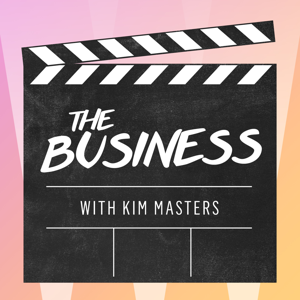
Lively banter about entertainment industry news and in-depth interviews with directors, producers, writers and actors, hosted by award-winning journalist Kim Masters of The Hollywood Reporter.
Ranked by our users in the last 21 days
581 Listeners

5,096 Listeners
1,278 Listeners
619 Listeners
2,435 Listeners

1,111 Listeners
537 Listeners
387 Listeners

351 Listeners
1,110 Listeners
738 Listeners

108 Listeners

156 Listeners
5,416 Listeners
739 Listeners

5,701 Listeners
974 Listeners
1,119 Listeners
204 Listeners
372 Listeners

1,125 Listeners
115 Listeners
128 Listeners
60 Listeners