
Sign up to save your podcasts
Or

By iHeartPodcasts
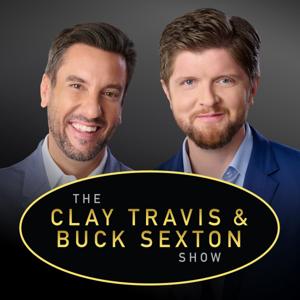
The Clay Travis and Buck Sexton Show. Clay Travis and Buck Sexton tackle the biggest stories in news, politics and current events with intelligence and humor. From the border crisis, to the madness
... more

4.5
1134411,344 ratings


The podcast currently has 12,070 episodes available.
The most played episodes among Podcast App listeners.
Hour 1 of the Clay Travis and Buck Sexton Show focused heavily on breaking political news, the economic concerns driving the 2026 midterm elections, Democrat Party strategy, and the rising national profile of Representative Alexandria Ocasio-Cortez (AOC). The hosts also discussed media trends, talk radio's influence, and their growing audience presence as the election season intensifies. The hour opened with discussion of the criminal case surrounding the alleged killer of Charlie Kirk. Clay Travis reported that Tyler Robinson had been charged with seven felony counts and entered a not guilty plea. The hosts argued that the upcoming televised trial will draw national attention and predicted that evidence presented in court will play a major role in settling ongoing public debate surrounding the case. They also briefly updated listeners on the still-deadlocked jury deliberations in the high-profile Lindsey Clancy case, noting that no verdict had yet been reached. A major topic throughout Hour 1 was the state of the economy and its impact on the upcoming midterm elections. Drawing from polling data discussed at a Tennessee political event featuring gubernatorial candidate Marsha Blackburn, Travis argued that voters remain overwhelmingly focused on affordability, inflation, and the rising cost of living. The hosts contended that economic concerns, including grocery prices and household expenses, remain the dominant issue for voters across the country. They framed the election environment as a referendum on economic conditions and debated how both parties are attempting to position themselves on inflation, consumer costs, and economic recovery. Battleground states such as Michigan and California were highlighted as examples of differing state-level political dynamics heading into the midterms. The hosts also spent significant time discussing a recent Wall Street Journal profile of the Clay and Buck program. Beyond some lighthearted discussion about photographs used in the feature, the conversation turned toward broader media industry trends. Travis and Sexton examined the continuing evolution of talk radio, podcasts, livestreaming, and digital media. They argued that live radio retains advantages over recorded podcasts because of its ability to respond instantly to breaking news and current events. They also discussed the changing podcast landscape, the growth of conspiracy-driven content online, audience trust, and the importance of maintaining credibility in political commentary and news analysis. Another segment focused on the show's continued expansion, including the announcement of a new radio affiliate in Las Vegas. The hosts discussed the growth of their national audience, cross-platform digital engagement, podcast network performance, and the broader reach of conservative media ahead of a highly competitive election cycle. The most extensive political discussion of Hour 1 centered on Alexandria Ocasio-Cortez and the future of the Democrat Party. Travis and Sexton analyzed a widely circulated TMZ interview in which AOC discussed dating across political lines, family planning, and the costs associated with having children. The hosts argued that AOC has become increasingly effective at presenting herself as relatable and authentic to voters. They suggested that her ability to communicate everyday concerns, particularly affordability, housing costs, healthcare expenses, and family economics, could make her a formidable national political figure. The conversation evolved into a broader assessment of potential Democratic presidential contenders for 2028. The hosts compared AOC's political strengths to those of Kamala Harris and other possible Democratic candidates, debating whether AOC could emerge as a future nominee or vice-presidential pick. They argued that modern campaigns are increasingly driven by personal connection, relatability, social media influence, and perceived authenticity rather than traditional policy expertise. The hosts suggested that AOC's communication style may resonate particularly strongly with younger voters, college-educated women, millennials, and voters concerned about affordability and quality-of-life issues. The hour concluded with listener reaction to the AOC discussion. A caller challenged the idea that the TMZ exchange demonstrated political strength, while the hosts countered that modern political success depends less on formal interviews and more on creating authentic moments that connect with voters. They compared AOC's appeal to skills previously demonstrated by successful national politicians and argued that personality, relatability, and voter connection will continue to shape future elections. Make sure you never miss a second of the show by subscribing to the Clay Travis & Buck Sexton show podcast wherever you get your podcasts! ihr.fm/3InlkL8 For the latest updates from Clay & Buck, visit our website https://www.clayandbuck.com/ Connect with Clay Travis and Buck Sexton: X - https://x.com/clayandbuck FB - https://www.facebook.com/ClayandBuck/ IG - https://www.instagram.com/clayandbuck/ YouTube - https://www.youtube.com/c/clayandbuck Rumble - https://rumble.com/c/ClayandBuck TikTok - https://www.tiktok.com/@clayandbuck Follow Clay & Buck on YouTube: https://www.youtube.com/c/clayandbuck See omnystudio.com/listener for privacy information.

Hour 1 of The Clay Travis and Buck Sexton Show focused heavily on politics, the evolving identity of the Democratic Party, the 2026 midterm elections, and reflections on the life and legacy of Dolly Parton. The hour opened with an emotional tribute to Parton following news of her passing, with Clay and Buck celebrating her extraordinary cultural impact, charitable work, and lifelong contributions to America. Particular attention was given to Dolly Parton's Imagination Library, which has provided millions of books to children around the world and was highlighted as one of the most significant philanthropic achievements in modern history. The hosts also analyzed the major political story of the day: Senator Darlene Graham's narrow Republican primary victory over Ralph Norman in South Carolina. Clay and Buck discussed the significance of the win, President Donald Trump's influence in the race, and what the outcome means for the broader Republican strategy heading into the 2026 midterm elections. They examined campaign spending, voter turnout dynamics, and the growing importance of key Senate races as Republicans seek to strengthen their position nationally. A substantial portion of Hour 1 centered on what the hosts described as the continued rise of the progressive left within the Democratic Party. They focused on left-wing media personality Hasan Piker and his growing influence among younger voters, criticizing Democratic politicians who have appeared alongside him despite his controversial comments regarding Israel, American Jews, and U.S. foreign policy. Clay and Buck argued that figures such as Hasan Piker, New York City Mayor Zohran Mamdani, and Michigan Senate candidate Abdul El-Sayed represent a broader ideological shift occurring within Democratic politics. The discussion expanded into a broader debate about antisemitism, the Israel-Hamas conflict, and Democratic coalition politics. The hosts examined comments made by Abdul El-Sayed regarding the Jewish community and questioned whether his public statements are consistent with the views held by key elements of his political base. They explored tensions between pro-Israel and anti-Israel factions within the Democratic Party and discussed how Jewish voters, particularly in Michigan, may respond in one of the nation's most competitive Senate contests. Clay and Buck devoted considerable time to analyzing political demographics in Michigan, highlighting the unique electoral landscape that includes both large Jewish and Arab-American populations. They debated whether Jewish voters who traditionally support Democratic candidates might reconsider their voting habits because of concerns about antisemitism and Democratic candidates' positions on Israel. The hosts invited listeners from Michigan to weigh in on local political conversations and discussed the potential impact of those voter shifts on the race between Republican Mike Rogers and Democrat Abdul El-Sayed. Another major theme in Hour 1 was the hosts' argument that progressive politics have evolved from what they termed "Woke 1.0" to "Woke 2.0." They contended that earlier movements focused on racial politics, police reform, and Black Lives Matter, while today's progressive movement is increasingly centered on anti-Israel activism and economic populism. Clay and Buck argued that modern left-wing messaging is shifting toward affordability concerns, wealth redistribution, and anti-capitalist rhetoric, while still relying on identity politics as a core organizing principle. They also credited Elon Musk's acquisition of Twitter, along with the widespread use of police body camera footage, for undermining narratives that fueled previous social justice movements. The hour also featured a discussion about media influence, political messaging, and voter perception. Clay and Buck shared listener reactions, discussed criticism they have received from both sides of Republican political debates, and reflected on the challenges of political commentary in an era of highly polarized audiences. As the hour concluded, the focus returned to the critical Michigan Senate race, with listener calls providing insight into concerns among Jewish voters regarding Abdul El-Sayed's candidacy, Democratic Party politics, antisemitism, Israel policy, and the future direction of one of the most closely watched battleground-state elections of 2026. Throughout Hour 1, the hosts framed these developments as part of a larger national debate over political realignment, religious identity, free speech, election strategy, and the future of both major political parties. Make sure you never miss a second of the show by subscribing to the Clay Travis & Buck Sexton show podcast wherever you get your podcasts! ihr.fm/3InlkL8 For the latest updates from Clay & Buck, visit our website https://www.clayandbuck.com/ Connect with Clay Travis and Buck Sexton: X - https://x.com/clayandbuck FB - https://www.facebook.com/ClayandBuck/ IG - https://www.instagram.com/clayandbuck/ YouTube - https://www.youtube.com/c/clayandbuck Rumble - https://rumble.com/c/ClayandBuck TikTok - https://www.tiktok.com/@clayandbuck Follow Clay & Buck on YouTube: https://www.youtube.com/c/clayandbuck See omnystudio.com/listener for privacy information.
Hour 1 of the Clay Travis and Buck Sexton Show was dominated by breaking developments in the highly publicized Lindsay Clancy murder trial in Massachusetts, as the hosts analyzed reports of a pending mistrial and extraordinary courtroom drama surrounding jury deliberations. Clay and Buck focused extensively on allegations that an 11-1 jury split had emerged, with one juror reportedly refusing to join the majority in finding Clancy not guilty by reason of insanity. The hosts examined the defense team's unprecedented effort to seek intervention from the Massachusetts Supreme Judicial Court and remove the lone holdout juror, arguing that the juror was allegedly failing to apply the law as instructed. Clay and Buck discussed the legal implications of juror independence, mistrials, reasonable doubt standards, jury misconduct claims, and whether courts should ever intervene in deliberations when a single juror disagrees with the majority. The conversation centered on dramatic courtroom exchanges between the defense attorney and trial judge, including arguments over emergency appeals, requests to delay a mistrial declaration, and disputes regarding jury instructions. Clay, drawing on his legal background, and Buck, offering a broader public perspective, questioned whether the defense was improperly attempting to overturn the jury process simply because one juror would not yield. They characterized the situation as highly unusual and debated what information from inside the jury room may have prompted the defense's claims that the holdout juror was disregarding legal standards. The hosts also explored the broader significance of the reported jury split and what it revealed about public attitudes toward the insanity defense. They repeatedly returned to the possibility that the overwhelming majority of jurors appeared prepared to find Clancy not guilty by reason of insanity while one juror remained opposed. Clay and Buck discussed the pressure facing a lone holdout juror, the dangers of exposing jury deliberations to public scrutiny, and whether the disclosures themselves represented an extraordinary breakdown in the normal judicial process. A major theme throughout Hour 1 was criticism of the prosecution’s apparent passivity during the courtroom battle. Clay suggested that prosecutors seemed reluctant to aggressively challenge the defense’s motions, potentially indicating an expectation that a conviction would be difficult to obtain in any future retrial. Both hosts debated whether Massachusetts prosecutors would realistically pursue another trial if a mistrial were declared, particularly given indications that the jury was overwhelmingly leaning toward an insanity verdict. They examined possible outcomes ranging from retrial to plea negotiations and questioned how likely it would be for a second jury to reach a dramatically different conclusion. The program also delved into the broader cultural and political implications of the case. Clay and Buck discussed public reactions to postpartum mental health defenses, gender differences in criminal responsibility, and the debate over whether society applies different standards to men and women accused of violent crimes. The hosts argued that the case had evolved beyond a local criminal proceeding into a nationally followed legal story, comparing public fascination with the trial to other landmark criminal cases and discussing the intense emotional reactions it has generated across the country. Later in the hour, listeners joined the discussion, including a former prosecutor who offered insight into mistrial strategy and retrials. The caller argued that mistrials are not always devastating for prosecutors because they gain valuable knowledge about the defense’s approach and can adjust tactics in a second trial. Clay and Buck evaluated that perspective while continuing to assess the likelihood of future proceedings and the challenges prosecutors would face in securing a conviction after an apparent 11-1 split. Make sure you never miss a second of the show by subscribing to the Clay Travis & Buck Sexton show podcast wherever you get your podcasts! ihr.fm/3InlkL8 For the latest updates from Clay & Buck, visit our website https://www.clayandbuck.com/ Connect with Clay Travis and Buck Sexton: X - https://x.com/clayandbuck FB - https://www.facebook.com/ClayandBuck/ IG - https://www.instagram.com/clayandbuck/ YouTube - https://www.youtube.com/c/clayandbuck Rumble - https://rumble.com/c/ClayandBuck TikTok - https://www.tiktok.com/@clayandbuck Follow Clay & Buck on YouTube: https://www.youtube.com/c/clayandbuck See omnystudio.com/listener for privacy information.
Hour 1 of the Clay Travis and Buck Sexton Show focused heavily on the political landscape heading into the 2026 midterm elections, President Donald Trump's latest comments on the economy and foreign policy, growing divisions within the Democratic Party, and the evolving role of Senator John Fetterman. Throughout the hour, Clay and Buck analyzed Trump's response to criticism surrounding U.S. military operations involving Iran, highlighting his defense of America's military readiness, munitions stockpiles, and broader national security posture. The hosts discussed how the Iran conflict, energy prices, and perceptions of American strength abroad could become significant factors influencing voters in key battleground states as Republicans seek to maintain momentum heading into the midterms. A major segment centered on Pennsylvania Senator John Fetterman, whose increasingly public clashes with progressive Democrats drew extensive attention. Clay and Buck examined Fetterman's criticism of Michigan Senate candidate Abdul El-Sayed, including Fetterman's attacks on El-Sayed's associations with controversial left-wing figures and positions related to Israel, Hamas, Iran, socialism, Sharia law, and policing. The discussion expanded into speculation about Fetterman's political future, with the hosts debating whether he could realistically remain a Democrat, run as an independent, align more closely with Republicans, or eventually leave elected office altogether. They argued that Fetterman's popularity among independents and Republicans, combined with his declining support among Democratic voters, makes him one of the most intriguing figures in American politics heading toward the 2028 election cycle. The hosts further explored the implications of the Michigan Senate race, discussing Republican candidate Mike Rogers and whether he could benefit politically from Fetterman's criticisms of El-Sayed. Clay suggested that Rogers should publicly invite Fetterman to campaign with him, particularly on issues involving support for Israel and national security. This broader conversation reflected concerns about the Democratic Party's ideological direction, internal divisions between moderates and progressives, and the electoral consequences those divisions could have in competitive Senate contests. The program also touched on several developing news stories, including continued jury deliberations in the Lindsay Clancy case, which the hosts described as a closely watched national story. While no verdict had been reached at the time of the broadcast, they noted that they were monitoring developments and expected significant public interest once a decision emerged. They also briefly referenced ongoing debates involving data centers and comments made by Fetterman on that subject. Later in the hour, Clay and Buck highlighted reports that former Clay and Buck Podcast Network contributor Sean Parnell, currently serving as the Pentagon's chief spokesman, was being considered for the position of Army Secretary. Both hosts strongly endorsed Parnell, praising his military service, leadership experience, relationship with Defense Secretary Pete Hegseth, and ability to help implement readiness and modernization reforms within the U.S. military. The conversation expanded into a broader discussion about the challenges political appointees face in managing large federal bureaucracies and executing policy priorities within government agencies. Another major focus of Hour 1 was President Trump's appearance at a White House Rose Garden event, where he touted what he described as the accomplishments of his administration during its first 19 months. Trump pointed to stock market gains, record exports, manufacturing growth, and historically high employment levels as evidence of economic success. Clay and Buck examined how Republicans should communicate these achievements to voters ahead of the midterms, while emphasizing that economic concerns and affordability remain top issues for many Americans. The hosts spent considerable time discussing inflation, gas prices, economic messaging, and voter sentiment, arguing that the inflation surge during the Biden administration remains a central political issue. Clay contended that Democrats created the affordability challenges now facing American families and are attempting to portray themselves as the solution to problems they originally caused. The hosts debated how Republicans can more effectively explain the relationship between inflation, energy costs, consumer prices, and economic policy. They compared current campaign messaging strategies to historical examples, including Barack Obama's efforts to frame economic recovery after the 2008 financial crisis. Listener calls later in the hour reinforced discussions about rising energy costs, fuel prices, and public frustration with economic conditions. The hour concluded with additional listener feedback regarding gas prices, inflation, the impact of Iran on global energy markets, and U.S. foreign policy strategy in the Middle East. One caller argued that more aggressive action against Iran would help stabilize energy prices, while the hosts noted that most Americans remain opposed to large-scale military deployments or "boots on the ground." The discussion reflected the broader themes of the hour: national security, energy policy, economic performance, and the political battles likely to shape the 2026 midterm elections. Make sure you never miss a second of the show by subscribing to the Clay Travis & Buck Sexton show podcast wherever you get your podcasts! ihr.fm/3InlkL8 For the latest updates from Clay & Buck, visit our website https://www.clayandbuck.com/ Connect with Clay Travis and Buck Sexton: X - https://x.com/clayandbuck FB - https://www.facebook.com/ClayandBuck/ IG - https://www.instagram.com/clayandbuck/ YouTube - https://www.youtube.com/c/clayandbuck Rumble - https://rumble.com/c/ClayandBuck TikTok - https://www.tiktok.com/@clayandbuck Follow Clay & Buck on YouTube: https://www.youtube.com/c/clayandbuck See omnystudio.com/listener for privacy information.
In Hour 1 of The Clay Travis and Buck Sexton Show, Clay Travis hosts solo while Buck Sexton is away, delivering a wide-ranging discussion focused on morality, crime, culture, politics, and public empathy in America. The hour opens with updates on several major news stories, including the ongoing jury deliberations in the high-profile Lindsay Clancy murder trial, the approaching 2026 midterm election season, and the unofficial kickoff of fall political campaigning following Labor Day. Clay frames the hour around a broader theme: what he sees as a troubling shift in American culture regarding how people assign sympathy, victimhood, and moral responsibility. A significant portion of Hour 1 is devoted to the Lindsay Clancy case, which serves as the central topic throughout the broadcast. Clay argues that public support for Clancy reflects a larger societal problem in which sympathy is being directed toward perpetrators rather than victims. He compares reactions to the Clancy case with public responses to the killing of healthcare executive Brian Thompson by Luigi Mangione and the murder of conservative activist Charlie Kirk, citing polling that he says shows a notable percentage of Americans expressing acceptance or justification for political or ideological violence. Clay contends that these examples illustrate a deeper cultural and moral crisis, raising concerns about political extremism, public attitudes toward violence, and the erosion of shared values. The program features extensive listener interaction, with callers weighing in on the causes of violent crime, mental illness, and the Clancy case. One caller argues that failures within the psychiatric healthcare system, including the prescribing of multiple medications and inadequate patient monitoring, may have contributed to tragic outcomes. This leads to a broader discussion about mental health treatment, prescription drug use, pharmaceutical oversight, and whether America has become overly reliant on medication, particularly among younger people. Clay questions the widespread use of psychiatric and other prescription drugs and argues for greater scrutiny of how medications are prescribed and managed. Another major theme in Hour 1 centers on the legal system and criminal accountability. Drawing on his background as an attorney, Clay advocates for stricter legal consequences in cases involving the murder of children. He discusses the concept of strict liability offenses and argues that child murder cases should allow fewer defenses based on mental state or mental illness. Throughout the hour, he repeatedly emphasizes the importance of focusing compassion on victims and surviving family members rather than on those accused or convicted of violent crimes. The conversation also expands into broader cultural and social issues. Clay examines why he believes certain segments of society are increasingly sympathetic toward criminals or individuals accused of serious wrongdoing. He discusses gender differences in reactions to high-profile criminal cases, questions the influence of social media and modern culture, and explores how public perceptions can be shaped by ideology and identity politics. These discussions tie into larger debates about crime, justice, public opinion, and cultural values in modern America. Religion, faith, and Western civilization emerge as additional topics during the hour. Responding to callers, Clay argues that declining religious participation and weakening shared moral foundations may be contributing to societal fragmentation and confusion about right and wrong. He reflects on the historical influence of Christianity and Western cultural traditions, drawing lessons from European history and architecture to make the case that common values and faith-based institutions have historically helped unify societies and provide moral direction. Other subjects touched on during Hour 1 include the start of football season, growing engagement with the show’s YouTube audience, upcoming guests including Good Ranchers executive Ben Spell, discussions about beef prices and American agriculture later in the program, and preparations for the intensifying 2026 political campaign cycle as attention turns toward the midterm elections. Make sure you never miss a second of the show by subscribing to the Clay Travis & Buck Sexton show podcast wherever you get your podcasts! ihr.fm/3InlkL8 For the latest updates from Clay & Buck, visit our website https://www.clayandbuck.com/ Connect with Clay Travis and Buck Sexton: X - https://x.com/clayandbuck FB - https://www.facebook.com/ClayandBuck/ IG - https://www.instagram.com/clayandbuck/ YouTube - https://www.youtube.com/c/clayandbuck Rumble - https://rumble.com/c/ClayandBuck TikTok - https://www.tiktok.com/@clayandbuck Follow Clay & Buck on YouTube: https://www.youtube.com/c/clayandbuck See omnystudio.com/listener for privacy information.
The podcast currently has 12,070 episodes available.
22,910 Listeners
25,996 Listeners

152,979 Listeners
465 Listeners

63,461 Listeners
2,248 Listeners

10,085 Listeners

12,610 Listeners

865 Listeners
1,217 Listeners
1,644 Listeners

1,949 Listeners
5,599 Listeners
106 Listeners

175 Listeners

3 Listeners

16 Listeners

196 Listeners
1 Listeners
116 Listeners
2 Listeners
21 Listeners
2 Listeners
1 Listeners

325 Listeners
6,509 Listeners
43,803 Listeners

122 Listeners
21 Listeners
3,100 Listeners
39,377 Listeners

6,204 Listeners
2,203 Listeners

46 Listeners