
Sign up to save your podcasts
Or

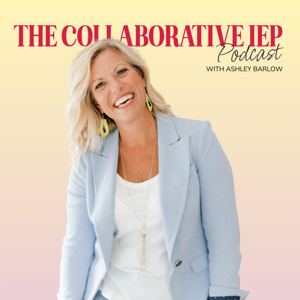


In this special episode of The Collaborative IEP Podcast, I’m diving into a big case you might’ve heard about—Texas vs. Becerra (now Kennedy)—and what it could mean for Section 504 of the Rehabilitation Act. Section 504, which has been around since 1973, is a law that protects people with disabilities from discrimination from organizations and businesses that receive federal funding. I have read the entire case, as well as all of the filings to date, and I’ll break it all down for you – the good, the bad, and the ugly!
We’ll unpack the background of the case, which involves 17 states challenging a new addition to the definition of disability—specifically, the Biden administration’s move to include gender dysphoria under that umbrella. We’ll talk about the real threat- these states’ request to find Section 504 Unconstitutional. I’ll break down what the states are arguing specifically, what’s happening with the case now, and why all of this matters—especially for our schools and the disability community.
I’ll also talk about the federal vs. state power struggle at the heart of the issue and the success of the grassroots advocacy that’s come out of it (we made them backtrack significantly!). Join me for a thoughtful conversation about how this case highlights the complicated intersections between disability rights, government regulations, and the policies that affect our everyday lives.
Timestamps
In this episode of the Collaborative IEP Podcast, I dive deep into the Individuals with Disabilities Education Act (IDEA), focusing specifically on evaluations and the IEP document itself. I'm walking you through sections 1414 A, B, and C—breaking down the purpose of different assessment tools, the requirement for parental consent, and the step-by-step procedures for evaluations and reevaluations.
In this special episode I’m diving into part two of our special series on the Department of Education’s policy document called Building and Sustaining Inclusive Educational Practices. This time, we’re talking all about how to actually put inclusive education into practice—with guiding principles, real-world strategies, and a big focus on belonging, leadership, and collaboration.
I’ll also share some highlights on the benefits of inclusion, how to create a shared vision, and ways to use the resources you already have to make inclusion work. Plus, I’ve got some fun announcements about the ABC Course, which can help you start or grow your business as a special education advocate.
Tune in for some actionable tips and key takeaways that’ll help you create more inclusive, supportive environments for all students!
Timestamps
Welcome back to the Collaborative IUP podcast! I'm Ashley Barlow, your host, and today we're diving into Part B, Section 1413 of the IDEA statute. This section focuses on what local education agencies, like your school districts, need to do to ensure they receive federal funds for special education. We'll walk through the general provisions, exceptions, compliance rules, and specific uses of funds. I also share exciting updates: our recent conference's success, ongoing sales of all access passes, and the reopening of the ABC course for special education advocates. Get ready for a deep dive and join me next week as we tackle Section 1414, covering evaluations and eligibility.
Welcome back to the Collaborative IEP podcast! I’m Ashley Barlow, your host, and today’s special episode is all about building and sustaining inclusive educational practices. We dive into the 52-page joint policy guidance from the Office of Special Education and Rehabilitated Services (OSERS) and the Office of Elementary and Secondary Education. This comprehensive document highlights where inclusive practices fit into the Individuals with Disabilities Education Act (IDEA) and the Elementary and Secondary Education Act (ESEA) of 1965. We explore key concepts, practical strategies for schools to adopt, and the importance of policy documents in advocacy. Through quotes, historical context, and breakdowns of the laws, I aim to make this guidance accessible and actionable for you. Don't miss this episode, and be sure to save and print the document for future reference!
Building and Sustaining Inclusive Educational Practices
Today, we're diving deep into Section 1412 of the IDEA, which is all about State Eligibility. We'll go through the 25 key requirements states must meet to qualify for federal funding under the IDEA. From providing a free, appropriate public education (FAPE) to ensuring students' confidentiality, and even discussing procedural safeguards, we cover it all. We'll also talk about various topics such as child find, IEP development, LRE (least restrictive environment), and transition services. This episode is packed with important information that educators and parents must know to navigate the special education landscape effectively. So let's get started!
In this episode of the Collaborative IEP podcast, host Ashley Barlow returns from a brief detour in our IDEA series to discuss Section 1411 of IDEA, which is all about funding and appropriations. The episode begins with a brief overview of the significance of staying informed through trusted sources in light of recent federal-level changes. I describe some resources, including the special series on this podcast, that may be of assistance on this issue. I then provide a concise guide on how to read legal statutes effectively and dives into the specifics of IDEA Part B, Section 1411, which addresses funding and allocation of funds for special education. Additionally, I emphasize the importance of reasonable conflict resolution and highlights upcoming content and opportunities for continued learning through the Collaborative IEP Conference.
You know what wasn't on my BINGO card for 2025? An Anti-Inclusion Narrative! Yet, we are where we are (or if you shop at Fresh Thyme, I yam what I yam... but I digress), and that's why I'm happy to have the opportunity to share my recent conversation with our friend, Kayla Coburn, with you all! Kayla has so many wonderful resources @inclusionstarts now to help us carve out inclusive opportunities, particularly at school. And what's great about Kayla's approach is that it doesn't rely specifically on laws or protections but on mindset and community. You're going to want to hear what Kayla has to say, because you're going to want to emulate it in your communities. Happy listening!!!!
Meet KaylaHi! I'm Kayla Coburn, former para, special education teacher, education specialist, turned inclusion specialist and mom of 2. California native, relocated to the PNW. Since 2010, when I started in the field, inclusion has been the goal. Inclusion starts with you and I just want to help.
In this episode of The Collaborative IEP Podcast, I sit down with Megan Pinchback, a highly trained CALT dyslexia therapist and owner of Dyslexia on Demand, to talk all things dyslexia intervention—from the gold standard in tutor and teacher training to the hallmarks of effective reading instruction. We also dive into important dyslexia stats, the benefits of online tutoring, and what really works for struggling readers.
Plus, Megan is speaking at my upcoming conference, so be sure to tune in for a sneak peek!
Meet MeganMegan Pinchback, MBA, LDT, CALT is a Licensed Dyslexia Therapist through the state of Texas. She completed her Certified Academic Language Therapist (CALT) training from the Scottish Rite Dyslexia Center of Austin in 2011. After a 10 year career as a special education teacher in the Texas public school system, in 2012 she transitioned into private practice as a dyslexia therapist and CALT servicing children out of her office in Dripping Springs, Texas. After 7 years of experience in private practice, she acted on her knowledge of the severe shortage of Certified Academic Language Therapists globally required to service the estimated 20% of the needed population and began Dyslexia On Demand, an exclusively web based, one on one platform connecting students with CALTs nationwide. Her understanding of the shortage of quality dyslexia servicing for children on a national level propels her daily to stretch her knowledge, voice, and reach.
Megan is a Vice President of the Academic Language Therapy Association (ALTA), co-host of the Don’t Call On Me Podcast, and a national speaker on dyslexia. Additionally, she holds both a Bachelor of Science and a Masters of Business Administration through Louisiana State University. She is passionate about dyslexia advocacy, legislation at the state and national level, and supporting students and parents through the social-emotional impact of dyslexia and the struggle to receive appropriate servicing.
Additionally, and most importantly, she is a wife and the mother to five wonderful children ranging in ages from 7 to 26 years old. She and her family enjoy spending as much time as they can together and outside in the beautiful Texas hill country an hour outside of Austin, Texas.
Series: Education on the Line: Special Education Policy Watch
The Trump administration has indicated that its plan at the beginning of its administration is to flood citizens with a barrage of information and a tidal wave of change to invoke overwhelm, allowing them to force policy and legislative changes on us before we see them coming. My dispute resolution body and soul tell me that when the going gets information-heavy and high-paced, the effective advocates get reasonable, rational, and thoughtful. So, we’re starting a new series where we stand watch over the Department of Education and its Offices of Special Education and Rehabilitative Services, Special Education Programs, and Civil Rights. We’ll provide you succinct, brief, easy-to-follow updates; potential impacts of policy and legislative changes; and actionable tasks to ensure the rights of our students are protected.
Major shifts may be coming to the U.S. Department of Education, and they could have profound effects on children with disabilities. In this special episode we try to break down what’s happening in clear, practical, pragmatic terms. From the potential reduction—or even elimination—of the DOE to the impact of shifting offices like the OCR to other agencies, we’ll explore what these changes could mean for special education funding, enforcement, implementation, and policy. We’ll also cover takeaways from Linda McMahon’s Senate confirmation hearings; the status of existing and potential executive orders affecting staffing and regulations; and the real-world consequences for students, families, and educators. Finally, we’ll share practical action steps—both big and small—that parents and advocates can take right now to stay informed and protect educational rights. As always, my goal is to provide a framework that empowers you to navigate these potential changes with clarity and confidence. I also aim to provide a bit of comfort, because despite the significant risk that students with disabilities are facing, there’s still plenty of good in this (admittedly wacky) world. Now more than ever, building strong, positive relationships with teachers, therapists, and administrators is critical; and I’ll walk you through every step of the way. Tune in to stay ahead of the curve and ensure your voice is heard in protecting the future of special education.
From the publisher's feed
10,567 Listeners

56,588 Listeners

334 Listeners

25,953 Listeners

27,540 Listeners
72 Listeners

46,620 Listeners
645 Listeners

57,775 Listeners
426 Listeners

18,924 Listeners

5,523 Listeners
153 Listeners

8,826 Listeners
20 Listeners