
Sign up to save your podcasts
Or

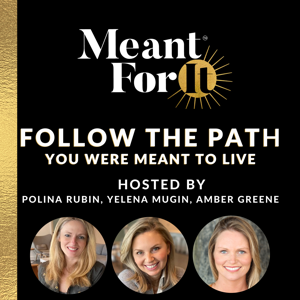


Stella Escobedo is an Emmy award winning news anchor-reporter with nearly 20 years experience, a fearless journalist and an advocate who immigrated to the U.S. from Uzbekistan. Stella is currently a news anchor for One American News (OAN). In this conversation, Stella shares how her upbringing shaped her values, her global perspective, and the causes of her disillusionment with mainstream media.
Journalism was always Stella's passion. but during the COVID-19 pandemic, something shifted. Stella began to question the media's silence on critical issues: the voices of parents during lockdowns, the integrity of the 2020 presidential election, and the dangerously skewed coverage of the Israel-Hamas conflict.
We discuss the deeply embedded bias against Israel in U.S. media and the painful, recurring truth that Jews are violently scapegoated in every generation. When serious issues arise, too many default to an intellectually lazy and ancient habit: blame the Jews, and deflect accountability.
This conversation is both a warning and a call to action. It's about truth, courage, and refusing to stay silent while history repeats itself.
Check out our website: https://meantforyoupod.com
Reach out to us: [email protected]
Follow us on IG
A few of our favorite quotes from this episode:
"If not me, then who?"
"I wanted to be a voice for the voiceless."
"The media completely ignored what we should have been able to have open conversations about."
"The indoctrination of their children must stop for peace to exist."
If you enjoyed this episode, you may like these conversations:
Timestamps:
Karen McKinney was a prosecutor working in the gang unit when her path first crossed with Joseph Herrera, a man she would go on to prosecute for murder. Twenty years later, Karen faced Joseph when he was up for parole. Not exactly your classic "how we met" story. What no one could have predicted is that years later, the two would form an extraordinary friendship that would transform both of their lives.
Karen saw something in Joseph that defied his past, a capacity for growth, empathy, and leadership. With her encouragement, Joseph began using his lived experience to help others break the cycle of recidivism. Today, they can speak on the phone for hours at a time, and Karen occasionally joins Joseph's speaking events at prisons.
This story is a reminder that people are more than their worst mistakes, and that sometimes, the most unexpected connections are the ones that change everything.
Follow Karen on Insta
If you're interested in powerful conversations on prison reform, don't miss our conversations with:
Humans of San Quentin Executive Director Diane Kahn
Jessca Jackson, Chief Advocacy Officer for Reform Alliance
Jane Mitchell from the Reform Alliance
Check out our website: https://meantforyoupod.com
Reach out to us: [email protected]
Follow us on IG
In this episode, we talk about the value of work with David Bahnsen, Managing Partner and Chief Investment Officer of The Bahnsen Group, a wealth management firm based in Newport Beach, California overseeing $4 billion in client's assets, David is also a thought leader, and author of Full-Time: Work and the Meaning of Life. David wants to challenge one of society's most accepted myths: that success means eventually not working.
David makes a bold, and deeply personal case for why work isn't just a way to earn a living, but a core part of living well. Drawing from his career in finance and his passion for theology, philosophy, and purpose, we discuss how our jobs can become our expressions of dignity, identity, and meaning.
David offers a different way of looking at work, especially for those feeling stuck or pressured to "have it all figured out."
Mic drop moments:
Want to skip ahead? Just tap the timestamps to dive into specific sections:
Check out our website: https://meantforyoupod.com
Reach out to us: [email protected]
Follow us on IG
Ada Palmer, is a sci-fi writer, historian, and someone who sees the world with an incredibly rare, long lens. If you've ever felt overwhelmed by the headlines, this episode might help.
Ada believes we're not living in a uniquely apocalyptic time—just a normally apocalyptic one.
"We're living in a moment we must rise to, work hard on, do well where what we do matters," she told me. "We have the ability to reduce 100% harm to 70% harm. We have that responsibility."
That line really stuck with us—because it's so easy to feel powerless right now. But Ada's message is the opposite: we do have agency, and what we do does matter.
She also reminded us that fear isn't new.
"We are not more scared than our predecessors were 50 or 100 years ago. They were just as scared as we are. The stakes were just as high. The rewards of hard work were just as real. The penalties of messing up were just as disastrous."
Ada sees change not in election cycles, but in centuries. And that shift in perspective is powerful. We talk about why we need to stop chasing "total wins" and start celebrating the small, meaningful steps forward. Progress is almost always incremental, but that doesn't make it any less real or important.
From ancient Rome to climate policy, Ada brings in vivid historical parallels that made us see our moment differently. She doesn't sugarcoat the challenges—we talk about the real stakes—but she offers something many of us arel craving: perspective, hope, and a reminder that we've come through hard things before.
The part of our conversation that keeps echoing for us is this: Every generation has been called to save the world. They rose to the challenge. Now, it's our turn.
🗣️ Quotes from Ada Palmer
"We shouldn't think that we are living now in a uniquely apocalyptic moment. We're living in a normally apocalyptic moment."
"Nothing is more similar to the future than the past."
"Success isn't 100% victory. Success is mitigating the thing so that it's less bad when it happens."
"Every generation has to save the world, and we can work hard at it and meet this occasion."
Topics Discussed:
Please share this episode with a friend!
Jenny Wood, former Google executive, leadership coach, and author of Wild Courage, joins us to talk about what it really takes to grow your career, whether you're in the early stages or navigating a mid-career reset. With her candid approach, Jenny shares how to apply your experience and find your courage.
In this episode, we cover practical, no-nonsense strategies for standing out at work, communicating with your boss, building a network that actually supports you, and tapping into the kind of courage that deepens with age. If you've ever felt overlooked, underestimated, or simply ready for more—this conversation is for you.
Careers: Looking for career clarity, inspiration, or a reset? Check out our other caereer related podcasts 💖
Topics Discussed:
Jenny Wood [jennywood.com](https://jennywood.com)
Wild Courage [Wild Courage Book](https://jennywood.com/wild-courage)
ChatGPT [OpenAI ChatGPT](https://openai.com/chatgpt)
ConvertKit [ConvertKit](https://convertkit.com)
Marshall Goldsmith [Marshall Goldsmith](https://marshallgoldsmith.com)
Natasha Sizlo was having a terrible year. Fresh off a divorce, bankruptcy, the end of a passionate relationship, and then the news came about her beloved father's devastating terminal illness. When a friend suggested an astrology reading, Natasha's first instinct was a hard pass. But, Natasha relented, and the reading led her towards a year of magic, the kind of year that turns into a romantic comedy on the big screen and a best-selling book.
All Signs Point to Paris by Natasha Sizlo.
Hire Natasha to be your real estate agent
If you enjoyed this podcast, check out our most powerful and inspiring conversations from the podcast featuring women who've taken bold risks, rebuilt their lives, or spoken the truths most of us keep quiet. These women are brilliant examples of living the life meant for you.
Starting Over, Resilience, Overcoming:
Nicole Avant on a Mindset of Gratitude and Service
Bethany Hamilton on Faith, Waves, and Fearlessness: Bethany Hamilton's Unshakable Journey"
Claire Bidwell Smith, Finding Peace After Grief
Dara Kurtz, How Dara Crushed Cancer and Changed Her Life
Annette Ross was Meant for love, after overcoming a tragic accident during the birth of her second child that left Anette unable to walk, Annette went on to create a beautiful life with five daughters and the love of her life
Travel:
Jeannie Ralston, The Unlikely Lavender Queen: A Memoir of Unexpected Blosssoming
Life Stories and Culture:
Laura Belgray, author of Tough Titties, on growing up loud, weird, and real
Kat Timpf, Truth Bombs and Punchlines: Kat Timpf on Humor That Hurts (and Heals)
Tiffany Shlain on reclaiming time with Tech Shabbats
Zibby Owens on bookfluencing and being a literary connector
Mental Health
Lori Gottlieb (Maybe You Should Talk to Someone) on why you really should talk to someone
Serving Others
Heidi Kuhn, founder of Roots of Peace, on turning grief into global impact
Dr. Leana Wen, Lifelines: A Doctor's Journey in the Fight for Public Health
Jessica Honegger on Going Scared and Choosing Purpose Over Comfort
Relationships
Amy Chan, "The Love Rehab You Didn't Know You Needed" and the Psychology of Love
Eve Rodsky (Fair Play) on burnout, breakdowns, and building a movement
Favorite Quotes from Natasha:
"I just have to go to find everybody with his exact same birth chart because the one has to still be out there."
"Once I started believing, I started seeing."
"To live an authentic life, that's a beautiful thing."
"If it's mentionable, it's manageable."
"Sounds like you're going to Paris. I'll meet you there."
https://podcasts.apple.com/us/podcast/meant-for-you/id1036108112?i=1000661332590Are you living a psychologically rich life? In this episode we discuss what it means to be psychologically rich and how you can generate more richness. In "Life in Three Dimensions: How Curiosity, Exploration, and Experience Make a Fuller, Better Life", Shigehiro Oishi, Professor of Psychology at the University of Chicago, shares his research and the ways leading a psychologically rich life can transform how you prioritize your days and goals.
As Shige shares, "a psychologically rich life is a life filled with diverse, unusual, interesting experiences that change your perspective; a life with twists and turns; a dramatic, eventful life instead of a simple and straightforward one".
For those of you who feel that something is missing from your lives, or that your dreams and goals don't fit with societal expectations, this conversation is for you. Shige Oishi has given us the language and concept for living our lives in search of experience, adventure, learning and connection.
Please share this episode with a frriend and follow us on Instagram at @meantforyoupod
You can Sign up for our newsletter here
Visit our website at www.meantforit.com
Guest ideas? Partnership ideas? Comments? Email us directly at [email protected]
Get Shige's book
if you enjoyed this podcast, consider our podcast with Nicole Avant on gratitude and our series on Narcissism with Dr. Ramani:
Topics Discussed:
05:07 - The the three pillars of a happy life
14:13 - How narrating your experiences enriches the experience
20:12 - A psychologically rich day involves a wide range of emotions
22:18 - Happiness used to be good luck and fortune, but now happiness is personal success
25:41 - Happiness is more like a batting average
32:03 - Happiness is not the intensity but the frequency of positive emotion
36:13 - As we age, curiosity and, and exploration wane, and how to balance it
39:09 - psychological richness mindset can help deal with difficult life situations
Filmmakers Courtney and Ted Balaker discuss their latest documentary surrounding the mental health crisis among Gen Z. Their film based on the book, The Coddling of the American Mind, by Jonathan Haidt and Greg Lukianoff, was made to spark critical discussions, including conversations across college campuses.
We discuss the alarming trends in Gen Z's mental health, the role of social media, and the impact of educational environments that often prioritize emotional safety over intellectual freedom and critical thinking.
Please listen to this enlightening discussion that will alert you to concerning Gen Z cultural trends.
Please share this episode with a friend!
Guest ideas? Partnership ideas? Comments? Email us directly at [email protected]
Links from conversation
Yardena Shwartz, an award-winning journalist and Emmy-nominated producer, joins us to discuss her book, Ghosts of a Holy War. Yardena's book focuses on the 1929 Hebron massacre, allowing us to see the shocking parallels between the historical events of 1929 and the October 7th massacre in Israel. Hebron, an ancient city with archeological finds going back some 5,000 years, is in the controlled territory of both governments. For thousands of years, Hebron has had great religious importance for both Jews and Muslims.
Despite Yardena's credentials, and her book's relevance to the current news cycle, "Ghosts of a Holy War" book has been largely ignored by mainstream media and literary circles. It is not a stretch to assume that the historical information revealed in this book goes against the dominant stories in mass media, that seek sources that support their simplified oppressor and oppressed narrative.
As history repeatedly shows us, if we don't understand the past, we are doomed to repeat it. The misinformation leading to the 1929 massacre, and the way the massacre was interpreted by the world, is a repeat of what we have seen since October 7. We have seen denials of the recorded atrocities on October 7, misinformation and marches praising the violence as glorious resistance. How can we end the cycles of violence in the region if we don't understand the root causes? It feels like we are trying to cure cancer by taking an Advil and screaming about the pain. Yardena's book shares the historical root causes of the cancer of violence that has plagued the region since 1929.
Yardena's book also recounts stories of friendship and muslim families that protected their neighbors. The Jewish families and students in Hebron were not prepared for the violence because they lived peacefully and happily with their neighbors. In 1929, just as today, misinformation from leaders with bad intentions, fueled horrifying fury, and religiously driven violence.
We hope that more people decide to learn the history of the region through credible journalists and historians, instead of repeating dangerous misinformation and lies. For the sake of every innocent child, please make time to find the historical truth.
PLEASE HELP US OUT BY SHARING THIS EPISODE WITH A FRIEND!
Notable Quotes with Timestamps"Those who don't learn history are doomed to repeat it... the similarities of what happened on October 7th and the 1929 massacre are shocking." — Polina, ~03:30 (04:25.74 segment)
"You had the Muslim clerics and Jewish rabbis dancing together at weddings." — Polina, 04:25
"3,000 Muslim men, armed with swords, axes, and daggers, marched through the ancient Jewish quarter of Hebron." — Yardena, 10:56
"At least 250 of them were saved by their courageous Muslim neighbors who risked their own lives to hide them." — Yardena, 13:17
"If in 1929 Hebron was a beacon of coexistence in Palestine, today it's the antithesis of coexistence." — Yardena, 15:41
"He convinced his people that the Jews of Palestine were actively working to destroy Al-Aqsa... he weaponized Islam." — 20:19
"Hitler even considered the Mufti an honorary Aryan." — Yardena, 41:21
"I asked children, what are you taught about peace? They couldn't answer me. They didn't understand the question." — Yardena, 01:00:03–01:02:24
"My book has only been covered in conservative media... the liberal, supposedly fact-based media sphere is just not interested in this story because it challenges the narrative they're trying to sell." — Yardena, 01:04:34
"Supporting Hamas is anti-Palestine... if you can both perpetuate the lie of genocide while also praising October 7th and the terrorists who carried it out, there's something wrong here." — Yardena, 01:06:51
"It was extremely disorienting because I felt that day as if I was walking into the pages of history I had spent the last four years reading and writing about." — Yardena, on October 7, 01:13:34
"Antizionism is inherently anti-Semitism... when you hold the one Jewish state to different standards than every other state, clearly you have a problem with there being a single Jewish state." — Yardena, 01:22:29
"There are 57 Muslim countries in the world, and one tiny little Jewish state." 01:22:29
https://curiousmiddlepod.com
If you enjoyed this episode, you may like these conversations:
When it comes to understanding our government, we often find ourselves asking, "What would Sharon say?" So we did. We invited Sharon McMahon, America's favorite government teacher and the force behind @SharonSaysS, to help us unpack why civics education in the U.S. has been defunded, sidelined, and under-taught for decades.
Sharon shares eye-opening insights about a troubling reality: many students graduate with little more than a single semester of civics, leaving them unequipped to understand how their government actually works. This lack of knowledge isn't just an educational failure it's a civic crisis. When citizens don't understand the basics of how power is structured or how change happens, we risk not only disengagement, but also a national security vulnerability and a weakening of our democracy itself.
How can we make America better if we don't understand how America works? How can we expect meaningful progress if the next generation doesn't grasp the role of local elections or how laws are made?
When people aren't educated about their own system of government, cynicism grows. Trust erodes. And disengagement becomes the norm—followed by frustration and the belief that everything is rigged.
We dive into the case for rebuilding a consistent, nationwide civics curriculum—and the enormous challenge of doing so in a country where education policy is decided by 50 separate state boards and over 14,000 local school boards.
This conversation matters. Please listen, learn, and share with your community!
Quotes:
"We have under-educated our citizens for existence in a very complex democracy."
"We need to understand the problem before we can make meaningful change."
"The civil rights movement didn't just happen because a bunch of members of Congress were like, what the right thing to do?"
-Sharon McMahon
"How are we supposed to make America great again if we don't understand how it works?" ----Polina Rubin
Zoom In:
06:49 Why aren't people saying in government that maybe we should prioritize civics education
08:10 The United States has an incredibly decentralized education system compared to other democracies
13:27 Whether the federal government should be involved in curriculum decisions is hotly debated
20:37 Elimination of Department of Justice or Department of Education could negatively impact students
23:23 Thoughts on the costs of education in the US compared to other countries
29:31 Every other developed nation takes far more steps to abate childhood poverty than we do
31:51 If you have two parents, you're more likely to not be in poverty
Please share this episode with a friend:
From the publisher's feed
78,422 Listeners
2,887 Listeners

6,598 Listeners

2,177 Listeners
3,140 Listeners
65,453 Listeners
6,068 Listeners

573 Listeners
614 Listeners
1,071 Listeners

720 Listeners
689 Listeners
8,430 Listeners
1,735 Listeners