
Sign up to save your podcasts
Or



It will soon be two years since Israel endured its worst day of bloodshed and terror in its history. At the time here in France, home to Europe's largest Jewish community, a majority expected and even supported a forceful reaction. Nearly two years on, the sympathy has long waned: yes, Hamas still holds hostages but public opinion has long turned, long before a summer of daily images of desperate Gazans braving bullets to reach aid distribution points and the United Nations now formally labelling the situation as a famine. Is it a tipping point? Yes and no.
Traditional Western allies are certainly banding together to up the pressure on Israel over its stranglehold on Gaza and the increased destruction of Palestinian livelihoods in the West Bank, but all Benjamin Netanyahu needs is a single ally, the strongest one, and he's got it: the United States.
To French President Emmanuel Macron's coalition of countries ready to recognise a Palestinian state at UN Week next month, the new US ambassador to France replies that Paris is stoking anti-Semitism. If Washington's OK with the crushing of civilians in Gaza and a further land grab in the West Bank, then what’s to be done?
Produced by Ilayda Habip, Aurore Laborie, Alessandro Xenos and Charles Wente.
The world couldn't believe it last December when Syria's Assad regime, after decades of iron-fisted rule, suddenly fell like a house of cards. The speed of that collapse exposed how the state had been hollowed out on the quiet. Eight months on, how weak does Syria remain?
The government forces of Ahmed al-Sharaa are pulling out from the Druze-majority city of Sweida after bombardment from neighbouring Israel and pressure from a United States that's only recently offered Damascus a lifeline through the lifting of years-old crippling sanctions.
What just happened in Sweida, with reports of summary executions of civilians? How will other minorities like the Kurds and the Alawites view the bloodbath? And why the climbdown by Damascus?
Looming large is Israel, with its own Druze community and its own agenda for perennial foes Syria, Lebanon and Gaza. Is war the only way for a nation that's occupied the Golan Heights since 1967 and which for now enjoys clear military supremacy over its neighbours?
Produced by Rebecca Gnignati, Elisa Amiri, Ilayda Habip.
Call it India's ignored conflict: it’s been two years since violence erupted in Manipur state, yet 60,000 people remain displaced by intercommunal tensions between the majority Meitei and the Kuki-Zo communities. We ask why mediation efforts have stalled and what's changed since the central government imposed President's rule from Delhi at the start of the year.
We also ask why the prime minister's remained mostly silent on Manipur, why foreign journalists wanting to report there have to apply for special accreditation – which is rarely granted – and we ask our panel to react to our exclusive report filmed by FRANCE 24's local team.
More broadly, what lessons can the rest of India draw, particularly in regards to unrest and insurgencies in other border areas like Kashmir and the mountains near China?
Produced by Rebecca Gnignati, Elisa Amiri, Ilayda Habip.
Brazil has announced it's working on counter-measures should the Trump administration make good on its threat to punish the country and sanction its Supreme Court president over the coup attempt case against far-right former president Jair Bolsonaro. Brazil is one of the nations threatened with secondary tariffs for buying Russian oil – but not Trump ally Turkey.
The US is using its economic might to boost fellow travellers like Bolsonaro and Recep Tayyip Erdogan, but also applying political pressure for purely domestic policy reasons, like last week when the threat of sanctions was reportedly dangled if African leaders didn't take in expelled immigrants.
Is this just a bit of political theatre? Or is the rest of the world taking seriously this blurring of the lines between economic policy and political vendettas? Does it damage – or not – the US's street cred on the world stage? And what's the right response when your nation gets a tariff warning from Washington?
Produced by François Picard, Rebecca Gnignati, Juliette Laffont, Ilayda Habip, Alessandro Xenos.
The Nobel Peace Prize can wait. The same Donald Trump whose administration just weeks ago paused munitions and air defence supplies for Ukraine is now turning on Vladimir Putin with threats of asset seizures and ramped-up weapons sales for Kyiv. Why the about-face? How committed to Ukraine is Trump going forward? And how committed to NATO? Allies know that the days are numbered for the United States providing the bulk of Europe's defence umbrella.
It's Bastille Day and on France's national holiday, we review remarks by President Emmanuel Macron on Europe's strategic autonomy and by Germany's defence minister, who's in Washington as Berlin takes stock of its own meagre supply of air defences.
And then there's the war in Ukraine, with the Russians relentless in their bombardments and steadfastly refusing truce offers. Do these announcements out of Washington change the calculus at the Kremlin?
Produced by Rebecca Gnignati, Aurore Laborie, Ilayda Habip.
Caught between the threat of Vladimir Putin's Russia and the wavering of Donald Trump's United States, can Europe really rely on its only two nuclear powers to guarantee deterrence from atomic attacks? We review the joint announcement by video link out of Northwood military base in England to leaders in Rome gathered for a "coalition of the willing" summit on Ukraine.
Ukraine has to think on its feet after yet another sleepless night of deadly bombardments and a week of off-and-on shipments of US air defence supplies. They're back on to express annoyance at Moscow's clear disinterest in Trump's mediation offers.
On that score, the chattering classes often speculate about Trump's rationale, but what about the master of the Kremlin? This in the wake of his transport minister meeting an unfortunate end: first fired then found dead of an apparent suicide. Are the leaders in Rome and Northwood ready for what's next in store?
Produced by Rebecca Gnignati, Elisa Amiri, Ilayda Habip.
Rubber bullets, tear gas, water cannons and live rounds: can Kenya's police beat the defiance of a new generation into submission? Monday's Saba Saba Day marches, marking 35 years since the spark of the movement that led to a return of multiparty rule, were the latest protests to turn deadly.
We ask about the 31 people killed on the day, the increasingly heavy hand of authorities since last year's anti-tax demonstrations and the demands of the so-called Gen Z movement.
Ahead of Saba Saba Day was the funeral in his home village of 31-year-old blogger Albert Ojwang, who died last month in police custody. How much of a test is this for Kenya's democracy, one of the few in the region?
President William Ruto, who in a past life was cleared over post-electoral violence at the International Criminal Court, had managed to recast himself as a mainstream politician courted on the world stage. He's defiant in the face of those calling for his departure before the end of his mandate in 2027. What next for Ruto and the largely leaderless movement defying him?
Produced by Rebecca Gnignati, Elisa Amiri and Ilayda Habip.
His post may be largely ceremonial, but his messaging is crystal clear. The first state dinner at the palace of King Charles's reign goes to France's Emmanuel Macron, not the United States' Donald Trump. At a time when the United Kingdom is forced to rethink its role in an uncertain world, is it turning its back this time on Winston Churchill's adage that "if Britain must choose between Europe and the open sea, she must always choose the open sea"?
On that point, Macron was even handed the microphone at Westminster as the first European leader honored with a state visit since Brexit. We ask about his message and the symbiotic ties that bind the continent's only nuclear powers.
On one of the highlights of the three-day visit, the French president and the British Prime Minister Keir Starmer will on Thursday jointly host a virtual summit of the "coalition of the willing" on Ukraine from the NATO base at Northwood, England. Will it be a symbolic show or a new chapter?
Produced by François Picard, Rebecca Gnignati, Juliette Laffont, Ilayda Habip, Alessandro Xenos.
Benjamin Netanyahu has done it before: making positive noises about a Gaza truce before boarding a plane to America, only for it all to unravel after he lands. For the Israeli prime minister's third visit to the White House since Inauguration Day, the noises are more positive than they've been in a while, but hard evidence of progress is thin and these meetings with Donald Trump always feel loosely scripted; perhaps even improvised.
The last time Netanyahu visited the Oval Office, he was ambushed by his host who gushed about Turkey's leader and announced direct talks with Iran. What about this time, after that 12-day war that roped in US fighter planes? We ask about an eventual deal.
And how to feed Palestinian civilians forced to risk their lives each time they approach one of those US and Israeli-backed aid distribution centres, the ones that bypass international aid agencies? Could Sunday's announcement that Israel's war cabinet approved aid for northern Gaza Strip signal call time on that concept?
Read more'Blood for food': The US soldier-spies sidelining UN aid work in Gaza
And then there's the rebuilding of a territory that’s been flattened. Does Trump still cling to his Gaza Riviera real estate development plan? Does Israel want to occupy Gaza? The US wants normalisation between Israel and the likes of Syria and Saudi Arabia. How badly? And where do Palestinians figure in all the grand bargaining?
Produced by François Picard, Rebecca Gnignati, Juliette Laffont, Ilayda Habip, Alessandro Xenos.
Remember last week and that collective sigh of relief among allies that Donald Trump had a) showed up at the NATO summit and b) agreed to a sidebar meeting with his Ukrainian counterpart, after which the US president gushed that Volodymyr Zelensky "couldn't have been nicer". It was quite the contrast with that February White House ambush on live television that so spooked Europeans.
But that was a week ago. Now comes a double whammy: a pause in US arms shipments to Ukraine – officially to replenish stockpiles – but the freeze includes weapons and ammunition already in neighbouring Poland.
Add to that news the fact that Washington's lifting of sanctions on Syria also includes Russian oligarchs and entities implicated in the invasion of Ukraine. We ask about the ways Russia keeps exporting oil and cashing checks from abroad.
Read moreArms deliveries, sanctions loopholes: How Trump's recent moves benefit Russia
As Ukraine figures out how to resist without Washington's help, we ask about Europe's efforts. On that score, what to make of Tuesday's first phone call between French President Emmanuel Macron and his Russian counterpart Vladimir Putin since Russia's full-scale invasion of Ukraine in 2022?
Produced by François Picard, Aurore Laborie, Ilayda Habip and Alessandro Xenos.
From the publisher's feed
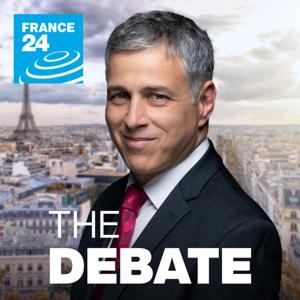
A live debate on the topic of the day, with four guests. From Monday to Thursday at 7:10pm Paris time.

7,580 Listeners

10,709 Listeners

3,369 Listeners

762 Listeners

1,046 Listeners
1,024 Listeners

1,802 Listeners

348 Listeners

4 Listeners

0 Listeners

0 Listeners

2 Listeners

1 Listeners

21 Listeners

181 Listeners

5 Listeners

0 Listeners

4 Listeners

6 Listeners

5 Listeners

39 Listeners

815 Listeners

3 Listeners

4 Listeners

5 Listeners

1 Listeners

16,143 Listeners

0 Listeners

0 Listeners

361 Listeners

0 Listeners

476 Listeners

378 Listeners