
Sign up to save your podcasts
Or



Welcome back!
This week I’m excited to talk to Barrie Shepley. Barrie was Canada’s National Triathlon Coach in the early 90s and has coached hundreds of people to National Championship titles, Pan American Games medals, World Championship medals, and to the successful completions of Hawaii Ironman and Boston Marathon. Barrie was selected to go to the 2000 Sydney Olympics where Triathlon made its debut as an Olympic Sport and where Canadian Simon Whitfield won a gold medal. Simon has also been on this podcast and you can listen to that interview here!
There are few people who have contributed to this sport as much as Barrie. In this episode we discuss his new book Chasing Greatness: Stories of Passion and Perseverance in Sport and in Life and what Barrie’s learned from coaching some of the top people in the world as well as people who are just looking to get fitter and healthier in their day to day lives.
Enjoy the conversation!
Welcome back!
This week I'm sharing an interview I did on the Magical Learning Podcast, an organization that helps companies and schools learn better.
We have a great conversation about health and wellbeing - specifically looking at play, fun, and happiness.
If you want to learn more about the Magical Learning Podcast, you can check out their website here.
Enjoy the episode!
Welcome back!
This week I'm really excited to share a short interview I did with Sports Psychology expert Dr. Alex Auerbach. Alex is the Director of Wellness and Development for the Toronto Raptors, and has worked for 7 years providing clinical care, crisis intervention, and performance consultation for professional, collegiate, and Olympic athletes, as well as coaching staff, medical staff, and sports administration.
In this amazing conversation, we dig into mental recovery and regeneration, sports psychology, and the athlete’s mind.
You can learn more about Alex at his website.
Enjoy!
Today I'm sharing the interview that I did with Chris VanVliet on his Insight Podcast all about sleep, recovery and regeneration.
We hope you love the episode and let us know what you think @drgregwells on social.
Have a great day!
Welcome back!
This week I’m excited to share my conversation with Dr. Bill Howatt on Sharpen Your Edge Live.
Bill is an internationally recognized expert in mental health. He's spent over 25 years helping employees, patients, and leaders achieve their potential.
Bill has a PhD in Organizational Psychology, did post-doctoral training at UCLA, has developed programs with organizations like the Conference Board of Canada and the University of New Brunswick, and is author of numerous books and articles, including regular contributions to The Globe and Mail.
During this conversation, Bill discusses the transformational nature of regret and the tools we can use to move forward from it.
If you want to learn more about Bill and his new book, “No Regrets: How to Live Today for Tomorrow’s Emotional Well-Being”, check out his website at billhowatt.com.
Enjoy!
From the publisher's feed
Healthy High Performance for a Limitless Life
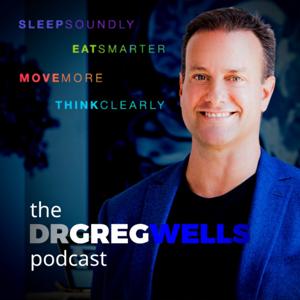
You can get healthier, improve your wellness, and live a limitless life and physiologist Dr. Greg Wells would love to be your trusted guide on that adventure.
Dr. Greg is one of the rare scientists who can take research and make it understandable so that you can have a clear path to achieving your goals.
In every episode, Dr. Greg and his expert guests will explain the science of how your body and brain work in a way that you can understand so you that you can get healthy, perform better, and live a limitless life.

90,991 Listeners

9,620 Listeners
11,782 Listeners
10,714 Listeners

12,708 Listeners

3,457 Listeners

19,271 Listeners