
Sign up to save your podcasts
Or



A few little titters here and there, the odd pun or amusing tale can make your content more interesting, put a smile on your audience’s face and keep them hooked.
But only if the proper precautions are taken. And, only if it’s authentic.
5 Star ratings and reviews help other women discover the show and learn how they can make sure their voice matters too. So please, don’t forget to leave one.
Want to continue the conversation or get some extra support with telling your story?
Find me:
On Instagram: @22storiesandme
On LinkedIn: linkedin.com/in/hilarysalzman
Online: www.22-stories.com
This podcast is produced by the brilliant Suzi @story_publishing
When should you use storytelling in your business? Can I give you a hint? Always
In this episode, I share ideas for where you can share your stories.
Want to continue the conversation or get some extra support with telling your story?
Find me:
On Instagram: @22storiesandme
On LinkedIn: linkedin.com/in/hilarysalzman
Online: www.22-stories.com
This podcast is produced by the brilliant Suzi @story_publishing
What’s your favourite movie? Mine’s Shawshank Redemption - not least for it’s wonderful storytelling but also what it teaches us about change. A little lesson I’m going to share in this episode.
Fear of change is often based on stories that stop us from achieving our potential or stop us from seeing when we’ve made massive, positive leaps forward. Stories that are so real and vivid we never think to question them and that society just loves to (unhelpfully) reinforce.
Figuring out your story can re-focus your mindset around change, creating a healthier relationship that is built around being excited about all the possibilities ahead of your, rather than giving into the fear.
Want to continue the conversation or get some extra support with telling your story?
Find me:
On Instagram: @22storiesandme
On LinkedIn: linkedin.com/in/hilarysalzman
Online: www.22-stories.com
This podcast is produced by the brilliant Suzi @story_publishing
Honesty. Integrity. Transparency. Fun. Ethical. Sustainable
All very worthy values but yawn, boring as dishwater. And, when something is boring, or says just the same as everyone else, your audience are just gonna sail right on past.
So how do you get them to stop, take note and say Yes! This is a brand I want to work with?
Here’s 3 tips you can start working on straight away
Tip 1 - Make sure your values are yours - not anyone else. Oh and be prepared to defend each value with evidence.
Tip 2 - Be specific - vagueness helps no-one.
Tip 3 - Ditch the boring language and have fun with it.
If you’d like to learn a bit more about why your values matter so much, check out my previous episode - How talking about your values could bag you a whole new audience.
Want to continue the conversation or get some extra support with telling your story?
Find me:
On Instagram: @22storiesandme
On LinkedIn: linkedin.com/in/hilarysalzman
Online: www.22-stories.com
This podcast is produced by the brilliant Suzi @story_publishing
Research shows 52% of consumers are more attracted to buy from certain brand
over others if these brands stand for something bigger than just the products or services
they sell, which align to their personal values.
So what does this all mean for you?
Whether or not you’re running a business, you are wanting people at the very least to buy
into you. And buying into someone is a lot harder if you don’t know what you’re buying into.
Understanding what you stand for gives your audience a choice. It also means you don’t need to waste your time trying to reach people who don’t share your values.
And being clear on your purpose, gives others something to connect to; a shared experience, a joint feeling which helps build stronger, more loyal relationships.
Continue the learning. Check out my next episode for tips on how you can talk about your values so they are more ‘Yes’ than ‘Yawn’.
Want to continue the conversation or get some extra support with telling your story?
Find me:
On Instagram: @22storiesandme
On LinkedIn: linkedin.com/in/hilarysalzman
Online: www.22-stories.com
This podcast is produced by the brilliant Suzi @story_publishing
So 2022 was a bit pants on a global scale. Is 2023 going to be any different? Who knows.
So much of what happens is out of our control, it’s almost worth not worrying about. What we can focus our efforts on, however, are the things we can influence. This includes how you choose to use your voice and the actions you take to achieve your goals.
In this episode I invite you to take a little step back as we explore the role your story can play when it comes to you getting what you want out of your life, business, career and relationships.
Interested to read the book I mention - Wired for Story by Lisa Cron? You can get it here.
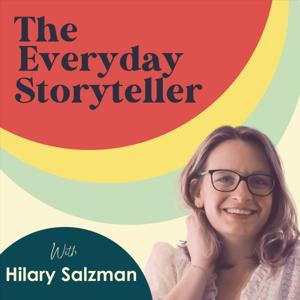
For women with something to say, The Everyday Storyteller is a podcast about making your voice matter, one day at a time.
5 Star ratings and reviews help other women discover the show and learn how they can make sure their voice matters too. So please, don’t forget to leave one.
Want to continue the conversation or get some extra support with telling your story?
Find me:
On Instagram: @22storiesandme
On LinkedIn: linkedin.com/in/hilarysalzman
Online: www.22-stories.com
This podcast is produced by the brilliant Suzi @story_publishing
The best told business stories focus on the outcome of what you do for your audience.
For example, a bakery makes bread but bread is not their outcome. Their outcome is you enjoying that bread and how it makes you feel.
Focussing on this outcome, enables you audience to quickly see how you can solve their problem which, is pretty much all they need to know.
Here are some questions to get you thinking about the problems you solve.
Want to continue the conversation or get some extra support with telling your story?
Find me:
On Instagram: @22storiesandme
On LinkedIn: linkedin.com/in/hilarysalzman
Online: www.22-stories.com
This podcast is produced by the brilliant Suzi @story_publishing
How do you get others to listen to you and engage with what you have to say? Simple, you just have to show up. It’s easy right. Sure. Until you actually have to do it.
It’s all very well and good saying you just need to show up consistently to build a brand. But what if that brand’s just you. And what if you haven’t ‘just shown up’ before?
In this episode I share a simple framework to help you feel more at ease with showing up and taking about what you do and why.
For women with something to say, The Everyday Storyteller is a podcast about making your voice matter, one day at a time.
5 Star ratings and reviews help other women discover the show and learn how they can make sure their voice matters too. So please, don’t forget to leave one.
Want to continue the conversation or get some extra support with telling your story?
Find me:
On Instagram: @22storiesandme
On LinkedIn: linkedin.com/in/hilarysalzman
Online: www.22-stories.com
This podcast is produced by the brilliant Suzi @story_publishing
Do you know the difference between your values and your value? And does it even matter?
Yes, yes it does.
Here are some questions to help you think about your value to your audience. Each one would make a perfect story for social media!
Want to continue the conversation or get some extra support with telling your story?
Find me:
On Instagram: @22storiesandme
On LinkedIn: linkedin.com/in/hilarysalzman
Online: www.22-stories.com
This podcast is produced by the brilliant Suzi @story_publishing
I’m a storyteller. This is podcast is called The Everyday Storyteller. But have you ever stopped for a moment to think what a story actually is?
In this episode I’m going to be answering exactly that by, you guessed it, sharing a story. And it’s very personal one for me.
Stick the kettle on and listen up.
For women with something to say, The Everyday Storyteller is a podcast about making your voice matter, one day at a time.
5 Star ratings and reviews help other women discover the show and learn how they can make sure their voice matters too. So please, don’t forget to leave one.
Want to continue the conversation or get some extra support with telling your story?
Find me:
On Instagram: @22storiesandme
On LinkedIn: linkedin.com/in/hilarysalzman
Online: www.22-stories.com
This podcast is produced by the brilliant Suzi @story_publishing
From the publisher's feed