
Sign up to save your podcasts
Or

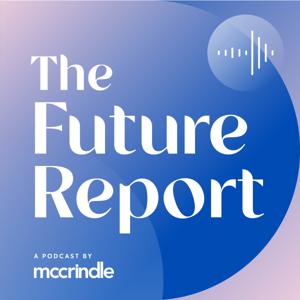


Generation Z describes those born between 1995 and 2009, placing them today aged between 13 and 27. While many of them are students, in just a few years they will comprise a third of the workforce.
In our work we find so many people wanting to understand the mindset and perspective of Gen Z; who they are, what is important to them, and how to remain relevant for this emerging generation.
Joining Ashley Fell to discuss this, is our Research Lead at McCrindle, Steph Razey.
Today we want to talk about a word or phrase that made its way to the Oxford English Dictionary Word of the Year in 2020 which is: Cancel Culture.
As social researchers, each week are deploying surveys and analysing demographic and community data. We gather content from focus groups and in-depth interviews and draw out the trends. That is social research. While analysing these data sets gives us specific insights into certain groups or areas, it also gives us a very broad read on our society.
One outcome of this type of work is that we are often asked to share insights and perspectives not just from a particular study, but a general perspective on our society and where we see it going. This is often labelled as social commentary.
So, in this episode we going to take our social research hat off and put the social commentator hat on, to see what is going on in our broader society and where things are going.
Joining our host, Ashley Fell, to do just that is Social Researcher and Principal of McCrindle, Mark McCrindle.
A few weeks ago, the latest Census results were released by the Australian Bureau of Statistics. While there were a lot of interesting findings, one big generational shift has occurred in the last five years: the Millennials have overtaken the Baby Boomers to become the largest generation.
So, in today’s episode, Ashley Fell sits down with Social Researcher, Geoff Brailey to talk about this shift, the differences between life 40 years ago compared to today and reframing some of the social stereotypes of the Millennial generation.
Welcome back to another season of The Future Report! Over the last few weeks, Mark McCrindle and Ashley Fell have been out travelling and sharing insights at conferences in Europe and the United States, which after two years of closed borders has been a bit of a treat! In today’s episode, our host, Ashley Fell sits down with social researcher, Mark McCrindle to discuss international conferences and travelling in a post-covid world.
Once every five years in Australia, we have the night that stops the nation, the census night. The Australian Bureau of Statistics then works busily away and analyses and compiles the data for almost a year and then releases it to the nation. For us, self-professed data nerds at McCrindle, the release day feels like our Christmas’ have all come at once, with a brand new data snapshot of the nation. This data tells the stories of our friends, families, communities, and our nation.
In this episode, we will be unpacking the census insights that you need to know about. Our host, Sophie Renton sits down with social researchers, Mark McCrindle and Geoff Brailey.
The education sector is at the centre of many different trends. From changing generations of students and teachers to adapting the curriculum to suit the future of work to respond to changes brought about by the pandemic, to focusing on teacher and student wellbeing and collecting data and knowing what to do with it.
Clearly, there is a lot on the plate for those working in the sector!
Therefore, it’s no wonder that when we speak to educators, they are feeling fatigued and a bit overwhelmed.
Yet, there is hope! If leaders in the sector understand the trends at play and how to utilise the data at their disposal, they can make informed and strategic decisions going forward.
Joining Ashley Fell on the podcast to discuss the role of data science in the future of education is McCrindle's Data Scientist, Mike Abecina.
Have you ever thought about whether you are an ‘anywhere’ or ‘somewhere’ type of person?
If you are an ‘anywhere’ type of person, it is likely that you can find home, community, or work, anywhere.
On the other hand, if you are a ‘somewhere’ person, it is likely that you have strong connections to a particular place.
As people continue to move and relocate, the idea of how we define our identity, and the concept of home is an interesting topic to explore.
Joining Ashley Fell on the podcast is social researcher, Grant Dusting.
At McCrindle, we love to talk about the generations. Today’s high school students and those in their early twenties belong to Generation Z, who were born between the years 1995 and 2009.
If you parent, lead or engage with this generation in any context, you will know that they are quite different from those who have gone before.
The questions on many people’s mind is, how do we best care for this generation who have grown up on screen-based devices and in a more technologically supplied world than we have ever experienced?
We're delighted to have psychologist and author, Collett Smart, joining the podcast to share her wisdom and insight with us about teenagers.
If you are old enough to remember dial-up, when you had to wait for the internet to connect and when the world wasn’t in our pockets, it’s a pretty stark contrast to the world shaping children today.
In the last two decades, technology has advanced at lightning speed, and it can be challenging to keep up for all of us – no matter what generation we are a part of. Especially since something we were once a little unsure of, perhaps skeptical of, is now an everyday experience at home, at work, at school and throughout society.
When we speak to parents and educators on the issue of generational differences, technology almost always comes up as the consistent answer as to how Generation Alpha are different from generations past.
Screens also come up as a source of tension. On the one hand, parents and educators want to ensure children are equipped with the necessary digital skills to thrive in an increasingly technological world. On the other hand, they also want them to develop resilience, interpersonal and life skills that come from activities and interactions away from screens.
In a recent survey we conducted, more than four in five Australians (83%) agree that for children aged eleven and under, the use of screens causes more harm than good.
So, what do we need to be aware of and how can we help raise Generation Alpha in the great screen age?
Joining Ashley Fell is the person who gave the name Generation Alpha to those born 2010-2024, Mark McCrindle.
Analysing baby names paints a fascinating picture of the era that we live in. The Builders generation (born before 1945) chose traditional names such as Peter, Paul, John, Karen, Jennifer, or Sharon for their children. In the 1980s, the Baby Boomers began drawing on baby name books for inspiration and trends. Meanwhile, today’s parents, Generation Y (also known as the Millennials), are not only choosing new and different names, but they are also parenting a new and unique generation – Generation Alpha.
At McCrindle, we have the privilege of gathering the top baby names and compiling the top 100 list. We have just released our 2022 baby names report, and there are some interesting naming trends that Gen Y parents are drawing on for their Generation Alpha children.
And in big news, we also have a new top baby girls name for the first time in a few years.
From the publisher's feed

101 Listeners
152 Listeners
585 Listeners

790 Listeners

757 Listeners

126 Listeners
55 Listeners
21 Listeners

228 Listeners

46 Listeners
69 Listeners

395 Listeners

44 Listeners

34 Listeners

19 Listeners