
Sign up to save your podcasts
Or

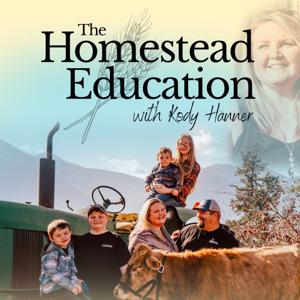


What should you actually keep in a home remedy cabinet—and where do you even start when natural medicine feels completely overwhelming?
In this episode of The Homestead Education Podcast, Kody Hanner sits down with Lesli and Coleen from Prep Mart to talk about natural remedies, preparedness, herbal medicine, and the practical skills families can learn to become more self-reliant.
The conversation covers everything from tinctures and essential oils to elderberry, herbal infusions, and what the guests describe as natural antibiotics. Lesli and Coleen also share how their own families' experiences with preparedness and natural living eventually led them to build Prep Mart and begin teaching other families the skills they had spent years learning themselves.
What people mean when they talk about natural antibiotics
The difference between tinctures, essential oils, teas, and herbal infusions
Why different herbal preparations may be used for different purposes
How Lesli and Coleen first became interested in natural remedies
Building a home remedy cabinet without buying everything at once
How to decide which herbs and remedies make the most sense for your individual family
Elderberry and why it has become a staple in many homestead medicine cabinets
Colloidal silver and the personal experiences that led Coleen to learn more about it
Oregano oil and other traditional remedies commonly discussed in natural-living communities
Why preparedness is about more than extreme emergencies
Creating a 72-hour preparedness plan
Slowly building a pantry when you can't afford to stock a year's worth of food at once
How unexpected job loss, storms, power outages, and financial difficulties can make preparedness valuable
The importance of building a community of farmers, medical professionals, and other skilled people
Teaching children science through tinctures, fermentation, cooking, gardening, and homestead projects
Why real-life skills naturally become part of homeschool education
Raising children who know how to identify problems, find answers, and take responsibility
One of the biggest topics in this conversation is something many families searching for a more self-reliant lifestyle eventually encounter: natural antibiotics.
Coleen explains how her family became interested in colloidal silver and describes how she makes it at home. She and Lesli also talk about their personal use of herbal remedies, including oregano oil, elderberry, mullein, tinctures, and essential oils.
But one of the most important moments in the episode comes when the conversation turns to serious infection.
Kody shares the story of her brother developing cellulitis after a seemingly minor wound while working outdoors. His condition progressed rapidly, eventually contributing to a medical crisis from which he did not recover. That experience is a powerful reminder that self-reliance doesn't mean refusing conventional medicine—it also means learning to recognize when something has moved beyond home care.
This episode shares personal experiences and traditional home-remedy practices for educational purposes and is not medical advice. Serious or worsening infections, breathing problems, high fever, cellulitis, or other concerning symptoms should be evaluated by a qualified medical professional.
One of the best pieces of advice from this conversation is surprisingly simple:
Don't try to build your entire natural medicine cabinet overnight.
Instead, look at the problems your family actually deals with most often.
A family with young children may prioritize completely different remedies than an older couple. Someone who struggles with seasonal respiratory issues may build a different cabinet than a family primarily dealing with bug bites, upset stomachs, or everyday bumps and scrapes.
It's the same approach Kody recommends for becoming more self-sufficient with food: identify the five or ten things your family uses most often, then learn how to produce, source, or prepare those things first.
Lesli and Coleen also challenge the stereotype that preparedness means preparing for some massive end-of-the-world event.
Sometimes preparedness looks like having enough food when you lose your job.
Sometimes it's being snowed in for several days.
Sometimes it's losing power.
Sometimes it's simply having what your family needs when getting to the store isn't an option.
Lesli shares how her family's stored food and preparedness supplies helped them through a period when multiple financial problems hit almost simultaneously—job losses, losing their housing arrangement, a totaled vehicle, and discovering they were expecting a baby. The supplies weren't there for a dramatic disaster. They were there for real life.
The conversation also moves into one of the central themes of The Homestead Education Podcast: children learn an incredible amount when they're allowed to participate in real life.
Fermentation becomes science.
Baking becomes fractions.
Making tinctures becomes chemistry.
Identifying elderberry, mullein, and goldenrod becomes botany.
Raising livestock becomes biology, economics, and responsibility.
And solving real problems gives kids something that's much harder to teach on a worksheet: confidence.
Lesli and Coleen explain how their children help with gardening, animals, fermentation, food production, herbal remedies, and even butchering—and how much academic learning naturally happens along the way.
As Kody puts it during the conversation, we're not simply raising kids.
We're raising adults.
And one of the most valuable things we can teach them is how to look at a problem and believe, I can figure this out.
Prep Mart
Use code HOMESTEAD EDUCATION for 10% off through Prep Mart.
Prep Mart also offers educational resources designed to help families gradually build preparedness skills, including a 72-hour preparedness checklist and pantry-building resources.
If you're interested in natural living, homesteading, preparedness, agriculture, and raising capable kids, follow The Homestead Education Podcast so you don't miss the next episode.
We're not interested in simply collecting more information.
We're interested in learning skills we can actually use.
Until next week, keep growing.
www.prepmartusa.com
FB: https://www.facebook.com/profile.php?id=61576608654246
IG: https://www.instagram.com/prepmartusa/?__pwa=1
Kody's Links
Seed saving is about far more than collecting a few seeds at the end of the gardening season. It is a practical way to preserve heirloom varieties, strengthen your garden, and keep more control over your family’s food supply.
In this episode, I’m joined by Christopher and Maggie Snow of Autumn Prairie Pumpkins to discuss seed saving, heirloom pumpkins, hand pollination, pest-resistant squash varieties, and the small suburban garden that grew into a micro farm and seed business.
Christopher and Maggie explain the difference between heirloom and F1 hybrid seeds—and why seeds collected from a hybrid plant may not produce the same variety the following year. We also walk through their seed-saving process, including covering unopened blossoms, hand-pollinating flowers, preventing unwanted cross-pollination, and labeling the seeds they intend to preserve.
We also talk about:
Why heirloom seeds matter for food security and resilience
How to begin seed saving in your own garden
The difference between heirloom and F1 hybrid varieties
How squash and pumpkins cross-pollinate
Using blossom bags and hand pollination to keep seeds true
Choosing squash varieties adapted to local pests and conditions
Squash vine borers, cucumber beetles, and natural pest-management methods
Growing vertically in a small suburban backyard
Preserving unusual culinary pumpkins and their agricultural history
Turning a passion for gardening into a small farm business
You do not need acres of land, generations of gardening knowledge, or a naturally green thumb to begin growing food and saving seeds. Sometimes it starts with one stubborn pumpkin plant—and a willingness to learn why it survived when the others did not.
Learn more about Christopher and Maggie, shop their heirloom seeds, and find their pumpkin cookbook at AutumnPrairiePumpkins.com.
Use code HOMESTEAD10 for 10% off your order.
Episode Links
Kody's Links
What happens when rising gas prices don't just hurt at the pump—but begin affecting the cost and availability of nearly everything else?
In this episode of The Homestead Education Podcast, I'm joined by my husband, Ron Hanner, to talk about what higher fuel costs can mean for truckers, farmers, food prices, local businesses, and the supply chain—and, more importantly, what ordinary families can actually do about it.
This isn't about preparing for the end of the world. It's about preparing for the unprecedented.
A job loss. A power outage. A winter storm. A supply-chain disruption. Rapidly rising gas prices. Or simply discovering that the groceries your family buys every week suddenly cost far more than they did a year ago.
Ron and I talk through the ripple effect that fuel prices can have across agriculture and transportation, including the pressure on independent truck drivers and the importance of the trucks that move food, fuel, medical supplies, manufacturing materials, and countless everyday necessities. We also discuss why even a short disruption can expose just how dependent modern communities are on products arriving exactly when they're needed.
But most of this episode is about what you can do before you're scrambling.
One of the biggest misconceptions about preparedness is that you need a huge pantry, acres of land, or thousands of dollars to get started.
You don't.
Start with one thing.
Buy an extra staple when it's inexpensive. Find someone locally who sells eggs. Split a bulk beef purchase with another family. Learn how to preserve one food your family already eats. Store a little water. Cook an extra portion and put it away.
The goal isn't fear.
The goal is creating enough margin in your life that the unexpected doesn't immediately become an emergency.
We also talk about one of the most important pieces of preparedness that can't be stored on a pantry shelf: relationships.
A functioning local food system exists only when local farmers have enough customers to keep producing food. Waiting until grocery shelves are empty to find your local farmer is too late. Supporting those producers consistently helps ensure that farms, ranches, dairies, and small food businesses are still there when your community needs them.
And because this is our family, the conversation naturally includes cows getting ready to calve, a chicken tractor that we accidentally built too large to get off the porch, kids who name animals destined for the freezer, plans for a multigenerational family homestead—and Ron abruptly leaving the podcast when his fire department pager goes off.
Real life doesn't stop because you're recording a podcast.
Neither does the unexpected.
The best time to prepare for it is before you need to.
Visit The Homestead Education for resources on food production, agriculture, preservation, homesteading, and teaching the next generation practical skills.
If you have a question you'd like us to answer in a future episode, reach out at [email protected].
And until next week—keep growing.
Episode Links
Kody's Links
In this episode, I’m answering one of the questions I get asked all the time: How do I get it all done?
Between running a homestead, raising livestock, homeschooling, managing multiple businesses, traveling, running a co-op, and keeping up with a very full household, the real answer is—I don’t do it all.
I’m sharing what actually helps me keep things moving: delegating, building systems, choosing priorities, managing the mental load, using tools that work with my brain, knowing when to hire help, and accepting that sometimes “good enough” really is good enough.
I also share plenty of real-life homestead chaos along the way—from new piglets and heritage hogs to chicken disasters, ducks, harvest season, and the reality of trying to prepare for winter while running a business.
If you’ve ever felt like you’re working constantly but somehow still falling behind, this episode is for you.
Episode Links
Kody’s Link
Kody Hanner and Ron Hanner share a raw, practical story about marriage, parenting, homesteading, and rebuilding health after Ron was told he had end-stage liver disease and might have only a year to live. What follows is a story of fear, grit, and gradual change that led their family to rethink food, home life, and what it means to fight for one another. This episode matters because it connects nutrition, mindset, family systems, and healing in a way that feels lived in rather than theoretical.
In this episode:
Ron's Links
Kody Hanner shares a solo episode that mixes personal life updates from a wildfire-filled summer with a practical rundown of major agriculture and food safety headlines. She also closes with a long reflection on county fairs, 4-H, and how local agricultural education shapes capable, community-minded kids. In this episode, Kody connects homestead life, livestock management, food policy, and youth ag education into one big picture of how agriculture touches daily life far beyond the farm. She also explains why she thinks local food systems matter more than ever when large-scale supply chains, regulations, and public health issues all collide.
Episode Links
Homestead Education Links
For many families, home economics has become a forgotten subject. But cooking, sewing, meal planning, budgeting, gardening, and creating with your hands are the very skills that build confidence, resilience, and independence.
In this episode of The Homestead Education Podcast, Kody Hanner sits down with Jessica Clark of The Lark Life to discuss why practical life skills deserve a place alongside traditional academics—and how families can begin teaching them today.
Jessica shares how teaching her children to cook, sew, quilt, and create has transformed their confidence and given them ownership over their education. Together, they explore why children were designed to be creators rather than passive consumers, and how giving kids meaningful responsibilities helps them develop problem-solving skills that last a lifetime.
Whether you homeschool, attend public school, or simply want to raise more capable kids, this conversation offers practical encouragement for bringing home economics back into everyday family life.
If you're passionate about raising capable kids, practical agriculture, and real-world education, be sure to follow The Homestead Education Podcast. Each week, we share conversations that help families reconnect with the skills, knowledge, and confidence to thrive—whether you live on a farm, in town, or somewhere in between.
In a world increasingly driven by screens, automation, and artificial intelligence, hands-on learning has never been more important. In this episode, agricultural educator Trent Van Leuwen shares how experiential learning, field trips, student entrepreneurship, and real-world agricultural experiences are helping students develop problem-solving skills, resilience, and career readiness. Whether you're a homeschool parent, teacher, or agriculture advocate, this conversation offers practical ideas for bringing meaningful hands-on education to today's students.
Key Topics:
Connect with Trent
Kody's Links
Living Freely on the Fringes: Embracing Authenticity and Freedom in Homesteading & Homeschooling
In this episode, Kody Hanner shares her raw, honest journey of redefining success, identity, and freedom within the homestead and homeschool lifestyle. She explores the pressures of social media, the importance of authenticity, and how to stay true to ourselves without falling into societal traps or comparisons. This episode is a powerful reminder that true freedom comes from living in alignment with your values, beyond public approval or perfect appearances.
Key Topics:
Resources & Links:
Connect with Kody:
Share your thoughts:
Feel inspired? Leave a review or comment on social media. I’d love to hear how you’re reclaiming your freedom and authenticity in your homesteading and homeschooling journey.
From the publisher's feed
Everyone deserves an agricultural education — to understand food, land, and responsibility at a scale that fits real life.
Hosted by Kody Hanner, agricultural educator, homeschool mom of six, and lifelong rural advocate, The Homestead Education Podcast explores how accessible, small-scale agricultural education can build capable people, strengthen families, and create resilient local food systems.
Drawing from generations of rural knowledge, educated in animal science, and years of teaching families outside traditional systems, Kody breaks down complex food and education topics into practical, usable skills for homes, classrooms, and communities.
Each week, you’ll hear honest conversations about food systems, small-scale agriculture, homeschooling, and real-world education — designed for families, educators, and anyone who believes we shouldn’t outsource our lives.
Whether you live on acreage, in town, or somewhere in between, this podcast will help you understand where your food comes from, why it matters, and how practical agricultural knowledge can create meaningful change.

3,757 Listeners

2,316 Listeners

3,363 Listeners

696 Listeners
977 Listeners

338 Listeners

2,209 Listeners
2,017 Listeners
269 Listeners

14,724 Listeners
147 Listeners
1,020 Listeners

312 Listeners
176 Listeners

1,240 Listeners