
Sign up to save your podcasts
Or

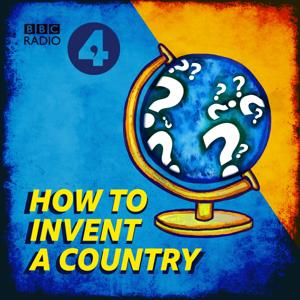


Misha Glenny and Miles Warde travel east to tell the story of China - what it is and where it came from.
"The empire long united must divide, long divided must unite. Thus it has ever been." The opening lines of a fourteenth century novel about the rise and fall of China's multiple dynasties, history explained in a couple of brilliant lines. But what is China and where did it come from?
This is episode 55 of How to Invent a Country on BBC Sounds, recorded on location and opening in Taiwan. "The reunification of the historical motherland is an inevitability," said the Chinese president, Xi Jinping, on New Year's day. China is an empire, and this is a president asserting central control - in Xinjiang, in Hong Kong, and now Taiwan appears to be in his sights. Control has been the ambition since the rule of the First Emperor in 221 BCE, but areas on the periphery continue to resist.
With contributions from Frances Wood, author of The First Emperor; Steve Tsang, The Political Thought of Xi Jinping; Amanda Hsiao, senior China analyst for the Crisis Group; Nathan Law, exiled activist, Hong Kong Umbrella Movement; Chris Buckley, Chief China correspondent of the New York Times now based in Taiwan; plus Paul French, Linda Jaivin, Tania Branigan and Ian Johnson, author of Sparks.
"What we do is explain where countries come from, and then unpick the stories governments use to stay in charge. They weren't always there, those lines on the map - everything keeps changing. And China has surged and collapsed, expanded and shrunk, as much as anywhere we've been." Misha Glenny
Presenter Misha Glenny is the author of McMafia and a former Central Europe correspondent for the BBC. The producer in Bristol is Miles Warde
Further reading:
Frances Wood, the First Emperor of China and No Dogs and Not Many Chinese
A bonus episode with Hannah Lucinda Smith, Christopher de Bellaigue and Misha Glenny.
Misha Glenny and Miles Warde take a ride over the Bosphorus to see the old Hyderpasha railway station - the Asian bulkhead of the Berlin to Baghdad railway which opened in 1909. The Ottoman alliance with Germany had implications for the Middle East that are still being felt to this day.
"This was a place of intrigue, spies and glamour. For four and half centuries Istanbul had been the centre of the empire, right up until the end of the first world war. At which point the empire was divided up, broken up, partitioned into mandates – Syria and Lebanon under the French, Palestine, Jordan and Iraq to the British, this based on the famous Sykes-Picot line agreed in 1916. The Ottoman empire had joined the wrong side in the war, and was going to pay. You could say this region is still paying, such has been the failure of those lines drawn in the sand."
Contributors include Soli Ozel of Kadir Has University; Eugene Rogan, author of The Fall of the Ottomans; and Suzy Hansen whose Notes on a Foreign Country was a finalist for a Pulitzer Prize.
The producer in Bristol is Miles Warde
On September 12 1683, an army led by Kara Mustafa Pasha, Grand Vizier of the Ottoman empire, lined up on a hill just outside Vienna. The Ottomans had been besieging the city for almost two months. This wasn’t the first time they’d threatened Vienna. Europe’s fate appeared to hang in the balance once again.
Misha Glenny - who now lives in Vienna - traces the rise and fall of the Ottoman empire with location recordings from the two palaces of Topkapi and Dolmabahce on the Bosphorus in Istanbul.
Contributors to the series include Hannah Lucinda Smith, author Erdogan Rising; Professor Marc David Baer, author of The Ottomans; the Istanbul based writer Kaya Genc; Martyn Rady, author of books on the Habsburgs and The Middle Kingdoms; and Christopher de Bellaigue, former Tehran correspondent and author of The Lion House.
Misha Glenny is rector of the Institute for Human Sciences in Vienna and author of McMafia. The producer in Bristol is Miles Warde
Further reading:
Suzy Hansen, Notes on a Foreign Country
When Mehmet the Conqueror arrived in Constantinople, now Istanbul, he turned the main cathedral into a mosque and threatened to move much further west. Christian Europe was terrified. Misha Glenny travels to Istanbul to reveal how Mehmet's empire expanded over the next 100 years - to Iran, to Egypt, right up to the gates of Vienna too. This was the age of mighty sultans, Selim the Grim and Suleiman the Magnificent, who was happy to take the challenge to the catholic Habsburgs. But as modern Turkey prepares to celebrate a hundred years without the Ottomans, how is this period remembered under the government of President Erdogan?
This is the fiftieth episode of Misha Glenny and Miles Warde's How to Invent a Country series, which sets out to explain where nations come from, who decides their borders, and what stories the people tell themselves. These programmes are recorded on location in Istanbul, Belgrade and Vienna.
"All these sultans, they were mythical creatures for us. I really thought they were part of a fictional world because the real history for us was about Ataturk, and in primary school Ottoman history was a foreign country for us." Kaya Genc, novelist and author of The Lion and Nightingale.
Other contributors to the series include Judith Herrin, author of Byzantium; Professor Marc David Baer, author of The Ottomans; senior lecturer at Kadir Has University Soli Ozel; Christopher de Bellaigue, author of The Lion House; and Hannah Lucinda Smith whose most recent book is Erdogan Rising: The Battle for the Soul of Turkey
Presenter Misha Glenny is the author of McMafia and a former Central Europe correspondent for the BBC. The producer in Bristol is Miles Warde
Further reading:
Suzy Hansen, Notes on a Foreign Country
Misha Glenny's final programme on Russia looks at the country's attitude to war, and in particular the great patriotic wars against Adolf Hitler and Napoleon Bonaparte. With contributions from Antony Beevor, author of Stalingrad; Robert Service, author of the Last Tsar, Kateryna Khinkulova of BBC WS; former ambassador to Moscow Rhodric Braithwaite; and Dominic Lieven, author of Napoleon against Russia.
The producer in Bristol is Miles Warde
The extraordinary tale of how a small fortressed city became the centre of the largest contiguous landmass in the world, presented by Misha Glenny. It was Peter the Great who created a new capital on the Baltic, and Catherine the Great who extended Russian influence south and west.
The producer in Bristol is Miles Warde
Russia's empire was not like that of Britain or France. It was built by expanding across the land, so much more like the United States of America. Presenter Misha Glenny speaks to James Hill of the New York Times about travelling to the edges, and also to Janet Hartley, author of Siberia: A History of the People. Plus further contributions from Ukrainian academic Olesya Khromeychuk; Anna Reid, author of Borderland; and the Tblisi-based journalist, Natalia Antelava, editor-in-chief at Coda Story.
The producer for BBC audio in Bristol is Miles Warde.
Countries look so cohesive on the map - sturdy borders, familiar shapes. Don't be misled; they didn't always look like this. This is the story of Russia, biggest contiguous country on the planet, told from the time when it was very small.
"In my producer's history textbook it says here, page 18, that Russia as a political entity did not exist."
With contributions across the series from Janet Hartley, author of a history of the Volga; Rhodric Braithwaite, former ambassador to Moscow; historian and sociologist, Mischa Gabowitsch; Anthony Beevor; Natalia Antelava; Kateryna Khinkulova; Dominic Lieven; Olesya Khromeychuk; and James Hill of the New York Times.
This is the latest in the How to Invent a Country series which has previously been to Poland, Brazil, Germany and the USA.
Presenter Misha Glenny is the author of McMafia and former BBC Central Europe correspondent
From the publisher's feed
Misha Glenny investigates the borders, the histories and the people that make different nations what they are.

7,585 Listeners

372 Listeners

882 Listeners

1,042 Listeners

5,486 Listeners

1,789 Listeners

954 Listeners

1,880 Listeners

603 Listeners

1,835 Listeners

1,042 Listeners

1,937 Listeners

485 Listeners

382 Listeners

4,768 Listeners

63 Listeners

3,206 Listeners

701 Listeners

66 Listeners

15,577 Listeners

1,601 Listeners

2,452 Listeners
118 Listeners

1,105 Listeners