
Sign up to save your podcasts
Or



This summer, many Brits are striking or thinking about striking. From railway workers to barristers, Post Office workers to teachers, an unusually large wave of strikes continues to build as the summer goes on. As workers struggle with the cost of living and turn to industrial action, the Labour Party is divided on how to act. As the leader of the opposition, Keir Starmer is walking a tightrope: the Party was founded on workers rights but strikes are disruptive and unpopular with many voters.
So how have Labour leaders in opposition dealt with mass strike action in the past? Jonathan Freedland takes the Long View.
Contributors: Professor Steven Fielding of the University of Nottingham and political historian Anne Perkins
In this edition of The Long View Jonathan Freedland finds historical comparisons to the current Tory leadership contest, considering moments in history when the Conservative Party has removed a prime minister and sought a new figure for Number 10.
He is first joined by Professor Laura Beers to discuss the removal of David Lloyd George in October 1922. Lloyd George, a Liberal, had led a War Time Coalition consisting of majority Conservative MPs. A charismatic figure, Lloyd George had a reputation as an innovator and a doer, but his time as PM was also plagued by scandal. Unhappy with the PMs economics, his foreign policy and his reputation, Conservative MPs met at the Carlton Club to decide whether to abandon the coalition and oust Lloyd George. Some of the loudest criticisms came from rising star and future PM, Stanley Baldwin who described Lloyd George as a 'dynamic force'.
Fast forward 40 years to 1963 and the Party is once again seeing a change of leader. This time after Harold Macmillan decides to resign on the eve of the Tory Conference, citing ill health. The non-democratic 'soundings' procedure, run by the party elite, settles on Alec Douglas-Home to be leader, refusing to back any of the favourites. The choice causes controversy and will have a lasting impact on how future leaders of the party are selected.
Presented by Jonathan Freedland
Jonathan Freedland explores the past behind the present. In the last of this long view of the future we ask when do civilizations & systems know that things cannot go on as they are. When do the rulers and the ruled sense the game is up? Historians Craig Clunas summon up the last days of the Ming Dynasty of the 17th Century, Maria Fusaro considers how the Venetian Republic registered its waning powers & end days in the 18th Century and Anthony Badger explores the existential crisis of America in 1933-would it survive as a democracy, could it be reformed & avoid collapse?
Producer Mark Burman
Cancel culture is not new or unique to the modern day. For as long as humans have had society, we’ve cancelled those who violated its unwritten rules and norms.
Contributors:
Producer: Sarah Shebbeare
Jonathan Freedland explores historical parallels of today's shift to renewable energy due to climate change.
Jonathan considers moments in history when societies have been forced to adapt their energy supply due to environmental pressures. He looks to the Ancient Egyptian Old Kingdom and how it adapted to a century long drought, Early Modern England's wood scarcity crisis and the shift away from coal prompted by London's Great Smog of 1952.
In our era of environmental crisis, can these historical events offer guidance on how best to adapt our own energy resources?
Contributors:
Producer: Sam Peach
Jonathan Freedland explores historical parallels to concerns around the harms of social media today. What can history tell us about those worries might be addressed?
Jonathan looks for historical precursors to fears around the harms of social media platforms. He examines the controversial unstamped press in the Victorian era, the rise of the motor car and road safety in the early 1900s as well as the role of whistle-blowing in exposing the tobacco industry in the second half of the 20th century.
Producer: Laurence Grissell
Jonathan Freedland explores what history can tell us about how today's tensions with China today might play out.
Jonathan looks for historical precursors to the rise of China. He examines the rise of the Macedonian Empire in the 4th century BC, the Anglo-Dutch Wars in the 17th century and the rise of the United States in the second half of the 19th century.
What can history tell us about how conflict might be avoided when a new power threatens an existing one?
Producer: Laurence Grissell
Jonathan Freedland and a team of historians and BBC correspondents take The Long View of the Union of the United Kingdom.
The peoples of this island and their relationship with each other is hotly discussed and contested. Its relationship – constitutionally, economically and culturally - is up for debate, especially as issues of the Union after Brexit and the pandemic come to the fore. In this special edition of The Long View Jonathan Freedland and a team of historians and BBC correspondents look back at three separate moments in the history of the birth of the Union where its future - and its terms of engagement - were under similar scrutiny.
Producer: Mohini Patel
Earlier this year the death of Sarah Everard provoked an outpouring of grief and anger. A vigil marking her death descended into violence and thousands of social media-posts were shared detailing experiences of attack and threats against women in public spaces. Although the attempted rape of Kate Dickinson by the military officer Valentine Baker had a less tragic conclusion, the response to his assault on her in a railway carriage, which resulted in her hanging out of the train door for several miles until rescue came, provoked a very similar reaction across the nation. The ability for a woman to travel freely, to walk the streets without let or hindrance, was a topic of hot debate.
Producer; Tom Alban
Although not dominating the COVID headlines the backlog of legal cases in the UK is taking a heavy toll on everyone from the people involved who are seeking resolution to the legal profession itself. That's the story today, but it was also the story back in 1666 when after a year of plague and then the Great Fire of London, our capital city was crippled by a legal backlog which made economic recovery and the rebuilding that it required all but impossible. The challenge then was to deal with all the cases to do with Landlords and Leaseholders who had lost everything in the fire and so couldn't afford to begin the rebuilding process.
Producer: Tom Alban
From the publisher's feed
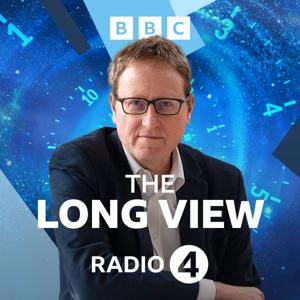
Jonathan Freedland presents the series in which stories from the past are compared with current events.

7,585 Listeners

1,042 Listeners

5,486 Listeners

1,789 Listeners

3,197 Listeners

1,835 Listeners

1,042 Listeners

2,097 Listeners

1,937 Listeners
152 Listeners

63 Listeners

3,206 Listeners

701 Listeners
99 Listeners

1,005 Listeners

15,577 Listeners

3,043 Listeners
193 Listeners

1,135 Listeners

836 Listeners

177 Listeners

2,229 Listeners
60 Listeners