
Sign up to save your podcasts
Or



Get the Month 2 Para Training Workbook: https://abainschool.com/month2
Data collection can sound intimidating, but most of the time we’re really trying to answer one simple question: What happened?
In Week 7 of Para Training in a Pinch, we’re breaking down the basics of special education data collection and the common ways paraprofessionals may be asked to measure student skills and behavior.
We don’t collect data just to fill out paperwork. We collect it because students deserve decisions based on evidence instead of guesses.
We’ll cover how to:
✔️ Collect objective, accurate data
✔️ Measure frequency, rate, and percentage
✔️ Use interval recording
✔️ Measure duration and latency
✔️ Understand ABC data and permanent products
You’ll also learn why different behaviors require different types of measurement. Frequency tells us how many, duration tells us how long, latency tells us how long until, and ABC data helps us look for patterns surrounding behavior.
And one of the biggest rules of good data collection? Record it as close to the moment as possible. Missing data is better than filling in something later based on what you think you remember.
This week’s takeaway: Record what you see, not what you remember. The goal isn’t perfect data. It’s honest, useful data that helps students succeed.
📚 Want the activities that go with Weeks 5–8?
The Month 2 Para Training Academy workbook includes weekly activities, scenarios, reflection, and practical application to go along with the trainings.
Get the Month 2 Para Training Workbook: https://abainschool.com/month2
• Para Training in a Pinch podcast series: Start here! https://abainschool.com/ep83
• Join The Misfit Behaviorists Facebook Group: https://abainschool.com/misfits
• ABA in School Resources: https://abainschool.com/tptstore
• Browse all podcast episodes: https://abainschool.com/podcast
💬 Join Us Next Time
Next episode, Week 8: Collecting High-Quality Data.
Join the Facebook group for collaboration and freebies: The Misfit Behaviorists
😍 More, you say? We’re here for you!
👋 Find us!
🖱️ Rate, Review, Like & Subscribe so you don’t miss an episode! Showing this love helps us get out to more educators out there!
Get the Month 2 Para Training Workbook: https://abainschool.com/month2
IEPs can be 40, 50, even 60 pages long. The good news? As a paraprofessional, you don’t need to memorize the whole thing.
In Week 6 of Para Training in a Pinch, we’re breaking down the IEP and focusing on the information paras actually need to support students successfully throughout the school day. Think of the IEP as the team’s playbook. You don’t need every play. You need to know the ones for your position.
We’ll cover how to:
✔️ Find the IEP information you need
✔️ Understand student goals and accommodations
✔️ Use an IEP At-a-Glance or Snapshot
✔️ Keep important supports easily accessible
✔️ Connect IEP goals to daily data collection
We’ll also talk about creating a para clipboard or “sideline playbook” with the information you need throughout the day, such as schedules, student snapshots, data sheets, visuals, reinforcement information, and other supports.
And remember, your data isn’t “just numbers.” The information you collect helps the team determine whether supports are working, whether students are becoming more independent, and what should happen next.
This week’s challenge: Take five minutes to review the plan for one student you support. Ask yourself: What goal are we working on? What supports does this student need? What should I be watching for?
Know the plan. Play the plan.
📚 Want the activities that go with Weeks 5–8?
The Month 2 Para Training Academy workbook includes weekly activities, scenarios, reflection, and practical application to go along with the trainings.
Get the Month 2 Para Training Workbook: https://abainschool.com/month2
• Para Training in a Pinch podcast series: Start here! https://abainschool.com/ep83
• Join The Misfit Behaviorists Facebook Group: https://abainschool.com/misfits
• ABA in School Resources: https://abainschool.com/tptstore
• Browse all podcast episodes: https://abainschool.com/podcast
💬 Join Us Next Time
Next episode, Week 7: Data Collection Basics.
Join the Facebook group for collaboration and freebies: The Misfit Behaviorists
😍 More, you say? We’re here for you!
👋 Find us!
🖱️ Rate, Review, Like & Subscribe so you don’t miss an episode! Showing this love helps us get out to more educators out there!
Get the Month 2 Para Training Workbook: https://abainschool.com/month2
Special education can be incredibly rewarding, but some days can also drain your battery before lunch. 🔋
In Week 5 of Para Training in a Pinch, we’re focusing on the adults in the classroom. Because when you’re overwhelmed, frustrated, or running on empty, it becomes much harder to be the calm and supportive person your students need.
We’ll cover how to:
✔️ Recognize your own stress early
✔️ Use quick reset strategies in the moment
✔️ Ask for help before reaching your limit
✔️ Create a team plan for swapping support
✔️ Recover after difficult moments
Self-care doesn’t always mean taking a 15-minute break. Sometimes you can’t leave. A reset might be ten seconds to breathe, relax your shoulders, ground yourself physically, or simply recognize, “I’m getting overwhelmed.”
We’ll also talk about creating a discreet code word or phrase your team can use when someone needs backup or a chance to swap out.
Great classrooms don’t require superheroes. They need teammates who know when to support each other.
This week’s challenge: Identify your own early signs of stress and choose one quick reset strategy you can use when you can’t immediately step away.
Taking care of yourself isn’t something you do instead of taking care of your students. It’s one of the ways you take care of them.
📚 Want the activities that go with Weeks 5–8?
The Month 2 Para Training Academy workbook includes weekly activities, scenarios, reflection, and practical application to go along with the trainings.
Get the Month 2 Para Training Workbook: https://abainschool.com/month2
• Para Training in a Pinch podcast series: Start here! https://abainschool.com/ep83
• Join The Misfit Behaviorists Facebook Group: https://abainschool.com/misfits
• ABA in School Resources: https://abainschool.com/tptstore
• Browse all podcast episodes: https://abainschool.com/podcast
💬 Join Us Next Time
Next episode, Week 6: Reading the IEP.
Join the Facebook group for collaboration and freebies: The Misfit Behaviorists
😍 More, you say? We’re here for you!
👋 Find us!
🖱️ Rate, Review, Like & Subscribe so you don’t miss an episode! Showing this love helps us get out to more educators out there!
Get the Month 1 Para Training Workbook: https://abainschool.com/month1
Before prompting, data collection, or behavior plans, there’s something even more foundational: the relationship you build with your students.
In Week 4 of Para Training in a Pinch, we’re talking about connection, pairing, reinforcement, and how strong relationships can make learning more effective. We’ll also look at how a little flexibility can help prevent unnecessary power struggles.
We’ll cover how to:
✔️ Build rapport through pairing
✔️ Find what actually reinforces each student
✔️ Use behavior-specific praise
✔️ Balance expectations with flexibility
✔️ Avoid unnecessary power struggles
You’ll also learn about “the frame”: decide what the real expectation is, then allow flexibility with the things inside that frame. Does the student really need that pencil, that chair, or that exact way of completing the task? Sometimes adults accidentally turn the picture into the frame.
This week’s challenge: Try two things. First, replace a generic “Good job!” with specific feedback such as, “I noticed how you kept trying.” Second, before correcting a student, ask yourself: Is this the frame or just the picture?
Students don’t have to earn a relationship from us. Relationships are how we earn the opportunity to teach them.
📚 Want the activities that go with Weeks 1–4?
The Month 1 Para Training Academy workbook includes weekly activities, scenarios, reflection, and practical application to go along with the trainings.
Get the Month 1 Para Training Workbook: https://abainschool.com/month1
• Para Training in a Pinch podcast series: Start here! https://abainschool.com/ep83
• Join The Misfit Behaviorists Facebook Group: https://abainschool.com/misfits
• ABA in School Resources: https://abainschool.com/tptstore
• Browse all podcast episodes: https://abainschool.com/podcast
💬 Join Us Next Time
Next episode, Week 5: Preventing Burnout.
Join the Facebook group for collaboration and freebies: The Misfit Behaviorists
😍 More, you say? We’re here for you!
👋 Find us!
🖱️ Rate, Review, Like & Subscribe so you don’t miss an episode! Showing this love helps us get out to more educators out there!
Get the Month 1 Para Training Workbook: https://abainschool.com/month1
Strong classroom routines aren’t about making everything rigid and predictable forever. They’re about creating enough structure and consistency that students feel secure, know what’s coming next, and can become more independent.
In Week 3 of Para Training in a Pinch, we’re talking about classroom systems, routines, and visual supports, plus the important role paraprofessionals play in keeping those systems consistent.
We’ll cover how to:
✔️ Follow classroom routines consistently
✔️ Balance predictability with flexibility
✔️ Use visual supports effectively
✔️ Individualize visuals for different learners
✔️ Fade supports to build independence
We’ll also talk about why visuals aren’t just for students with autism. We all use calendars, GPS, lists, reminders, and other visual supports to navigate our own lives. The question isn’t whether we can give students more supports. It’s which supports help this student do more independently?
This week’s challenge: Find one situation where a visual could replace some of your words. Try a visual schedule, first-then board, checklist, picture directions, transition card, or choice board. Use it consistently for a few days and watch what happens.
Did the student become more independent? Need fewer verbal reminders? Experience less confusion? Sometimes a little visual support lets us do a lot less talking. 🙃
📚 Want the activities that go with Weeks 1–4?
The Month 1 Para Training Academy workbook includes weekly activities, scenarios, reflection, and practical application to go along with the trainings.
Get the Month 1 Para Training Workbook: https://abainschool.com/month1
• Para Training in a Pinch podcast series: Start here! https://abainschool.com/ep83
• Join The Misfit Behaviorists Facebook Group: https://abainschool.com/misfits
• ABA in School Resources: https://abainschool.com/tptstore
• Browse all podcast episodes: https://abainschool.com/podcast
💬 Join Us Next Time
Next episode, Week 4: Positive Classroom Interactions.
Join the Facebook group for collaboration and freebies: The Misfit Behaviorists
😍 More, you say? We’re here for you!
👋 Find us!
🖱️ Rate, Review, Like & Subscribe so you don’t miss an episode! Showing this love helps us get out to more educators out there!
Get the Month 1 Para Training Workbook: https://abainschool.com/month1
A disability label can give us useful information, but it doesn’t tell us who a student is.
In Week 2 of Para Training in a Pinch, we’re talking about understanding the individual students behind the labels. Every learner brings different strengths, interests, communication styles, experiences, and support needs to the classroom.
We’ll cover how to:
✔️ Presume competence
✔️ Look beyond disability labels
✔️ Recognize individual strengths and learning styles
✔️ Use respectful, student-centered language
✔️ Build trust and positive relationships
You’ll also hear a personal example of how an unexpected strength can become a powerful teaching tool, and why sometimes supporting a student means thinking outside the box instead of following the “typical” path.
This week’s challenge: Choose one student you support and learn something new about them that has nothing to do with their disability. What do they enjoy? What makes them smile? What are they really good at?
Great educators don’t just know students’ needs. They get to know the students.
📚 Want the activities that go with Weeks 1–4?
The Month 1 Para Training Academy workbook includes weekly activities, scenarios, reflection, and practical application to go along with the trainings.
Get the Month 1 Para Training Workbook: https://abainschool.com/month1
• Para Training in a Pinch podcast series: Start here! https://abainschool.com/ep83
• Join The Misfit Behaviorists Facebook Group: https://abainschool.com/misfits
• ABA in School Resources: https://abainschool.com/tptstore
• Browse all podcast episodes: https://abainschool.com/podcast
💬 Join Us Next Time
Next episode, Week 3: Classroom Systems & Routines.
Join the Facebook group for collaboration and freebies: The Misfit Behaviorists
😍 More, you say? We’re here for you!
👋 Find us!
🖱️ Rate, Review, Like & Subscribe so you don’t miss an episode! Showing this love helps us get out to more educators out there!
Get the Month 1 Para Training Workbook: https://abainschool.com/month1
Welcome to Para Training in a Pinch, a quick weekly training series for special education paraprofessionals!
In Week 1, we’re starting with the foundation: professionalism and understanding your role as a para.
Being a great paraprofessional isn’t about knowing everything on day one. It’s about being someone your students and team can count on. We’re talking about knowing your role, communicating with your team, being open to feedback, protecting student confidentiality, using technology appropriately, and asking questions when you’re unsure.
In this episode:
✔️ Know your role on the classroom team
✔️ Build professional habits
✔️ Communicate and accept feedback
✔️ Protect student privacy and confidentiality
✔️ Be curious, ask questions, and keep learning
And remember: you are never “just a para.” Well-trained, dependable paraprofessionals make a tremendous difference for students, teachers, and the entire classroom.
This week’s challenge: Remember your why. What brought you to this work, and what kind of teammate do you want to be?
📚 Want the activities that go with Weeks 1–4?
The Month 1 Para Training Academy workbook includes weekly activities, scenarios, reflection, and practical application to go along with the trainings.
Get the Month 1 Para Training Workbook: https://abainschool.com/month1
• Para Training in a Pinch podcast series: Start here! https://abainschool.com/ep83
• Join The Misfit Behaviorists Facebook Group: https://abainschool.com/misfits
• ABA in School Resources: https://abainschool.com/tptstore
• Browse all podcast episodes: https://abainschool.com/podcast
💬 Join Us Next Time
Next episode, Week 2: Understanding Our Students.
Join the Facebook group for collaboration and freebies: The Misfit Behaviorists
😍 More, you say? We’re here for you!
👋 Find us!
🖱️ Rate, Review, Like & Subscribe so you don’t miss an episode! Showing this love helps us get out to more educators out there!
Have you ever heard someone say, "They never do that for me!" or "She behaves completely differently in my class."?
In this episode, Caitlin breaks down one of the most important (and misunderstood) concepts in Applied Behavior Analysis: stimulus control. Learn why students often behave differently with different teachers, classrooms, and situations, and why those differences are a clue to understanding behavior, not a competition between educators.
Whether you're a special education teacher, BCBA, paraprofessional, or general education teacher, this episode will help you look beyond the behavior and start asking better questions.
🎙️ Key Takeaways
✔️ What stimulus control means in everyday classroom language
✔️ Why students naturally behave differently with different people and settings
✔️ How teachers, routines, and classroom expectations become cues for behavior
✔️ What a discriminative stimulus (SD) is and how it influences behavior
✔️ Why substitute teachers often see different behaviors than classroom staff
✔️ Why behavior differences don't mean one teacher is "better" than another
✔️ Better questions to ask instead of, "Why don't they do that for me?"
📚 Resources
• ABA Without the Jargon podcast series: Start here! https://abainschool.com/ep77
• Also check out the FBA mini-series: Start here! https://abainschool.com/ep31buzz
• Get the FREE visuals for this episode: https://abainschool.com/g3qk
• Join The Misfit Behaviorists Facebook Group → https://abainschool.com/misfits
• Find Caitlin here! → https://beltransbehaviorbasics.com/
• ABA in School Resources → https://abainschool.com/tptstore
• Browse all podcast episodes: https://abainschool.com/podcast
💬 Join Us Next Time
Next episode, Caitlin will go over Preference Assessments.
Join the Facebook group for collaboration and freebies: The Misfit Behaviorists
😍 More, you say? We’re here for you!
👋 Find us!
🖱️ Rate, Review, Like & Subscribe so you don’t miss an episode! Showing this love helps us get out to more educators out there!
What exactly is the difference between an FBA (Functional Behavior Assessment) and a BIP (Behavior Intervention Plan)?
These two terms are often used together, but they serve very different purposes. In this episode of ABA Without the Jargon, we explain how an FBA helps identify why a behavior is happening and how a BIP outlines what to do about it.
Using a simple car repair analogy and real classroom examples, you'll learn why understanding the function of behavior is the key to creating effective behavior support.
🎯 Key Takeaways
✔️ An FBA (Functional Behavior Assessment) helps identify why a behavior is occurring.
✔️ A BIP (Behavior Intervention Plan) outlines how the team will respond and support behavior change.
✔️ Jumping to interventions before understanding the function of behavior often leads to ineffective plans.
✔️ Looking for patterns in antecedents, consequences, and the environment helps identify the function of behavior.
✔️ Effective behavior plans are based on data, not guesswork.
✔️ Matching interventions to the function of behavior increases the likelihood of long-term success.
📚 Resources Mentioned
• ABA Without the Jargon podcast series: Start here! https://abainschool.com/ep77
• Also check out the FBA mini-series: Start here! https://abainschool.com/ep31buzz
• Get the FREE visuals for this episode: https://abainschool.com/9214
• Join The Misfit Behaviorists Facebook Group → https://abainschool.com/misfits
• ABA in School Resources → https://abainschool.com/tptstore
• Browse all podcast episodes: https://abainschool.com/podcast
💬 Join Us Next Time
Next episode, Caitlin will go over the difference between an FBA and a BIP.
Join the Facebook group for collaboration and freebies: The Misfit Behaviorists
😍 More, you say? We’re here for you!
👋 Find us!
🖱️ Rate, Review, Like & Subscribe so you don’t miss an episode! Showing this love helps us get out to more educators out there!
Have you ever had a student suddenly stop working for a favorite reward? Or wondered why a reinforcer works one day but not the next?
The answer may not be the reinforcer at all. It could be a motivating operation (MO).
In this episode of ABA Without the Jargon, we explain motivating operations using everyday examples like cookies after Thanksgiving dinner, Skittles at your desk, and why water tastes so much better after a hot day outside.
By the end of the episode, you'll understand why motivation changes, how it affects behavior, and an easy trick to remember the difference between establishing operations (EOs) and abolishing operations (AOs).
🎯 Key Takeaways
✔️ A motivating operation (MO) changes how valuable a reinforcer is at that moment.
✔️ An establishing operation (EO) makes a reinforcer more valuable.
✔️ An abolishing operation (AO) makes a reinforcer less valuable.
✔️ Reinforcers don't always stop working. Sometimes motivation changes instead.
✔️ Hunger, thirst, fatigue, attention, and other everyday experiences all influence motivation.
✔️ Looking at the student's current needs can help explain why behavior changes from day to day.
✔️ A simple "Empty vs. Overflowing" memory trick can help you remember EO vs. AO.
📚 Resources Mentioned
• ABA Without the Jargon podcast series: Start here! https://abainschool.com/ep77
• Get the FREE visuals for this episode: https://abainschool.com/v8og
• Join The Misfit Behaviorists Facebook Group → https://abainschool.com/misfits
• ABA in School Resources → https://abainschool.com/tptstore
• Browse all podcast episodes: https://abainschool.com/podcast
💬 Join Us Next Time
Next episode, Caitlin will go over the difference between an FBA and a BIP.
Join the Facebook group for collaboration and freebies: The Misfit Behaviorists
😍 More, you say? We’re here for you!
👋 Find us!
🖱️ Rate, Review, Like & Subscribe so you don’t miss an episode! Showing this love helps us get out to more educators out there!
From the publisher's feed
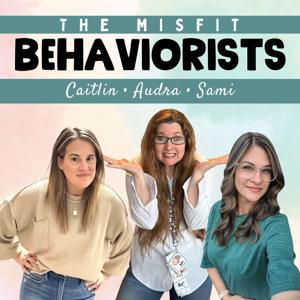
Are you a teacher looking for support with students with diverse needs or behavior management in the classroom? Tune into The Misfit Behaviorists podcast, hosted by Caitlin Beltran and Audra…
Whether you're seeking advice or just want to laugh, new to the field or a veteran looking for a fresh perspective, tune in for this unique blend of professional expertise and real-life experience. Weekly episodes will be concise, because we know your time is limited! Don’t miss it!
Join the Facebook group for collaboration and freebies: https://abainschool.com/misfits
😍 More, you say? We’re here for you!
👋 Find us!
🖱️ Rate, Review, Like & Subscribe so you don’t miss an episode! Showing this love helps us get out to more educators out there!

171,959 Listeners

24,521 Listeners

369,475 Listeners

46,877 Listeners
643 Listeners

57,604 Listeners
62 Listeners

19,009 Listeners
119 Listeners