
Sign up to save your podcasts
Or

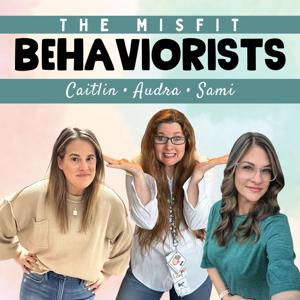


A quick story from an ABA clinic about a student checking the floor to see if the “down” internet had literally fallen down. This Misfit Minute is a reminder that language is not always interpreted the way we expect, especially for students who process communication very literally.
Key Takeaways
• Literal language can create confusion—Common phrases may not mean what we think they mean to every learner
• Everyday expressions are learned skills—Sarcasm, metaphors, and slang often need direct teaching
• Clarity matters—Sometimes clearer language reduces frustration and misunderstandings
• “Extra support” may just be clearer communication—Simple wording can make a huge difference
• Think about your audience—Different learners process language differently
• Everyday moments create teaching opportunities—Small interactions can build long-term communication understanding
• Communication goes both ways—Sometimes we need to adjust our language, not just expectations
Resources
• Another fun story here about sensory overload → https://abainschool.com/mm27
• And a cute story about how a puppy taught us a lesson → https://abainschool.com/mm26
Join Us
• Join the Misfit Behaviorists Facebook group → https://abainschool.com/misfits
• Subscribe for more real-life ABA and special education stories
• Share your own “that time I learned…” moments with us
Join the Facebook group for collaboration and freebies: The Misfit Behaviorists
😍 More, you say? We’re here for you!
👋 Find us!
🖱️ Rate, Review, Like & Subscribe so you don’t miss an episode! Showing this love helps us get out to more educators out there!
A quick reminder that behavior problems are not always “won’t do” problems. Sometimes they’re “can’t do yet” problems. In this Misfit Minute, Caitlin breaks down why consequences alone don’t teach skills like waiting, emotional regulation, frustration tolerance, or communication, and why practicing coping skills during calm moments matters so much.
Key Takeaways
• You can’t punish a skill deficit away—Consequences alone don’t teach missing skills
• Behavior often communicates missing abilities—Difficulty waiting, coping, or communicating may be skill deficits
• Replacement behaviors must be taught—Students need to learn what to do instead
• Practice during calm moments matters most—Skills are harder to learn when already escalated
• Reinforce progress, not perfection—Growth happens through repetition and support
• Shift from “defiance” to information—Repeated behavior may signal a need for more teaching and practice
• Long-term behavior change requires instruction—Not just reacting after the behavior happens
Resources
• Need support teaching replacement behaviors and coping skills? Check out these behavior support visuals: https://abainschool.com/k858
• “Can’t Do vs Won’t Do” visual → https://abainschool.com/mm15
• DTT vs NET teaching → https://abainschool.com/ep5
• Check out the FBA mini-series! Start here → https://abainschool.com/ep31
Join Us
• Join the Misfit Behaviorists Facebook group → https://abainschool.com/misfits
• Subscribe for more ABA and special education quick tips
• Share an example of a skill you realized needed teaching instead of consequences
Join the Facebook group for collaboration and freebies: The Misfit Behaviorists
😍 More, you say? We’re here for you!
👋 Find us!
🖱️ Rate, Review, Like & Subscribe so you don’t miss an episode! Showing this love helps us get out to more educators out there!
A quick story from early in my autism journey that completely shifted how I understand sensory overload. One small moment in a speech therapy room turned into a lifelong reminder: we may be in the same space, but experiencing it in very different ways.
Key Takeaways
• Sensory overload isn’t always visible—A child may be overwhelmed even when the environment feels “normal” to us
• Not all brains filter the same way—Some learners hear, see, and feel everything at once
• Small details can be big triggers—Sounds you don’t notice (like a ticking clock) can be intense and constant
• Same room, different experience—Two people can share a space but have completely different sensory input
• Perspective matters—Understanding sensory differences helps build empathy and better support
• Don’t assume ease = universal—What feels simple to you may be overwhelming for someone else
Resources
• Check out this social story about communicating about sensory needs I Need Something: https://abainschool.com/p8t6
Join Us
• Join the Misfit Behaviorists Facebook group
• Subscribe for more real-life ABA and special education insights
• Share your own “that time I learned…” moments—we’d love to hear them
Join the Facebook group for collaboration and freebies: The Misfit Behaviorists
😍 More, you say? We’re here for you!
👋 Find us!
🖱️ Rate, Review, Like & Subscribe so you don’t miss an episode! Showing this love helps us get out to more educators out there!
What happens when your well-planned behavior strategy falls apart in real life?
This quick episode uses a runaway puppy story to break down what to do in the moment—especially when safety, attention-seeking behavior, and real-world variables take over.
Key Takeaways
• Safety comes first
• Behavior plans aren’t one-size-fits-all
• Change the environment before blaming the learner
• Stay neutral, not emotional
• Calm, predictable responses matter
• Reflect after, not during
Resources
• See these Functions of Behavior social stories for some ideas! https://abainschool.com/fxbxstories
• If you need all the dox you need to create a great FBA, check these out: https://abainschool.com/4zdz
🤝 Join Us
💬 Join the conversation in the Misfit Behaviorists Facebook Group
🎧 Follow the podcast for more quick, practical strategies
⭐ Leave a review if this episode helped you—it helps other educators find us!
• Share your own “real-life behavior” moments—we’ve all been there
Join the Facebook group for collaboration and freebies: The Misfit Behaviorists
😍 More, you say? We’re here for you!
👋 Find us!
🖱️ Rate, Review, Like & Subscribe so you don’t miss an episode! Showing this love helps us get out to more educators out there!
What do you do when a paraprofessional just can’t keep up with the pace, data, or demands of your classroom?
Before jumping to frustration, this Misfit Minute walks you through a practical, compassionate approach to coaching staff, improving systems, and making data-based decisions that keep your students first.
🔑 Key Takeaways
• Check the system, not just the person
• Define what “keeping up” actually means
• Simplify and prioritize tasks
• Model + narrate your thinking
• Practice together + give immediate feedback
• Reinforce effort and growth
• Reflect on fit using data, not emotion
• Document support and communication
🤝 Join Us
💬 Join the conversation in the Misfit Behaviorists Facebook Group
🎧 Follow the podcast for more quick, practical strategies
⭐ Leave a review if this episode helped you—it helps other educators find us!
Join the Facebook group for collaboration and freebies: The Misfit Behaviorists
😍 More, you say? We’re here for you!
👋 Find us!
🖱️ Rate, Review, Like & Subscribe so you don’t miss an episode! Showing this love helps us get out to more educators out there!
In this Misfit Minute, Audra shares five career lessons she wishes she’d learned earlier as an educator: don’t overplan—use one strong activity with built-in extensions instead of many activities that won’t work; don’t skip data collection because “I’ll remember later” leads to missing or skewed data—quick tallies beat perfect data never recorded; don’t try to do everything alone—treat paras, therapists, and gen ed teachers as true collaborators; protect breaks and boundaries early to prevent burnout by leaning on staff and requesting admin support when needed; and prioritize connection over compliance, since connection creates longer-lasting engagement and makes behavior strategies more effective. She encourages newer professionals to give themselves grace, set parameters, and develop step by step to stay in the field long-term.
00:00 Welcome and Setup
00:19 Tip 1 Stop Overplanning
00:55 Tip 2 Track Data Now
01:14 Tip 3 Collaborate More
01:37 Tip 4 Protect Boundaries
02:23 Tip 5 Connection Over Compliance
03:18 Closing Encouragement
🙌 Join Us & Share
• Join us on FB for freebies, sharing, and more! → https://abainschool.com/misfits
• Subscribe for weekly behavior insights + full-length episodes
• Send this episode to a teammate who needs a little "pump" this week!
Join the Facebook group for collaboration and freebies: The Misfit Behaviorists
😍 More, you say? We’re here for you!
👋 Find us!
🖱️ Rate, Review, Like & Subscribe so you don’t miss an episode! Showing this love helps us get out to more educators out there!
In this episode, Audra and Caitlin tackle one of the hardest parts of working in special education and behavior support: talking with families when things are not improving yet. When behaviors are escalating or strategies aren’t working, those meetings can feel tense for everyone in the room. The conversation explores how educators and BCBAs can stay transparent, rely on objective data, and keep relationships strong with families even when the news is difficult. Instead of panic, blame, or sugarcoating, the focus is on collaboration, trust, and problem-solving together.
🔑 Key Takeaways
• Tip 1: Start with transparency — Families usually know when things aren’t going well. Honest communication builds trust.
• Tip 2: Lead with data, not emotion — Share observable patterns (frequency, timing, context) instead of subjective language.
• Tip 3: Share what’s been tried — Explain strategies already attempted, what’s happening now, and the next steps.
• Tip 4: Stay calm when emotions rise — Pause, slow the conversation, and return to shared goals for the student.
• Affirm the child first — Let families know you genuinely value their child before discussing challenges.
• Follow up in writing — Send a short recap so families can process and avoid misunderstandings.
📦 Resources Mentioned
• Join the Misfit Behaviorists Facebook Group → https://abainschool.com/misfits
• Share strategies for navigating difficult parent conversations
• Ask questions or suggest topics for future episodes
🙌 Join Us & Share
• How do you handle tough conversations with families when behavior plans aren’t working?
• What strategies help keep meetings collaborative instead of confrontational?
• Have you found ways to share difficult data without escalating stress for families?
• Join the discussion in the Misfit Behaviorists Facebook Group
• Know a teacher or BCBA who dreads parent meetings? Send them this episode 🎧
Join the Facebook group for collaboration and freebies: The Misfit Behaviorists
😍 More, you say? We’re here for you!
👋 Find us!
🖱️ Rate, Review, Like & Subscribe so you don’t miss an episode! Showing this love helps us get out to more educators out there!
Running small groups in an ABA classroom can feel like juggling flaming data sheets. Two learners. Two programs. Two sets of behaviors. In this Misfit Minute, Caitlin shares four practical tips for running dyads and small group instruction without sacrificing instructional quality.
🔑 Key Takeaways
• Prep for success — have materials, reinforcers, pencils, and data sheets ready before you start. Less scrambling, more teaching.
• Plan the rotation — decide who gets your attention first and what the other learner will do while waiting. Keep them engaged.
• Position strategically — sit between students when possible so you can monitor engagement, behavior, and prompting easily.
• Quality over quantity — five strong, meaningful trials beat fifteen rushed ones every time.
• Expect it to feel clunky at first — rhythm builds with practice for both you and your learners.
📦 Resources to check out
• Join the Misfit Behaviorists Facebook Group → https://abainschool.com/misfits
• IEP Goal Bank & Assessment System → https://abainschool.com/iepgoals
• Episode #62 Running Social Skills Groups → https://abainschool.com/ep62
🙌 Join Us & Share
• Do you prefer dyads or 1:1 instruction?
• What helps you keep the “waiting” student engaged?
• Drop your favorite small group tip in the Facebook group 💬
• Know a teacher overwhelmed by small groups? Send them this Misfit Minute 💙
Join the Facebook group for collaboration and freebies: The Misfit Behaviorists
😍 More, you say? We’re here for you!
👋 Find us!
🖱️ Rate, Review, Like & Subscribe so you don’t miss an episode! Showing this love helps us get out to more educators out there!
The past few years have reshaped classrooms in ways many educators are still trying to make sense of. In this episode, Audra and Caitlin react to real conversations from teachers and parents about burnout, behavior changes, staffing shortages, placement decisions, and the growing gap between expectations and reality in special education. They share honest reflections, practical perspective, and reassurance for educators wondering if it’s just them… or if things really have changed.
🔑 Key Takeaways
• Post-COVID behavior shifts are still impacting classrooms — many educators report lasting changes in student readiness and regulation.
• Burnout often comes from systems, not students — paperwork, staffing shortages, and unrealistic expectations wear people down.
• No two schools are the same — a difficult placement doesn’t mean the entire field is broken.
• It’s okay to leave a setting that isn’t sustainable — protecting your mental health helps students too.
• Placement decisions must be individualized — least restrictive environment looks different for every student.
• Social media advice has limits — meaningful strategies require knowing the actual child.
• Independence skills matter more than academics at school entry — self-care and routines set the foundation for learning.
• If you’re still in this field, your commitment matters — staying doesn’t mean it’s easy; it means it’s meaningful.
📦 Resources Mentioned
• Join the Misfit Behaviorists Facebook Group → https://abainschool.com/misfits
• Share your experiences with post-COVID classroom changes
• Submit future episode topics in the group
🙌 Join Us & Share
• Are you seeing lasting behavior or readiness changes in students?
• What’s been the biggest contributor to burnout in your role?
• What has helped you stay in the field — or decide to leave?
• Share your perspective in the Misfit Behaviorists Facebook Group
• Know an educator who feels exhausted or discouraged? Send them this episode
Join the Facebook group for collaboration and freebies: The Misfit Behaviorists
😍 More, you say? We’re here for you!
👋 Find us!
🖱️ Rate, Review, Like & Subscribe so you don’t miss an episode! Showing this love helps us get out to more educators out there!
Noncompliance isn’t always loud. Sometimes it’s quiet, avoidant, and easy to miss until it grows into something bigger. In this Misfit Minute, we break down the difference between passive vs active noncompliance and why recognizing the difference early helps you respond calmly, support regulation, and prevent escalation into unsafe behaviors.
🔑 Key Takeaways
• Not all noncompliance looks the same 👀 — passive noncompliance is quiet avoidance, while active noncompliance is disruptive and visible.
• Catch it early ⛰️ — it’s much easier to support students during passive noncompliance than after behaviors escalate.
• Think “can’t vs won’t” 🧠 — skill deficits need support and modification; motivation issues need reinforcement and engagement strategies.
• Passive noncompliance calls for gentle support 🤍 — quick prompts, choices, first/then, and small motivation boosts can help students get started.
• Active noncompliance needs regulation first 🔄 — short directives, movement breaks, coping strategies, and validation help reset before returning to work.
• Pushing demands during escalation rarely works 🚫 — address regulation and underlying needs before expecting task completion.
• Neutral, supportive tone prevents power struggles 🎯 — focus on helping students be successful, not “winning” the moment.
📦 Resources to check out
• Join the Misfit Behaviorists Facebook Group → https://abainschool.com/misfits
• “Can’t Do vs Won’t Do” visual → https://abainschool.com/mm2w
• Related episode: 5 Preschool Behavior Strategies → https://abainschool.com/ep66 • Crisis Cycle Creation → https://abainschool.com/ep57 • FBA process starts here! → https://abainschool.com/ep31
• ABA in School blog → https://abainschool.com
• Free token boards → https://abainschool.com/ymnr
🙌 Join Us & Share
• Do you see more passive or active noncompliance in your classroom?
• What strategies help you catch behaviors before they escalate?
• Share your experiences in the Misfit Behaviorists Facebook Group 💬
• Know a teacher or BCBA who could use this distinction? Send them this Misfit Minute 💙
Join the Facebook group for collaboration and freebies: The Misfit Behaviorists
😍 More, you say? We’re here for you!
👋 Find us!
🖱️ Rate, Review, Like & Subscribe so you don’t miss an episode! Showing this love helps us get out to more educators out there!
From the publisher's feed
Are you a teacher looking for support with students with diverse needs or behavior management in the classroom? Tune into The Misfit Behaviorists podcast, hosted by Caitlin Beltran and Audra…
Whether you're seeking advice or just want to laugh, new to the field or a veteran looking for a fresh perspective, tune in for this unique blend of professional expertise and real-life experience. Weekly episodes will be concise, because we know your time is limited! Don’t miss it!
Join the Facebook group for collaboration and freebies: https://abainschool.com/misfits
😍 More, you say? We’re here for you!
👋 Find us!
🖱️ Rate, Review, Like & Subscribe so you don’t miss an episode! Showing this love helps us get out to more educators out there!
171,932 Listeners

24,541 Listeners

369,621 Listeners

46,903 Listeners
642 Listeners
57,581 Listeners
59 Listeners

19,246 Listeners
120 Listeners