
Sign up to save your podcasts
Or

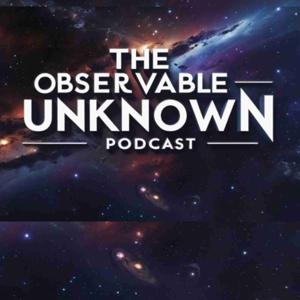


Interlude XXV of The Observable Unknown opens a new arc at the crossroads of linguistics, neuroscience, and consciousness studies. In this episode, Dr. Juan Carlos Rey of crowscupboard.com examines how language does far more than label experience. It organizes perception itself. Drawing from the work of linguists such as Leonard Talmy, George Lakoff, Lera Boroditsky, and contemporary neurolinguistic research, this interlude investigates the ways grammar, metaphor, and syntactic structure silently shape the architecture of awareness.
Listeners are invited to explore how linguistic categories channel cognition, how verbs can redirect attention, and how metaphor functions as a cognitive operating system rather than a decorative feature of speech. Dr. Rey examines studies that demonstrate how speakers of different languages track space, time, agency, and emotion through distinct neural pathways, and how these grammatical habits modulate everything from moral judgment to sensory processing.
The interlude also addresses the deeper question beneath the science: If language influences perception, does each language offer a different window on reality? And if so, what happens to consciousness when a language evolves, fades, or is culturally suppressed? This exploration includes a discussion of endangered languages, ritual speech forms, and the neurological flexibility that allows bilingual speakers to shift perceptual modes.
As with every interlude in the neuroscience arc, Grammars of Perception blends empirical research with reflective inquiry. The goal is not to promote linguistic determinism but to illuminate the subtle reciprocity between words and worlds, mapping how the brain’s linguistic circuitry becomes the scaffolding for meaning.
Listeners seeking a richer understanding of consciousness, cognition, language, and human possibility will find this episode a contemplative and intellectually rigorous guide into the subtle mechanics of mind.
Dr. Robert Atkinson stands at the confluence of myth, developmental psychology, and the perennial human hunger for wholeness. An award-winning author, educator, and architect of what he calls unitive consciousness, Dr. Atkinson writes with the calm authority of one who has spent a lifetime apprenticed to depth, meaning, and the evolutionary arc of the human story.
His newest work, The Way of Unity: Essential Principles and Preconditions for Peace, is a sweeping synthesis of sacred cosmologies, cross-cultural wisdom traditions, and the evolutionary sciences. This text proposes that unity is not merely an ethical aspiration but a structural principle woven into the fabric of reality itself. Through nine unitive principles and a global tapestry of community models already living these truths, Atkinson offers a roadmap for moving from fracture to coherence, from division to planetary flourishing.
His oeuvre spans eleven other books, including The Story of Our Time, A New Story of Wholeness, and the Nautilus Award–winning Our Moment of Choice. With a doctorate in cross-cultural human development from the University of Pennsylvania and a postdoctoral fellowship at the University of Chicago, Dr. Atkinson has been a pioneering voice in storytelling research, personal myth-making, and the evolution of consciousness. He is the founder of the One Planet Peace Forum and a member of the Evolutionary Leaders Circle.
It is my honor to welcome to The Observable Unknown a thinker who writes at the scale of civilizations while keeping his hand gently on the human heart.
In this episode of The Observable Unknown, Dr. Juan Carlos Rey of crowscupboard.com invites you into an exploration of consciousness not only as electrical patterns but as radiance itself. We trace the emergence of biophotons -ultra-weak light emissions from living cells -through the pioneering work of biophysicist Fritz-Albert Popp, whose research at the University of Marburg in the 1970s uncovered coherent photon emissions in DNA and cellular tissue. Next, we consider Roeland van Wijk and his photonic studies of stress, health, and light-based cellular signalling in the early 2000s. Finally, we bring in quantum theorist Vlatko Vedral of the University of Oxford, who links quantum coherence to living systems and suggests that cognitive processes may be photon-mediated.
Here we ask: what if neurons communicate not only with spikes but with flashes of light? What if meaning literally shimmers, and the aura and halo of tradition reflect actual photonic fields of the body? The observable unknown becomes radiant: a living network of photonic resonance where consciousness may arise from the interplay of electrons, DNA helices, and photons.
Write to [email protected] or text 336-675-5836 to share reflections, queries, or insights. Please leave a rating or review on Spotify or Apple Podcasts - your support helps carry these explorations into broader fields of inquiry.
Keywords: biophotons, quantum biology, Fritz-Albert Popp, Roeland van Wijk, Vlatko Vedral, consciousness science, photonic mind, neuroscience podcast, Dr Juan Carlos Rey, The Observable Unknown, crowscupboard.
In this grounded and intimate episode of The Observable Unknown, Dr. Juan Carlos Rey of crowscupboard.com explores the silent symphony within the chest - the electromagnetic rhythm that links body, brain, and emotion.
Neurophysiologist J. Andrew Armour of McGill University first described the heart’s intrinsic nervous system - tens of thousands of neurons that sense, process, and send information independently of the brain. Psychophysiologist Rollin McCraty at the HeartMath Institute revealed that the heart’s electromagnetic field extends several feet beyond the body and changes with emotional state. And neuroscientist Karl Pribram of Stanford and Georgetown suggested that perception operates holographically through waves of energy and interference.
Together, their work illuminates a profound insight: emotion is not merely felt - it radiates. Heart-brain coherence, measured through heart-rate variability and vagal signaling, aligns cognition and compassion. In moments of love, prayer, or shared song, human fields literally synchronize.
The heart is a resonant organ, a transmitter of empathy. Its rhythm communicates safety, trust, and presence faster than words. To “listen to your heart” is not merely metaphor - it is biology tuned to meaning.
The Observable Unknown continues its exploration of mind, matter, and mystery - returning from the quantum to the corporeal, from the photon to the pulse.
Write to [email protected] or text 336-675-5836 to share your reflections. Please rate and review The Observable Unknown on Apple Podcasts, or Spotify to help expand the field of inquiry.
Keywords: heart-brain coherence, neurocardiology, J Andrew Armour, Rollin McCraty, Karl Pribram, electromagnetic field, emotion science, vagus nerve, heart rhythm variability, The Observable Unknown, Dr Juan Carlos Rey, crowscupboard.
There are artists who photograph the world, and then there are rare souls who seem to listen to it. Pen Densham is the latter.
He has lived at the intersection of myth, cinema, and the ineffable since childhood - when, at the age of four, he rode a live alligator for one of his parents’ 35mm theatrical shorts. It was perhaps the earliest sign that he would spend a lifetime courting the miraculous. Cameras, he says, “seemed like magician’s instruments,” and his entire artistic journey has been shaped by that early enchantment.
His filmmaking career spans Robin Hood: Prince of Thieves, Moll Flanders, the revival of The Outer Limits and The Twilight Zone, collaborations with Costner, Freeman, Jodie Foster, Ron Howard, and nearly 300 hours of television - all anchored in a deep humanism, a love of mythic structure, and a reverence for the emotional life of images.
But today, we turn our attention to the visual world he has cultivated in silence - a body of fine art photography that dissolves the boundaries between the real and the remembered. Work that is neither documentary nor digital sorcery but entirely in-camera, executed with the spontaneity of Pollock and the lyricism of Monet.
He calls some of his pieces “Organic Mandalas.” They are photographs, yes - but they are also meditations, reflections, and portals into the subconscious rhythms of nature.
Pen Densham is, in truth, a minister of vision - a man who shows us not what the world looks like, but how it feels.
Today, on The Observable Unknown, we journey with him through intuition, image, loss, nature, and the subtle revelations that only an artist of his staggering magnitude can offer.
Interlude XXII - The Cosmic Self: Consciousness Beyond the Brain
In this enlightening interlude of The Observable Unknown, Dr. Juan Carlos Rey of crowscupboard.com traces the frontier where neuroscience meets metaphysics – where consciousness ceases to be a human trait and becomes a cosmic condition.
Neuroscientist Giulio Tononi of the University of Wisconsin introduced Integrated Information Theory (IIT), proposing that consciousness emerges from the degree of informational integration within any system. His collaborator Christof Koch of the Allen Institute for Brain Science extended this work, measuring the brain’s coherence during wakefulness, dreaming, and anesthesia. Philosopher Bernardo Kastrup of the University of Amsterdam re-envisions their data through analytic idealism - a universe not made of matter that thinks, but of mind that materializes.
From neurons to galaxies, from quantum entanglement to human empathy, Interlude XXII explores the ancient question of whether awareness is fundamental. What if the cosmos itself computes its own experience? What if every atom hums with interiority?
Blending rigorous science with philosophical depth, Dr. Rey revisits the lineage from panpsychism and Vedanta to modern physics and information theory. The result is a breathtaking meditation on participation: to know is to belong to a thinking universe.
Write to [email protected] or text 336-675-5836 to share your reflections. Rate and review The Observable Unknown on Podbean, Apple Podcasts, or Spotify to help the dialogue expand.
Keywords: panpsychism, integrated information theory, Giulio Tononi, Christof Koch, Bernardo Kastrup, analytic idealism, consciousness studies, quantum mind, cosmic self, philosophy of mind, The Observable Unknown, Dr Juan Carlos Rey, crowscupboard.
Today I’m joined by someone whose work has moved fluidly between stage, screen, and self-examination - actor and producer Jordan Feldman.
Jordan’s career has unfolded at the intersection of visibility and vulnerability. He has brought humor and humanity to complex stories, while also speaking candidly about his journey through anxiety, recovery, and rediscovery.
In this conversation, we look beneath the spotlight - into the quieter backstage of the mind where creativity, discipline, and mental health intersect. What happens when a performer learns to listen to his own nervous system as carefully as he listens to a script?
This is a dialogue about art as medicine, and the human spirit as both stage and sanctuary.
Dr. Juan Carlos Rey of Crowscupboard.com sits with three-time Emmy Award winning director and Akashic Records practitioner Mary Madeiras to explore how the soul communicates, remembers, and unfolds through lived experience. This conversation moves through identity, intuition, trauma as material for transformation, and the quiet inner voice that guides the shape of a life.
This is not a discussion of belief.
In this illuminating conversation, Dr. Juan Carlos Rey of crowscupboard.com explores the paradox of human knowledge: how civilizations accumulate, then discard, their greatest insights. Author Jack R. Bialik examines the patterns of erasure in his new book, "Lost In Time" - from ancient cataract surgery to the fragility of our digital archives - and posits that forgetting may be as essential as remembering. With over 30 years in technology and biblical studies, Bialik bridges the empirical and the esoteric, asking whether the next frontier of wisdom lies not in new discovery but in re-remembering what we once lost.
Keywords: collective memory, civilizational forgetting, digital impermanence, knowledge vs wisdom, Jack R. Bialik interview, human archives, Dr. Juan Carlos Rey, The Observable Unknown, science & spirituality, historiography of science.
In this Mailbag installment of The Observable Unknown, Dr. Juan Carlos Rey of crowscupboard.com responds to listener Priya A. of Seattle, who asks whether ancient fasting rituals were early, intuitive ways of shaping the gut–brain connection.
Drawing from modern neurogastroenterology, nutritional neuroscience, and microbiome research, Dr. Rey traces fasting through time - from Upanishadic austerity and monastic silence to the cellular ecologies within us. He revisits the verified work of Mark Mattson (National Institute on Aging), Valter Longo (University of Southern California), and Satchidananda Panda (Salk Institute), alongside cross-cultural rites that discovered metabolic renewal long before molecular biology.
Listeners learn how temporary abstinence activates brain-derived neurotrophic factor, regenerates immune function, recalibrates circadian genes, and modulates the microbiome’s chemical symphony of serotonin, dopamine, and GABA. Ancient seekers may have lacked microscopes - but they possessed an embodied intuition that consciousness and digestion are one continuum of rhythm and light.
Fasting emerges here not as deprivation but as dialogue - a physiological prayer aligning metabolism, mood, and meaning. Dr. Rey invites the audience to consider hunger as a form of listening: an emptiness through which the body remembers its original harmony.
Email reflections or questions to [email protected], or text 336-675-5836. Reviews and ratings on Podbean or Apple Podcasts help sustain this global conversation between science, soul, and the unseen.
Keywords: fasting, gut-brain axis, microbiome, neuroplasticity, BDNF, circadian rhythm, Valter Longo, Mark Mattson, Satchidananda Panda, psychobiotics, neuroscience, spirituality, The Observable Unknown, Dr Juan Carlos Rey, crowscupboard.
From the publisher's feed
The Observable Unknown is a scientific and psychological podcast exploring consciousness, perception, behavior, identity, altered states, symbolism, neuroscience, and the hidden structures shaping…

91,018 Listeners
78,398 Listeners

43,827 Listeners

43,362 Listeners
26,829 Listeners
14,348 Listeners

8,656 Listeners

111,865 Listeners
7,165 Listeners
3,377 Listeners

29,207 Listeners
713 Listeners

479 Listeners

1,395 Listeners
8,792 Listeners