
Sign up to save your podcasts
Or

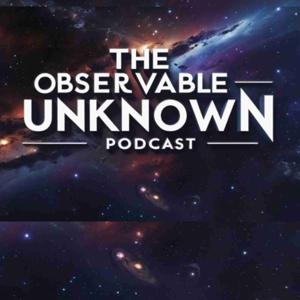


In this interlude of The Observable Unknown, Dr. Juan Carlos Rey of crowscupboard.com steps into the shimmer between matter and meaning – the quantum frontier of consciousness. Could awareness itself arise from sub-atomic events inside the brain?
Mathematician Roger Penrose and anesthesiologist Stuart Hameroff proposed the Orch-OR Theory, suggesting that quantum coherence within neuronal microtubules gives birth to conscious experience. Though Max Tegmark argued that such coherence would vanish in trillionths of a second, new findings challenge that dismissal.
At Oxford, quantum effects in photosynthesis and avian navigation imply that biology itself sustains quantum order. At the University of Tokyo, Anirban Bandyopadhyay demonstrated microtubule vibrations that behave like coherent quantum systems, while Matthew Fisher at UC Santa Barbara proposed that phosphorus atoms might store quantum information within the brain’s chemistry.
Dr. Rey explores how these discoveries reshape our understanding of decision, memory, and perception - each thought a potential collapse of probability. If so, consciousness may not emerge from the universe; the universe may awaken through us.
This interlude traverses the philosophical and empirical: quantum tunneling in enzymes, coherence in bird migration, and the mystery of awareness as cosmic feedback. The observable unknown is this - that every act of perception might be the universe observing itself.
Connect with Dr. Rey directly at [email protected] or (336) 675-5836.
In this quietly radical interlude, Dr. Juan Carlos Rey of crowscupboard.com invites you into the hidden orchestra of the brain - the immense realm of glial cells: astrocytes, oligodendrocytes, and microglia. We have long worshipped the bright-firing neurons, but these non-neuronal cells may in fact hold the deeper language of consciousness.
In this interlude, Dr. Juan Carlos Rey of crowscupboard.com examines the hidden choreography of empathy - the mirror mechanism that allows one human brain to echo another’s joy, sorrow, and intent.
Drawing upon research from Tania Singer at the Max Planck Institute on compassion fatigue, Marco Iacoboni at UCLA on social context and empathy, and Jean Decety at the University of Chicago on psychopathy and volitional empathy, Dr. Rey explores how imitation becomes the architecture of morality itself. Empathy, he suggests, is not a moral ornament - it is a neurological duet.
Listeners will journey from the original macaque experiments to contemporary insights in social neuroscience, learning how oxytocin, dopamine, and neural oscillations create the subtle harmonics of connection. The episode also addresses how virtual life and digital mediation fracture our natural resonance, and how ritual, music, and collective rhythm can restore it.
In the end, Neural Mirroring invites reflection on the deep biochemistry of belonging.
In this special Mailbag installment, Dr. Juan Carlos Rey of crowscupboard.com answers a letter from Clara W of Asheville, North Carolina, who asks about the ancient practice of spirit communication. Drawing on his thirty-year body of research and teaching, Dr. Rey explains how conditioning Broca’s Area and Wernicke’s Area - the brain’s language centers - can strengthen intuitive speech and symbolic translation, while regulation of the limbic system allows practitioners to access altered states of consciousness safely and consistently.
The episode bridges anthropology, neurolinguistics, and transpersonal psychology to show how mediumship arises from measurable biological processes rather than mystical abstraction. Listeners will learn how respiratory entrainment, micro-movement, and hemispheric synchronization transform intuition into reliable perception - and how emotion, chemistry, and attention converge to form the neural architecture of faith itself.
Across cultures and centuries, every form of trance, prophecy, and divination has relied on the same physiological symphony: breath, rhythm, and meaning. This conversation reveals why mediumship is not supernatural - it is super-biological.
Key topics: mediumship science, Broca’s Area training, Wernicke’s Area integration, limbic resonance, neuro-somatic conditioning, intuitive cognition, spiritual neuroscience, transpersonal psychology, anthropology of ritual, scientific mediumship.
To learn more or to enroll in Mediumship Coursework, visit crowscupboard.com.
In this episode of The Observable Unknown, Dr. Juan Carlos Rey of Crowscupboard.com sits down with molecular biologist and award-winning author Richard M. Anderson - a visionary whose work unites hard science, humanism, and speculative imagination.
A former clinical laboratory director and bioanalyst, Anderson built a distinguished scientific career before turning to writing. His nonfiction landmark The Evolution of Life: Big Bang to Space Colonies traces existence from cosmic birth to post-terrestrial civilization, arguing that empathy and reason are our most essential survival traits. His acclaimed Outbound series - beginning with Islands in the Void and continuing with Meta Mars - extends this inquiry into the 23rd century, when humankind and sentient machines must decide whether coexistence or conflict defines evolution.
In conversation, Anderson reflects on how curiosity became his compass - from laboratory benches to literary worlds. He discusses the ethics of AI, the fragility of ecosystems, and why emotional intelligence may be the only true technology capable of saving us. With clarity and compassion, he paints a future where scientific realism meets moral responsibility, where “the Pandora’s Box of artificial intelligence” forces us to re-evaluate what it means to be alive.
Listeners will come away with a deeper understanding of how data, imagination, and conscience converge to form our collective destiny.
Join us for a far-reaching dialogue about the origins of life, the future of consciousness, and the hope that still lies between the molecules and the stars.
In this edition of The Observable Unknown: Mailbag, Dr. Juan Carlos Rey of Crowscupboard.com explores how social media operates not merely as communication, but as ritual space. When acts of attention shift online, every repost, “like,” and scroll becomes a litany of belonging, performance, and belief. Drawing on innovative scholarship in digital religion and media anthropology, this episode asks how our feeds mirror ancient altars - and whether attention given or withheld today is the most sacred offering we still possess. Join us as we ask: if the altar is now algorithmic, what does ritual become? Rate and review the show wherever you listen - and step into the inquiry.
In this episode, Dr. Juan Carlos Rey of Crowscupboard.com invites listeners into a meditation on memory - no longer a candle passed from mind to mind, but a circuitry of data and desire. Drawing on the sociologist Maurice Halbwachs (1877–1945), Dr. Rey examines how collective memory has migrated from the oral to the algorithmic, shaping what humanity remembers - and what it forgets.
From the neural encoding of emotion to the digital contagion of belief, this conversation explores why misinformation feels so persuasive: because the brain itself prizes coherence over accuracy. Memory is not a library - it is a living organism seeking equilibrium. Online, that organism meets the algorithm, and together they compose the myths of the present.
Blending neuroscience, cultural theory, and reflective poetics, The Memory Machine asks: what happens when remembering becomes automated? And can we reclaim attention - the last uncommodified act of consciousness - as a form of moral resistance?
In this episode of The Observable Unknown, Dr. Juan Carlos Rey of CrowsCupboard.com uncovers the hidden clockwork of the living body - the molecular rhythms that measure dawn, dusk, and everything between. Drawing on the Nobel-winning research of Jeffrey C. Hall, Michael Rosbash, and Michael W. Young, whose fruit-fly experiments at Brandeis University and Rockefeller University revealed the PER gene and its feedback loop, Dr. Rey shows how each of us carries an internal timepiece.
Before temples were built of stone, the body already knew how to worship.
Drawing on the work of Candace Pert (1973), who first identified the brain’s opiate receptors, Jaak Panksepp (1998), who revealed the primal circuits of care and play, and Björn Lindström (2015), whose studies of synchronized movement uncovered the opioid basis of social bonding, Dr. Rey guides listeners through a physiological theology of awe.
From early laboratory discoveries to modern neuroimaging of musical ecstasy, The Observable Unknown traces how meaning itself may be the body’s oldest high - how ritual, rhythm, and relationship activate an interior pharmacy of connection. The conversation extends into psychiatry and philosophy: what happens when trauma dulls these receptors, when faith becomes analgesic, or when hope itself behaves like a biochemical placebo?
Listeners will leave understanding that spirituality is not opposed to science - it is embodied by it. The neurons that ache, the hormones that heal, the molecules that bind us together are the same forces that generate compassion and purpose.
Listen to The Observable Unknown wherever you find your podcasts.
Before language, before heartbeat, there was rhythm - the pulse that shaped both cosmos and consciousness. In this episode of The Observable Unknown, Dr. Juan Carlos Rey of crowscupboard.com explores the hidden architecture of the mind’s music: the neural oscillations and neurochemical cadences that give rise to awareness itself.
Drawing on research by György Buzsáki (New York University), Earl Miller (MIT), Christof Koch (Allen Institute for Brain Science), Laura Colgin (University of Texas at Austin), and Patricia Locke (UCLA), Dr. Rey examines how gamma, theta, alpha, and delta waves synchronize the brain’s electrical ensembles with the biochemistry of gamma-aminobutyric acid, glutamate, and acetylcholine.
Through this rhythmic interplay, thought becomes chord, perception becomes phrase, and emotion becomes harmony. From Miller’s discovery that working memory depends on oscillatory phase-locking, to Colgin’s finding that hippocampal rhythms toggle between recalling the past and composing the future, we begin to see cognition as a living composition - part science, part symphony.
Listeners are invited to consider a provocative question: what if consciousness is not computation but composition? When neurons resonate in phase, awareness coheres; when coherence breaks, selfhood dissolves into silence. Neural Oscillations and the Biochemistry of Rhythm reveals the mind not as machinery but as music - an improvisation between ions and intention.
Follow Dr. Juan Carlos Rey on LinkedIn and X (@DrJuanCarlorRey), or share reflections at [email protected].
From the publisher's feed
The Observable Unknown is a scientific and psychological podcast exploring consciousness, perception, behavior, identity, altered states, symbolism, neuroscience, and the hidden structures shaping…

91,018 Listeners
78,398 Listeners

43,827 Listeners

43,362 Listeners
26,829 Listeners
14,348 Listeners

8,656 Listeners

111,865 Listeners
7,165 Listeners
3,377 Listeners

29,207 Listeners
713 Listeners

479 Listeners
1,395 Listeners
8,792 Listeners