
Sign up to save your podcasts
Or

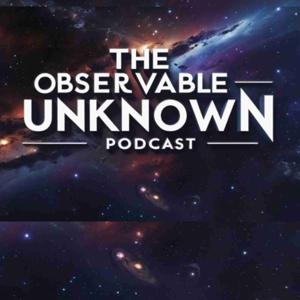


A listener writes from Toronto:
“I’ve always felt intuitive - but I don’t know how to trust or strengthen it. Is intuition a gift or a skill?”
In this episode of The Observable Unknown, I respond with both rigour and heart. Drawing on over two decades of research and training - from neuroscience to somatic practice to symbolic language - I share the system I’ve developed to help intuition become usable intelligence. We explore how the body-brain interface holds predictive power, how the nervous system speaks metaphorically, and how intuition can be taught, measured, and integrated into daily life. The sacred becomes trainable. The incipient awareness becomes architecture.
If you’ve ever felt a signal you couldn’t translate, or a hunch you couldn’t trust, this episode invites you to step into the practice of knowing what you already feel. Visit crowscupboard.com for more information.
Astrologer Sam Reynolds returns to discuss not only numerous aspects of astrology with Dr. Juan Carlos Rey of crowscupboard.com that were not discussed previously, but also his forthcoming class on a Basic Introduction to Astrology.
In this profound installment of The Observable Unknown, Dr. Juan Carlos Rey of crowscupboard.com explores the ancient and often misunderstood intersection of erotic performance and spirituality. Responding to a listener’s question from San Antonio, Dr. Rey traces how the language of desire has always mirrored the language of the divine.
From Plato’s Symposium to modern neuroscience, Eros emerges not as indulgence but as a way of knowing. Drawing on the work of Jaak Panksepp, Helen Fisher, and Andrew Newberg, Dr. Rey reveals that the same neural circuits governing erotic arousal - dopamine, oxytocin, and the reward pathways of the limbic system - also ignite during prayer, meditation, and states of awe. Pleasure and transcendence, he suggests, are biologically intertwined.
This episode also examines performance as ritual: how the body, in conscious movement, becomes both subject and sacrament. We visit the anthropology of Dionysian rites, the psychological insights of Carl Jung, and the somatic therapies of Bessel van der Kolk and Peter Levine, each pointing toward a single truth - that awareness within desire transforms instinct into revelation.
Listeners will discover that sacred sensuality is neither paradox nor provocation, but a form of embodied theology. In Dr. Rey’s words, “To feel is to know, and to know through feeling is to remember what the soul once forgot.”
Tune in to The Observable Unknown for this meditation on the chemistry of longing, the neurobiology of transcendence, and the oldest sacrament of all - the consciousness that trembles when it recognizes itself.
What if faith were simply the nervous system daring to trust its own prediction?
In this Mailbag installment, Dr. Rey of crowscupboard.com responds to listener DeShawn Carter of Atlanta, Georgia, whose question probes the hidden alliance between free will, intuition, and the brain’s comparator model – that quiet circuit which measures intention against outcome, authorship against experience.
From Chris Frith’s neuroscience of agency to the ancient mystic’s surrender, this episode explores how faith and intuition emerge not in opposition to science but as its most mysterious expressions.
Can belief be mapped onto synapses? Can intuition be a biological form of grace?
Submit your question: [email protected]
Please rate, share, and review this episode wherever you're listening.
What if evolution is not a finished act, but an ongoing collaboration between ancestry and awareness?
In this interlude of The Observable Unknown, Dr. Juan Carlos Rey of crowscupboard.com explores the profound intersection between phylogenetic inertia - the evolutionary gravity that preserves our biological past - and epigenetic rewriting, the molecular poetry of adaptation that lets life edit its own script.
Through studies by Dr. Samuel Almeida, Dr. Michael Kertes, Dr. Jessica Loke, Dr. Steve Horvath, and Dr. Helena Verdile, this episode reveals how inheritance moves beyond genes: into chemistry, emotion, opportunity, and choice.
From prenatal stress shaping neural architecture to trauma accelerating biological age, Interlude XV examines how the genome is less a fixed code and more a living text - revised through experience, reflection, and resilience.
The question at its center is timeless:
Email: [email protected]
Please rate this episode and leave a review wherever you listen.
What if memory is not only electrical - but molecular?
In this new interlude, Dr. Juan Carlos Rey explores how experience, stress, and nurture inscribe themselves directly into the genome of the brain. Through the pioneering studies of Michael Meaney and Moshe Szyf, we learn that the nervous system is not a fixed circuit but a living manuscript - continuously edited by love, fear, and time.
From the first experiments at McGill University in the early 2000s that revealed maternal care could alter gene methylation in the hippocampus, to the recent findings that environmental enrichment can rewrite those very marks, this episode unveils a profound idea:
Join Dr. Rey in exploring how trauma leaves biochemical footprints, how healing may be an act of epigenetic revision, and how consciousness itself may be a story the genome keeps telling anew.
Email: [email protected]
Please rate this episode and leave a review wherever you're listening.
What if emotion were an immune response?
In this interlude, Dr. Juan Carlos Rey explores the emerging science of neuroimmunology, where the immune and nervous systems reveal themselves as co-authors of consciousness.
From autoimmune melancholy to the “sickness behavior” that demands rest, this episode unveils the silent director behind cognition itself—
Continue the conversation
And wherever you listen, please leave a review and rating - your words help the dialogue evolve.
In this first listener-driven episode, I turn the conversation inward - answering a question from Tanya W (Portland, OR) about what it means to be a moral witness in a world that often rewards unseeing obedience. We invoke Hannah Arendt’s “banality of evil”, explore the tension between witnessing and complicity, and ask: how do we interrupt history’s momentum?
Join me as we reflect on conscience, attention, and the subtle art of refusing sleep in the face of cruelty.
How to engage & support the show:
In this episode, Dr. Rey takes a second opportunity to answer more listener-submitted questions regarding himself and his role as host of "The Observable Unknown" Podcast.
What if intuition… digestion… and belief were all part of the same conversation?
In this interlude, Dr. Juan Carlos Rey explores the growing science of the gut-brain axis - where trillions of microbes whisper through the vagus nerve to shape emotion, cognition, and even moral intuition.
Drawing on research from Emeran Mayer, Sarkis Mazmanian, John Cryan, and Ted Dinan, this journey reveals a hidden ecology of consciousness - where neurotransmitters, bacteria, and the human nervous system collaborate to compose what we call self.
Here, the Observable Unknown is not distant or abstract - it’s inside you.
Continue the conversation:
Wherever you listen, please leave a review and rating - your voice helps others discover the mystery that connects mind, body, and meaning.
When you write, tell us:
From the publisher's feed
The Observable Unknown is a scientific and psychological podcast exploring consciousness, perception, behavior, identity, altered states, symbolism, neuroscience, and the hidden structures shaping…

91,018 Listeners
78,398 Listeners

43,827 Listeners

43,362 Listeners
26,829 Listeners
14,348 Listeners

8,656 Listeners

111,865 Listeners
7,165 Listeners
3,377 Listeners

29,207 Listeners
713 Listeners

479 Listeners
1,395 Listeners
8,792 Listeners