
Sign up to save your podcasts
Or



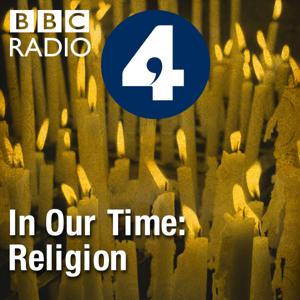
Melvyn Bragg and guests discuss the Oxford Movement in the Church of England in the 19th century. Cardinal John Henry Newman is perhaps the most significant Christian theologian of the nineteenth century. He began as an evangelical, becoming a High Anglican before converting to Roman Catholicism in 1845. His is the story of the diversity of Victorian religious life. But his path also marks the waning of the ideas of Protestant nationhood at the close of the eighteenth century and the reaffirmation of the Catholic tradition at the turn of the twentieth century. For over a decade, between 1833 and 1845, Newman and his fellow travellers, the Oxford Movement, argued that the Church of England was a holy Catholic and Apostolic Church. They sought to assert the Catholic nature of their Church just as secularism, liberalism, non-conformism, and even Roman Catholicism, seemed to threaten her. They published tracts, preached and brought their social mission to some of the poorest urban parishes. Why between 1833 and 1845 was the voice of reaction such a loud one? What was the Oxford Movement and what motivated them? How did they present their ideas to the Anglican clergy at large and what did the clergy make of them? And why did they leave such a powerful legacy for the Church of England, its character and its churches? With Sheridan Gilley, Emeritus Reader in Theology at the University of Durham; Frances Knight, Senior Lecturer in Church History at the University of Wales, Lampeter; Simon Skinner, Fellow and Tutor in History at Balliol College, Oxford.
 View all episodes
 By BBC Radio 4

4.6
51095,109 ratings
Melvyn Bragg and guests discuss the Oxford Movement in the Church of England in the 19th century. Cardinal John Henry Newman is perhaps the most significant Christian theologian of the nineteenth century. He began as an evangelical, becoming a High Anglican before converting to Roman Catholicism in 1845. His is the story of the diversity of Victorian religious life. But his path also marks the waning of the ideas of Protestant nationhood at the close of the eighteenth century and the reaffirmation of the Catholic tradition at the turn of the twentieth century. For over a decade, between 1833 and 1845, Newman and his fellow travellers, the Oxford Movement, argued that the Church of England was a holy Catholic and Apostolic Church. They sought to assert the Catholic nature of their Church just as secularism, liberalism, non-conformism, and even Roman Catholicism, seemed to threaten her. They published tracts, preached and brought their social mission to some of the poorest urban parishes. Why between 1833 and 1845 was the voice of reaction such a loud one? What was the Oxford Movement and what motivated them? How did they present their ideas to the Anglican clergy at large and what did the clergy make of them? And why did they leave such a powerful legacy for the Church of England, its character and its churches? With Sheridan Gilley, Emeritus Reader in Theology at the University of Durham; Frances Knight, Senior Lecturer in Church History at the University of Wales, Lampeter; Simon Skinner, Fellow and Tutor in History at Balliol College, Oxford.

7,639 Listeners

301 Listeners

519 Listeners

1,046 Listeners

293 Listeners

3,223 Listeners
1,878 Listeners
870 Listeners
604 Listeners
720 Listeners
283 Listeners

2,110 Listeners
488 Listeners

4,785 Listeners

217 Listeners
360 Listeners
233 Listeners
307 Listeners

3,177 Listeners
3,370 Listeners

15,592 Listeners
1,895 Listeners

65 Listeners
814 Listeners
555 Listeners

2,409 Listeners
328 Listeners
643 Listeners

386 Listeners
239 Listeners
56 Listeners
75 Listeners
74 Listeners