
Sign up to save your podcasts
Or



Based on Podcast App listening data
Patrick Radden Keefe is an award-winning staff writer at The New Yorker and the bestselling author of Empire of Pain: The Secret History of the Sackler Dynasty. In this episode, Patrick tells the story of the Sackler family and Purdue Pharma - makers of the pain management drug OxyContin, providing the backdrop for the ensuing opioid epidemic and public health crisis. He reveals the implicit and sometimes explicit corruption of all parties involved in the development, approval, and marketing of OxyContin, leading to a cascade of unintended consequences including addiction and death. He explains the unfortunate lack of accountability for the current crisis, as well as what it all means for those with legitimate pain management needs. Finally, he examines the difficult path ahead towards finding a solution. We discuss:
Allan Sniderman is a highly acclaimed Professor of Cardiology and Medicine at McGill University and a foremost expert in cardiovascular disease (CVD). In this episode, Allan explains the many risk factors used to predict atherosclerosis, including triglycerides, cholesterol, and lipoproteins, and he makes the case for apoB as a superior metric that is currently being underutilized. Allan expresses his frustration with the current scientific climate and its emphasis on consensus and unanimity over encouraging multiple viewpoints, thus holding back the advancement of metrics like apoB for assessing CVD risk, treatment, and prevention strategies. Finally, Allan illuminates his research that led to his 30-year causal model of risk and explains the potentially life-saving advantages of early intervention for the prevention of future disease. We discuss:
Today's episode of The Drive is a rebroadcast of the conversation with Rick Johnson (originally released January 6th, 2020). This episode was one of the most popular discussions to-date and is a prelude to an upcoming follow-up discussion which will be coming out in February 2022 along with the release of Rick's new book. In this episode, Rick Johnson, professor of nephrology at the University of Colorado, explains how his research into the causes of blood pressure resulted in a change of research direction to focus more on how fructose has such profound metabolic effects. Rick begins by talking about the relationship between salt and high blood pressure, then provides a masterclass into uric acid, and then expertly reveals the mechanisms and pathways by which sugar (specifically fructose) can profoundly impact metabolic health. From there, he explains how he applies this information to real life patients as well as touches on some of the most promising ideas around pharmacotherapy that are being developed in response to the epidemics of fatty liver, insulin resistance, diabetes, and obesity. Furthermore, Rick gives his take on artificial sweeteners compared to real sugar, discusses cancer's affinity for fructose, and much more. We discuss:
In this "Ask Me Anything" (AMA) episode, Peter and Bob discuss all things related to GLP-1 agonists—a class of drugs that are gaining popularity for the treatment of obesity. They cover the discovery of these peptides, their physiology, and what it is they do in their natural state. Next, Peter and Bob break down a recently published study which showed remarkable results for weight loss and other metabolic parameters using a once-weekly injection of the GLP-1 agonist drug semaglutide, also known as Ozempic, in overweight and obese patients. Finally, they compare results from the semaglutide study to results from various lifestyle interventions and give their take on the potential future of GLP-1 agonists. If you're not a subscriber and listening on a podcast player, you'll only be able to hear a preview of the AMA. If you're a subscriber, you can now listen to this full episode on your private RSS feed or on our website at the AMA #29 show notes page. If you are not a subscriber, you can learn more about the subscriber benefits here. We discuss:
James Clear is the author of the New York Times bestseller Atomic Habits. His extensive research into human behavior has helped him identify key components of habit formation and develop the "Four Laws of Behavioral Change." In this episode, James provides insights into how both good and bad habits are formed, including the influence of genetics, environment, social circles, and more. He points to changes one can make to cultivate more perseverance and discipline and describes the profound impact habits can have when tying them into one's self-identity. Finally, James breaks down his "Four Laws of Behavioral Change" and how to use them to create new habits, undo bad habits, and make meaningful changes in one's life. We discuss:
David Nutt is a psychiatrist and a neuroscientist at Downing College, Cambridge. His research focuses on illicit drugs—their harm, classification, and potential for therapeutic use in psychiatry. In this episode, David discusses his framework for assessing the potential harm caused by common recreational drugs and explains how they are regulated, which is oftentimes misaligned with actual risk. He describes in detail the neurobiology, mechanisms of action, and addiction potential of alcohol, opiates, cocaine, and methamphetamine and contrasts those with psychedelics, which have been given a similar regulatory classification despite their relatively low risk of harm and their numerous potential therapeutic uses. Additionally, David explains the promise of psychedelics like ketamine, MDMA, and psilocybin for treating drug addiction and depression and discusses how political pressures have created roadblocks to future necessary research. We discuss:
Robert (Bob) Gatenby is a radiologist who specializes in exploring theoretical and experimental models of evolutionary dynamics in cancer and cancer drug resistance. He has developed an adaptive therapy approach for treating cancer which has shown promise in improving survival times with less cumulative drug use. In this episode, Bob explains what brought him into medicine, his search for organizing principles from which to understand cancer, and the mathematical modeling of other complex systems that led him to model the dynamics of tumor cell changes in cancer. He discusses his pilot clinical trial treating metastatic prostate cancer, in which he used an evolutionary game theory model to analyze patient-specific tumor dynamics and determine the on/off cycling of treatment. He describes how altering chemotherapy to maximize the fitness ratio between drug-sensitive and drug-resistant cancer cells can increase patient survival and explains how treatment of metastatic cancer may be improved using adaptive therapy and strategic sequencing of different chemotherapy drugs. We discuss:
Learn more: https://peterattiamd.com/
Show notes page for this episode: https://peterattiamd.com/RobertGatenby
Subscribe to receive exclusive subscriber-only content: https://peterattiamd.com/subscribe/
Sign up to receive Peter's email newsletter: https://peterattiamd.com/newsletter/
Connect with Peter on Facebook | Twitter | Instagram.
In this "Ask Me Anything" (AMA) episode, Peter and Bob discuss all things related to testosterone: what happens when testosterone levels are low, and the potential benefits and risks of testosterone replacement therapy (TRT). They explain the physiology of testosterone, how it works, and how its level changes over the course of a person's life. They have a detailed discussion about existing literature, which reveals vast potential structural, functional, and metabolic benefits of testosterone replacement therapy. They also take a very close look at potential risks of this therapy, with a focus on the controversial effects on cardiovascular disease and prostate cancer. If you're not a subscriber and listening on a podcast player, you'll only be able to hear a preview of the AMA. If you're a subscriber, you can now listen to this full episode on your private RSS feed or on our website at the AMA #28 show notes page. If you are not a subscriber, you can learn more about the subscriber benefits here. We discuss:
Jeremy Loenneke has a Ph.D. in exercise physiology, a Master's in nutrition and exercise, and is currently the director of the Kevser Ermin Applied Physiology Laboratory at the University of Mississippi, where he focuses his research on skeletal muscle adaptations to exercise in combination with blood flow restriction (BFR). In this episode, Jeremy explains the science of BFR and the mechanisms by which BFR training can produce hypertrophy using low loads. Here, he reviews anatomy and terminology of muscle structure and discusses the evidence that increasing muscular strength may not be dependent on increasing muscle size. Additionally, Jeremy goes into depth on how one might take advantage of BFR training, including practical applications for athletes and average people, as well as the situations for which BFR training would be most advantageous. We discuss:
Learn more: https://peterattiamd.com/
Show notes page for this episode: https://peterattiamd.com/JeremyLoenneke
Subscribe to receive exclusive subscriber-only content: https://peterattiamd.com/subscribe/
Sign up to receive Peter's email newsletter: https://peterattiamd.com/newsletter/
Connect with Peter on Facebook | Twitter | Instagram.
Lance Armstrong is a legendary figure in professional cycling having won seven consecutive Tour de France titles but also a controversial figure facing scrutiny for the use of performance enhancing drugs. In this episode, Lance takes us through his meteoric rise to one of the most famous athletes in the world and his equally accelerated fall from grace. Lance describes how he persevered through his brutal diagnosis of testicular cancer before rattling off a historic run of seven consecutive Tour de France titles all while facing tremendous scrutiny for his alleged use of performance enhancing drugs such as EPO and cortisone. Lance opens up about his decision to come clean about his use of performance enhancing drugs, the remorse for how he treated other people during that time in his life, and the personal growth that's helped him emerge on the other end of that. Finally, Lance recounts some of favorite stories from his cycling career, reflects on his legacy, and explains how he stays fit at age 50. We discuss:
Learn more: https://peterattiamd.com/
Show notes page for this episode: https://peterattiamd.com/LanceArmstrong
Subscribe to receive exclusive subscriber-only content: https://peterattiamd.com/subscribe/
Sign up to receive Peter's email newsletter: https://peterattiamd.com/newsletter/
Connect with Peter on Facebook | Twitter | Instagram.
From the publisher's feed
Ranked by our users in the last 21 days
16,055 Listeners
7,185 Listeners
11,785 Listeners
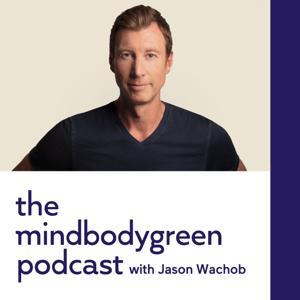
2,006 Listeners
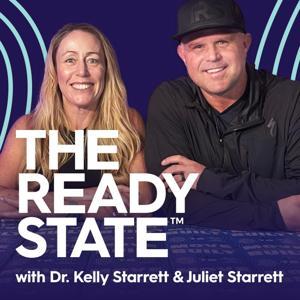
502 Listeners
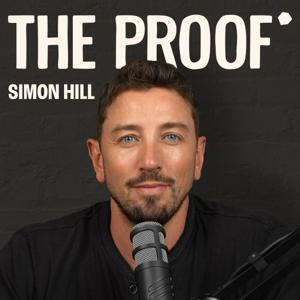
2,602 Listeners
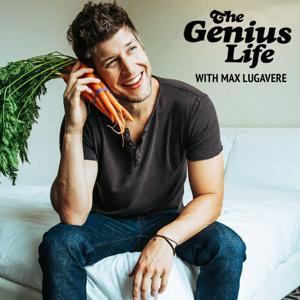
4,870 Listeners
3,418 Listeners
9,148 Listeners
129 Listeners
619 Listeners
1,140 Listeners

29,204 Listeners
1,192 Listeners
1,186 Listeners