
Sign up to save your podcasts
Or



Send us Fan Mail
You’ve been told to “just take a deep breath” more times than you can count.
Usually by someone who doesn’t realize you’ve been holding your breath since pre-med.
This week on Ending Physician Overwhelm, we’re talking about something deceptively simple — breathing. Not the kind of “calm down” breath that makes you want to throw a stethoscope, but intentional, physiologic breathing that actually changes your body chemistry.
In Week 3 of the 10-Week Recharge Challenge, we’re taking a minute (literally, one minute) to breathe — on purpose. Because even when the world doesn’t give you space, your breath can.
In this episode, we’ll explore:
🫁 Why most of us are over-breathing and under-resting — and how to fix that
⏱️ A one-minute breathing practice that resets your nervous system (no mat, no app, no drama)
📚 What the research (and the book Breath by James Nestor) reveals about how our modern lives have changed how we breathe
🧠 How intentional breathing retrains your brain to recognize safety — and why that matters in burnout recovery
You’ll finish this episode feeling calmer, clearer, and ready to reclaim your next inhale.
🎧 Listen now, and then try the practice right where you are — standing in line, sitting in your car, walking into a patient room.
👉 Join the 10-Week Recharge Challenge for Women Physicians — where we’re layering micro-habits to unwind the stress you’ve been carrying for years.
📚 Curious to go deeper? Find Breath and other favorites in my Bookshop collection.
Next week: we’ll keep building on these habits as we explore how movement reconnects us to ourselves — even when we’re tired, busy, and a little skeptical.
Support the show
To learn more about my coaching practice and group offerings, head over to www.healthierforgood.com. I help Physicians and Allied Health Professional women to let go of toxic perfectionist and people-pleasing habits that leave them frustrated and exhausted. If you are ready to learn skills that help you set boundaries and prioritize yourself, without becoming a cynical a-hole, come work with me.
Want to contact me directly?
Email: [email protected]
Follow me on Instagram!
@MeganMeloMD
Send us Fan Mail
This week, we’re getting a little leafy. In Week 2 of our 10-Week Recharge Challenge, we’re focusing on feeding your cells from the inside out. No, you don’t need to become a kale evangelist — but yes, your mitochondria are begging you for some help.
As physicians, we’ve been trained to care for everyone else first. We run on caffeine, cortisol, and guilt, and we convince ourselves that “real” self-care can wait until the inbox is empty. But your body isn’t a machine — it’s an ecosystem. And if you’ve been running it on fumes, it’s time to replenish the soil.
In this episode, we’ll talk about:
🌿 Why cruciferous veggies (like broccoli and kale) literally boost your immune defense and repair gut lining
🧬 How greens increase nitric oxide, improving blood flow, brain clarity, and energy
🩸 The connection between greens, telomere repair, and cellular aging
🥗 The habit science of “I’m someone who takes care of myself”
🍃 Simple ways to get more greens into your day (no perfectionism required)
Join the 10-Week Recharge Challenge for Women Physicians and get curated weekly resources — recipes, guides, and accountability — to make these habits stick.
👉 Join the VIP Challenge for $49
Mentioned in this Episode:
Next Week: We’ll explore breathwork — your built-in stress reset button.
Let's Connect
Need more support? Schedule a coaching consultation at https://calendly.com/healthierforgood/coaching-discovery-call
Connect with us:
If you enjoyed this episode, please leave a review and share with a colleague who might benefit!
Support the show
To learn more about my coaching practice and group offerings, head over to www.healthierforgood.com. I help Physicians and Allied Health Professional women to let go of toxic perfectionist and people-pleasing habits that leave them frustrated and exhausted. If you are ready to learn skills that help you set boundaries and prioritize yourself, without becoming a cynical a-hole, come work with me.
Want to contact me directly?
Email: [email protected]
Follow me on Instagram!
@MeganMeloMD
Send us Fan Mail
Hey friend — can we talk about the badge of busyness for a minute?
That invisible medal we wear to prove our worth?
In medicine, we’ve turned endurance into identity. We work through exhaustion, chart through dinner, and treat rest like a reward we haven’t quite earned. But that constant hustle for worthiness isn’t just costing us our joy — it’s literally aging us faster.
In this 200th episode of Ending Physician Overwhelm, we’re diving into the science of stress, telomeres, and how chronic overload is changing our bodies — and more importantly, how we can start to change it back.
You’ll learn:
And, we’re kicking off the 10-Week Recharge Challenge — a series of small, science-backed weekly practices to help you lower stress and rebuild energy.
This week’s focus: Yoga Nidra — the guided “yogic sleep” practice proven to decrease cortisol and improve rest.
Because feeling better isn’t a luxury. It’s your prescription for longevity, clarity, and peace.
👉 Join the free challenge by listening to the episode or upgrade to VIP for curated Yoga Nidra resources and reminders:
https://www.healthierforgood.com/the-10-week-recharge-challenge-for-women-physicians
📚 Mentioned in this episode:
You are not alone. You are not broken. And you are so much more capable than you realize.
Let's Connect
Need more support? Schedule a coaching consultation at https://calendly.com/healthierforgood/coaching-discovery-call
Connect with us:
If you enjoyed this episode, please leave a review and share with a colleague who might benefit!
Support the show
To learn more about my coaching practice and group offerings, head over to www.healthierforgood.com. I help Physicians and Allied Health Professional women to let go of toxic perfectionist and people-pleasing habits that leave them frustrated and exhausted. If you are ready to learn skills that help you set boundaries and prioritize yourself, without becoming a cynical a-hole, come work with me.
Want to contact me directly?
Email: [email protected]
Follow me on Instagram!
@MeganMeloMD
Send us Fan Mail
You're Not Broken. You're Just in a Broken System.
After four years of coaching women physicians, I've noticed patterns; patterns that show up again and again in brilliant, capable doctors who feel like they're barely holding it together.
If you've ever felt like a hot mess inside while everyone thinks you have it all figured out, this episode is for you.
What You'll Discover in This Episode:
1. We all feel like hot messes inside You think it's just you who's struggling to thrive in healthcare. It's not. Every woman physician I've coached feels this way. The problem isn't you; it's the system. But this belief keeps us isolated, thinking we're the only ones falling apart.
2. We're all carrying trauma (even if we don't see it) Migraines. Panic attacks. That third glass of wine. Emotional numbness. These aren't character flaws; they're trauma responses. Our bodies weren't designed to hold this much stress for this long.
3. We think we "should" know how to take care of ourselves. Here's the truth bomb: You were never taught self-care. You were taught self-sacrifice. Stop that sentence in your head that says "I'm a doctor, I should know better." Knowing medical facts doesn't mean you know how to care for yourself.
4. The system doesn't value your unique gifts You have patients who say "I never want to see anyone else." You make a real difference. But the system treats you like a widget. When you don't fit in their box, you internalize the message that you're not valuable. That thought is killing us.
5. We get in our own way "Who I am isn't enough. What I want doesn't matter. I need to be better before I deserve what I want." Sound familiar? This belief is the biggest stumbling block keeping you stuck.
6. We won't set boundaries until we believe in our own value You think you have to prove your worth first, then you'll deserve boundaries. But that day never comes. The system profits from your lack of boundaries. You have to believe in your value NOW to set them.
7. We think there's ONE right way to do everything Medical training taught us to look for the algorithm, the evidence, the one best answer. So we keep searching for the perfect planner, the ideal system, the magic app. Meanwhile, we take no action at all. The best system is the one that works for YOU.
8. Change is uncomfortable—and we hate that You can rewire yourself. You can set boundaries. You can take better care of yourself. But it requires time you don't think you have and attention you don't think you have. Growth feels awkward. That's how you know it's working.
9. The answer isn't out there. It's in here. I know you want a hack, an app, a planner that will fix everything. But no external system will replace doing your own internal work. You need tools and support, yes—but you have to do the work yourself.
10. The doctors crushing it aren't doing it alone They hire help. They delegate. They're in communities. They have support systems you can't see. You only see what they're doing—not all the things they're NOT doing and not the help they have.
BONUS #11: Self-confidence and self-compassion are learnable skills You're not supposed to already know this. You're not broken. You've just never had time or energy focused on building these skills. We can learn this together.
Coming Next: Episode 200 & Beyond
I'm launching a group challenge to help you make tiny habit shifts that actually move the needle. Small, intentional practices you can build week by week to reduce stress and improve your health.
Watch your email for details on how to join. I'll be doing this challenge right alongside you—because I'm on this journey too.
Resources:
Support the show
To learn more about my coaching practice and group offerings, head over to www.healthierforgood.com. I help Physicians and Allied Health Professional women to let go of toxic perfectionist and people-pleasing habits that leave them frustrated and exhausted. If you are ready to learn skills that help you set boundaries and prioritize yourself, without becoming a cynical a-hole, come work with me.
Want to contact me directly?
Email: [email protected]
Follow me on Instagram!
@MeganMeloMD
Send us Fan Mail
What if you gave yourself permission to dream bigger?
We spend so much time answering questions about our patients, our practice, our responsibilities. But when was the last time someone asked you questions just about you? Not you as a physician. Not you as a professional. Just... you.
In this episode, we're doing something different. I'm inviting you to sit down with me—imagine we're in a cozy space, maybe sipping something warm—and explore seven powerful questions together. These aren't clinical questions or administrative puzzles. These are the kind of questions that crack open possibilities you didn't know existed.
Why this matters now
Recently, I attended a celebration of life for a neighbor who died far too young. Her wife, a physician, shared how cardiovascular disease took her suddenly. As I sat there, I couldn't help but think about how we spend our time, what we prioritize, and whether we're living in alignment with what truly matters to us.
We're so practiced at ignoring our own desires, our own needs, our own dreams. We've been trained to see self-care as selfish and ambition as ego. But what if that's exactly backwards?
How to use this episode
This isn't a typical listen-and-forget episode. I want you to actually engage with these questions. You can:
The magic happens when you let yourself answer honestly, without judgment, without immediately jumping to "but that's not practical."
The Seven "What If" Questions
The exercise that changes everything
I challenge you to pick just one of these questions and let yourself really sit with it this week. Don't rush to the practical answer. Don't immediately shoot down what comes up. Just notice what emerges when you give yourself permission to consider these possibilities.
Because here's what I know: You've been trained to put everyone else first. To see your needs as secondary. To make everything harder than it needs to be. And it's costing you—your energy, your joy, maybe even your health.
These questions are your invitation to something different.
The Seven Questions at a Glance:
Support the show
To learn more about my coaching practice and group offerings, head over to www.healthierforgood.com. I help Physicians and Allied Health Professional women to let go of toxic perfectionist and people-pleasing habits that leave them frustrated and exhausted. If you are ready to learn skills that help you set boundaries and prioritize yourself, without becoming a cynical a-hole, come work with me.
Want to contact me directly?
Email: [email protected]
Follow me on Instagram!
@MeganMeloMD
Send us Fan Mail
How to keep showing up when the system keeps breaking down
Recording from my car today because perfectionism can take a back seat - we've got more important things to talk about.
Let's not sugarcoat this: Healthcare is a dumpster fire right now. Between government officials spreading vaccine misinformation, declining reimbursements, inadequate staffing, and the general chaos of October 2025, you have every reason to feel cynical.
But here's what we're NOT going to do: We're not going to gaslight ourselves into pretending everything's fine. And we're also not going to drown in cynicism.
What You'll Learn:
The Truth About Cynicism: Cynicism tells you: "If I expect nothing, I can't be disappointed." But you know what? You're still getting hurt. You're just getting hurt while also becoming passive, disengaged, and spreading negativity to everyone around you.
Clear-Eyed Realism Says:
Your Reality Check: When you're short-staffed and expected to maintain full productivity, something has to give. You're not making up for systemic failures with your personal exhaustion. That's not noble - it's unsustainable.
Bottom Line: You're not broken. The system is. Your job is to decide how you'll navigate that reality without sacrificing your humanity in the process.
Let's Connect
Need more support? Schedule a coaching consultation at https://calendly.com/healthierforgood/coaching-discovery-call
Connect with us:
If you enjoyed this episode, please leave a review and share with a colleague who might benefit!
Support the show
To learn more about my coaching practice and group offerings, head over to www.healthierforgood.com. I help Physicians and Allied Health Professional women to let go of toxic perfectionist and people-pleasing habits that leave them frustrated and exhausted. If you are ready to learn skills that help you set boundaries and prioritize yourself, without becoming a cynical a-hole, come work with me.
Want to contact me directly?
Email: [email protected]
Follow me on Instagram!
@MeganMeloMD
Send us Fan Mail
The question that reveals everything about why you're stuck (and how to get unstuck)
Before we dive in, I want you to do something. Right now, finish this sentence: "If I had more help, I'd..." Don't filter it. Don't edit it. Just let your brain complete that thought.
What came up for you? Was it "see more patients" or "finally start that exercise routine"? The answer reveals more about your relationship with help than you might realize.
What You'll Learn:
Key Insights:
The Reality Check: You walk around with an instruction manual in your head for everything. Other people don't have access to that manual. The gap between what you expect and what others deliver isn't about their incompetence - it's about unclear communication.
Your Action Step: Identify one area where you need help, then get specific about what "done" actually looks like. Not perfect - just done.
Let's Connect
Need more support? Schedule a coaching consultation at https://calendly.com/healthierforgood/coaching-discovery-call
Connect with us:
If you enjoyed this episode, please leave a review and share with a colleague who might benefit!
Support the show
To learn more about my coaching practice and group offerings, head over to www.healthierforgood.com. I help Physicians and Allied Health Professional women to let go of toxic perfectionist and people-pleasing habits that leave them frustrated and exhausted. If you are ready to learn skills that help you set boundaries and prioritize yourself, without becoming a cynical a-hole, come work with me.
Want to contact me directly?
Email: [email protected]
Follow me on Instagram!
@MeganMeloMD
Send us Fan Mail
When you're stuck in a grumpy spiral and can't seem to shake it off
We've all been there - that Sunday afternoon where everything feels irritating, you're snapping at people you love, and you just can't seem to pull yourself out of the funk. This week, I'm sharing the exact process I used to work through my own "petty pity party" and how you can use these same tools when you're feeling stuck.
What You'll Learn:
Key Takeaways:
The Bottom Line: You don't have to stay stuck in negative emotions, but you also don't have to judge yourself for having them. Sometimes the fastest way out is straight through - with intention.
Let's Connect
Need more support? Schedule a coaching consultation at https://calendly.com/healthierforgood/coaching-discovery-call
Connect with us:
If you enjoyed this episode, please leave a review and share with a colleague who might benefit!
Support the show
To learn more about my coaching practice and group offerings, head over to www.healthierforgood.com. I help Physicians and Allied Health Professional women to let go of toxic perfectionist and people-pleasing habits that leave them frustrated and exhausted. If you are ready to learn skills that help you set boundaries and prioritize yourself, without becoming a cynical a-hole, come work with me.
Want to contact me directly?
Email: [email protected]
Follow me on Instagram!
@MeganMeloMD
Send us Fan Mail
What are you waiting to give yourself permission to do?
Let me guess. You want to leave work on time. Say no to that extra committee. Cut down your FTE. Set an actual boundary with that colleague who dumps last-minute requests on you.
But you're waiting. Waiting for someone in authority to tell you it's okay. Waiting until you've "earned" enough loyalty points. Waiting until you feel expert enough, senior enough, liked enough.
Here's the hard truth: That permission isn't coming.
The Permission Trap That's Keeping You Stuck
We're brilliant at following rules and understanding hierarchy - it's how we survived medical school and residency. But when it comes to the rest of our lives, we're still constantly seeking permission, even without naming it.
You tell yourself:
But here's what you're missing: The systems benefit from us not having boundaries. There's no world where leadership wakes up and says, "You know what? You've worked hard enough. Here are tickets to Hawaii, and we're canceling all your patients next week."
It's not happening. No amount of good deeds will earn you that outcome.
The Extra Layer for Women in Medicine
As women in medicine, we carry an additional burden. We've been socialized to:
We're expected to be self-sacrificing, work without boundaries, and do it all for less compensation than our male colleagues.
When your male colleague gets automatic chaperone support for procedures (giving them extra hands), while you're unglowing and regloving alone - that's not coincidence. That's systemic under-resourcing that you've been taught to accept.
What You're Really Afraid Of
Let's name what's underneath this permission-seeking:
Conflict. But conflict is already happening - you're just having it all internally through resentment and exhaustion.
Judgment. Being called "difficult" (raise your hand if you've been there). But you're already judging yourself more harshly than anyone else would.
Being wrong. Like when they tell you, "If you drop your FTE, we can't guarantee you'll ever be able to increase it." My friends, there's always enough work. This is gaslighting and fear-mongering.
Not being "nice." You're afraid of losing your title as the approachable one everyone goes to with questions. But you're worth more than just being nice.
How to Start Giving Yourself Permission
1. Name your needs. What do you actually need? Not what would be nice - what do you NEED? Quiet time, adequate sleep, connection, support, movement. Stop minimizing these as optional.
2. Don't pre-reject yourself. Stop filling in excuses before you even ask. "They'll never go for this because we're understaffed" - you're doing their rejection for them.
3. State instead of ask.
4. Allow for discomfort. This work will feel uncomfortable. Your voice might shake. You'll second-guess yourself. That's part of the process, not a sign you're doing something wrong.
The Permission You Need Already Exists
The permission you're seeking is wrapped up in confidence in your own worth and the courage to act on it.
You don't need anyone else to validate that your ti
Support the show
To learn more about my coaching practice and group offerings, head over to www.healthierforgood.com. I help Physicians and Allied Health Professional women to let go of toxic perfectionist and people-pleasing habits that leave them frustrated and exhausted. If you are ready to learn skills that help you set boundaries and prioritize yourself, without becoming a cynical a-hole, come work with me.
Want to contact me directly?
Email: [email protected]
Follow me on Instagram!
@MeganMeloMD
Send us Fan Mail
Death by a thousand paper cuts.
You know exactly what I'm talking about. Those small, repetitive frustrations that chip away at your energy every single day. The outdated dot phrase you keep meaning to fix. The cluttered workspace that makes you cringe. The workflow that slows you down every. Single. Time.
We tell ourselves these things shouldn't bother us. That we should have figured this out already. But here's the truth: these nagging tasks are silently draining your energy and undermining your sense of self-efficacy.
The Hidden Cost of "Small" Problems
Think about your last workday. How many times did you encounter something that made you think, "Ugh, I really need to fix this"?
Each encounter costs you:
What You Can Control vs. What You Can't
Yes, some things are beyond your control. Broken hospital equipment, IT system failures, front desk workflow issues – these contribute to burnout, but today we're focusing on what's within your sphere of influence.
At Work:
At Home:
The Momentum Secret
Here's what my husband and I discovered over Labor Day weekend: Success breeds success. When we tackled one small project and celebrated the improvement, we naturally wanted to keep going. That satisfaction of noticing "this is better" creates momentum.
Breaking the "I Don't Deserve Help" Cycle
As women in medicine, we've been socialized to accept under-resourced conditions. While our male colleagues might have chaperoned procedures (extra hands!), we're doing the same procedures solo, ungloving and regloving when we need supplies.
This socialization teaches us:
This stops now.
Your Action Plan
Start Small (10-15 Minutes Weekly)
The Teaching Investment
Yes, training others takes initial energy. Whether it's a scribe, medical assistant, or your kids packing their own lunches – the upfront investment pays dividends in reclaimed time and energy.
Celebrate Every Win
When you fix something, notice it. Say to yourself: "This is so much better." This reinforces your self-efficacy and keeps momentum building.
The Real Impact
These aren't just efficiency hacks. They're acts of self-advocacy. Each time you streamline a process or eliminate a frustration, you're saying:
Your Next Steps
Support the show
To learn more about my coaching practice and group offerings, head over to www.healthierforgood.com. I help Physicians and Allied Health Professional women to let go of toxic perfectionist and people-pleasing habits that leave them frustrated and exhausted. If you are ready to learn skills that help you set boundaries and prioritize yourself, without becoming a cynical a-hole, come work with me.
Want to contact me directly?
Email: [email protected]
Follow me on Instagram!
@MeganMeloMD
From the publisher's feed
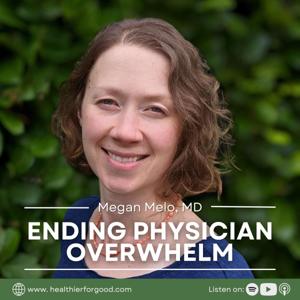
I'm Megan Melo, board-certified Family and Obesity Medicine Physician and Physician Coach. In this podcast we talk about the many ways that burnout shows up in our lives, and what we can do about…
The healthcare system is broken; but you don't have to wait until it's fixed to feel better. I'm here to help.
Thank you for tuning in! Don’t forget to subscribe, rate, and review. Until next time, take care.
Connect with me:

12,673 Listeners

6,678 Listeners

771 Listeners

57 Listeners
48 Listeners

14 Listeners
16 Listeners