
Sign up to save your podcasts
Or

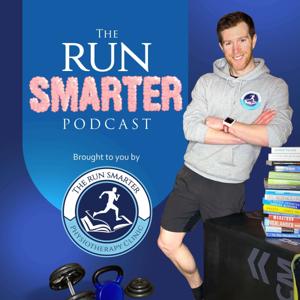


Based on Podcast App listening data
Learn more about Brodie's Research Database & AI Assistant 📄🔍
For MORE Run Smarter Resources 🏃♂️📚
- Including Free Injury Prevention Courses 🩹🎓
- The Run Smarter Book 📖
- Access to Research Papers 📄🔍
- & Ways to Work with Brodie 🤝👟
👉 CLICK HERE! 🎉✨
Luke is a Sports & Exercise Chiropractor who has a particular interest in the management, treatment and prevention of calf and achilles injuries.
I interview Luke and explore the common causes for this injury and the most common mistakes runners make in their recovery plan.
Luke also provides his checklist if calf strains are a regular occurrence in your training. We also go through your patron questions including:
Be sure to follow luke on instagram
Find Luke's website here
Learn more about Brodie's Research Database & AI Assistant 📄🔍
For MORE Run Smarter Resources 🏃♂️📚
- Including Free Injury Prevention Courses 🩹🎓
- The Run Smarter Book 📖
- Access to Research Papers 📄🔍
- & Ways to Work with Brodie 🤝👟
👉 CLICK HERE! 🎉✨
Latest Research: Performance Gains, Shockwave Debate, Arch Support Science
In this month’s research roundup, Brodie breaks down three fascinating new papers covering running performance, Achilles rehab and plantar fasciitis management.
First, a large systematic review investigates what actually predicts better running performance in non-elite runners — from 5K athletes through to ultramarathoners. The findings reveal how the demands of performance dramatically change depending on race distance, highlighting the importance of physiology, training consistency, psychology and fueling strategies.
Next, Brodie unpacks a controversial new systematic review and meta-analysis on shockwave therapy for Achilles tendinopathy. Does shockwave actually improve outcomes, or has the treatment become overhyped within sports medicine? The findings may surprise clinicians and runners alike.
Finally, a new plantar fasciitis paper explores whether arch supports genuinely help reduce pain and — more importantly — why. Using imaging, biomechanics and computational modeling, the researchers attempted to uncover the mechanical effects of orthotics and how they may redistribute stress through the foot.
Papers discussed in this episode
1. Performance predictors in recreational runners
A systematic review examining the factors associated with performance in non-elite runners across distances ranging from 5K to ultramarathons.
Topics discussed:
2. Shockwave therapy for Achilles tendinopathy
A systematic review and meta-analysis investigating whether shockwave therapy improves outcomes for midportion and insertional Achilles tendinopathy.
Topics discussed:
3. Arch supports and plantar fasciitis
A prospective study exploring the effects of arch-support insoles on pain, foot alignment and heel stress distribution in plantar fasciitis patients.
Topics discussed:
Key takeaways
Learn more about Brodie's Research Database & AI Assistant 📄🔍
For MORE Run Smarter Resources 🏃♂️📚
- Including Free Injury Prevention Courses 🩹🎓
- The Run Smarter Book 📖
- Access to Research Papers 📄🔍
- & Ways to Work with Brodie 🤝👟
👉 CLICK HERE! 🎉✨
The Missing Link in Rehab You’re Probably Ignoring
Pain isn’t always just about tissues, load, or biomechanics.
In this episode, Brodie explores one of the most overlooked contributors to prolonged running injuries: the psychosocial side of pain. Drawing from both research and years of working with chronic injury cases, he introduces a 20-question “Pain & Wellness Score” designed to uncover the emotional, cognitive, and social factors that may be quietly influencing your recovery.
You’ll learn why some runners continue to struggle despite doing all the “right” rehab exercises, how hypervigilance and fear can amplify symptoms, and why recovery should be approached through a biopsychosocial lens rather than purely mechanical thinking. Brodie also breaks down the science behind chronic pain, nervous system hypersensitivity, catastrophisation, fear of movement, and the powerful role attention plays in symptom intensity.
Throughout the episode, Brodie walks listeners through the full questionnaire so they can assess themselves in real time. He explains how low scores may reveal missing pieces in recovery and shares practical interventions that can help calm the nervous system, reduce fear, and improve recovery outcomes.
Topics include:
Brodie also discusses research on chronic pain neuroplasticity and highlights therapies shown to help regulate the nervous system, including:
If you’ve been stuck in an injury cycle, feel emotionally exhausted by pain, or feel like your rehab is missing something despite doing the exercises correctly, this episode may provide an entirely new perspective on recovery.
Resources & Links:
Click here to learn about Brodie's Chronic Pain Reset Course
Learn more about Brodie's Research Database & AI Assistant 📄🔍
For MORE Run Smarter Resources 🏃♂️📚
- Including Free Injury Prevention Courses 🩹🎓
- The Run Smarter Book 📖
- Access to Research Papers 📄🔍
- & Ways to Work with Brodie 🤝👟
👉 CLICK HERE! 🎉✨
In this exclusive AMA release, Brodie answers three practical listener questions that many runners quietly struggle with. From deciding whether to see a physio or doctor for persistent knee pain, to knowing when it’s safe to introduce back-to-back running days during rehab, to understanding why your lower back tightens on longer runs… this episode is packed with evidence-based guidance and real-world rehab insights.
If you’ve been stuck in an injury cycle, unsure whether your rehab is working, or second-guessing your training decisions, this episode will help you simplify the process and run smarter.
In this episode, Brodie discusses:
Key Takeaways:
Learn more about Brodie's Research Database & AI Assistant 📄🔍
For MORE Run Smarter Resources 🏃♂️📚
- Including Free Injury Prevention Courses 🩹🎓
- The Run Smarter Book 📖
- Access to Research Papers 📄🔍
- & Ways to Work with Brodie 🤝👟
👉 CLICK HERE! 🎉✨
Coach Claire Bartholic wasn’t always a runner. She started running in her mid-30s simply to get in shape for her high school reunion. She caught the running bug and finished her first marathon at age 38 in a respectable 4:02 and was immediately hooked. With dedicated coaching and training, she successfully lowered her marathon PR to 2:58, remarkably without injury, and entirely plant-based. Today, we talk about all things masters running, including the common mistakes and misconceptions Claire often sees working with masters athletes. We also answer all your patron questions, including ways to best prepare in your younger years, how to adjust your goals, how to increase mileage safely and how to recover from long runs.
Follow The Run to the Top podcast by RunnersConnect
Head to Claire's website to receive your free download about the ultimate fuel plan for runners
Follow @theplantedrunner on insta
Learn more about Brodie's Research Database & AI Assistant 📄🔍
For MORE Run Smarter Resources 🏃♂️📚
- Including Free Injury Prevention Courses 🩹🎓
- The Run Smarter Book 📖
- Access to Research Papers 📄🔍
- & Ways to Work with Brodie 🤝👟
👉 CLICK HERE! 🎉✨
In this episode, Brodie breaks down a brand-new 2026 systematic review investigating whether collagen supplementation truly improves tendon health, recovery, and performance. With conflicting advice from experts and unclear evidence in the past, this paper helps clarify what actually works—and more importantly, how to apply it to your training.
Paper: Collagen Supplementation on Tendon-Related Structural and Performance Outcomes: A Systematic Review
Key Takeaways
Bottom line: collagen seems tendon-specific, not a general performance enhancer
Training Requirements
Collagen without loading = minimal benefit
Final Thoughts
This paper helps move us from confusion to clarity.
Collagen isn’t a magic fix—but when used strategically alongside heavy strength training, it may:
In other words, it’s a potential amplifier—not a replacement—for good rehab and training principles.
Learn more about Brodie's Research Database & AI Assistant 📄🔍
For MORE Run Smarter Resources 🏃♂️📚
- Including Free Injury Prevention Courses 🩹🎓
- The Run Smarter Book 📖
- Access to Research Papers 📄🔍
- & Ways to Work with Brodie 🤝👟
👉 CLICK HERE! 🎉✨
Stem cells are one of the most talked-about frontiers in medicine—but how much of it actually applies to runners dealing with tendon pain?
In this episode, I’m joined by orthopaedic surgeon and researcher Chukwuweike Gwam to break down the latest evidence on stem cells and tendon healing. We unpack what stem cells actually are, how they work in the body, and whether they live up to the hype when it comes to treating tendinopathy.
We also explore the real-world limitations, risks, and costs—alongside what the future might hold for regenerative medicine in running injuries.
If you’ve ever considered injections, biologics, or wondered if stem cells are “the next big thing”… this episode will bring you up to speed.
About Chukwuweike Gwam MD:
Follow him on Instagram:
https://www.instagram.com/chukwuweike_g/
Key Topics & Insights
What Are Stem Cells (In Simple Terms)?
Why Do We Heal Slower As We Age?
It’s not just one factor—it’s a combination:
In other words: your repair system is still there… just less efficient.
Stem Cells & Tendon Healing — The Theory
The idea is simple:
The goal:
But here’s the key point…
👉 They are NOT a magic bullet—they’re an adjunct.
What the Research Actually Shows
From their literature review (2015–2025):
Findings:
👉 Especially beyond 6–12 months, results tend to equalise.
The Most Interesting Finding
In rotator cuff studies:
Why?
Why Results Are So Inconsistent
This is the biggest limitation:
No standardisation.
👉 Your stem cells ≠ someone else’s stem cells
Risks & Limitations
Cost vs Benefit (Reality Check)
In most cases:
You’re paying a premium for uncertain benefit.
What About PRP?
Again, works best alongside loading—not instead of it.
Practical Takeaways (For Runners)
The fundamentals still win:
Learn more about Brodie's Research Database & AI Assistant 📄🔍
For MORE Run Smarter Resources 🏃♂️📚
- Including Free Injury Prevention Courses 🩹🎓
- The Run Smarter Book 📖
- Access to Research Papers 📄🔍
- & Ways to Work with Brodie 🤝👟
👉 CLICK HERE! 🎉✨
On today’s Q&A episode, Brodie tackles a wide range of listener-submitted questions—covering everything from preparing for mountain races without hills, structuring marathon training in your 50s, and the science of hydration, to managing lateral knee pain, deload weeks, and cardiac drift in ultra events.
The common thread is learning how to train smarter by understanding why your body responds the way it does—and how to adjust accordingly.
Key Questions & Insights
Training for Mountain Events (While Living on the Flats)
Marathon Training at 57 (Sub 3:30 Goal)
Hydration & Recovery (The Science)
Hydration plays a critical role in recovery through:
Practical takeaway:
Lateral Knee Pain in Runners
Potential causes discussed:
Key management strategies:
How to Structure a Deload Week
Purpose: allow accumulated fatigue to recover and adaptations to occur
Options for strength training deload:
Key goal:
Start the next training block feeling fresh, strong, and ready to progress
Cardiac Drift in Long Runs & Ultras
What it is:
Main contributors:
Strategies to delay drift:
Key Takeaways
Learn more about Brodie's Research Database & AI Assistant 📄🔍
For MORE Run Smarter Resources 🏃♂️📚
- Including Free Injury Prevention Courses 🩹🎓
- The Run Smarter Book 📖
- Access to Research Papers 📄🔍
- & Ways to Work with Brodie 🤝👟
👉 CLICK HERE! 🎉✨
Returning to running after injury isn’t as simple as waiting until you’re pain-free and heading back out the door.
In this episode, I sit down with Eric Hegedus to break down a structured, evidence-informed approach to returning to running—based on his clinical commentary and years of working with injured runners.
We dive into how to bridge the gap between rehab and performance, why so many runners get re-injured, and how to use simple tools like TRIMP to guide your training decisions.
If you’ve ever felt unsure about when to run, how much to do, or whether you’re progressing too quickly… this episode gives you a clear framework to follow.
Learn more about Brodie's Research Database & AI Assistant 📄🔍
For MORE Run Smarter Resources 🏃♂️📚
- Including Free Injury Prevention Courses 🩹🎓
- The Run Smarter Book 📖
- Access to Research Papers 📄🔍
- & Ways to Work with Brodie 🤝👟
👉 CLICK HERE! 🎉✨
In this month’s Latest Running Research episode, Brodie breaks down three fascinating studies that challenge common beliefs and refine how runners should approach performance and injury prevention. First, a randomized controlled trial on ketone supplementation reveals that while ketones significantly improve cognitive function—helping with reaction time and mental clarity—they do not improve running performance, efficiency, or fuel utilization. Despite feeling better during efforts, runners didn’t run faster, and some even experienced gastrointestinal issues, raising questions about their real-world value for endurance athletes.
Next, Brodie explores a meta-analysis comparing high-intensity interval training (HIIT) vs moderate continuous running (MICT). The key takeaway: HIIT is more effective at improving running economy (efficiency at submax speeds), particularly at moderate intensities, while steady running is better for improving VO₂ max (your aerobic engine). This reinforces the idea that both training styles serve different physiological purposes—and combining them strategically is the smartest approach for performance gains.
Finally, a newly released review challenges one of the most common rehab narratives: that weak glutes cause poor running mechanics. Across 19 studies, there was no consistent link between hip strength and running biomechanics, and even strengthening programs failed to meaningfully change running form. Instead, Brodie reframes strength training as a way to increase load capacity, not “fix” technique—highlighting the importance of gait retraining and smart load management over blindly strengthening muscles.
🎯 Key Takeaways
From the publisher's feed
1,162 Listeners
1,507 Listeners

1,344 Listeners

4,130 Listeners
425 Listeners

53 Listeners
200 Listeners
779 Listeners
1,877 Listeners

383 Listeners
15 Listeners
955 Listeners

163 Listeners
364 Listeners
46 Listeners