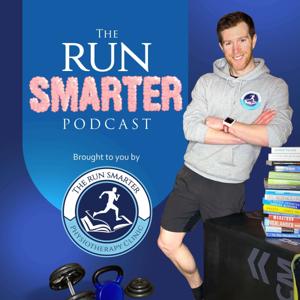
The Run Smarter Podcast

The Run Smarter Podcast

By Brodie SharpeSportsHealth & FitnessRunning
Download on the App Store
  • Ranking

    45th

    on Running

  • Favorites

    93

    Followers

  • Typical duration

    58 min

    per episode

Based on Podcast App listening data

The Run Smarter Podcast episodes

  • Stress Fractures & Bone Health with Belinda Beck (Re-run: Mar 2021)

    Learn more about Brodie's Research Database & AI Assistant πŸ“„πŸ”

    Belinda Beck is a Professor in the school of allied health services at Griffith University. She has been involved in bone health research for 20 years and published over 100 research papers.

    Today, we discuss stress fractures and bone health. We start with the adolescent population and why diet, bone loading & peak bone mass is so important in this population. Secondly, Belinda dives into symptoms, risks, causes and treatment of stress fractures. Lastly, we talk about the masters runner and aging populations. What is the best approach for the treatment and management of bone conditions such as osteoporosis?

    Click here to head to the bone clinic
    You can also find the bone clinic on facebook

    Check out some previous podcast episode:
    Avoiding & Managing Stress Fractures
    The hidden dangers of RED-S with Isobel Ross

    For MORE Run Smarter Resources πŸƒβ€β™‚οΈπŸ“š
    - Including Free Injury Prevention Courses πŸ©ΉπŸŽ“
    - The Run Smarter Book πŸ“–
    - Access to Research Papers πŸ“„πŸ”
    - & Ways to Work with Brodie πŸ€πŸ‘Ÿ
    πŸ‘‰ CLICK HERE! πŸŽ‰βœ¨

    58 min
  • Latest Research: Healing Degenerative Tendons / Timing of Nutrition in Marathons / Smartwatches Predicting Performance

    Learn more about Brodie's Research Database & AI Assistant πŸ“„πŸ”

    🧠 Episode Summary:

    In this jam-packed episode, Brodie dives into the latest running research added to the Run Smarter database for March 2025. From tendon rehab protocols to marathon fueling strategies and smartwatch accuracy, you'll walk away with practical takeaways and cutting-edge insights to train and rehab smarter.

    πŸ” Featured Research Papers:

    1. Stress Relaxation & Nutrition in Patellar Tendinopathy (Keith Barr, 2019)
      • Explores how combining gelatin + vitamin C with isometric loading can heal even severe degenerative tendons.
      • Case study of an NBA player with 50% degenerative patellar tendonβ€”healed to normal MRI status after 18 months.
      • Practical rehab protocol: Heavy isometrics (leg extensions, leg press, Spanish squats) + 15g gelatin + 225mg Vitamin C, taken 1 hour before.
      • Key concept: Stress relaxation allows load to reach the injured part of the tendon.
    2. Nutrition Timing & Marathon Performance
      • Examines how pre-, during-, and post-race fueling impacts finish times.
      • Top performers consumed 30–60g of carbs per hour (those closer to 60g performed best).
      • Having a nutrition plan, especially one guided by a dietitian, correlated with faster times.
      • Surprisingly, pre-race caffeine, carbs, and fluid intake didn’t significantly affect finish time.
      • Overhydration linked to slower finishesβ€”individualize hydration plans!
    3. Smartwatch Accuracy for Predicting Performance (Huawei GT Runner Study)
      • Watches accurately predicted marathon times within 3% error margin based on 5K/10K/HM times.
      • Great alternative to expensive lab VO2 max or lactate threshold tests.
      • Encouraging for recreational runners looking to track and plan training more effectively.

    πŸƒ Key Takeaways for Runners:

    • Tendon Rehab: Healing degenerative tendon is possibleβ€”target it with specific loading + nutrition.
    • Race Day Fueling: Practice your carb intake in training and aim for 60–90g/hr during long races.
    • Hydration: Don’t overdo fluidsβ€”tailor to sweat rate and environmental conditions.
    • Tech Insights: Smartwatches can be surprisingly accurate in predicting race performancesβ€”use that data!


    For MORE Run Smarter Resources πŸƒβ€β™‚οΈπŸ“š
    - Including Free Injury Prevention Courses πŸ©ΉπŸŽ“
    - The Run Smarter Book πŸ“–
    - Access to Research Papers πŸ“„πŸ”
    - & Ways to Work with Brodie πŸ€πŸ‘Ÿ
    πŸ‘‰ CLICK HERE! πŸŽ‰βœ¨

    40 min
  • The Right Strength Training to Improve Fatigued Running with Michele Zanini

    Learn more about Brodie's Research Database & AI Assistant πŸ“„πŸ”

    In this episode of the Run Smarter Podcast, Brodie sits down with researcher and lecturer Dr. Michele Zanini to discuss his groundbreaking new study: "Strength Training Improves Running Economy Durability and Fatigued High Intensity Performance in Well-Trained Male Runners."

    We dive into what durability actually means in a running context, why it matters, and how strength trainingβ€”done the right wayβ€”can help you maintain performance under fatigue and finish your races stronger.

    πŸ” Topics Covered:

    • Why Dr. Zanini designed this study and the research gaps it aimed to fill
    • The concept of running economy durability and how it differs from standard running economy
    • How the study was structured and what made it unique
    • Detailed breakdown of the strength training protocol:
      • 10-week program, 2x/week
      • Exercises: back squats, single-leg press, isometric calf raises, plyometric drills
      • Progressive overload and focus on intent (explosive effort)
    • Key results:
      • 35% improvement in time-to-exhaustion at 95% VO2max
      • Significant gains in running economy under fatigue
      • No change in economy in a fresh stateβ€”why this might be the case
    • Practical implications for recreational runners
    • Strength training tips to optimize durability and late-race performance
    • Additional insights on how female and recreational runners might respond to similar training

    πŸ“Œ Key Takeaways for Runners:

    • Strength training doesn’t just help with injury preventionβ€”it can enhance fatigue resistance.
    • Running economy improvements may be more visible during fatigue, especially for well-trained runners.
    • Strength protocols should include progressive loading, low reps with high intent, and strategic plyometrics.
    • Even without fancy lab equipment, runners can apply these training principles and see real-world performance gains.

    Follow Michele on:
    X @MicZanini
    BlueSky @mzaniniphysiology.bsky.social
    LinkedIn

    For MORE Run Smarter Resources πŸƒβ€β™‚οΈπŸ“š
    - Including Free Injury Prevention Courses πŸ©ΉπŸŽ“
    - The Run Smarter Book πŸ“–
    - Access to Research Papers πŸ“„πŸ”
    - & Ways to Work with Brodie πŸ€πŸ‘Ÿ
    πŸ‘‰ CLICK HERE! πŸŽ‰βœ¨

    1 hr 2 min
  • Moira’s Chronic Injury Success Story

    Learn more about Brodie's Research Database & AI Assistant πŸ“„πŸ”

    In this episode of the Run Smarter Podcast, Brodie sits down with Moira, a dedicated endurance athlete and physical therapist, to discuss her long and challenging battle with chronic injury. What started as a suspected stress fracture turned into a frustrating cycle of pain, conflicting diagnoses, and psychological hurdles. Moira shares her journey of setbacks, self-reflection, and ultimately, breakthrough moments that led her back to running. Her story highlights the importance of understanding pain science, overcoming fear of movement, and following a structured, gradual return-to-running plan.

    What You’ll Learn in This Episode:

    • The progression of Moira’s injury and the many misdiagnoses she received along the way.
    • How medical imaging (MRI, x-rays) and different professional opinions added to her confusion.
    • The psychological impact of chronic pain and injury on an athlete’s identity.
    • The role of pain science in Moira’s recovery and how she shifted her mindset.
    • The importance of finding a trusted health professional who aligns with your approach.
    • How Moira gradually returned to running and her current training routine.

    Key Takeaways:

    • Pain Science & Nervous System Sensitivity: Moira learned that her pain wasn’t solely due to structural damage but also a result of a hypersensitive nervous system. Recognizing this was a major turning point in her recovery.
    • Fear of Movement (Kinesiophobia): Despite being a physical therapist, Moira developed a deep fear of movement, which prolonged her symptoms. A gradual and confidence-building approach to movement helped her break this cycle.
    • Small, Sustainable Steps: Her return to running started with 10-second run intervals. This slow approach was crucial in rebuilding confidence and reducing fear-driven pain responses.
    • The Power of Self-Talk & Mental Reframing: Moira used mantras, journaling, and positive reinforcement to change her mental approach to pain and injury.
    • Trust & Patience in the Process: Finding a professional she trusted and following a structured plan were critical in her return to pain-free running.


    For MORE Run Smarter Resources πŸƒβ€β™‚οΈπŸ“š
    - Including Free Injury Prevention Courses πŸ©ΉπŸŽ“
    - The Run Smarter Book πŸ“–
    - Access to Research Papers πŸ“„πŸ”
    - & Ways to Work with Brodie πŸ€πŸ‘Ÿ
    πŸ‘‰ CLICK HERE! πŸŽ‰βœ¨

    1 hr 13 min
  • Understanding & Enhancing Running Economy with Mark Connick

    Learn more about Brodie's Research Database & AI Assistant πŸ“„πŸ”
    For a summary & graphic of Mark's paper, click here

    Understanding and Enhancing Running Economy with Mark Connick

    Episode 379 | Run Smarter Podcast

    πŸŽ™ Guest: Mark Connick – Postdoctoral Researcher in Sports Biomechanics and Physiology
    πŸ“„ Topic: Individualization of Footwear for Optimizing Running Economy

    Episode Overview:

    In this episode, we dive deep into the science of running economy and how different footwear choices impact performance. Mark Connick shares insights from his recent paper and explains the direct and indirect effects of footwear on biomechanics. Whether you're an elite athlete or a recreational runner, this episode will help you understand how shoe selection can make you more efficient and faster.

    Key Takeaways for Runners:

    βœ… What is Running Economy? – Learn how oxygen cost impacts running performance and how you can run faster while using less energy.

    βœ… How Footwear Affects Performance – Discover the direct (mechanical) and indirect (biomechanical) effects of shoes on your stride, muscle activation, and efficiency.

    βœ… The Role of Carbon Fiber Plates – Do super shoes really make you faster? Understand how plates act as a lever rather than a spring and why different runners experience different benefits.

    βœ… Foam, Midsole, and Energy Return – Learn why shoe stack height, midsole density, and weight impact how much energy is saved or lost with each step.

    βœ… How to Test Your Own Running Economy – A simple DIY test using a heart rate monitor and a track to compare shoes and determine which is most efficient for you.

    βœ… Choosing the Right Shoe for Your Needs – Should you get a super shoe for your next marathon? Mark shares practical advice on how to find the best shoe based on comfort, biomechanics, and race goals.

    βœ… How to Transition Safely into Super Shoes – Avoid injuries by gradually adapting to new footwear and listening to your body's response.


    For MORE Run Smarter Resources πŸƒβ€β™‚οΈπŸ“š

    - Including Free Injury Prevention Courses πŸ©ΉπŸŽ“
    - The Run Smarter Book πŸ“–
    - Access to Research Papers πŸ“„πŸ”
    - & Ways to Work with Brodie πŸ€πŸ‘Ÿ
    πŸ‘‰ CLICK HERE! πŸŽ‰βœ¨

    49 min
  • Latest Research: Brodie’s Apology/Compression Garments & Performance/Anxiety & Recovery/Knee Pain Management

    Learn more about Brodie's Research Database & AI Assistant πŸ“„πŸ”

    What You’ll Learn in This Episode:

    βœ… Compression Garments: Hype or Helpful?

    • Does wearing compression gear actually improve running performance?
    • A deep dive into the latest systematic review and meta-analysis.
    • The surprising truth about muscle vibration and efficiency.
    • What this means for your race day gear choices.

    βœ… Achilles Tendon Pain: The Role of Anxiety & Fear

    • How psychological factors like anxiety and fear of rupture impact your pain levels.
    • Why fear of movement may not be as important as fear of rupture.
    • The proven strategies to manage Achilles tendinopathy more effectively.

    βœ… Runner’s Knee (Patellofemoral Pain Syndrome): Self-Management That Works

    • The power of strengthening your quads and glutes.
    • How education and load management can speed up recovery.
    • The unexpected role of mindfulness in pain management.
    • Key takeaways from the latest systematic review.

    Why You Should Listen:

    🎯 Stop Wasting Money on Unproven Gear – Learn what science says about compression wear before you invest. 🎯 Break Free from Persistent Achilles Pain – Understand the mental and physical strategies that will help you heal faster. 🎯 Recover from Runner’s Knee More Effectively – Discover the best exercises, education strategies, and mindset shifts to get back to pain-free running.


    For MORE Run Smarter Resources πŸƒβ€β™‚οΈπŸ“š
    - Including Free Injury Prevention Courses πŸ©ΉπŸŽ“
    - The Run Smarter Book πŸ“–
    - Access to Research Papers πŸ“„πŸ”
    - & Ways to Work with Brodie πŸ€πŸ‘Ÿ
    πŸ‘‰ CLICK HERE! πŸŽ‰βœ¨

    57 min
  • How to Survive & Thrive in All Weather Conditions with Andrew & Michael

    Learn more about Brodie's Research Database & AI Assistant πŸ“„πŸ”

    How to Survive and Thrive in All Weather Conditions with Andrew and Michael

    Episode Summary: In this episode of the Run Smarter Podcast, we sit down with Andrew and Michael, hosts of the Endurance Innovation Podcast, to explore how runners can optimize performance in various weather conditions. Whether you’re training in freezing temperatures, racing in extreme heat, or battling humidity, Andrew and Michael break down the science behind heat transfer, thermoregulation, and practical strategies to maintain performance. Expect a deep dive into the mechanics of cooling, hydration, layering, and more!

    What You’ll Learn in This Episode:

    • Why understanding thermoregulation is key to running performance
    • How to dress appropriately for cold weather runs and avoid frostbite
    • Why runners naturally slow down in extreme cold and how to manage it
    • The role of humidity in heat stress and how to handle it
    • How heat adaptation works and how to train for hot conditions
    • The best cooling strategies, including ice slushies, wrist cooling, and pre-cooling methods
    • How clothing color and material impact heat absorption and reflection
    • Common mistakes runners make in extreme temperatures and how to avoid them

    Guest Bios:

    • Andrew Buckrell: Mechanical engineer with a research background in aerodynamics and heat transfer. Passionate about applying engineering principles to endurance sports.
    • Michael Petralia: Mechanical engineer turned endurance coach. Specializes in performance optimization through scientific principles.

    Listener Questions Answered:

    • Why do I run slower in the cold, no matter how warm my muscles get?
    • Why does my heart rate increase more in cold weather?
    • How can I stay cool in extreme heat and humidity?
    • Should I train by heart rate in hot conditions?
    • Do hot drinks really help cool you down?

    Search 'The Endurance Innovation' wherever you find your podcasts

    You can also follow 3X training on Instagram

    For MORE Run Smarter Resources πŸƒβ€β™‚οΈπŸ“š
    - Including Free Injury Prevention Courses πŸ©ΉπŸŽ“
    - The Run Smarter Book πŸ“–
    - Access to Research Papers πŸ“„πŸ”
    - & Ways to Work with Brodie πŸ€πŸ‘Ÿ
    πŸ‘‰ CLICK HERE! πŸŽ‰βœ¨

    1 hr 16 min
  • Healing Chronic Scar Tissue in Tendons with Keith Barr

    Learn more about Brodie's Research Database & AI Assistant πŸ“„πŸ”

    In this episode of the Run Smarter Podcast, I sit down with Dr. Keith Barr from the University of California, Davis, to uncover groundbreaking research on tendon health, rehabilitation, and performance. Dr. Barr shares his expertise on tendon tissue engineering, the role of mechanical loading in healing tendinopathies, and how to reverse chronic scar tissue formation. Whether you're a runner struggling with tendon pain or a coach looking to optimize performance, this episode is packed with game-changing insights.

    What You'll Learn in This Episode

    πŸ”Ή Why tendons develop scar tissue – and how stress shielding plays a role in tendinopathy
    πŸ”Ή How to reverse chronic tendon damage – with the right type of loading strategy
    πŸ”Ή The difference between tendon stiffness and perceived stiffness – and how it impacts performance and injury risk
    πŸ”Ή Why isometric exercises are a game-changer – and how to use them effectively in rehab and injury prevention
    πŸ”Ή The role of hormones in tendon injuries – including how menopause and testosterone affect tendon health
    πŸ”Ή How to train smarter to avoid tendon injuries – including the optimal way to structure your running volume

    Key Takeaways & Actionable Strategies

    βœ… Target the scar tissue with load – Use isometric holds after a workout to gradually reintroduce load to the weak areas
    βœ… Don’t rush into plyometrics – Start with long-duration isometric exercises before progressing to slow, heavy strength training
    βœ… Train twice a day for better tendon adaptation – Splitting your runs into two sessions improves tendon recovery and adaptation
    βœ… Respect the first few sessions of new training – The first track session, spikes workout, or hill session introduces high jerk forces, increasing injury risk
    βœ… Consider hormonal factors – Women going through menopause may need to adjust their training due to changes in tendon stiffness and collagen synthesis

    Dr. Keith Barr’s Research & Resources

    πŸ”Ή Follow Keith Barr on BlueSky: Muscle Science
    πŸ”Ή Read his research paper: Using Load to Improve Tendon Ligament Tissue Engineering and Develop Novel Treatments for Tendinopathy


    For MORE Run Smarter Resources πŸƒβ€β™‚οΈπŸ“š
    - Including Free Injury Prevention Courses πŸ©ΉπŸŽ“
    - The Run Smarter Book πŸ“–
    - Access to Research Papers πŸ“„πŸ”
    - & Ways to Work with Brodie πŸ€πŸ‘Ÿ
    πŸ‘‰ CLICK HERE! πŸŽ‰βœ¨

    1 hr 12 min
  • Understanding Nutrition for Optimal Recovery with Christie Ashwanden (Re-Run Dec 2020)

    Learn more about Brodie's Research Database & AI Assistant πŸ“„πŸ”

    Episode Summary:
    In today's episode, Brodie is joined by Christie Ashwanden, author of Good to Go: How to Eat, Sleep and Rest Like a Champion. Christie, a renowned science journalist and former lead writer at 538, shares practical advice on nutrition, hydration, and recovery for athletes. They discuss the myths and marketing tactics surrounding sports nutrition, the importance of body awareness, and how to simplify recovery by listening to your body’s natural signals.

    Topics Covered:

    • 00:00 – Introduction: About Christie Ashwanden and her book Good to Go.
    • 01:46 – Brodie shares how Christie Ashwanden’s book has influenced his recovery series and introduced him to new experts and topics.
    • 04:07 – Christie’s background in sports and her journey through overtraining and recovery struggles.
    • 05:58 – Insights from Christie’s interviews with elite athletes and the overlooked importance of recovery throughout one's athletic career.
    • 07:25 – Nutrition's role in recovery: Is it more complex than we think?
    • 09:44 – Debunking the recovery window myth and how marketing has influenced sports nutrition trends.
    • 13:16 – Why a balanced diet often meets all your nutrient needs without supplements or "superfoods."
    • 18:04 – The truth about hydration: Why drinking to thirst is more effective than following arbitrary hydration guidelines.
    • 23:10 – The dangers of overhydration and the rise in hyponatremia cases in endurance athletes.
    • 27:19 – Marketing tactics in the protein and supplement industry: What science really says.
    • 32:05 – Alcohol and recovery: Can a post-run beer fit into a recovery plan?
    • 35:49 – Final advice: Simplify your nutrition strategy, avoid overthinking, and improve body awareness to optimize recovery.

    Key Takeaways:

    • Nutrition doesn’t have to be overly complicated. Focus on balanced, real foods and trust your body’s hunger and thirst signals.
    • The "recovery window" is more of a "barn door." You don’t need to eat immediately after a workout unless you're performing again soon.
    • Overhydration can be more dangerous than mild dehydration. Drink to thirst rather than forcing hydration based on weight loss or urine color.
    • Supplements are often driven by marketing rather than science. Real food provides the nutrients your body needs.
    • Stress management, including dietary flexibility and recovery rituals, plays a significant role in optimal recovery.


    For MORE Run Smarter Resources πŸƒβ€β™‚οΈπŸ“š
    - Including Free Injury Prevention Courses πŸ©ΉπŸŽ“
    - The Run Smarter Book πŸ“–
    - Access to Research Papers πŸ“„πŸ”
    - & Ways to Work with Brodie πŸ€πŸ‘Ÿ
    πŸ‘‰ CLICK HERE! πŸŽ‰βœ¨

    41 min
  • Latest Research: Superior Interval Training / Dark Chocolate / Turmeric for Runners

    Learn more about Brodie's Research Database & AI Assistant πŸ“„πŸ”

    Welcome to the Run Smarter Podcast, where we decipher the latest running research to help you train smarter and achieve your running goals. In today’s episode, Brodie dives into cutting-edge studies released this month, breaking them down into actionable takeaways for runners. From optimizing your interval training to uncovering the surprising benefits of dark chocolate and curcumin, this episode is packed with evidence-based insights. Plus, discover how you can gain access to hundreds of research papers and the new Run Smarter AI Assistant to level up your running IQ.

    What You’ll Learn in This Episode:

    1. Interval Training for VO2 Max Improvements:
      • Short intervals vs. long intervalsβ€”what’s more effective for improving VO2 max and heart rate zones?
      • Key takeaways for structuring your interval sessions.
    2. Dark Chocolate for Endurance Runners:
      • How 50g of dark chocolate daily can improve arterial flexibility, reduce blood pressure, and enhance recovery.
      • Why these benefits are even more pronounced for runners over 40.
    3. Curcumin and Running Performance:
      • The effects of curcumin supplementation on inflammation, brain function, and overall performance.
      • Does curcumin live up to the hype for endurance athletes?

    For MORE Run Smarter Resources πŸƒβ€β™‚οΈπŸ“š
    - Including Free Injury Prevention Courses πŸ©ΉπŸŽ“
    - The Run Smarter Book πŸ“–
    - Access to Research Papers πŸ“„πŸ”
    - & Ways to Work with Brodie πŸ€πŸ‘Ÿ
    πŸ‘‰ CLICK HERE! πŸŽ‰βœ¨

    36 min

About The Run Smarter Podcast

From the publisher's feed

Expand your running knowledge, identify running misconceptions and become a faster, healthier, SMARTER runner. Let Brodie Sharpe become your new running guide as he teaches you powerful injury…

More shows like The Run Smarter Podcast

Trail Runner Nation by Trail Runner Nation

Trail Runner Nation

1,162 Listeners

Marathon Training Academy by Angie and Trevor

Marathon Training Academy

1,507 Listeners

The Strength Running Podcast by Jason Fitzgerald

The Strength Running Podcast

1,344 Listeners

Ali on the Run Show by Ali Feller

Ali on the Run Show

4,130 Listeners

That Triathlon Show by Mikael Eriksson

That Triathlon Show

425 Listeners

Runner's World Podcast by Runner's World UK

Runner's World Podcast

53 Listeners

Run4PRs by Run4PRs

Run4PRs

200 Listeners

The Freetrail Podcast with Dylan Bowman by Dylan Bowman

The Freetrail Podcast with Dylan Bowman

779 Listeners

Some Work, All Play by David Roche and Megan Roche

Some Work, All Play

1,877 Listeners

The Drop by Believe in the Run

The Drop

383 Listeners

Fuel for the Sole by Fuel for the Sole

Fuel for the Sole

15 Listeners

Singletrack by Finn Melanson

Singletrack

955 Listeners

The Running Channel Podcast by The Running Channel

The Running Channel Podcast

163 Listeners

Tread Lightly Running Science Podcast by Amanda Brooks and Laura Norris

Tread Lightly Running Science Podcast

364 Listeners

The Runna Podcast by Runna

The Runna Podcast

46 Listeners