
Sign up to save your podcasts
Or

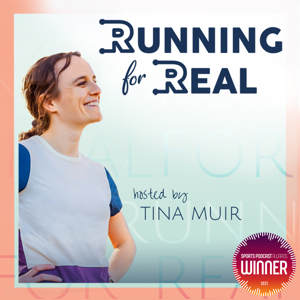


It is that time again!
Another episode where we get to know other members of the Running For Real community through this Superstars episode.
For these episodes, I asked you who YOU wanted to meet on the running podcast, and brought them on! In the first two rounds of these meet the superstars episodes, they were a big hit. Turns out you love meeting other every day runners and getting to know their stories, especially those from names you see in our wonderful online runner community the Running For Real Superstars group on a daily basis.
Let's go meet them!
Today's GuestsThe Running for Real Superstars Community
Thank you to Bodyhealth for being a wonderful sponsor of The Running For Real Podcast. If you are struggling to recover quick enough from your training, my little secret is to use BodyHealth Perfect Amino to get you there. It contains all the essential amino acids, and is very easy for your body to use and begin the repair process. Use code TINA10 for 10% off at BodyHealth.com Thanks for Listening! I hope you enjoyed today's episode.
To share your thoughts:
Leave a note in the comment section below.
Join the Running for Real Facebook Group and share your thoughts on the episode (or future guests you would like to hear from)
Share this show on Twitter, Facebook, Instagram, or Pinterest.
To help out the show:
Leave an honest review on iTunes. Your ratings and reviews will really help me climb up the iTunes rankings and I promise, I read every single one.
Not sure how to leave a review or subscribe, you can find out here.
Thank you to the wonderful Superstars, I look forward to hearing your thoughts on the show.
Finding your calling in life is wonderful. When you have a burning inside you that powers your actions, no amount of adversity can stop or discourage you. You know why you do what you do, and your success and fulfillment don’t stem from the results of your effort, they come from your effort alone.
For some people, a life calling comes naturally, often at a very young age. For others, it takes years of searching and work till they discover what makes them excited to jump out of bed each morning.
Us runners? We also all have a running calling. Something that fuels our reason for running. A natural ability, an appreciation for the body, a desire to stay healthy, or an aspiration to break records can all be reasons to run. Maybe you are battling cancer, maybe you lost someone to cancer, maybe you run simply to work off some stress. Whatever it is, it’s yours.
Today we interviewed Ryan Hall on the Running for Real podcast. Ryan holds the record for the U.S. half marathon and once completed seven marathons, on all seven continents, in seven days. Yes, you read that correctly. Ryan knows how it feels to find a calling in life and in running. Listen or read along to see what you can learn about your calling and how that can propel you to do great things.
Learn About YourselfLearning about yourself is a funny concept. We are the only people we are around 24/7, and yet often times, coaches, parents, or mentors know things about us we don’t know about ourselves. For Ryan, learning about himself helped him to know that running was something he wanted to do from the first time he went on a run.
It can be difficult to decide which interests are life callings, and which are just interests. Knowing when to give something up or when to work through difficulty takes practice. Ryan says, “The more you know yourself, the easier it is to act on these different ideas or inspirations.” Take time to explore a variety of ideas and ponder which ones speak to your heart.
Also take time to think about why you run. When you think back to the first time you ran, or the first run you enjoyed, was there something bigger attached to that run? Something that you can always lean on when your next run seems pointless or too hard? Finding a deeper meaning will help you stay strong and committed.
Listen to Your BodyLearning about your body can be as important as learning about yourself. A healthy body will allow you to perform to the best of your ability. Whether you are working to solve a social issue, running your own business, or training for your hometown 10K, it is important to listen to your body.
Ryan gives two suggestions from having been a professional athlete when it comes to listening to your body. The first is rest. Make sure to prioritize rest. The only way to perform at a high level is to push yourself and then allow your body to adapt to that level. Adaptation cannot come without proper rest. Again, make it a priority.
Another critical aspect of body performance is proper fueling. Especially in the long-distance realm, getting down to a certain weight is a popular way to try to conserve energy. Avoid this trend. Your body knows best, and whatever weight it settles at, be comfortable with it. Focus on your performance, eat when you are hungry, and your body will figure out the optimal weight for you.
Be like BambooThere will be times when life throws you a curveball. Unexpected events are normal, so don’t let them take you off your path. “You want to be like Bamboo,” says Ryan referencing an ancient Samurai adage, “You bend but you don’t break.” Set goals for yourself, but be flexible. If you accept that there are many ways to reach your objectives, then you won’t be disturbed by changes you may need to make.
Ryan was on a trajectory to become a great baseball player when he found running. Now that his professional running career is over, he has taken up weight lifting. With each transition Ryan finds a common thread that connects his current focus to his personality. For him, it’s all about taking on a new challenge. What is it for you?
Praise OthersLast of all, wherever you find yourself on your journey, it is important to praise others. As you do so you will find support from others, and the temptation to compare your journey to theirs will fade away.
We are all on this journey together. Running can be a very individual sport, but it’s much more enjoyable when you have friends, teammates, coaches, and even competitors that you can share this experience with. We may all have different running callings, but we all have one.
Resources:(Book) Run the Mile You’re In
Ryan’s Instagram
Ryan’s Twitter
Ryan and Sara’s Website
Mike Wardian’s Instagram
Thank you to Aftershokz and Generation UCAN for being a wonderful sponsor of The Running For Real Podcast. The award winning headphones which are best known for their open ear listening experience. I have to admit, I was a little skeptical at first, but they absolutely blew me away, they are fantastic and were built for runners! Being able to hear your music as well as your surroundings is great for our safety. Visit the Aftershokz website, and use code TINA for $50 off! UCAN is back on the Running4Real Podcast as an amazing sponsor! This product have been my go to nutritional product for marathon training and racing when I was getting all of my best times. It gives you a steady energy without the sugar, so there are no sugar crashes! 15% off with coupon code tinamuir at www.generationUCAN.com Thanks for Listening! I hope you enjoyed today's episode.To share your thoughts:
Leave a note in the comment section below.
Join the Running for Real Facebook Group and share your thoughts on the episode (or future guests you would like to hear from)
Share this show on Twitter, Facebook, Instagram, or Pinterest.
To help out the show:
Leave an honest review on iTunes. Your ratings and reviews will really help me climb up the iTunes rankings and I promise, I read every single one.
Not sure how to leave a review or subscribe, you can find out here.
Thank you to Ryan, I look forward to hearing your thoughts on the show.
Justin Gallegos has always had a different life than most. By the time he was three he still had difficulty learning to walk and was diagnosed with Cerebral Palsy (CP). Physical activity and speaking were and have been two of the more challenging aspects of Justin’s life. Justin wasn’t able to participate in P.E. classes throughout elementary school, and has had to work on reducing his speech impediment throughout his life. But CP isn’t the only thing that sets Justin’s life apart from most.
Over the past few years Justin has been busy building quite an impressive resumé for himself. He is studying journalism at the University of Oregon while simultaneously running for their track team and working with Nike to design a special pair of shoes.
There seems to be no obstacle too large for Justin. He is now a motivational speaker and professional athlete. It was official when he became the first athlete with CP to sign with Nike, a dream come true for Justin.
And he is not done yet.
Tune in to today’s Running for Real podcast or read along to learn more from Justin’s determination and winning spirit where he discusses his love for running, working at Nike (including meeting Phil Knight), and his plan to break into the 2-hour half marathon club.
What is Cerebral Palsy?Brain damage, especially while the brain is developing and the child is in the womb, is the cause of Cerebral Palsy. The symptoms include a wide variety of muscle movement challenges. Involuntary movement, abnormal posture, and speech impediments are some of the most common.
As Justin explains it, “It is very a diverse disability.” For some people this means they are paralyzed, for others it means they struggle with speaking and walking. Justin considers himself somewhere in the middle, closer to the high-functioning side. Cerebral Palsy is challenging, but as Justin shows, it is not defining.
You Are Not Your DisabilityJustin is a wonderful ambassador for being much more than his disability, and running has been a huge factor for helping him come to that realization. When Justin first started running, he was unable to pick up his feet and knees properly, causing his feet to drag. He would fall during his workouts frequently. But slowly, his body grew stronger, and as it did, so did his mind.
“I never set out to be a motivational speaker or inspiring to be a pro athlete,” says Justin, “But running really did that for me, in the sense that it changed my mental game and showed me that I’m no different than anyone else.”
Running has shown Justin that he can overcome. It has given him the confidence to tackle other impossibilities. This is one of the most beautiful things about running. It is a sport that allows you to improve every day, to work hard on something every day, and it rewards you with determination to live life fearlessly. For Justin and for anyone, running can change your life.
Appreciating the PushWhen Justin began running cross country and track for his high school, he experienced something new and refreshing. Instead of being told to be careful, he was asked to work harder. He relates that his coach often pushed him to work just as harder or harder than the other athletes.
Justin thrived in this environment. Having the trust of a coach to encourage Justin to run faster instead of to slow down, gave him a drive and confidence.
Sometimes it is easy to overlook our opportunities because of their difficulty. Justin’s mindset is a wonderful example. Next time you feel overwhelmed with the tasks before you, take a step back and be grateful that you are allowed to take on those tasks. An attitude of gratitude will change your world.
Your Only Limit is Your MindEach of us has challenges that are unique to us. Some may appear harder than others, but Justin’s message is that all of us have limitless potential. “Never forget you are limitless,” he says. You will be happily surprised when you put your heart into your work with gratitude and fearlessness. Like Justin, you too can change the world. What you do matters, so make it count.
Resources:
Justin’s Instagram
Justin’s GoFundMe
Justin’s Twitter
Justin’s Video
Justin’s Article with Runner’s World
Charlie Jabaley’s Instagram
Thank you to Aftershokz and Generation UCAN for being a wonderful sponsor of The Running For Real Podcast. The award winning headphones which are best known for their open ear listening experience. I have to admit, I was a little skeptical at first, but they absolutely blew me away, they are fantastic and were built for runners! Being able to hear your music as well as your surroundings is great for our safety. Visit the Aftershokz website using this link for $50 off!
UCAN is back on the Running4Real Podcast as an amazing sponsor! This product have been my go to nutritional product for marathon training and racing when I was getting all of my best times. It gives you a steady energy without the sugar, so there are no sugar crashes!
15% off with coupon code tinamuir at www.generationUCAN.com
Thanks for Listening! I hope you enjoyed today's episode.
To share your thoughts:
Leave a note in the comment section below.
Join the Running for Real Facebook Group and share your thoughts on the episode (or future guests you would like to hear from)
Share this show on Twitter, Facebook, Instagram, or Pinterest.
To help out the show:
Leave an honest review on iTunes. Your ratings and reviews will really help me climb up the iTunes rankings and I promise, I read every single one.
Not sure how to leave a review or subscribe, you can find out here.
Thank you to Justin, I look forward to hearing your thoughts on the show.
Feet. Arguably the most important part of a runner’s body. Feet allow us to stand upright and give us the balance required to walk and run. As runner’s our greatest expenses revolve around our feet, literally and figuratively. We may spend hundreds of dollars a year on good running shoes and little on anything else.
As the foundation of our bodies, naturally feet should be given the upmost care. However, little is done to strengthen our feet. Many injuries above the feet can be avoided with proper foot care.
Today on the Running for Real podcast we interviewed Ray McClanahan. An impressive runner himself, with a 5K PR under fifteen minutes, Ray understands the running world. Dr. McClanahan studied podiatry and practiced as a foot surgeon for a number of years before considering other branches of medicine. His experience as a runner and a surgeon prepared him to research the world of natural foot health. Today he helps thousands recover from foot injuries in ways that are long-lasting and natural.
Getting to the Root CauseDr. McClanahan practiced what is termed allopathic medicine during the formative years of his career. Allopathic medicine, often referred to as modern or Western Medicine, focuses on treating symptoms. It is valuable in relieving pain and quickly addressing particular injuries. However, allopathy rarely looks to the root cause of diseases and injuries. Dr. McClanahan realized this as many of his patients returned with reoccurring injuries after successful surgeries.
On the other hand, osteopathy or naturopathy are branches of medicine that focus on a holistic and preventative approach. Finding the root cause is the entire purpose. Then, changing diet, exercise, and lifestyle habits work to eradicate the injuries or diseases entirely.
Many injuries, especially when it comes to feet, don’t need surgery. They may not even require a rest from running. Tweaking form, footwear, and adding stretching exercises is often all it takes to produce long-term cures.
What Your Feet are Supposed to Look LikeWhen you are born, your feet look exactly as they should. Take a look at any newborn’s foot and you will see that the toes are the widest part of the foot. Over the years, humans cram their feet into fashionable shoes that shape the foot into an unnatural state. Try taking out your shoe insole and placing your foot on top. You will see that your foot extends past the insole.
Since your feet contain one-fourth of your body's bones, they are extremely malleable. So much so that as toddler’s feet transform when they begin to wear popular shoes, it is painless. Pain caused by deformed feet usually takes years to emerge. But when it does, it is obvious that the shape of the foot is the cause.
Humans that have gone without confining or “shoe-shaped” shoes, have perfectly natural-shaped feet. Societies in Africa that don’t wear shoes, or societies Asian countries that only wear sandals, have baby-shaped feet. These populations are free from many of the conditions that the Western world deals with such as hammertoe, bunions, ingrown toenails, arthritis and more.
“We Want You to Heal Yourself”The best things about preventative foot care and naturopathy are that they are nonintrusive, inexpensive, and autonomous. “We want you to heal yourself,” says Dr. McClanahan, “Most people don’t need aggressive stuff.” Simply changing the type of shoes you wear, pairs that allow your toes to fully extend, can make a world of a difference.
Now is the Best TimeNo matter your age, now is the best time to have better foot health. The sooner you begin, the easier it is for your foot to morph back to the shape it naturally wants to be in. If you are uncomfortable wearing unfashionable shoes in the work place, start by at least wearing a better running shoe and taking your shoes off at home. Even if you don’t throw out all your old shoes, reducing the amount of time you live in “shoe-shaped” shoes will have a positive effect on your foot health. Decide to put your foot health first and it will reward you with less injury in the future.
Resources:Correct Toes use coupon code: tinamuir for free shipping!
North West Foot and Ankle
Mark Cucuzella
The sponsor for today's episode is Aftershokz. The award winning headphones that are best known for their open ear listening experience. These headphones were built for runners! Being able to hear your music as well as your surroundings. Click here Aftershokz for $50 off!
I am conducting a survey, to figure out how to serve you better. If you have a few minutes, it will help both of us to being in the same place, but won't take long. I would love to learn from you. Find the survey here.
Thanks for Listening! I hope you enjoyed today's episode.To share your thoughts:
Leave a note in the comment section below.
Join the Running for Real Facebook Group and share your thoughts on the episode (or future guests you would like to hear from)
Share this show on Twitter, Facebook, Instagram, or Pinterest.
To help out the show:
Leave an honest review on iTunes. Your ratings and reviews will really help me climb up the iTunes rankings and I promise, I read every single one.
Not sure how to leave a review or subscribe, you can find out here.
Thank you to Ray, I look forward to hearing your thoughts on the show.
Becoming a better runner is simple in theory. Run hard so muscles break down, then rest so those muscles repair and become stronger. Everything gets more complicated when we try to pinpoint the exact amount of time recovery should be, what foods we should eat, and when we should eat them. Do ice baths really work? How about massages? Surely with all the research we have today we should have the answers, right?
Well, yes and no. Again, we know the basics of recovery. We know that recovery is necessary to improve, that certain whole foods are generally better than refined and processed foods. We know sleep is important, and that anxiety and stress slow the recovery process. However, proving that specific techniques are beneficial to every runner’s recovery is difficult.
Christie Aschwanden, athlete, journalist, and scientific method enthusiast, is a recent author of the book “Good to Go.” In her book Christie both debunks and confirms recovery techniques that have been coached for many years. Listen to today’s “Running for Real” podcast or read on to learn more about what recovery methods are tried and true.
Do Your ResearchOne of the most difficult aspects of determining the best recovery techniques is measuring recovery. Even defining recovery can be difficult. In most cases, recovery is measured by performance, which is variable even when recovery is exactly the same. Aschwanden says that the best way to measure recovery is by just asking the athlete, “How are you feeling?” Athletes that are really tuned in to how their body is feeling are best at finding recovery methods that work for them.
"Science is not an answer,” says Christie, “It’s a process.” The very art of the scientific method is narrowing down what is true by finding things that are not true. It takes a long time and a lot of results to come to any conclusions. This means that we shouldn’t trust everything we hear, and we shouldn’t take ourselves or any particular recovery method too seriously. Take the time to read multiple opinions on various recovery topics before forming too strong of an opinion. Chances are that for every article you read on the benefits of “this or that” there is another article debunking that exact method.
SleepChristie says that the first, second, and third most important recovery techniques are sleep, sleep and sleep. “Everything else is minuscule by comparison,” she says, “If you’re not getting enough sleep there is just no way that your recovery will be optimal.” Sleep is when your body makes all its physiological repairs. It’s the time when your mind and body totally relax so that it can focus on recovery.
Sleep ought to be a priority for anyone serious about getting better at their sport. Just like you would never miss a workout or a meal, you shouldn’t miss a full night’s sleep. This does not always come easy. Sleep is often the one thing that we reduce in order to fit everything else in. If something goes amiss in our schedule, it’s usually the first thing to go. Getting the sleep you need can take serious effort, but it is worth every minute.
There are several ways you can make your sleep sacred. Deciding to put phones and other screens away 45 minutes before bedtime and creating a dark and peaceful environment (as much as possible) are great ways to begin. If you have a hard time falling asleep try using a meditation or sleep app before going to bed. Whatever it takes, getting your sleep will pay off.
Do What Feels GoodApart from sleep, Christie suggests two other recovery techniques that often get overlooked. (1) Find a way to reduce stress and (2) find a recovery ritual.
Recovery is very individually because the amount of stress we have in our lives is unique. Stress cannot always be eliminated, but it can be managed. Stress is detrimental to the healing process, and managing it will help your body and mind recover more quickly.
Lastly, find a recovery ritual that is customized for you. Whether it’s a warm bath, a mindless soap opera, or a compression blanket, find something that signals to your mind and body that it is time to unwind and relax.
Recovery is serious. It is important. It is also important that recovery isn’t stressful. So make time in your schedule to recover and then forget about the world. Taking recovery seriously in a not-so-serious way is exactly what you need to repair and improve.
Resources:(Book) Good to Go
Christie’s Twitter
Christie’s Website
Emerging Form Podcast
Camille Herron’s Twitter
My new book is out in the world! You can purchase a copy of
Overcoming Amenorrhea: Get Your Period Back. Get Your Life Back.
Thank you SO much for all of the support my friends, I couldn't of done any of this without you all!!
Secondly, I am conducting a survey, to figure out how to serve you better. If you have a few minutes, it will help both of us to being in the same place, but won't take long. I would love to learn from you. Find the survey here.
Thanks for Listening! I hope you enjoyed today's episode.To share your thoughts:
Leave a note in the comment section below.
Join the Running for Real Facebook Group and share your thoughts on the episode (or future guests you would like to hear from)
Share this show on Twitter, Facebook, Instagram, or Pinterest.
To help out the show:
Leave an honest review on iTunes. Your ratings and reviews will really help me climb up the iTunes rankings and I promise, I read every single one.
Not sure how to leave a review or subscribe, you can find out here.
Thank you to Christie, I look forward to hearing your thoughts on the show.
When it comes to running a race as long as the marathon, each small improvement can make a big difference. There are a multitude of areas to improve on: posture, nutrition, training, mental preparation and attire just to name a few.
This week on the Running for Real podcast, we interviewed Nick Anderson. Nick has been a coach to a variety of runners, beginners and Olympians alike. More recently Nick has coached the Great Britain team in the world half marathon. He founded “Running With Us” and helps to coach many to get to the next level.
Nick is also part of a team that helps runners that are a tier below certain Olympic or Commonwealth qualifying times and helps them get to that standard. He says that although these athletes may be training more than casual runners, the principles are the same for all levels of marathon runners. “The basics are still the same,” says Nick, “We are looking at making sure the right type of recovery running, running economy work, and long runs are being structured correctly and that the athlete knows how to look after themselves.”
Whether you are just planning your second marathon, a first-time Boston qualifier or an Olympic hopeful, Nick has some good advice for you in today’s podcast.
The “Long Run” Isn’t the Only Important RunDoing a long run every Sunday or once every ten days is a common way to train for a marathon. This is a pretty crucial run. Your body can never be prepared to run a marathon if it doesn’t get used to some long runs. However, this is definitely not the only workout that matters, and there are several ways to help your body be prepared for 26.2.
Maintaining correct form and avoiding cramps comes from strength training. This can include doing hills runs, speed work, or getting in the gym. Strength training is more than just getting sweaty and tired in a gym workout. Nick says that it is important that the right muscle groups are being activated and strengthened. Take the time to find a physical trainer who understands weights for a runner and the biomechanics and correct posture needed. You won’t regret it. “I would really spend a little bit of money on that one,” says Nick.
What about learning how to run tired? A great way to simulate running on tired legs is to begin by running 5 miles at a marathon pace, then running 5 miles at your 10k pace and finish by running the last 5 at marathon pace again. This way you can prepare your mind and body to run on tired legs without having the fatigue of running over 20 miles.
Make sure to do some strength training, some threshold training, some long runs, and some recovery runs. Each one has their purpose and will play a role in your improved marathon times.
Adapt and RecoverNick compares training for a marathon to climbing Mount Everest. When you train to climb Mount Everest you first spend several weeks at base camp. Acclimating here can be compared to the base amount of training you do for your marathon. This can mostly be mindless work, just putting in the miles and getting your body used to running in general.
Once a climber is acclimated, they move up to the next base and spend some time there before coming back to the base camp to recover. They complete this process a handful of times, going up a bit further, and coming back down a camp or two. This is exactly what a marathoner needs to do during training. Long and hard runs are great, but without proper recovery, the body can’t adapt.
“You get fitter through adapting,” says Nick, “You don’t get fitter through just doing more training.” Nick’s opinion is that to get the most out of a hard run, you need to be recovered from the last run. This is how the body can adapt; teach your body how to take it to the next level and avoid burning out.
We Are All Performance RunnersIt is easy to think of yourself as only a casual or even unaccomplished runner. But Don’t! Nick reminds us that anyone who has a desire to improve their running is a performance runner. Be proud of that. You are a performance runner.
Embrace the fact that you want to improve, and find ways to do so. Allow yourself to recover more fully. Pay for some strength training sessions. Train smart, not just hard. Adapt. These changes will take your running to the next level. YOU are a performance runner.
Resources:Running With Us
Running With Us Instagram
Running With Us Facebook
Running With Us Twitter
Nick’s Twitter
Steve Magness Twitter
Eliud Kipchoge Instagram
My new book is out in the world! You can purchase a copy of Overcoming Amenorrhea: Get Your Period Back. Get Your Life Back. Thank you SO much for all of the support my friends, I couldn’t of done any of this without you all!! Secondly, I am conducting a survey, to figure out how to serve you better. If you have a few minutes, it will help both of us to being in the same place, but won’t take long. I would love to learn from you. Find the survey here. Thanks for Listening! I hope you enjoyed today’s episode.
To share your thoughts:
Leave a note in the comment section below.
Join the Running for Real Facebook Group and share your thoughts on the episode (or future guests you would like to hear from)
Share this show on Twitter, Facebook, Instagram, or Pinterest.
To help out the show:
Leave an honest review on iTunes. Your ratings and reviews will really help me climb up the iTunes rankings and I promise, I read every single one.
Not sure how to leave a review or subscribe, you can find out here.
Thank you to Nick, I look forward to hearing your thoughts on the show.
Somehow it is here, episode 100 of the Running For Real Podcast, and today, you have a special episode to celebrate that.
I thought about bringing on a big time guest, but that has been done by every other podcast, and one thing about Running For Real is that it is exactly that, REAL. So, I thought I would give you a REAL conversation between two friends who are catching up. I recently won the Walt Disney World Half Marathon, and my book, Overcoming Amenorrhea is now out in the world.
These are the most popular running podcast episodes, and you always request more, so hopefully you enjoy this chat between friends, and feel like you have two running buddies with you on your run today. When you run alone every day, it can be a lonely running existence, I hope this episode makes you feel a part of something.
Let’s celebrate!
Resources:Overcoming Amenorrhea: Get Your Period Back. Get Your Life Back.
Snoogle Pillow for Pregnancy
Hypnobabies blog post
Hypnobabies materials
Tina’s Website
Tina’s Twitter
Tina’s Instagram
The wonderful sponsor for this episode is ME about my new book. Overcoming Amenorrhea: Get Your Period Back. Get Your Life Back. My new book is out in the world! You can purchase a copy of Overcoming Amenorrhea: Get Your Period Back. Get Your Life Back. here. Thanks for Listening! I hope you enjoyed today’s episode.
To share your thoughts:
Leave a note in the comment section below.
Join the Running for Real Facebook Group and share your thoughts on the episode (or future guests you would like to hear from)
Share this show on Twitter, Facebook, Instagram, or Pinterest.
To help out the show:
Leave an honest review on iTunes. Your ratings and reviews will really help me climb up the iTunes rankings and I promise, I read every single one.
Not sure how to leave a review or subscribe, you can find out here.
Thank you to Sarah, I look forward to hearing your thoughts on the show.
Welcome to the end of January. Crazy resolutions, goals, and expectations have hopefully run out the door and you can finally get back to being you. The “new year, new me” effect is slowly wearing off, and pressure to be something that you aren’t is fading away.
Don’t get it mixed up. You still want to be better. You want to be in a better place physically, emotionally, socially, and spiritually than you’ve been in the past. But the façade of being a different person isn’t what is going to get you there. It’s time to give yourself permission to be true to who you really are. Accept who you are, love who you are, and you will be on a fast track to changing what you want to change.
Somehow food is always in the mix around this time of year. Maybe you look forward to a few “cheat days” around the holidays when you can forget about your diet and dive into the desserts. For some of you, there will be a feeling of guilt associated with the holidays. Gaining a few pounds might feel like more than a few pounds to you.
But it’s not. This is normal. You are okay.
For many athletes, the notion of “food is fuel” is common. Reaching for physical goals can make us look at food in a different way. But food has always been more than fuel, and not just for aspiring chefs and Michelin Star seekers. Food brings people together. It is a way to celebrate, to relax, and to have fun. Food is memories. I’m positive that you can relate multiple memories back to making or eating foods. If this is the case, then we should do everything we can to create a positive relationship with the food we eat. It gives us strength and enjoyment, and for that, it should be celebrated.
OrthorexiaWhat is Orthorexia?
When you think of eating disorders, eating lots of vegetables, or consistent meal-prepping, rarely crosses your mind. Orthorexia is an obsession with eating healthy foods. People that seem on top of their diet, the ones that know how close they are to hitting their macros for the week and how many grams of sodium are in a can of soup, are usually praised and congratulated. This is exactly why orthorexia is difficult to combat.
As a newborn, each of us is born with instinctive eating cues that we follow perfectly. Newborns cry when they are hungry, and turn their head away when they are full. Over time, this regulating eating behavior can get lost, and it’s not exactly easy to find it again. Listening to and understanding cues the body gives us about eating takes practice, but it’s worth it.
Renee McGregor is a performance and eating specialist dietician. She has spent over 15 years working with elite athletes, coaches, teams, and others to enhance athletic performance and manage eating disorders. She is at the forefront of researching and providing solutions on orthorexia.
Pace > WeightFor runners especially, weight can feel like the difference between winning and losing. In today’s episode of the Running for Real podcast, Renee helps to debunk the myth about losing weight to run faster. It is common to think that losing five pounds will make you run faster. Mathematically it makes sense, less weight to carry means less work, leaving more energy to run longer and faster. But the body is best when it comes to deciding how much weight to keep.
Renee says that the best indicator of how fast you’ll be able to run is the pace you hit in training. Pace, not weight, is what runners should be focused on. If you are able to hit your pace, then the body will decide how much weight it should keep in order to maintain that pace. Especially in the long run, allowing the body to be the weight it wants to be will allow you to consistently hit the times you are reaching for. Body knows best.
Your Example MattersThe way you talk to yourself about your body matters. It matters to young athletes around you, and it matters to your own emotional health. Orthorexia and other eating disorders can only be combatted as the norms and societal thinking patterns change. It starts with you.
Be aware of how you are talking about yourself in front of others and how you are talking to yourself in your head. “We all have intrusive thoughts on a daily basis that make us uncomfortable,” says Renee, “For every intrusive thought, can we find a best friend thought, thoughts that have your best interest at heart?”
So, be positive. Talk to yourself as if you were encouraging a best friend. Better your relationship with food. Don’t feel guilty for having fun. Listen to your body, give it what it needs. As you do these things, your body will take care of you and you will find a love for who you are, regardless of what life throws at you.
Resources:(Book) Orthorexia
Renee’s Twitter
Renee’s Website
Renee’s Instagram
Train Brave
Alan Flanagan’s Instagram
The wonderful sponsor for this episode is ME about my new book. My new book is out in the world! You can purchase a copy of Overcoming Amenorrhea: Get Your Period Back. Get Your Life Back. Thank you SO much for all of the support my friends, I couldn’t of done any of this without you all!! Thanks for Listening! I hope you enjoyed today’s episode.
To share your thoughts:
Leave a note in the comment section below.
Join the Running for Real Facebook Group and share your thoughts on the episode (or future guests you would like to hear from)
Share this show on Twitter, Facebook, Instagram, or Pinterest.
To help out the show:
Leave an honest review on iTunes. Your ratings and reviews will really help me climb up the iTunes rankings and I promise, I read every single one.
Not sure how to leave a review or subscribe, you can find out here.
Thank you to Renee, I look forward to hearing your thoughts on the show.
Running has been an individual sport since the Ancient Greek Olympics. There are no excuses when you run a race poorly, and no teammates to blame. Even in the few running events that are team related, you have complete control over how you perform.
For many runners, this is an aspect of the sport that they love. You can train and compete on your own. The only person you need to worry about beating, is yourself. You are in command, and in the end, it’s just you against your previous best time. All you need is a pair of shoes and a watch to continually improve on your sport.
But what if someone told you that you are doing it all wrong? Would you still run if you were told you could never use a watch again? What if you never knew your best 5K, 10K, or marathon time? How would running change for you?
Effort-Based RunningSteve Magness, whose friends and colleagues sometimes refer to as “the science guy,” has a love for numbers and stats. In some ways, numbers have defined who he is. Steve was first well known for running a 4:01 mile in high school. If there was any teenager who deserved to be obsessed with a watch, it was Steve.
Magness went on to run on a collegiate level, and shortly after he began his coaching career. He is now a coach for a handful of elite runners as well as the head coach for the University of Houston cross country team. Houston is known for its heat and humidity which can completely dictate the pace of a run. Steve quickly realized that conducting workouts focused on time alone can be dangerous. It is impossible to base training sessions and race times off the face of a clock when the weather is in control.
So, how can you race against yourself if you can’t count on a watch?
Steve has learned over the years to pull back the reigns on his left side brain of statistics and fact, and let feeling dictate the pace of his athlete’s runs. “As you deal with people you realize that they are people, not robots,” says Steve, “It’s incredibly important to remember the human component of it. Running by feel requires a different skillset than saying, ‘go run a 5:00 pace.’”
Coach Magness’s athletes learn how to do things like run at a 6:00 per mile effort. This is very useful when race day comes around and the weather looks scary. Instead of mindlessly trying to hit certain splits, Steve’s athletes can run at certain efforts based on how they feel. Whether the weather is humid, freezing, or windy, they know what it feels like to run at a pace that should allow them to do their very best.
Running Smarter vs. Runner Harder“We’ve lost the notion of smart work at the expense of hard work which somehow almost always gets confused with more work.”
When you tap into your feelings as you run, you have a chance to truly run your best. The only way to run smart, instead of just hard, is to understand your emotional and physical self completely. Taking time away from your watch is one way to stay in touch with how you feel. Another way is to take a break from running completely.
“Our culture is one where success and performance has been mistaken for ‘do more work,’ and that’s not reality,” says Steve, “Performance and success aren’t dependent on how much work we do, it’s how much better we get. And sometimes that means having the courage to step back and take rests.”
Taking a break from using a watch, or from running in general, is less about letting our bodies rest and more about letting our minds rest. We need emotional restorative periods that allow full recovery. Overuse of our mental muscles is just as real as overuse of our physical muscles.
Start SmallIf you are addicted to your watch, Steve recommends taking baby steps in moving away from it. Especially for recreational runners, it is important that running stays a form of release rather than another daily stress.
Try doing one workout without your apple watch, or do one 400 without looking down at the half-way point. Slowly, you will learn to run by feel and effort. As you do, you will be confident that you have done your best, no matter what the clock says.
Resources:The Science of Running (Book)
Peak Performance (Book)
The Passion Paradox (Book, Preorder)
Steve’s Website
Steve’s Twitter
Adam Grant’s Twitter
The wonderful sponsor for this episode is ME about my new book. Overcoming Amenorrhea: Get Your Period Back. Get Your Life Back. It’s coming out on January 21, 2019, THREE DAYS but also is available for pre-order NOW. I can remind you when it is available if you sign up here Running4Real Newsletter. Thank you SO much for all of the support my friends!! Thanks for Listening! I hope you enjoyed today’s episode.
To share your thoughts:
Leave a note in the comment section below.
Join the Running for Real Facebook Group and share your thoughts on the episode (or future guests you would like to hear from)
Share this show on Twitter, Facebook, Instagram, or Pinterest.
To help out the show:
Leave an honest review on iTunes. Your ratings and reviews will really help me climb up the iTunes rankings and I promise, I read every single one.
Not sure how to leave a review or subscribe, you can find out here.
Thank you to Steve, I look forward to hearing your thoughts on the show.
There has been a lot of talk about breaking the 2-hour marathon over the past year. In 2018 Eliud Kipchoge finished with a time of 2:01:39 at the Berlin Marathon, beating the previous record by over 40 seconds. Many believe that the sub 2-hour marathon will happen in the next five to ten years when just a few years ago scientists were saying that it was impossible for a human to complete such a feat.
Completing such an impossible task takes more than just a perfectly fit physical body and optimal running conditions. To break this type of barrier, the mind has to be just as fit as the body. “Your brain has all sorts of very clever and hardwired ways of trying to convince you to stop things that are hard,” says Alex Hutchinson. If there’s one thing that I am certain is hard, it’s running a marathon in under two hours.
Alex Hutchinson, Ph.D., is an author and journalist who focuses much of his energies on human endurance research. He is also a former middle- and long-distance runner on the Canadian national team. In today’s episode of the Running for Real podcast, Alex adeptly articulates his thoughts on the impact of running with an elite mindset, and what that means today. This is not one you want to miss.
Fads vs FactsControversy and excitement always surround new inventions and discoveries that help to break world records. It can be difficult to distinguish between what is new and true and what is simply a coincidence (think of any short-lived diet fad). Sometimes it’s less about what works, and more about whether it is fair (like any number of banned drugs). Two interesting and seemingly unrelated ideas that may have an impact on the sub 2-hour marathon are shoes and smiles.
The Nike Zoom Vaporfly 4% was the first shoe to cross the finish line in the 2018 Berlin Marathon. This shoe has now been worn by about half of the top 3 runners in each of the major marathons recently. The Nike Zoom Vaporfly is light, well-cushioned, and has a thin carbon fiber plate that supposedly gives a spring-like push to propel the runner forward. Purists argue that this shoe changes the run enough that it is no longer fair to compare those that have run without them, to those that have run with them. The shoes have yet to be banned, but don’t be surprised if broken records aren’t taken as seriously by those that run with them.
In a recent experiment, scientists discovered that runners who smiled during a run compared to those that frowned, experienced a running economy that was 2% better. Smiling, whether naturally or deliberately, has been found to increase productivity, healing-rate, and a number of other things over the years.
But is smiling always a positive thing? For Alex Hutchinson it’s about the situation. While training Alex realized that when he smiled, he felt surprisingly better. He finished a set with more energy, but his pace also slowed. Obviously, running slower makes you feel better.
However, when Alex is running paced splits, he does the best he can to relax his face. When you know your pace won’t change, then smiling can reap the benefits. But if an intense face is what gets you running fast, then put on your best snarl. In general, it is better to mix things up occasionally.
Do Your Workout, Not the “Best” WorkoutAnother common pitfall when training is to compare your training program to your competitors’. You know your body better than anyone, and doing your workout can be much more effective than doing someone else’s.
Alex gives an example of changing his training to match one of his friends. Both Alex and his friend would beat each other in races about the same number of times, but Alex’s friend had a training program that was much more grueling. When Alex tried to complete a similar training session, he felt defeated, not able to even finish the workout. But he remembered that he could compete in the actual race with his own workout.
An important part of an elitist mindset is faith in your way. If you believe in your stride, your training, and your body, you can spend less time comparing yourself and more time winning.
A Progressive MindsetA great mindset to have when running a long-distance race is a progressive one. Start off the race with less intense, more relaxed thoughts, and as you near the finish line, have thoughts that give you the grit you need to dig deep. Sport psychologists recommend having planned thoughts during certain parts of a race. For example, plan on thinking about your dream home during mile 5-8, think about your form during mile 12-14, and think about that bully from middle school during mile 22-23.
It’s just as important to exercise your mind as it is your body. Smile and snarl with purpose. Visualize and meditate. Practice having different thoughts during your workouts and see what works best for you. As you practice, you will find a mindset that helps you become the runner you want to be.
Resources:(Book) Endure
Alex’s Twitter
Alex’s Website
Trent Stellingwerff’s Twitter
The wonderful sponsors for this episode is ME about my new book and Inside Tracker. Overcoming Amenorrhea: Get Your Period Back. Get Your Life Back. It’s coming out on January 21, 2019 and available for pre-order NOW. I can remind you when it is available if you sign up here Running4Real Newsletter. Thank you SO much for all of the support my friends!! Sometimes our bodies act in weird ways that don’t quite make sense. Often our bodies show that stress when we have blood work, but the results from the doctors can be confusing. I love using Inside Tracker to get my test, get the results assessed for me, and get the recommendations of what I can eat and do to improve my health. I recommend Inside Tracker High Performance Test Use coupon code TINA for 20% off. Thanks for Listening! I hope you enjoyed today’s episode.To share your thoughts:
Leave a note in the comment section below.
Join the Running for Real Facebook Group and share your thoughts on the episode (or future guests you would like to hear from)
Share this show on Twitter, Facebook, Instagram, or Pinterest.
To help out the show:
Leave an honest review on iTunes. Your ratings and reviews will really help me climb up the iTunes rankings and I promise, I read every single one.
Not sure how to leave a review or subscribe, you can find out here.
Thank you to Alex, I look forward to hearing your thoughts on the show.
From the publisher's feed

1,508 Listeners
1,331 Listeners

375 Listeners

2,042 Listeners

1,345 Listeners

4,120 Listeners

1,839 Listeners
493 Listeners

1,366 Listeners

1,875 Listeners

463 Listeners

14 Listeners
1,422 Listeners

1,773 Listeners

366 Listeners