
Sign up to save your podcasts
Or

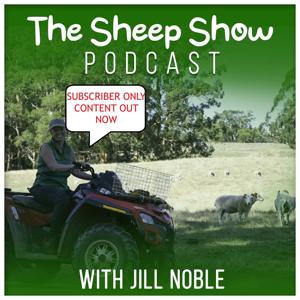


Get in touch to share sheeping stories or questions anytime!
Welcome to season 3! Here is the first installment of the lambing diaries for 2021! Happy lambing!
Support the show
Thank you for supporting our pod! Sign up via our sheep supporters tab !
https://www.buzzsprout.com/954910/supporters/new
Get in touch to share sheeping stories or questions anytime!
So what is rumen acidosis? What causes it? What are the signs and what can you you do about it. Enjoy this last episode of season 2!
What is acidosis?
Grain overload (acidosis, grain poisoning) occurs when cattle, sheep or goats eat large amounts of grain. The grain releases carbohydrate into the animal's rumen and this rapidly ferments rather than being digested normally. Bacteria in the rumen produce lactic acid, resulting in acidosis, slowing of the gut, dehydration and often death.
What causes it?
Wheat and barley are the most common causes of grain overload, but it occasionally occurs with oats and lupins. Crushing or cracking of grain by a hammermill increases the likelihood of grain overload, because these processes result in quicker release of carbohydrates.
Cases are often seen when:
How can I prevent acidosis?
Acidosis can be prevented by gradually introducing animals to grain or pellets. The amount of grain and the time taken to adapt sheep to grain depends on:
Some useful guidelines for preventing acidosis in stock are:
Support the show
Thank you for supporting our pod! Sign up via our sheep supporters tab !
https://www.buzzsprout.com/954910/supporters/new
Get in touch to share sheeping stories or questions anytime!
So what paddock do I lamb in? What do I need to consider when I'm lambing in a paddock? In this episode we explore the options and factors we need to consider.
Support the show
Thank you for supporting our pod! Sign up via our sheep supporters tab !
https://www.buzzsprout.com/954910/supporters/new
Get in touch to share sheeping stories or questions anytime!
How wonderful the concept of 4H is! Join me as we meet a group of 4H kids and their leaders from Ontario Canada. Their questions just blew me away - I loved meeting them all!
Learn more about 4H here:
https://4-h.org/
Happy Listening!
Support the show
Thank you for supporting our pod! Sign up via our sheep supporters tab !
https://www.buzzsprout.com/954910/supporters/new
Get in touch to share sheeping stories or questions anytime!
So much is said about sheep and minerals but what really matters most? In this episode Stefanie Hildmann from https://stefaniehildmann.com/ helps us to get a handle on the most important things and what we can do to help our sheep be as naturally healthy as possible.
In this episode we explore:
The difference between vitamins and minerals and macro and micro minerals?
What three mineral deficiencies do your customers frequently ask you about when it comes to sheep?
Pat Coleby’s work on sheep and minerals for sheep
What do each of the lose lick minerals help with?
How might you identify a mineral deficiency in sheep?
Tell me about the relationship between lime/calcium and dolomite?
What about salt and sheep? How much do they need and do they need it all year round?
What mineral do you need to be careful with when it comes to sheep?
Is there a difference in the quantity of minerals needed for wool sheep, or young sheep or pregnant and lactating sheep?
What is the best way to administer products to sheep? Drench, licks, on the pasture?
Can you give a sheep too much kelp – either min-kel or the seaweed meal? What about the cod liver oil?
Can your sheep help to spread these minerals across your farm through their urine etc?
We are approaching lambing or the final stages of gestation with our sheep? What do you recommend to help with ease of lambing? \\
What recipes (with minerals) are you aware of/do you use with sheep when an issue arises?
Check out Stefanie's work and contact her directly for an on-farm consult at:
https://stefaniehildmann.com/
Support the show
Thank you for supporting our pod! Sign up via our sheep supporters tab !
https://www.buzzsprout.com/954910/supporters/new
Get in touch to share sheeping stories or questions anytime!
Enjoy this chat with Gary and I as we explore who our mentors are, what to expect from a mentor, how to find them and how to get the best from a relationship with your mentor.
Some of the mentors mentioned include:
Gabe Brown
Greg Judy
Joel Salatin
Pay Colby
William Albecht
Gerhard Grasser
Jason O'Loghlin
Gavin Wall
Check them out online via YouTube or Facebook.
Show Gary some love at Hallston Valley Farm on Facebook, Instagram or via [email protected] and I will make sure he gets your email!
Support the show
Thank you for supporting our pod! Sign up via our sheep supporters tab !
https://www.buzzsprout.com/954910/supporters/new
Get in touch to share sheeping stories or questions anytime!
Lambing is the most important time of the shepherd's year. The sheep's, too. So, it's important to be prepared. Preparations include managing and feeding the sheep properly, getting the lambing facilities ready, and gathering necessary supplies.
Preparing the Ewes
Feeding and management during late gestation can determine success of the lambing season and sheep enterprise. While random problems occur, most problems can be prevented and result from improper feeding and management, especially during the last third of pregnancy.
What's Happening During Late Gestation?
Approximately 70 percent of foetal growth occurs during the last 4 to 6 weeks of pregnancy. Most of the ewe's mammary (udder) growth is occurring during this period. In addition, her rumen capacity is decreasing. The primary result is the need for increased feed, primarily a more nutrient-dense diet.
Extra nutrition is needed to support foetal growth, especially if there are multiple foetuses involved. Extra feed is needed to support mammary development and ensure a plentiful milk supply. The quantity and quality of colostrum is affected by nutrition. Extra nutrition will prevent the occurrence of pregnancy toxaemia (ketosis). It will ensure the birth of strong, healthy lambs that aren't too big and aren't too small. Birth weight is highly correlated to lamb survival. There is usually a quadratic relationship between birth weight and lamb survival.
Nutrition During Late Gestation
During late gestation, energy (TDN) is the nutrient most likely to be deficient. The level of nutrients required will depend upon the age and weight of the ewe and her expected level of production, i.e. singles, twins, or triplets.
To meet the increased energy needs during this period, it is usually necessary to feed concentrates (grain). In addition, if forage quality is low, it may be necessary to provide a supplemental source of protein and calcium.
Examples of late gestation feed rations
| Forage | Grain
| 3.5 to 4 lbs. of medium to good quality hay | 1.25 to 1.5 lbs. of concentrate
| 4 to 5 lbs. of medium quality hay or pasture equivalent | 0.5 to 1 lb. of concentrate
| Limit the roughage intake of ewe lambs and mature females carrying 3 or more foetuses | 1 lb. of grain per foetus
It is important not to under- or overfeed ewes during late gestation. There are consequences to both. Inadequate nutrition may result in pregnancy toxaemia, small and weak lambs, higher lamb mortality, reduced quality and quantity of colostrum, poor milk yield, and reduced wool production (in the offspring) via fewer secondary follicles.
Fat ewes are more prone to pregnancy toxaemia. They experience more dystocia (birthing difficulties). Overfeeding can result in oversized fetuses that the female cannot deliver on her own. It costs extra money to make ewes fat.
Feed Management
In addition to feeding the right ration, you must also practice good feed bunk management. All ewes should be able to eat at once. If there is inadequate feeder space, some ewes, especially the small, young, old, and timid ones, may not get enough to eat.
Pregnant ewe lambs should be fed separately from mature ewes. Their nutritional requirements are higher than mature ewes because in addition to being pregnant, they are still growing. They may also have trouble competing for feeder space.
Pregnant ewes should generally not be fed on the ground. This is one way that abortions are spread. An exception might be feeding on frozen ground.
Selenium and Vitamin E
Selenium and vitamin E are critical nutrients during late gestation. Low levels of selenium (Se) and/or vitamin
Support the show
Thank you for supporting our pod! Sign up via our sheep supporters tab !
https://www.buzzsprout.com/954910/supporters/new
Get in touch to share sheeping stories or questions anytime!
Join Simon Makeham from North South Border Leicester Stud, a veteran sheep showing expert in this celebratory 50th episode of The Sheep Show Podcast! Simon shares some of the secrets to showing sheep, how to prepare your sheep and some ring craft tips for us to consider.Support the show
Thank you for supporting our pod! Sign up via our sheep supporters tab !
https://www.buzzsprout.com/954910/supporters/new
Get in touch to share sheeping stories or questions anytime!
If you plan on showing your sheep then teaching your sheep to lead will be very helpful. Start off by purchasing a good quality Halter and lead rope, we use the following Halter which can be purchased online from The Farm Store. This halter is great as it can be adjusted both behind the poll and over the nose.
| www.thefarmstore.com.au Bainbridge halter for sheep and goats $26.95 Product Code: A2131
For a lead rope try and get one that will not stretch too much, The cotton ones tend to stretch a bit and make it hard to undo when you have the sheep tied up. We use a Marine/Yacht rope.
Once you get a halter on them, tie them to a solid post or rail, Making sure to use a quick release knot and walk away to let them figure out for themselves about pressure and release on their own. Most sheep will catch on quick. Make sure you stay within sight just in case they get into trouble getting hung up or flipped over. Find something else to do, close to them and every now and then walk around them to get them used to activity.
When left tied, they will pull for a while. After a bit, they get tired, they take a step forward and discover they get relief from the pressure.
Once they have been tied for 10 mins untie them and start by firmly putting pressure on the rope till they take a step forward, remembering to let them feel the release of pressure when they take a step. Keep repeating this
until you can get a few steps forward from them, Every time they take a step back make sure you ask them to take a step forward to where you asked them to stand. I find that standing slightly to the side and not directly looking at them helps as it gives them somewhere to go and they don’t feel as pressured with someone eyeballing their every move.
The next step is to be able to stand beside them as you would in a show ring, Step towards their shoulder holding the lead firm so they can’t run away, they will run around you in circles to start with so just keep taking one step towards the shoulder until they stand, When they stand release the pressure on the lead, step away and keep the lead slack so they can rest, if you notice your sheep starting to lick their lips or chew a bit this is a good sign and usually means they are thinking about what you are asking them.
After you can stand beside them at the shoulder you can start touching them as a judge would. Start by grabbing the halter where the nose and cheek strap meet and holding their head slightly tilted towards you so you have control and they can’t run away or over top of you. Then using firm touch place your free hand either on the top of the shoulder and pat or feel your way down their back, keep repeating this until they stand still as you do it.
When letting your sheep go always get them to stand still before taking the lead off so they don’t learn to run as soon as you reach for the clip.
Doing this daily or twice daily in short lessons over a few weeks should have them quiet and leading well. If you are hard feeding them try and leave the feeding till after the lesson as a reward.
Support the show
Thank you for supporting our pod! Sign up via our sheep supporters tab !
https://www.buzzsprout.com/954910/supporters/new
Get in touch to share sheeping stories or questions anytime!
For those new to showing or those who are thinking of showing in the new future I've put together my top dos and don'ts many of which I have learned the hard way!
Let's start with the positives!
Do
· come ready to learn, meet new friends collaborate and ask questions. Being part of a show is very collegiate. We all help where we can, sharing advice and resources that we have in our show box. I had a few scouring rams and Darren stepped in recently with a great remedy mentioned below.
· attend to the food and water for your sheep before the public arrive each morning
· clean each pen and replenish the straw at least once a day
· hold your sheep close to their face when you are standing with them so you have as much control as possible
· watch the judges at all times and turn to face the judge if they are walking behind you
· congratulation your fellow breeder including shaking their hand if appropriate
· thank the judge including shaking their hand if appropriate
· get your sheep used to the food you will be giving them at the show, grain will need weeks for the rumen to adjust
· have all your paperwork in order, you OB cert, your sheep health declaration and your NVD for inspection
· attend to your sheep's feet at least a week before the show. The better and shorter the hoof is the better your sheep will stand and look.
· do a full health check of your sheep before they leave your property, are their eyes clear, are their feet all clean and healthy, are their gums nice and pink, is your animal free from any signs of inflammation.
· scrub your sheep's horns - they come up a treat!
wash your halter before the show or have a set for showing and another for halter training
· get your sheep out to walk around if you notice they are not themselves, ideally do this before the public arrive.
· if you are someone else's sheep is being stubborn use 'gooseing' which is where you grab their tail area to encourage them to move forward
· be ready to help with general set up and take down like the association banners, displays and flags
· manage your bio-security when you return to your farm, drench your sheep and quarantine them for 5 days if you can after an event
· be ready to help other's unload and load their animals, this includes other breeders
· The general etiquette here is that those who have a longer distance to travel go first.
· get to know your breed captain and check with them if you have any questions or doubts.
To bring in your show kit:
· pins for your scan data cards
· a marker
· cordial or apple cider vinegar to mask the chlorine in the water
· halters and lead ropes, you will need one halter and one lead rope for each animal
· D scour horse paste or berg oil for tummy upsets in animals
· rags to wipe noses and clean your sheep
-a curry comb or similar to brush your animals. Kristy was raving about a pet mit kit recently! The options are endless here so find whatever works best for you.
· a small bucket for hot water
· pet shampoo for dirty bums or similar
· a scrubbing brush
· one feed containe
Support the show
Thank you for supporting our pod! Sign up via our sheep supporters tab !
https://www.buzzsprout.com/954910/supporters/new
From the publisher's feed
All things ovine, sheep farming and learning more about sheep and shepherding. Learn about breeding animals and being a sheep farmer. Brother and sister team across two hemispheres explore sheep…

56,445 Listeners
436 Listeners
520 Listeners

10,186 Listeners
117 Listeners
10 Listeners
62 Listeners
15,948 Listeners
21 Listeners
36 Listeners
14 Listeners

1,121 Listeners
7 Listeners