
Sign up to save your podcasts
Or



Get in touch to share sheeping stories or questions anytime!
Meet a sheep legend with a passion for legs! Gavin Vale is a veteran with decades of knowledge about sheep. In this episode we get up close and personal with the legs of sheep!
So what are the basics with sheep and their legs? Why are good, structurally correct legs so important in sheep?
With legs are we talking about all four or just the back legs and the front are shoulders?
Let’s explore some language – what is hocky, sickle hock, cow hock, straight legged, bow legged any others?
What is hip placement? How is this related to leg issues?
What about tail set? Is this leg related or relevant to leg structure?
How should a sheep stand when they are still?
How do you decide what sheep to cull – based on leg problems/flaws?
What advice would you have for someone who was buying sheep – what to look for re legs?
What do you look for when you watch a sheep walk?
What is the biggest mistake people make when looking at legs? What might people miss when looking at legs?
Support the show
Thank you for supporting our pod! Sign up via our sheep supporters tab !
https://www.buzzsprout.com/954910/supporters/new
Get in touch to share sheeping stories or questions anytime!
So what stops your lambs for growing, simply it is one of three things:
1- Genetics
2- Nutrition and feed
3- Environmental conditions including parasites, weather,stress
How are your lambs growing this season?
Support the show
Thank you for supporting our pod! Sign up via our sheep supporters tab !
https://www.buzzsprout.com/954910/supporters/new
Get in touch to share sheeping stories or questions anytime!
This is a challenging one and most of the research on this comes from Australia where they refer to this as a Dry Sheep Equivalent or DSE. This is how many sheep can have have per hectare on your property.
In measuring the energy requirements of livestock, we use a 50 kg wether as the standard. Other areas use a 45 kg wether. A 50 kg wether maintained at constant weight has a dry sheep equivalent (DSE) rating of 1.
There are lots of variables to consider - your soil and pasture, your fertilising program, do you have any other livestock or free loading wildlife and what is the weather doing, as well as what breed of sheep you are running - so many things to consider! Have a listen and let me know if you are any the wiser after this episode!!
https://www.dpi.nsw.gov.au/agriculture/budgets/livestock/sheep-gross-margins-october-2015/background/dse
Support the show
Thank you for supporting our pod! Sign up via our sheep supporters tab !
https://www.buzzsprout.com/954910/supporters/new
Get in touch to share sheeping stories or questions anytime!
The carnivore diet is not only an incredibly healing way of eating, but also a whole lifestyle that nourishes you, ensuring you maintain that optimal physical health and mental wellness. Eating a biologically appropriate diet adequately fuels both your body and your mind, enabling your body to restore its nutrient capacity. Your body then heals by natural design. Yes, that’s right, it HEALS itself! It just needs YOU to support it.
What do you eat?
A meat-only diet is pretty self-explanatory — you’re going to eat only meat. Nonetheless, like all diets, there are a few gray areas.
In this episode we explore Lynsey's journey to becoming carnivore, what this might mean for the red sheep industry in Australia and what the health benefits a carnivore way of eating and way of life might be.
Contact Lynsey @CarniMumma and via:
https://www.carnivorelifestyleaustralia.com.au/beginners/your-why/health-and-wellness Check out the carnivore friendly products that Lynsey has sourced at https://www.carnivorelifestyleaustralia.com.au/.
Support the show
Thank you for supporting our pod! Sign up via our sheep supporters tab !
https://www.buzzsprout.com/954910/supporters/new
Get in touch to share sheeping stories or questions anytime!
Wet weather this spring and summer has certainly created ideal conditions for foot problems in sheep. Nearly continuous exposure to moisture softens the hoof’s horny tissues and makes it more vulnerable to irritation, injury, and infection. Those flocks that are affected by classic virulent foot rot (sometimes called contagious foot rot) have likely seen a surge in the number and severity of cases if they have not been attempting to control or eradicate this potentially devastating disease.
Those flock owners who have experienced milder forms of lameness in their flocks may assume that they don’t have foot rot but have a milder condition called “foot scald” or “scald.” Actually there are really two recognized conditions that are sometimes referred to as “scald.” At first the difference may seem academic, but for some producers, it may be more than that.
Virulent, or contagious, foot rot is caused by a synergistic infection with two organisms, Dichelobacter nodosus (formerly Bacteroides nodosus) and Fusobacterium necrophorum. This last organism is in virtually all sheep environments and sets the stage for infection with the organism necessary for foot rot to occur — Dichelobacter nodosus. This organism produces a powerful proteolytic enzyme that dissolves hoof horn and leads to the undermining of the sole, the severe lameness, the foul smell, and the abnormal hoof growth seen with classic virulent foot rot. About 20 different strains of D. nodosus are believed to occur in the US.
True foot rot does not occur in the absence of D. nodosus. However, a less persistent and generally milder condition in which only inflammation between the toes and a slight under-running of the hoof horn occurs in some flocks. Both D. nodosus and F. necrophorum can be isolated from these cases, but the strains of D. nodosus isolated seem have a reduced virulence or ability to produce disease. This condition is technically referred to as benign foot rot but has also been called foot “scald.” It is believed that the strains of D. nodosus that are involved are weak enzyme producers and are less able to produce the severe damage seen with virulent foot rot.
Another infectious and inflammatory condition which involves only the skin between the claws without significant undermining of the horny tissue has been termed ovine interdigital dermatitis (OID), and it has also been called “scald.” The bacteria associated with this condition are F. necrophorum and Actinomyces pyogenes; both of which tend to be common in typical sheep environments. D. nodosus is not involved. The disease usually only occurs when the weather and other conditions on the farm damage the skin and allow these bacteria to create skin infections. Because the term “scald” has been applied to both OID and benign foot rot, the use of that term can be misleading. Both conditions usually cause only mild or temporary lameness that may be obvious only in wet periods of the year. From a practical standpoint, the two conditions are difficult to distinguish from one another, and laboratory capability to isolate and serotype D. nodusus is generally not readily available. Foot baths and soaks with 10% zinc sulfate usually result in improved healing of either condition. Foot “scald” often disappears when the environmental conditions become dry.
So if the two conditions called “scald” are not easy to differentiate and they both tend to clear up with foot bathing or dry weather, why even bother to make the distinction? There are two reasons that may be important to some producers. The first is that all the strains of D. nodosus, whether they produce virulent or benign foot rot, are maintained in the flock by sheep that harbor the infection in cracks and crevices on their feet — carrier animals. That means that most likely, unless an attempt at eradication is made, benign foot rot will be back again as soon as the weather conditions favorable for foot softening&
Support the show
Thank you for supporting our pod! Sign up via our sheep supporters tab !
https://www.buzzsprout.com/954910/supporters/new
Get in touch to share sheeping stories or questions anytime!
Here are some resources for this episode:
https://www.wormx.info/tapeworms
What about tapeworms in sheep? (wormboss.com.au)
Support the show
Thank you for supporting our pod! Sign up via our sheep supporters tab !
https://www.buzzsprout.com/954910/supporters/new
Get in touch to share sheeping stories or questions anytime!
Who knew we could influence our lamb taste so much!
Research for this podcast includes:
Foods | Free Full-Text | Odd- and Branched-Chain Fatty Acids in Lamb Meat as Potential Indicators of Fattening Diet Characteristics (mdpi.com)
What does lamb taste like? - Chef's Pencil (chefspencil.com)
This episode was inspired by this great article written by Bill Williams. His original article is below:
Six factors that influence the flavour of lamb before the chef starts work (which you will never know if you buy your lamb from a supermarket!)
1. The breed of the sheep. What are you actually eating? Merino, Corriedale, Border Leicester, Suffolk, Dorset, Ryeland, Southdown, Romney? I guess I must mention Dorper and Damara. LIke different grape varieties, sheep varieties produce different tasting and textured meat. I produce Wiltshire because that's the breed that yields the dining experience I personally like best. They may not be the fastest to reach a marketable weight, but the wait's worth it! Another example of slow food.
2. The age of the sheep. When was the last time you saw "old ewe" or even mutton labelled at the supermarket? Not that mutton can't be delicious if prepared correctly, but seriously, if you go to a saleyard more than half the sheep sold usually aren't lambs or even hoggets. Where do they go? My theory is that most of them turn into "lamb" when they leave the abattoir.
3. Diet. Are they feedlot finished? Or perhaps they've been raised on improved pasture made up of just one or 2 grass varieties in high rainfall or irrigated grazing areas where the native grasses have been wiped out by broad acre round up applications? In my experience lambs raised on a wide variety of native grasses and shrubs like saltbush taste much sweeter with a less fatty taste. Of course what they have been eating also effects how fat they are, too.
4. Water. Water quality and availability are extremely important to sheep health. Consider the difference between sheep that have to walk a long way to a muddy dam compared to sheep grazed in close proximity to a flowing stream of fresh clean water. Good water access also enables sheep to browse and digest roughage more easily.
5. Animal husbandry. Have the sheep been dogged? Consider the journey from the paddock to the abattoir.....especially for sheep sold through saleyards. Many supermarket lambs end up affected by adrenaline and fear. I don't like to road transport sheep in summer....it's just too hot most days.
6.How long have the carcasses been dry aged before being cut up into kitchen ready cuts? If the carcass is given at least a few days to "set", the muscles relax and the meat matures. Dry aged lamb is much more tender and flavoursome than freshly butchered lamb.
What do you think? We would greatly appreciate any comments about which factors you consider most important in determining lamb quality.
Support the show
Thank you for supporting our pod! Sign up via our sheep supporters tab !
https://www.buzzsprout.com/954910/supporters/new
Get in touch to share sheeping stories or questions anytime!
Setting your breed objectives – Simon Thomas
To set your breeding objectives ask yourself the following question and write down your answers:
Question 1: Why breed sheep?
Apart from the usual answers like “I enjoy the challenge” or “sheep chose me” you need some underpinning factors.
My career as a former stock agent and being an experienced breeder has taught me that there are two key driving factors behind breeding livestock 'profit' and 'tradition'. The varying degrees of adopting these factors will influence and drive your program. This could be breeding heritage sheep to maintain a breed type and a stable population or breeding sheep to met market demands for example.
Question 2: Where do you sit on this scale? Is the balance between the factors of profit and tradition right in your breeding operation currently?
Question 3: What is your perfect description of the sheep you want to breed?
My earliest memory of being at a sheep show was being in the viewing tiers at Royal Melbourne Show in the early 1980s watching my father show his Border Leicesters. The wonderful Mrs Peggy Sparrow often sat by my side to watch me. In between the completion of classes Mrs Sparrow would always strike up a conversation with us kids. These conversations normally would revolve around the results of the show floor, but every now and then Mrs Sparrow would give you a 'gem' piece of advice. This question comes from Mrs Sparrow, she went on to say “once you have your perfect description, write it down and then set a plan as to how you are going to achieve it and do it multiple times”.
Why is this question so important?
To write your own sheep description is a very personal thing, no two descriptions will be the same. Each breed has their own standard. These standards are what every breed association set out as the core traits that define their breed. To write down your description take this breed standard further so yours not only meets this standard but it also meets your personal view of the perfect sheep for your operation or market.
Why you are breeding sheep in the first place will impact on the level of depth you delve into when writing your description.
When writing a sheep description plan I use an analogy of choosing a vehicle. When buying a vehicle, that vehicle comes with standards features (these are your breeds core traits). You then have the ability to individualise the standard features to personalise that vehicle to you. For example maybe you would like leather interior, metallic paint (these are your personalised sheep traits). For example, the Southdown breed description states that the feet should be black, my breed description for this standards are feet must be black. Then there are the times where a feature of the breed may not be explicitly stated in a breed description but this could be of significant importance to you, for example nose colour, teat placement, temperament and performance traits like growth rate or fertility.
Question 4: Do you assess and modify your description as required?
It is never to early or late to record a sheep description. Whether you have been breeding sheep for generations or you are still deciding what your first breed of sheep may be, you should regularly assess and modify your description as required. Assess your sheep against your own statement. You may need to modify it and you may need to modify your breeding program to get there. Regularly read your associations breed standards, this can help you to clarify your standards. Associations standards do change so review them regularly.
Today, we have the ability to obtain data and statistics that&
Support the show
Thank you for supporting our pod! Sign up via our sheep supporters tab !
https://www.buzzsprout.com/954910/supporters/new
Get in touch to share sheeping stories or questions anytime!
Have you heard of mob breeding? If not this will blow your mind! Join Bjorn Johansson from Norway as he shares the concept, strategy and benefits behind mob breeding in sheep!!
In this episode we explore:
What is mob breeding?
Why does it work? What does it achieve?
What can do wrong when you mob breed?
What are the challenges with mob breeding?
How do you practically select your rams to mate? What do you do to set up breeding?
How come more people don’t breed using mob breeding?
How come we find it so confronting?
Are the results different if you mob breed than if you breed in a more conventional way?
What about things like predators? Should we intervene with nature?
What other interventions do you use in mob breeding – any vaccines or drenches?
What about animal welfare issues if we are mob breeding?
Can you get a balance between mob breeding and breeding seed stock in a stud situation? Is there a hybrid method or approach to mob breeding?
How do you know if mob breeding is working – are there signals or indicators?
What do you monitor and what do you measure?
How long does it take for mob breeding to pay off? Especially as your cull rate might be very high initially and the challenge with getting rid of these animals and not have this negatively impacting your bottom line.
What are the arguments that people give you against mob breeding?
Where can someone start with mob breeding?
Get in touch with Bjorn or learn more via his Facebook page - Mob breeding for Holistic breeding of livestock
Support the show
Thank you for supporting our pod! Sign up via our sheep supporters tab !
https://www.buzzsprout.com/954910/supporters/new
Get in touch to share sheeping stories or questions anytime!
Confused about your twist, barrel or tail set?
In this episode we explore the basics of what a structurally sound sheep should look like and why these thing are important in a sheep with sheep breeder and enthusiast Ash Trebilco.
Support the show
Thank you for supporting our pod! Sign up via our sheep supporters tab !
https://www.buzzsprout.com/954910/supporters/new
From the publisher's feed
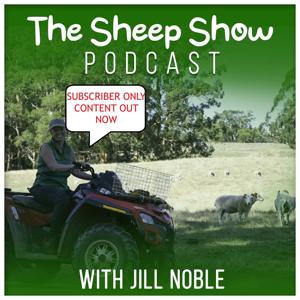
All things ovine, sheep farming and learning more about sheep and shepherding. Learn about breeding animals and being a sheep farmer. Brother and sister team across two hemispheres explore sheep…

56,445 Listeners
436 Listeners
520 Listeners

10,186 Listeners
117 Listeners
10 Listeners
62 Listeners
15,948 Listeners
21 Listeners
36 Listeners
14 Listeners

1,121 Listeners
7 Listeners