
Sign up to save your podcasts
Or

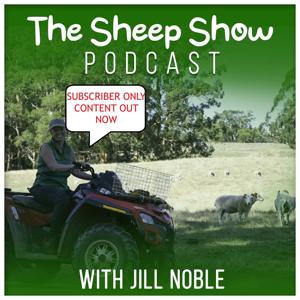


Get in touch to share sheeping stories or questions anytime!
Vaccination
Why vaccinate?
Vaccination is the key to preventing some of the most serious sheep diseases. Vaccination stimulates the body’s defence system to build immunity to a particular disease, by exposing sheep to either the live organism presented in a safe form (e.g. Scabby Mouth vaccine) or to a killed organism (e.g. Blackleg vaccine) or to an inactivated organism (e.g. Johne’s disease vaccine) or to part of an organism (e.g. footrot vaccine, most Clostridia vaccines).
Indeed, without effective vaccines, the control, prevention and management of many diseases in the large vulnerable populations that make up sheep flocks would be virtually impossible. So what vaccines are available, how are they used and what are the diseases that they protect sheep against?
The Clostridia Diseases
The most widely used vaccine in Australia is a vaccine called ‘5 in 1’. It is used to control a group of potentially severe diseases caused by several different species of a bacterium called Clostridium. The important thing to remember with the Clostridia diseases is that they are not something that is caught. The organisms are either in the soil or in the sheep’s bowel. Sheep are therefore exposed to them or already have them in their system virtually all the time. It is only when some trigger compromises the ability of the sheep to resist disease that the sheep become sick. When the sheep become compromised, these bacteria produce potent toxins that cause severe disease and often kill the sheep within hours. There are six diseases that are caused by Clostridium bacteria for which vaccines are available. These are:-
1/Pulpy kidney
Pulpy kidney is caused by a toxin produced by the bacteria Clostridium perfringens type D. The bacteria and the toxins they produce are present in the intestines of normal healthy sheep. The bacteria multiply slowly and are continuously swept out with the droppings so that the number of bacteria and the level of toxins never really build up. However, if there is highly nutritious food in the bowel as occurs if sheep are placed onto lush pastures or fed grain in higher levels than they are used to and the passage along the bowel slows, these bacteria are able to multiply quickly and produce lethal quantities of toxin. The toxin causes extensive damage to blood vessels throughout the body, including those in the kidneys (which makes them “pulpy” as they decompose after death) and also those in the brain. It is damage to the blood vessels in the brain that kills the sheep and is also the reason why they tend to die fairly quickly – often in hours, and also why there is no effective treatment. Essentially, these sheep have multiple “strokes”. The history of feeding lush food and symptoms displayed by the sheep arouse suspicions of this problem and it is confirmed by autopsy examination.
2/Tetanus
Tetanus is caused by a toxin produced by the bacterium Clostridium tetani. This bacterium survives in soil as spores wherever livestock are kept. These spores contaminate breaks in the skin such as those that occur with tail docking, grass seed penetration or an injury. Once in the body, if in healthy tissue the spores will sit there harmlessly, sometimes for months. If, however, the tissue is damaged, bruised or dead, the spores germinate, multiply and produce a toxin. The toxin then spreads to the nearest nerves and then to the spine and brain, causing a range of nervous symptoms including muscle spasms and convulsions, which get worse when the animal is disturbed. About 80 % of affected sheep die. Diagnosis is made by the typical symptoms displayed by an affected sheep. If the animal is already dead, an autopsy is done to rule out other diseases with similar symptoms.
3/Black Disease
This disease is caused by Clostridium novy
Support the show
Thank you for supporting our pod! Sign up via our sheep supporters tab !
https://www.buzzsprout.com/954910/supporters/new
Get in touch to share sheeping stories or questions anytime!
What is mastitis?
Mastitis, an inflammation of the mammary gland (udder), is one of the most common reasons for culling ewes in sheep flocks. Mastitis is usually due to a bacterial infection but can also have non-infectious causes such as injury. It can occur any time in the production cycle of the ewe but is most common two to four weeks post-lambing. It can prove costly for breeders. In general, it usually occurs in animals raising more than one lamb or with an excessively high rate of milk production.
Some cases occur when sheep are being grazed at too high a stocking rate, though the vast majority of all mastitis cases in sheep occur within a few weeks of lambing or just as weaning is due to start The infection occurs when bacteria make their way into the udder of the ewe. It is most common in breeds that produce multiple offspring per lambing.
Forms of the disease
There are two main types of mastitis in sheep. Mastitis can be classified as clinical and subclinical.
Subclinical mastitis is a difficult one to identify and ewes tend to only show low growth rates when affected. Poor weather and a lack of adequate nutrition can cause subclinical mastitis to develop into clinical mastitis. Subclinical mastitis can also cause the death of twin lambs.
Clinical mastitis refers to an infection that becomes obvious clinically. Mastitis can rapidly progress, eventually turning parts of the udder black, if the infection becomes severe enough to compromise the blood supply to the udder. Ewes usually appear lame and weak, with lambs also lethargic and depressed. Lambs can die because of a lack of milk when ewes have clinical mastitis and they can die from the infection gained from digesting the infected milk. Euthanasia may be considered in severely affected animals but best to consult your vet for advice.
Picture shows clinical mastitis.
When treating mastitis, early detection is key and can prevent further spreading of the infection. Your Vet may provide you with an antibiotic and painkiller for your animal. or may make other treatment suggestions. Some cases of mastitis are due to yeast or fungi and giving these animals antibiotics makes them worse. It is important to get a diagnosis and treat appropriately. It is a good idea to mark all ewes once treatment occurs, so they can be identified for possible culling at weaning.
What causes it?
The primary cause of mastitis in cattle, goats and sheep are well-recognized groups of microorganisms, Streptococcus sp., Staphylococcus sp., Pasteurella sp. and coliforms, Escherichia coli, Enterobacter sp., and Klebsiella sp. Yeast and fungus have also been found frequently infecting the udder, but usually go unnoticed because they produce a mild or subclinical mastitis.
Picture shows severe mastitis resulted in an erupted udder
How to treat it?
Disinfect the teat end with chlorhexidine or iodine-based disinfectants and infuse a tube of mastitis antibiotic through the teat canal if the cause of the mastitis is a bacterial infection. If the problem is a bacterial infection the ewe can be give an injection of an antibiotic and nonsteroidal anti-inflammatory drug as directed by your vet.
The udders of ewes should be examined physically for hard lumps after weaning and before breeding. Ewes with ‘lumpy bags’ may be considered for culling. The milk supply of these ewes will be decreased, and the amount of decrease will depend upon the amount of tissue damaged.
How to prevent it?
A strong immune system is the key to preventing mastitis and similar infections. Injectable trace mineral supplement products such as Multimin can help during times of stress such as lambing and weaning.
A good management
Support the show
Thank you for supporting our pod! Sign up via our sheep supporters tab !
https://www.buzzsprout.com/954910/supporters/new
Get in touch to share sheeping stories or questions anytime!
So what is fly strike, what causes it and how can it be prevented and what do we do to treat it? Join Vet Dr Tim Gole from For Flock Sake (www.forflocksake.,com.au), a sheep consulting business as we explore the parasite paradise that fly strike is.
Contact Tim:
@for flock sake
www.forflocksake.com.au
Transcript:
Parasite Paradise for flies
It's perfect. Welcome, everyone. In this episode of the sheep show podcast, I bring you someone very special. And you know, very funny too, I think because this is Tim and his businesses called For Flock Sake. I mean, how funny can that be? Hi, Tim, welcome to the Sheep show podcast.. So, Tim, you're a vet, you're a sheep vet that you really specialize in our topic as well. And you're running a sheep consulting services business, you just told me just turn once Happy Birthday to For Flock Sake, thank you. Just give them give the listeners a little bit of an idea about you your background and how you come to set up a business like this.
00:48
A great deal. So my background, I've been vet for about 14 years, worked in so Central West New South Wales, and then did did the stint in the UK, which I really, really loved came back and I just love being a vet. So bought a practice with a friend. And then it just kind of went a bit crazy, we bought one and then we built another one up the road. And then we got involved in the northern cattle industry. And we did a bit of fly in fly out bet stuff out to the you know, the real big kind of wild west stuff. And it's really interesting. So we had this really awesome team and I was looking around going, I'm in a massive shape area, but I actually wasn't adding a lot of value to my shaped clients. And that's when we started providing a pregnancy Testing Service. And then it was just the start, there's so many things you can do with shape that maybe you can't do with catalog, there's not, you know, 100 pregnant cows, you can't get any more than 100 calves, but cheaper, so much different you can, there's so many more little levers you can pull to get, you know, get better, we'll get better lamps. So that's how I started and then so I got an opportunity to sell my business. And some shape work. And I thought this is this is my time. And so I thought it was funny calling up for flux. And that was part of really because we'd come out of a three horrific three year drought. And it kind of felt it was a bit locked for flux, like, you know, you know, winds, the winds are gonna rain, but also, I just thought, I suppose, you know, trying to be a little bit funny, you know, you get a positive reaction and get it. And when we got positive mindsets, we were much more open to different ideas and different ways of doing things. So that's that lead in with flux sake. It's been a great, great journey one year. So it's been great.
Jill Noble 02:38
I really love that. And I think I think you you're aware of the numbnuts product as well, I can guess, are you using it? And again, it's sort of, you know, being kind of on that sort of funny journalistic, I think it's something we need to have in our industry lighten things up a little bit, you know, and be a bit more real and a bit more vulnerable. And I think that's really, really good. I love it. I really love it. Great job. Really? And um, I mean, when you were studying 14 years ago, and you're studying veterinary medicine, did you? Did you sort of think, did you start to do like sheep, then did you think that you would specialize the sheep? Because Because it's quite rare that we have a vet specializing and specializing in shape. Yeah,
03:24
I've always like shape joy. I went to body school and had spent a lot of my holidays with me to add sheep farms and in shearing sheds always kind of like the shape thing, but I suppose and this is suppose the thing for the Australian sheep industry,
Support the show
Thank you for supporting our pod! Sign up via our sheep supporters tab !
https://www.buzzsprout.com/954910/supporters/new
Get in touch to share sheeping stories or questions anytime!
What to know why we tag, when to tag and when not to tag sheep - tune in to this episode to get all the info you need on tagging sheep!
Support the show
Thank you for supporting our pod! Sign up via our sheep supporters tab !
https://www.buzzsprout.com/954910/supporters/new
Get in touch to share sheeping stories or questions anytime!
Do you breed sheep that shed their wool or hair? Want to get better shedability in your flock? In this episode we shed light on shedding sheep and help you make better choices for your easy care flock of shedders!
Support the show
Thank you for supporting our pod! Sign up via our sheep supporters tab !
https://www.buzzsprout.com/954910/supporters/new
Get in touch to share sheeping stories or questions anytime!
They've done the hard work up until now so what can we shepherds to to help keep our ewes in optimum health post-lambing.
Support the show
Thank you for supporting our pod! Sign up via our sheep supporters tab !
https://www.buzzsprout.com/954910/supporters/new
Get in touch to share sheeping stories or questions anytime!
Scabby mouth or Orf in humans is a huge issue especially with lambs so what is it, where does it come from and what can we actually do about it?
Support the show
Thank you for supporting our pod! Sign up via our sheep supporters tab !
https://www.buzzsprout.com/954910/supporters/new
Get in touch to share sheeping stories or questions anytime!
Bloat in bottle fed lambs is one of the most horrible things I have had to deal with in my shepherding experience. You have a really close relationship with animals that you bottle raise and losing them suddenly is heart breaking for us but imagine the pain the poor lamb must be in with bloat. So in this episode I am so grateful to Sez the Vet for helping us learn about preventing bloat in bottle fed lambs.
A few clarifications to the content in this episode:
- Sarcina Ventriculi is not covered in the clostridial vaccines
- the Lactobacillus Acidophilus bacteria doesn't produce gas itself, it's another species that is often in the Acidophilus yogurt
We explore:
· What causes this?
· How come it is generally bottle fed animals that get this?
· What can we do to prevent it?
· What can we do if it happens?
· Are there any tell tale signs to see if you bottle fed lamb is likely to get bloat?
· What about the bicarb solution? Does this work?
Contact Sez at:
https://www.facebook.com/SeztheVet/
Subscribe and give a thumbs up to Sez on Youtube:
https://www.youtube.com/c/SeztheVet
Support the show
Thank you for supporting our pod! Sign up via our sheep supporters tab !
https://www.buzzsprout.com/954910/supporters/new
Get in touch to share sheeping stories or questions anytime!
Another action packed lambing diaries episode with all the challenges of lambing laid bare!
Support the show
Thank you for supporting our pod! Sign up via our sheep supporters tab !
https://www.buzzsprout.com/954910/supporters/new
Get in touch to share sheeping stories or questions anytime!
Another lambing diaries installment - a week is a long time in lambing!!
Support the show
Thank you for supporting our pod! Sign up via our sheep supporters tab !
https://www.buzzsprout.com/954910/supporters/new
From the publisher's feed
All things ovine, sheep farming and learning more about sheep and shepherding. Learn about breeding animals and being a sheep farmer. Brother and sister team across two hemispheres explore sheep…

56,424 Listeners
436 Listeners
519 Listeners

10,185 Listeners
117 Listeners
9 Listeners

62 Listeners

15,953 Listeners
21 Listeners
36 Listeners
14 Listeners

1,123 Listeners
7 Listeners