
Sign up to save your podcasts
Or



Based on Podcast App listening data
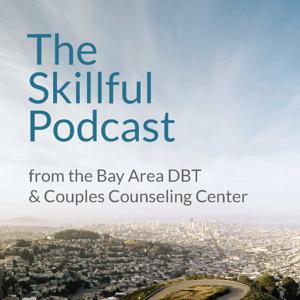
Do you find it hard to take care of yourself? The DBT skill of self-soothing is designed to help you tolerate distress, but it's also helpful for regular self-care. This episode explores what exactly self-soothing is, when and how to use it, and common barriers to implementing it.
Many of us are going through a time of tremendous uncertainty and multiple losses in the face of a global pandemic. This can wear us down and bring up past traumas, both big and small. Self-soothing is one way to help ease the suffering of this moment.
This episode explores how to use the senses to self-soothe: sight, sound, smell, taste, and touch. For some people, self-soothing brings up feelings of not deserving. If you weren't treated with kindness and care as a child, it might be particularly hard to treat yourself with kindness and care as an adult.
To learn more about this podcast and get full show notes, go to www.bayareadbtcc.com
Ask us a QuestionWe'd love to hear from you! Where are you getting stuck with your skills application? Ask us a question for the chance to have it answered on the podcast. Submit your question here.
Please note that questions, and this podcast in general, are not a substitute for individual mental health treatment.
Today, Marielle and Ed unpack what happens in the body and mind when an emotion occurs. There's actually a lot going on! If you are sensitive to or are confused by your emotions, it can be helpful to have an understanding of the different components that make up an emotional experience.
DBT's Model for Describing Emotions breaks down emotions into ten parts: the prompting event, awareness, interpretation, vulnerability factors, biological changes, nervous system changes, expressions, actions, emotion names, and after-effects. This episode explores all these parts as well as skills to intervene at different points during the emotional experience.
To learn more about this podcast and get full show notes, go to www.bayareadbtcc.com
Ask us a QuestionWe'd love to hear from you! Where are you getting stuck with your skills application? Ask us a question for the chance to have it answered on the podcast. Submit your question here.
Please note that questions, and this podcast in general, are not a substitute for individual mental health treatment.
Today Marielle and Ed offer ways to use DBT skills to support emotional equilibrium during a time where systemic anti-black racism is being confronted and discussed in new and necessary ways.
This episode is not about how to be anti-racist. That's beyond what we can provide. The resources below serve as a starting point to learn more. Rather, this episode focuses on skills to help you find your emotional footing during a time of national tumult around race. This work deeply aligns with our values as therapists. Racism is a mental health issue and its impact may be easy to dismiss if we aren't a member of a targeted group.
We recognize that our lens as white therapists limits us and that there is a lot we may get wrong. In the spirit of DBT, we want to approach what's hard, rather than avoid.
To learn more about this podcast and get full show notes, go to www.bayareadbtcc.com
Ask us a QuestionWe'd love to hear from you! Where are you getting stuck with your skills application? Ask us a question for the chance to have it answered on the podcast. Submit your question here.
Please note that questions, and this podcast in general, are not a substitute for individual mental health treatment.
Today Marielle and Ed answer listener questions.
The first question is from a listener in Sweden about how to cope with anger at others for not taking the COVID-19 pandemic seriously.
Question two is about how to use DEAR MAN to say no.
The final question in this episode is about how to figure out when it's time to leave a situation.
To learn more about this podcast and get full show notes, go to www.bayareadbtcc.com
Ask us a QuestionWe'd love to hear from you! Where are you getting stuck with your skills application? Ask us a question for the chance to have it answered on the podcast. Submit your question here.
Please note that questions, and this podcast in general, are not a substitute for individual mental health treatment.
Today's show revisits Radical Acceptance in the face of a global pandemic. Marielle and Ed discuss how they are using this skill (or not using it!) during this time.
Ed is using Radical Acceptance a lot lately, as he feels like it is often the only thing to do in this situation. Marielle shares her resistance to using Radical Acceptance during this time, and the ways she works with fear of strong emotions if she radically accepts what's happening in the world.
Unlike other more action-oriented skills in DBT, Radical Acceptance is more of a frame of mind, or a turning toward (rather than away from) what's actually happening in any given moment.
When we can fully and deeply accept reality, painful emotions may arise. But, if we allow them to move through, often there is a sense of peace on the other side. Plus, it's much harder to take skillful action toward change if we are denying the facts of what is happening.
So much has changed in a few months and the future is uncertain. Loss of all kinds is happening around us and to us. Listen in to learn how the skill of Radical Acceptance can help.
To learn more about this podcast and get full show notes, go to www.bayareadbtcc.com
Ask us a QuestionWe'd love to hear from you! Where are you getting stuck with your skills application? Ask us a question for the chance to have it answered on the podcast. Submit your question here.
Please note that questions, and this podcast in general, are not a substitute for individual mental health treatment.
Today, Marielle and Ed discuss skills to help you communicate with other people during a global pandemic where we are all facing new interpersonal challenges.
We are connecting - or not connecting - with each other in very different ways now which can strain relationships.
People living alone may feel isolated.
People living with others may long for time alone. The demands of partners, children, and/or other family members may feel like too much.
Additionally, continual low-grade fear and uncertainty make it hard to be in Wise Mind and to know what you want and need.
The DBT skills of DEAR MAN and GIVE can help. These skills provide structure for asking for what you need, saying no, or having your opinion taken seriously. Marielle and Ed revisit these skills and talk about relationships as a whole during this pandemic.
To learn more about this podcast and get full show notes, go to www.bayareadbtcc.com
Ask us a QuestionWe'd love to hear from you! Where are you getting stuck with your skills application? Ask us a question for the chance to have it answered on the podcast. Submit your question here.
Please note that questions, and this podcast in general, are not a substitute for individual mental health treatment.
Today, Marielle and Ed continue to discuss DBT skills to cope during a pandemic. We are all going through a collective trauma and need extra support. The DBT skill called Check The Facts is explored. We also explore the difficulty in using this skill during a time when things are rapidly changing and uncertain. Using Check the Facts coupled with Mindfulness may be helpful to remind yourself that that you are ok right in this moment.
The importance of dialectics is also discussed to avoid getting stuck in either/or thinking and rigidity. Flexibility helps us respond to an ongoing highly stressful situation, rather than react.
Gentleness with ourselves and others is very important right now. We all need an extra dose of patience and self-compassion. Some people are pressuring themselves to do a lot during this time, not quite realizing what an emotionally exhausting time this is. Continual anxiety is draining. You are not going to be able to do it all and that's ok. Watch out for berating yourself for not doing more.
Marielle and Ed also review PLEASE skills that help you regulate your emotions and decrease your vulnerability to Emotion Mind by focusing on caring for your physical well-being.
To learn more about this podcast and get full show notes, go to www.bayareadbtcc.com
Ask us a QuestionWe'd love to hear from you! Where are you getting stuck with your skills application? Ask us a question for the chance to have it answered on the podcast. Submit your question here.
Please note that questions, and this podcast in general, are not a substitute for individual mental health treatment.
In today's episode, Marielle and Ed explore skills to help you cope with your emotions as we collectively face a pandemic. Many of you may be feeling intense distress on a regular basis during these uncertain times. DBT offers lots of skills to help manage strong, painful emotions like fear and panic.
Different ways of thinking about your distress levels are discussed, including the Subjective Units of Distress Scale and the Window of Tolerance. Stopping regularly throughout your day to check in with your distress level and naming your emotion can be a helpful first step in helping you feel more centered.
The Distress Tolerance skill of TIPP is discussed, as is Contributing and Self-Soothing. TIPP, in particular, is helpful in calming an over-activated nervous system.
To learn more about this podcast and get full show notes, go to www.bayareadbtcc.com
Ask us a QuestionWe'd love to hear from you! Where are you getting stuck with your skills application? Ask us a question for the chance to have it answered on the podcast. Submit your question here.
Please note that questions, and this podcast in general, are not a substitute for individual mental health treatment.
Today's show covers the DBT skill called Pros and Cons. While most of us have already done informal pro and con lists in our heads when facing a tough decision, the DBT take on Pros and Cons is a little different.
Pros and Cons is great to use in anticipation of problem behaviors like avoiding, lashing out, shutting down, self-harm, or any kind of addictive behavior. Just make sure that you're in your Wise Mind when you write out your Pros and Cons list, rather than Emotion Mind.
We review states of mind during this episode as well, in case you're unfamiliar with the concepts of Wise Mind, Emotion Mind, and Reasonable Mind. We also review the SUDs scale, or Subjective Units of Distress, to help you become familiar with what different distress levels feel like for you.
Pros and Cons is part of the Distress Tolerance module and all the skills in Distress Tolerance are designed to help you get through a crisis or stressful situation without making things worse.
Towards the end of the podcast, Marielle guides Ed through a Pros and Cons list for procrastination. You might be surprised at what is discovered!
To learn more about this podcast and get full show notes, go to www.bayareadbtcc.com
Ask us a QuestionWe'd love to hear from you! Where are you getting stuck with your skills application? Ask us a question for the chance to have it answered on the podcast. Submit your question here.
Please note that questions, and this podcast in general, are not a substitute for individual mental health treatment.
In today's episode, Marielle and Ed discuss the emotion regulation skills of Build Mastery and Cope Ahead. These are future-oriented skills that involve some planning to carry out.
Build Mastery is a way to strengthen your sense of competence by doing small, regular things that are challenging. Over time, this skill will help you stretch yourself and believe in your capability to accomplish hard things which in turn, will increase your emotional resiliency. This skill also helps you avoid a common mistake when trying to learn a new skill or do something hard: setting your sights too high and then giving up in defeat. Instead, Build Mastery helps you make small, incremental changes that are stretch you out of your comfort zone but aren't impossible. You'll find that the skill of Build Mastery will help you increase your sense of self-worth, self-efficacy, and pride in what you can achieve.
Cope Ahead is a skill that walks you through a process of planning for stressful situations ahead of time. This is a good skill to use when you anticipate that you will be in a situation that will bring up strong painful emotions and/or you might feel like engaging in a behavior you are trying to stop. Part of why this skill can be so helpful is that it asks you to make a coping plan ahead of time, step by step, and then visualize coping well with the situation.
To learn more about this podcast and get full show notes, go to www.bayareadbtcc.com
Ask us a Question
We'd love to hear from you! Where are you getting stuck with your skills application? Ask us a question for the chance to have it answered on the podcast. Submit your question here.
Please note that questions, and this podcast in general, are not a substitute for individual mental health treatment.
From the publisher's feed

91,022 Listeners

43,852 Listeners

16,094 Listeners
10,502 Listeners

1,797 Listeners

2,516 Listeners

14,897 Listeners

1,342 Listeners

1,656 Listeners
139 Listeners
16,840 Listeners

15,882 Listeners

1,377 Listeners

681 Listeners
380 Listeners