
Sign up to save your podcasts
Or



Based on Podcast App listening data
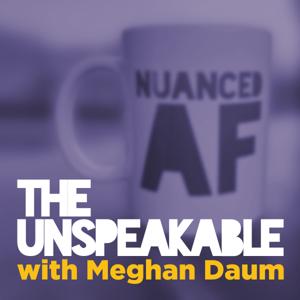
Aaron Kimberly is a mental health clinician with longtime experience providing care to transgender and gender questioning patients. He is also a trans man who made his transition fifteen years ago. In recent years, he has been speaking out against what has become the prevailing wisdom and standard protocol in transgender medicine: that people identifying as transgender, even adolescents and sometimes children, effectively "know who they are" and have a right to begin hormone therapy without comprehensive psychological assessment. Known as the affirmative care model, this approach has been promoted by activists and largely embraced by the medical establishment and the mainstream media. In many cases, the alliance with that approach comes from a fear of being labeled transphobic or of "gatekeeping." But as listeners of The Unspeakable know, the issue is far more layered and complex than the many people in general public—and even many well-meaning health care providers—realize. On the heels of a January 13, 2022 New York Times story, which for the first time gave credence to the idea that the affirmative care model might not be the best approach for young people (and which featured two time Unspeakable guest Dr. Laura Edwards-Leeper), Meghan returns to the topic to speak with Aaron about what's gone awry in gender medicine and why so few people have been willing to talk about it.
Guest Bio: Aaron Kimberly is (by his own terms) a transsexual man, born female with a rare ovotesticular intersex condition. He's worked as a mental health clinician since 2008 in hospital and community settings. In 2021 he founded the Gender Dysphoria Alliance to educate about different types of gender dysphoria from an evidence base, without the lens of political ideology. He is also co-host of the Transparency podcast.
Michael Wolff is the author of ten books including, most recently, Too Famous, a collection of essays, and three best-selling books about the Trump presidency. Over the past twenty years he has been a regular columnist for New York Magazine, Vanity Fair, British GQ, The Guardian, and The Hollywood Reporter. He has won numerous awards in the U.S. and U.K., including two National Magazine Awards. He lives in New York City and has five children.
Writer Stephen Elliott was once a bonafide member of the independent literary scene. In 2009 he founded the literary site The Rumpus, which helped launch the careers of writers like Roxane Gay and Cheryl Strayed. His eight books include the memoir The Adderall Diaries and the novel Happy Baby, which draws from his experiences in the child welfare system as a teenager and his subsequent involvement in the BDSM community. Both of those books were adapted into films, one of which he directed. He also wrote and directed the film "After Cherry" and made a web series. In 2017, Stephen was among more than 70 men whose names appeared on the so-called "Shitty Media Men List," an anonymously sourced Google document that accused the men of various levels of sexual misconduct. Stephen was among those accused of rape. He eventually decided to sue the list's creator because, he says, he was in the "unique position of knowing not only that I didn't rape anyone, but that there was no one out in the world who believed I had raped them." In this conversation, Stephen explained what he means by that and what he hopes to accomplish with the lawsuit. But the interview is not really about the lawsuit or the list. It's about Meghan's favorite subject, the mid-career pivot, and how Stephen put his life back together after being about as cancelled as it's possible to be. They talked about how Stephen managed to become a real estate investor with very little startup money and about his "Self Help" newsletter, which he's dubbed "financial advice for poets." Stephen shared his belief that literary writers are especially likely to participate in social media mobs and also offered his biggest piece of advice for anyone: buy a house. This interview was originally recorded on video for the podcast's Unspeakeasy video series. A partial version can be seen on the Unspeakable YouTube channel. The full version is available to Patreon supporters of the podcast at Patrreon.com/theunspeakable.
Guest Bio: Stephen Elliott is the author of The Adderall Diaries and the novel Happy Baby, which draws from his experiences in the child welfare system as a teenager and his subsequent involvement in the BDSM community. Both of those books were adapted into films, one of which he directed. He also wrote and directed the film "After Cherry" and made a web series.
Leigh Stein first came on the show in the summer of 2020 to talk about her novel, Self-Care, which spoofs corporate feminism and the cult of the girl boss. Now she's back to share her observations about the publishing industry and what she's learned as a book coach, independent editor and consultant for other writers. She thinks that authors (and aspiring authors) need to be realistic about building social media platforms and crafting a personal brand. She also has a pet theory that MFA writing programs are tantamount to multi-level marketing schemes in that they don't prepare students to actually publish books as much as teach them to teach writing to yet more writing students. In 2016 Leigh cofounded the feminist literary nonprofit Out of the Binders and organized BinderCon, a conference that brought in more than 2,000 attendees. She wrote about that experience in an article out this week in LitHub and spoke with Meghan about how she went broke while leading an organization designed to empower writers. Meghan also shared her own thoughts about the changing literary landscape and why she's not as excited about publishing her work as she used to be. A video version of this conversion is up on the podcast's YouTube Channel, The Unspeakable channel. Guest Bio: Leigh Stein is a writer interested in what the internet is doing to our identities, relationships, and politics. She is the author of five books, including the critically acclaimed satirical novel Self Care (Penguin, 2020) and the poetry collection What to Miss When (Soft Skull Press, 2021). She has written for the New York Times, the Washington Post, Allure, ELLE, and The Cut.
Regular listeners of this podcast are no strangers to the subject of political bias in the news media - especially the left wing, elite-driven bias that's in heavy rotation in the opinion and culture sections of big news organizations like The New York Times, The Washington Post and NPR. But as much as we talk about the social movements driving this trend, we think less often about the practical reasons and bottom line root causes. That's exactly Batya Ungar-Sargon explores in her new book Bad News: How Woke Media Is Undermining Democracy. In this conversation, Batya explains how journalism underwent a "status revolution," with the job of reporter going from an almost blue collar profession to something on a par (at least socially) with lawyers and bankers. She also explains how the digital era forced a reframing of the business model of media organizations. The bills were no longer paid by advertisers but by subscribers who demanded fealty to their political values. Batya, who was formerly the opinion editor of The Forward and currently deputy opinion editor of Newsweek, considers herself not just on the left, but something of a socialist. As such, she worries that the much of the social justice posturing that dominates mainstream discourse today is distracting from the real emergency of economic inequality. Guest Bio: Batya Ungar-Sargon is the deputy opinion editor of Newsweek. Before that, she was the opinion editor of the Forward, the largest Jewish media outlet in America. She has written for the New York Times, the Washington Post, Foreign Policy, Newsweek, the New York Review of Books Daily, and other publications. She has appeared numerous times on MSNBC, NBC, the Brian Lehrer Show, NPR, and at other media outlets. She holds a PhD from the University of California, Berkeley.
This week Meghan welcomes comedian Jamie Kilstein. This is the audio version of a video interview they recorded for The Unspeakeasy, the new video feature of the podcast available to Patreon supporters. Meghan decided to make the conversation available as a regular podcast because in addition to talking about comedy and what Jamie's been up to recently, they got pretty deep into some topics that are near and dear to the show, including Meghan's signature issue, "nuance." They ask whether trying to uphold nuance in the face of relentless group signaling and rage bait is a lost cause, not to mention a career killer. Jamie, who considers himself among the "canceled," talks about how that came to pass and about the ideological whiplash that ensued. They open the conversation by talking about how they manage professional stress: Jamie by contemplating trading in his car and Meghan by purchasing domain names for projects she'll probably never start let alone finish. Guest Bio: Jamie Kilstein hosts the podcasts Rear Naked Radio and A Fuckup's Guide To The Universe. He has appeared on The Joe Rogan Experience and Late Night With Conan O'Brien.
From the publisher's feed
Ranked by our users in the last 21 days

2,279 Listeners
832 Listeners

2,887 Listeners

902 Listeners
796 Listeners

615 Listeners

3,839 Listeners
816 Listeners
222 Listeners

8,440 Listeners
242 Listeners

284 Listeners
1,065 Listeners
59 Listeners
212 Listeners