The Why? Curve

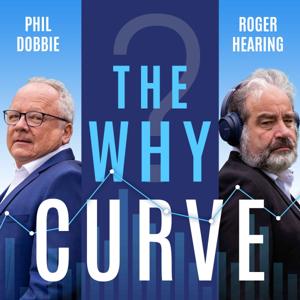
The Why? Curve

Download on the App Store

The Why? Curve episodes

  • Apocalypse Soon?
    Are we facing nuclear war? It seems extraordinary but many analysts and advisers in western capitals believe there’s a good chance Vladimir Putin could use a nuclear weapon to save his regime from defeat in Ukraine. 32 years after the Cold War ended we are back to contemplating nuclear war, and wondering how to avoid it, without rewarding Russian aggression or giving in to blackmail. This week Phil and Roger walk through the scenarios with Jeremy Shapiro, formerly of the US State Department, now director of research at the European Council on Foreign Relations - and consider the chances of avoiding Armageddon 

    Hosted on Acast. See acast.com/privacy for more information.

    39 min
  • Police Emergency
    The thin blue line is getting thinner and less effective. When chief constables have to assure the public they WILL turn up for reported burglaries, something has gone badly wrong. Are the police in tune with the society they protect? Did something change when they were given huge new powers during COVID? Are they racist? Are they misogynist? Are they too busy taking the knee or monitoring online offensiveness to actually police real crime? Phil and Roger hear from Dr Rick Muir, director of the Police Foundation that what’s needed is more resources and a recognition that officers can only be a sticking-plaster on society’s deeper problems

    Hosted on Acast. See acast.com/privacy for more information.

    44 min
  • What's the prescription for the NHS?
    We’re a sick nation - and the prognosis for the NHS is not good. It’s showing all of its 75 years, as patients wait in ambulances outside A&E or struggle to speak to - much less see - their own GP. So what’s the remedy? Just more - more money, doctors, nurses, hospitals? Or better systems of provision? And how should we pay for it - could some of us pay when we see our doctor? Tim Gardner, senior policy fellow at the Health Foundation, tells Phil and Roger there need to be tough decisions about how much we value and are willing to pay for our health.

    Hosted on Acast. See acast.com/privacy for more information.

    39 min
  • Fiscal event or economic suicide?

    Last week Kwasi Kwarteng delivered his ‘fiscal event’, unsupported by any analysis from the Office for Budget Responsibility. He said we wouldn’t apologise for focusing on economic growth. He’s also refused to apologise for the market response, which has seen the pound sink to a record low and the Bank of England forced to step in and buy-up bonds to stop the collapse of many pension funds, suffering from rapidly rising longer-end gilt yields.


    Even if the approach was to work, is there any sense going for growth at a time when the central bank is trying to slow the economy down to subdue the rate of inflation? It’s a question Phil and Roger put to the FT’s Chief Economics Correspondent Martin Wolf.


    As you’ll hear in this week’s Why Curve, it’s clear he has a great many concerns about Kwarteng’s approach to managing the economy, not least his disregard to public debt. Growth, he says, won’t be resolved by cutting taxes. And investors focus on economies that are stable; we haven’t seen any of that the last few days.

    Burt what of those who say markets and commentators have over-reacted to Kwarteng’s budget. The Telegraph’s Ambrose Evans-Pritchard says all this conjecture is the “pathological catastrophism of the pro-Brussels commentariat.” Could he be talking about Martin?

    Hosted on Acast. See acast.com/privacy for more information.

    47 min
  • Hard Labour
    A weak Tory prime minister, a dire economic crisis, a government seemingly set on making the rich richer while an election looms - an open goal for Labour surely? What could possibly go wrong? But the mood among the party faithful as they meet in conference in Liverpool is anything but confident. Corbynism may be buried, but Keir Starmer lacks charisma, his team are not exactly household names, and can YOU name a single Labour policy? Phil and Roger talk to David Kogan, Labour historian and adviser, about whether, after 12 years in opposition, the party can revive and be fit enough to aim once again for government.

    Hosted on Acast. See acast.com/privacy for more information.

    41 min
  • Welcome to Cold War 2
    The Cold War was supposed to be over twenty years ago, but are China and Russia now a new bloc of autocracy, posed against western democracies in competition for global dominance? And do they have a point - are states where electors don’t have to be appeased every four or five years, better able to plan and make difficult decisions? Do Brexit and the presidency of Donald Trump show up the weak points of liberal democracy? On this week’s episode Phil and Roger raise all this with Dr Natasha Kuhrt, senior lecturer in international peace and security at King’s College London, and ask if the current Cold War with Beijing and Moscow could eventually turn hot.

    Hosted on Acast. See acast.com/privacy for more information.

    34 min
  • "Well I didn't vote for her!"
    Is our democracy broken? We have a new prime minister - but who elected her? When a few Conservative party members have the choice of who holds the top job in the country, has something gone wrong with the system? When the last holder of that job (also chosen by the Tory membership) leaves with the appointment of his choice of his friends and supporters to the House of Lords, does it smell a bit of cronyism? This week Phil and Roger ask Robert Hazell, professor of government and the constitution at University College London, if the whole system needs an overhaul, and whether it's time for the ancient network of practices and understandings to be formalised into a written constitution. Is it time to take back control.....of our democracy?

    Hosted on Acast. See acast.com/privacy for more information.

    43 min
  • The Last Days Of The BBC?
    Is the national broadcaster moving towards some kind of closedown? With the likely next prime minister challenging the BBC’s accuracy, and one of its most prominent former presenters questioning its impartiality, while the frozen licence fee and inflation mean it can do less and less, is there a better model of public service broadcasting? A century after its foundation, should the corporation cede the field to the newcomers - Netflix and Disney? Patrick Barwise, emeritus professor of management and marketing at London Business School and co-author of The War Against The BBC tells Phil and Roger why, despite its problems, the BBC remains a vital part of our national life and needs all of our support. 

    Hosted on Acast. See acast.com/privacy for more information.

    42 min
  • Net Zero Chance?
    The world knows we’ve got to break our addiction to fossil fuels, and we need to move to a future where we no long pollute our atmosphere. But how quickly can we reach this utopian future? How far are current worries about being able to afford to heat our homes going to delay Net Zero? Can we still enjoy the benefits of a growing economy without destroying the planet? Can we reach it quickly enough? Will we ever reach it? Phil Dobbie and Roger Hearing put all that to Professor Richard Black from the Energy & Climate Intelligence Unit, and find a strange optimism - he says renewable energy is paving the way, not just because of our concern for the environment, but also because it’s the most cost effective solution

    Hosted on Acast. See acast.com/privacy for more information.

    41 min
  • Sleepwalking into a crisis
    UK inflation is now in double digits. We got there faster than expected and the Bank of England is likely to keep raising interest rates because they believe that’s the only way to contain prices. Not long ago the same bankers were arguing that there was no need for a change in their monetary policy because the problem was a transitory lack of supply. That’s still the case, of course, so why do they think hiking rates will make much difference now? This week Phil and Roger talk through the build-up to Britain’s cost of living crisis, and ask why is so much reliance being placed on the Bank of England to fix the problem. 

    Hosted on Acast. See acast.com/privacy for more information.

    30 min

About The Why? Curve

From the publisher's feed

Each week Phil Dobbie and Roger Hearing get to grips with one issue that impacts our lives. It could be economic, social, technological or geopolitical. Whatever the subject, they'll talk to the…

More shows like The Why? Curve

Economist Podcasts by The Economist

Economist Podcasts

4,119 Listeners

More or Less by BBC Radio 4

More or Less

869 Listeners

The Politics Show by The New Statesman

The Politics Show

126 Listeners

Novara Media by Novara Media

Novara Media

168 Listeners

Today in Focus by The Guardian

Today in Focus

968 Listeners

The Blindboy Podcast by Blindboyboatclub

The Blindboy Podcast

1,803 Listeners

Debunking Economics - the podcast by Steve Keen & Phil Dobbie

Debunking Economics - the podcast

40 Listeners

Americast by BBC News

Americast

763 Listeners

Ones and Tooze by Foreign  Policy

Ones and Tooze

359 Listeners

The Rest Is Politics by Goalhanger

The Rest Is Politics

3,101 Listeners

Empire: World History by Goalhanger

Empire: World History

2,417 Listeners

The Rest Is Money by Goalhanger

The Rest Is Money

157 Listeners

The Rest Is Politics: US by Goalhanger

The Rest Is Politics: US

2,403 Listeners

The Economics Show with Soumaya Keynes by Financial Times

The Economics Show with Soumaya Keynes

137 Listeners

The Rest Is Classified by Goalhanger

The Rest Is Classified

1,076 Listeners