
Sign up to save your podcasts
Or



Based on Podcast App listening data
This week has seen unprecedented US intervention in Iran, in a pre-dawn operation code-named "Midnight Hammer". It's also seen another high profile message leak on the Signal app and deadly protests in Kenya.
Seven "silent assassins", the US B-2 Spirit bombers flew 18 hours from Missouri into Iranian airspace, to fire 14 of the world's most powerful bombs at the main enrichment site at Fordo and at Natanz. The overall attack involved 125 fighter jets, several strategic feints, and submarine fire. Not a shot was fired in response. "Complete and utter obliteration" claimed President Donald Trump. Iran hit back later at the US, with ballistic missiles targeting the American base at Qatar, though it telegraphed in advance. Some 24 hours later, a ceasefire was agreed between Iran and Israel. It's holding so far, after a questionable start and presidential outrage at both sides.
This week has also seen another high profile message leak on the Signal app. This time a private thank you note, a "Dear Donald" message sent by NATO Secretary General Mark Rutte, that said "Congratulations for your decisive action in Iran, something no one else dared to do" and "Flying into another big success at The Hague. It was not easy but we’ve got them all signed onto 5 percent! Europe is going to pay in a BIG (capital letters) way, and it will be your win."
The leaker: Trump, of course, who published it on Truth Social ahead of the NATO summit. No harm done, said Rutte, the so-called Trump whisperer, who later went on to allude to him as "Daddy".
Plus, it's been a week that's seen thousands of Kenyans protesting against police brutality and government corruption in cities across the country. Security forces barricaded President William Ruto's office, as police fired water canon, tear gas and reportedly live fire too, as they clashed with demonstrators in Nairobi. At least 16 people were killed. The protests marked a year since a grassroots movement first took to the streets of the capital, against the president's planned tax law – a movement that spread nationwide after the deaths and disappearances of some of the demonstrators.
Produced by Gavin Lee, Charles Wente, Siobhan Silke, Aurore Laborie and Laura Burloux.
In a week of escalating conflict between Israel and Iran that's been decades in the making, assassinations, air strikes and missile attacks have pushed the region to the brink. Iran is striking back, with seven days of air raid sirens across Israel and a hospital hit in Beersheba. As the crisis deepens, US President Donald Trump faces a pivotal choice: whether to join the fight and unleash the only weapons capable of destroying Iran’s underground nuclear site at Fordow. A decision is promised within two weeks.
Meanwhile, across Europe, protests erupted over "over-tourism". Demonstrators in Spain, Portugal, and Italy took to the streets with slogans like “Your Holiday, Our Misery.” In Barcelona, tourists were targeted with water pistols. In Venice, the arrival of Jeff Bezos for his three-day wedding sparked outrage. “No Space for Bezos” read the signs.
Produced by Gavin Lee, Charles Wente, Antonia Cimini, Guillaume Gougeon and Laura Burloux.
It’s been a week of escalating global tensions. Israel launched a series of targeted strikes on Iran – codenamed Operation Rising Lion – aimed at crippling Tehran's nuclear capabilities. Iran has vowed a swift response. In the United States, protests erupted in Los Angeles over immigration enforcement, as federal officers intensified roundups of undocumented migrants – part of President Donald Trump’s broader plan for mass deportations. Meanwhile in Ukraine, Kyiv, Kharkiv, and Odesa came under heavy fire. Russia launched one of its largest aerial assaults yet, striking the capital with a wave of 315 drones and ballistic missiles. And in Europe, NATO Secretary-General Mark Rutte delivered a stark warning in London: defence spending is no longer optional –it’s existential.
Produced by Gavin Lee, Charles Wente, Siobhan Silke, Guillaume Gougeon and Laura Burloux.
This week, Ukraine launched Operation Spider's Web. Some 18 months in the planning and personally overseen by President Volodymyr Zelensky, simultaneous drone attacks were launched across Russian airfields, destroying its fighter jets and strategic bombers. The Ukrainian intelligence service claimed 40 planes had been left burning on the tarmac. Russia described it as terrorism and President Vladimir Putin vowed revenge.
It's also been a week that’s seen two new presidents elected. A hard-right nationalist in Poland won by a whisker in the runoff vote. It was the opposition-backed candidate, Karol Navrovski, a historian and amateur boxer, who prevailed, dealing a blow to the centrist Prime Minister Donald Tusk and his chances of reforming the country. Meanwhile in South Korea, Lee Jae-myung won a snap election following the downfall of his disgraced predecessor Yoon Suk Yeol after his disastrous attempt to declare martial law last December. The new leader, who on the night that troops tried to take over the National Assembly had rallied people to come out on the streets, now pitches himself as the unifier of a divided country.
It's been a back to the future week for President Donald Trump, who is once again banning citizens of several countries from entering the US. Those nations include Iran, Libya, Somalia and Yemen, with echoes of 2017, both on the grounds of protecting against terrorism. This time Trump referred to Sunday's attack on an Israeli peace March in Colorado, which was carried out by an Egyptian suspect. Notably, Egypt wasn't on the list.
And it’s been a week when relations between Trump and Elon Musk fell apart quicker than a Space X Falcon 9 launch. We also take a closer look at Starbase, Musk's controversial new city in Texas.
Produced by Andrew Hilliar, Aurore Laborie and Gavin Lee.
This week saw Israel attempt a new plan to distribute food in Gaza, bypassing the UN and using American private contractors known as the Gaza Humanitarian Fund. But it was suspended on day one after looting, chaos and security measures were overwhelmed by desperate crowds. Meanwhile, the once-steadfast support of Israel's key allies has seen a diplomatic erosion, with private outrage turning to public condemnation.
It's also been the week that Elon Musk said goodbye to the Trump administration and left his role at the White House. The world's richest man said his time has come to an end at the Department of Government Efficiency, just days after his public critique of Trump's so-called big beautiful tax bill, calling it too expensive and undermining the point of DOGE. Washington insiders quoted sources suggesting Musk had been seen as a bit of nuisance in the Trump inner circle. White House officials told reporters he was "offboarded" on Wednesday night.
Finally, it was a week that created an inadvertent legacy moment for French President Emmanuel Macron on a visit to Southeast Asia: a push in the face from the first lady. The moment is likely to be included in every future look back at the president's career. Pay no attention to the couple behind the plane's curtain, it was just "play fighting", the French president said.
Produced by Siobhan Silke, Aurore Laborie and Gavin Lee.
For the first time, leaders of France, the UK, and Canada have issued an explicit threat of sanctions if Israeli forces don’t halt their renewed offensive to seize full control of Gaza. The warning came after Israeli Prime Minister Benjamin Netanyahu announced that “minimal” humanitarian aid would resume – a move the UN has dismissed as a drop in the ocean.
President Donald Trump made the first overseas tour of his second term this week to the Middle East, where Riyadh royalty rolled out a lavender carpet ahead of a 600-billion-dollar pledge of Saudi investment for US contracts. Qatar next, where The Beast was surrounded by a caravan of camels, while the man inside watched a ceremonial sword-dance spectacle.
Then onwards to the UAE to the sound of drums and the swishing of hair, more big money deals announced too. A trip that made headlines for a surprise meeting with Syria’s warlord turned President; and questions over why Trump left Israel off the itinerary; and on the ethics of accepting the gift of a winged palace from Doha.
It’s also been a week where President Zelensky called President Putin’s bluff. He was awaiting talks in Turkey, the setting the Russian leader had chosen for negotiations, rather than accepting an unconditional ceasefire. Putin was a no show, stand-in props sent instead according to Kyiv. Moscow had barely had the time to call Zelensky “a clown” in response by the time President Trump intervened.
“Nothing’s going to happen”, he suddenly declared to reporters, “until Putin and I get together”. We’ll assess when and where the stage is being set for that.
And it’s the week where the 78th Cannes Film Festival kicked off … Juliette Binoche heads up this year’s jury. A new dress code too, no nudity or gowns with long trains. And honorary Palme D’or has already been awarded to Robert De Niro, who used his acceptance speech to criticise President Trump and the big tip for this year's best film award is the Japanese drama “Renoir”.
Produced by Luis Miguel Cabrera, Jean-Vincent Russo, Rebecca Gnignati and Laura Burloux.
In a week that marked US President Donald Trump's first 100 days in office, national security adviser Mike Waltz wasn't celebrating, as he was moved being aside. The first cabinet casualty of the president's second term, Waltz's departure appears to be a direct result of Signalgate, when he accidentally added a journalist to a group chat planning attacks on Yemen's Houthi rebels.
We assess the first 100 days and Trump's so-called "muzzle velocity strategy" of flooding the media space with continuous announcements. It perhaps comes as no surprise that he’s given himself full marks.
This week has also seen the political comeback of the year so far, thanks partly to the threats and trolling from Trump. Canada's Liberal Party came out on top in elections there, despite being discarded by analysts as down and out at the start of the year. Tariffs and trade wars triggered by their big neighbour, and Trump’s threats to annex them seem to have helped galvanise a patriotic pushback. Mark Carney's task was to distance himself from predecessor Justin Trudeau, while Conservative opposition leader Pierre Poilievre had to distance himself from claims of being a mini Trump. Voters opted for Liberal ex-banker Carney, who expressed his happiness at party headquarters in the form of dance.
And it’s been a rare week of good news in Ukraine, or at least that's how it’s being presented by negotiators in Kyiv and Washington. A critical minerals deal has been concluded with the US, one that was first proposed by the Ukrainians to President Joe Biden last autumn. It morphed under Trump into an IOU agreement: critical minerals for repayment of past US aid. After the Oval Office spat, and with Ukrainian hopes of a security guarantee out of the question, terms were dropped and better concessions agreed, which Kyiv sees as a good deal, given the circumstances. We assess what it means for the conflict.
Produced by Gavin Lee, Luis Miguel Cabrera, Juliette Laffont, Charles Wente, Laura Burloux and Guillaume Gougeon.
The world said goodbye to Pope Francis this week. Tens of thousands of mourners queued to pay their respects as he lay in state in Saint Peter's Basilica over three days of mourning. We discuss his life and legacy, the geopolitics of his papal funeral and look ahead to the conclave that will follow.
Also this week, Russian forces launched the heaviest assault on Ukraine's capital since last summer. Seventy missiles and 145 drones hit a civilian district in Kyiv, in a week that began with a sudden announcement from the Kremlin of a 30-hour Easter truce, seen as peace posturing propaganda by European leaders.
US President Donald Trump claimed he has his own private deadline in mind before he will walk away from efforts for a "real truce" in Ukraine, making a personal appeal to Vladimir Putin. "Vladimir, STOP", Trump wrote on social media, adding that he’s not happy with Russian strikes, this in an apparent change of tone.
It’s also been a week of renewed tensions between India and Pakistan, after the deadliest attack on civilians in Indian-administered Kashmir for 25 years. Militants posing as police shot and killed 25 Indian tourists and one Nepalese citizen in a Himalayan mountain retreat. Kashmir, which is claimed by both India and Pakistan, has been a flashpoint for insurgency for decades, but attacks on tourists are rare.
Produced by Gavin Lee, Luis Miguel Cabrera, Aurore Laborie, Charles Wente.
A week on from Trump's special envoy Steve Witkoff's meeting with Vladimir Putin, Witkoff has been in Paris for transatlantic talks. We assess the state of play for Ukraine. We also look at the significance of US-Iran nuclear talks – the first major level of engagement in years. We then discuss the significance of the UK Supreme Court’s landmark ruling: the terms "woman" and "sex" refer to biological sex. Finally, we look at reactions to the first female space flight in six decades.
From the publisher's feed
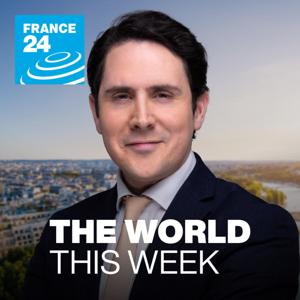
Our panel of Paris-based journalists review the week's international news: the stories that made the headlines and also those you may have missed! Join us every Friday at 7:10pm Paris time.
Ranked by our users in the last 21 days

7,626 Listeners

4,114 Listeners

1,046 Listeners
1,019 Listeners
287 Listeners

1,798 Listeners

4 Listeners

11 Listeners
0 Listeners

0 Listeners

2 Listeners
1 Listeners

21 Listeners

4 Listeners

0 Listeners

4 Listeners
21 Listeners

6 Listeners

5 Listeners

101 Listeners
238 Listeners

4 Listeners
269 Listeners
560 Listeners
4 Listeners

2,543 Listeners
1 Listeners

0 Listeners
0 Listeners

0 Listeners

143 Listeners

301 Listeners
385 Listeners