
Sign up to save your podcasts
Or



Based on Podcast App listening data
In a week where US President Donald Trump played fast and loose with world markets, his global tariff threats became a reality, with brutal and immediate economic fallout. Dozens of countries reached out to negotiate – or, as Trump described it – begged and pleaded to have the import taxes on supposed friends and foes removed.
We also saw supposed friends within the Trump administration become public foes, as Elon Musk called trade adviser Pete Navarro "dumber than a sack of bricks". Musk did swiftly apologise … to the bricks.
And while Washington's brinksmanship with Beijing remained, the rest of the world was given a partial reprieve of 90 days.
This week also saw the end of five months of political limbo in Europe's biggest economy. Germany's government had been stuck in neutral since the coalition collapsed in November, but after winning February's election, chancellor-to-be Friedrich Merz has at last struck a deal between his centre- right party and the centre-left Social Democrats. But there's been a timely reminder of the thin ice the new coalition is skating on. A poll released this week shows the far-right AfD in ascendency. It's now regarded, for the first time, as the country's most popular party.
Finally, this week has seen the United Arab Emirates brought to the International Court of Justice, accused of complicity in genocide in Sudan. In the middle of a civil war, the Sudanese military rulers are accusing the UAE of providing direct financial and political support to Sudan's rival faction, the Rapid Support Forces, and claiming that in doing so, Doha has enabled the RSF to carry out widespread atrocities in Darfur. The UAE denies the claims.
Produced by Gavin Lee, Luis Miguel Cabrera, Juliette Laffont, Charles Wente.
The past week will be, according to US President Donald Trump, "remembered forever" for what happened on Wednesday, April 2. "Liberation Day", as he called it, saw the US leader announce sweeping tariffs on friend and foe alike.
There's no denying the magnitude of a move that is causing international panic and a slump in the global stock markets. Any company making products outside of the US will now have to pay increased costs to export them – although notably, that doesn't include Russia. Western analysts say the maths behind the tariffs all seem a bit totted up on the "back of a fag packet". Trump claims it's about fairness for Uncle Sam, and is warning others not to strike back.
Meanwhile, it's been a surprising week in French politics. A criminal court in Paris has ruled Marine Le Pen ineligible to run for public office for the next five years, effective immediately, after being found guilty of embezzling €4 million of EU Parliament funds. The far-right opposition figurehead was, until now, the front runner in France's 2027’s presidential elections. "Unbelievable", Le Pen uttered, as she stormed out of court before the judge had even finished reading the sentence. With her political dreams upended, and now forced to wear an electronic tag for the next two years, her anger was visible on Monday night primetime television.
It's also been a week that’s seen Hungary roll out the red carpet for a leader wanted by the International Criminal Court for war crimes. Israeli Prime Minister Binyamin Netanyahu chanced his first European trip since being indicted in November, in the knowledge that his Hungarian counterpart Viktor Orban was withdrawing from the ICC and wouldn't be obliged to arrest him on arrival.
And it's been a week that’s seen a crisis on top of a crisis in Myanmar. The nation is suffering from the effects of the biggest earthquake in a century, and the military regime is using the aftermath of the natural disaster for military advantage: bombing rebel-held areas, according to the UN, as well as reportedly blocking the flow of humanitarian aid and firing on a Chinese Red Cross convoy that was trying to help victims of the earthquake. The overall death toll has now reached more than 3,000.
Produced by Ilayda Habib, Aurore Laborie and Alessandro Xenos.
This week has seen the biggest unrest in Turkey in a decade. Mass street protests have taken place there in the face of a heavy government crackdown, where large gatherings have been banned, social media has been limited, and almost 2,000 people have been arrested.
It's also been a week that's exposed a huge lapse in the internal comms of the Trump administration, where the world became privy to the casual banter during the coordination of a bombing raid in Yemen. The scandal has become known as Signalgate, after journalist Jeffrey Goldberg was accidentally added to the Signal chat.
It's also been a week of confusion, conflicting statements and setbacks for any kind of peace deal in Ukraine. On Tuesday, the White House announced it had brokered separate agreements with Moscow and Kyiv to cease hostilities in the Black Sea, aiming to ensure safe navigation. But within hours, the truce was in trouble. Meanwhile, leaders of the new coalition of the willing met in Paris to support Ukraine. Trump's key interlocutor on the conflict suggested they were all playing at being Winston Churchill.
Produced by Gavin Lee, Theophile Vareille, Juliette Laffont, Laura Burloux, Charles Wente.
This week, a high-stakes call between the Russian and US leaders shaped the Ukraine conflict, with Russia claiming a diplomatic victory while key issues remained unresolved. Meanwhile in Gaza, Israeli air strikes reignited violence, killing over 600 Palestinians, including children, and deepening PM Binyamin Netanyahu’s political crisis. Plus, the Trump administration deported hundreds of alleged gang members to El Salvador, setting up a showdown with the US judiciary.
Produced by Gavin Lee, Luis Miguel Cabrera, Guillaume Gougeon, Charles Wente and Laura Burloux.
This week, our set of experts gathered around Gavin Lee to take a look at the latest in the Ukraine-Russia ceasefire proposal, clashes and mass killings in Syria and Donald Trump's tariff war against the EU and its neighbouring countries.
It has been a week of suspicion and distrust with the sudden prospect of a ceasefire in Ukraine. Proposed after Ukrainian negotiators were forced to the table for talks with the US in Saudi Arabia, and coming days after discovering their most important ally had switched off intelligence sharing and military support. The ball is now in Russia’s court according to Secretary of State Marco Rubio, and for 48 hours it was. The Kremlin considered its response. When it came, it first sounded like a breakthrough. “We agree…”, Russian president Vladimir Putin said, before adding that “there are nuances needed”. Nuance means a very slight difference, a subtle distinction. Ukraine’s interpretation was that it was Russian manipulation.
It has also been a week that we see some of the worst sectarian violence in Syria for years, taking place in the coastal strongholds of former dictator Bashar al Assad.
And it has been a good week for Mark Carney, the man once dubbed the Rock Star banker. Polls suggested that he hardly was a recognisable face in his country two months ago, with 75 per cent of the public not knowing who he was. Now he is the prime minister, overwhelmingly voted in by liberal party members to replace the resigning and tearful Justin Trudeau.
Produced by Gavin Lee, Luis Miguel Cabrera, Meiqi AN
This week, the US tightened the screws on Ukraine, pausing military aid until Kyiv shows more willingness to negotiate – starting with handing over half its rare earth resources to America. Moscow welcomed the shift, calling it “aligned with the Kremlin’s vision,” while Ukraine scrambled to smooth things over with a letter to Trump.
Trump also kicked off the biggest protectionist move since 1930, slapping heavy tariffs on Canada, Mexico, and China. Markets tanked, and The Wall Street Journal called it “the dumbest tariff war in history.” By week’s end, signs of a rollback emerged, and Justin Trudeau hit back with his own “Dear Donald” letter.
In Turkey, a major breakthrough: the PKK declared a ceasefire after its jailed leader called for disarmament, signalling an end to a four-decade conflict that claimed over 40,000 lives. A rare good news story – one that could also extend Erdogan’s rule.
Produced by Gavin Lee, Luis Miguel Cabrera and Guillaume Gougeon.
There have been unprecedented scenes in the White House this Friday: a fierce row unfolding in front of cameras at the Oval Office between Presidents Donald Trump and Volodymyr Zelensky. The Ukrainian leader was described as "disrespectful" by both Trump and US Vice President JD Vance, who also accused him of playing to the media. Four international correspondents discuss the unprecedented fallout with FRANCE 24's Gavin Lee and talk through the "excruciating" scenes at the Oval office. Plus our White House correspondent Fraser Jackson reports live as events unfold. We ask: what are the implications for Zelensky and the security of his country?
Produced by Gavin Lee, Luis Miguel Cabrera, Lila Paulou and Nick Rushworth.
Three years after ending all official communications with Moscow, the US government is suddenly back in Russia’s orbit. The two nuclear powers sat down in Saudi Arabia on Tuesday to find a path to ending the Ukraine war and more besides. The talks were no longer about how to deal with the aggressor in the conflict, but how to normalise relations and make Russia a potential partner for future energy deals. So what of Ukraine?
Left out of talks, Ukraine's president is picking up scraps of detail via the press. His biggest ally, the US, is now his biggest problem. Volodymyr Zelensky suggested Donald Trump was living in Vladimir Putin's disinformation space. Trump’s defence was to attack, accusing Zelensky of being a dictator. "Moscow holds the cards in the conflict," said Trump. But does Moscow have the president’s ear?
It's been a week where Europe was forced to rapidly rethink its own defences and consider how to remain a relevant voice in Ukraine after also being sidelined in the talks. Emergency meetings were held in Paris. Britain's Prime Minister Keir Starmer called it a once-in-a-generation moment for national security, and offered to send British peacekeeping troops to Ukraine in the future. There was no room at the table for Hungary or Slovakia, their leaders being on friendly terms with Putin. Slovak PM Robert Fico said Europe should stop crying with unnecessary nervousness, referencing the shock caused by the US Vice President's recent blunt critique of Europe, which had the head of the Munich Security Conference in tears.
This week has also seen the final TV debate of the German election campaign. The conservative opposition leader Friedrich Merz is odds-on favourite to be the next chancellor. Merz is a helicopter-flying multi-millionaire and a longtime bitter rival of former chancellor Angela Merkel. But analysts say he's capable of saying the wrong thing at the wrong time and has to avoid conversationally slipping on a banana skin if he's to win.
Meanwhile, current Chancellor Olaf Scholz says he still thinks he can triumph, even if others have written him off. There's much focus, too, on the continuing rise of the far-right AfD party, who are expected to double their vote, having garnered notable support from US VP JD Vance, as well as Elon Musk and his X algorithm. Migration and the economy are key voter issues, with Europe's biggest economy sliding closer towards recession. We examine the key issues and profile the contenders.
This week, Moscow got what it wanted. A Trump-Putin call ended with talk of visits and no NATO future for Ukraine. As Vladimir Putin steps back in, Volodymyr Zelensky risks being shut out and the EU warns of a behind-the-scenes deal. In Gaza, the truce nearly collapsed as Hamas delayed hostage releases, citing Israeli violations. Donald Trump launched an ultimatum: free them all or "let all hell break loose". Hamas dismissed the threat, but stuck to the plan. Freed hostages spoke of starvation and abuse. Meanwhile, at the Paris AI summit, US VP JD Vance pushed for no regulation, while Emmanuel Macron warned of AI's "Wild West" risks, yet seized the business opportunity. Safety concerns barely got a mention.
Produced by Gavin Lee, Luis Miguel Cabrera and Guillaume Gougeon.
This week, Donald Trump’s latest bombshell—suggesting the US should own Gaza and relocate its population in what he calls a Real Estate solution. Critics call it ethnic cleansing; he calls it Gaza Lago. Meanwhile, Keir Starmer kept a low profile at his first EU summit as Trump threatened tariffs on the bloc. And over in France, PM François Bayrou has clung to power after yet another no-confidence vote.
Produced by Gavin Lee, Luis Miguel Cabrera and Guillaume Gougeon.
From the publisher's feed
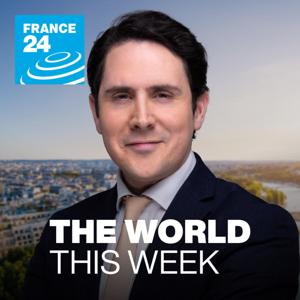
Our panel of Paris-based journalists review the week's international news: the stories that made the headlines and also those you may have missed! Join us every Friday at 7:10pm Paris time.
Ranked by our users in the last 21 days
7,626 Listeners

4,114 Listeners
1,046 Listeners
1,019 Listeners
287 Listeners
1,798 Listeners

4 Listeners

11 Listeners
0 Listeners

0 Listeners
2 Listeners
1 Listeners

21 Listeners

4 Listeners

0 Listeners
4 Listeners
21 Listeners
6 Listeners
5 Listeners

101 Listeners
238 Listeners
4 Listeners

269 Listeners
560 Listeners
4 Listeners

2,543 Listeners
1 Listeners

0 Listeners
0 Listeners

0 Listeners

143 Listeners

301 Listeners
385 Listeners